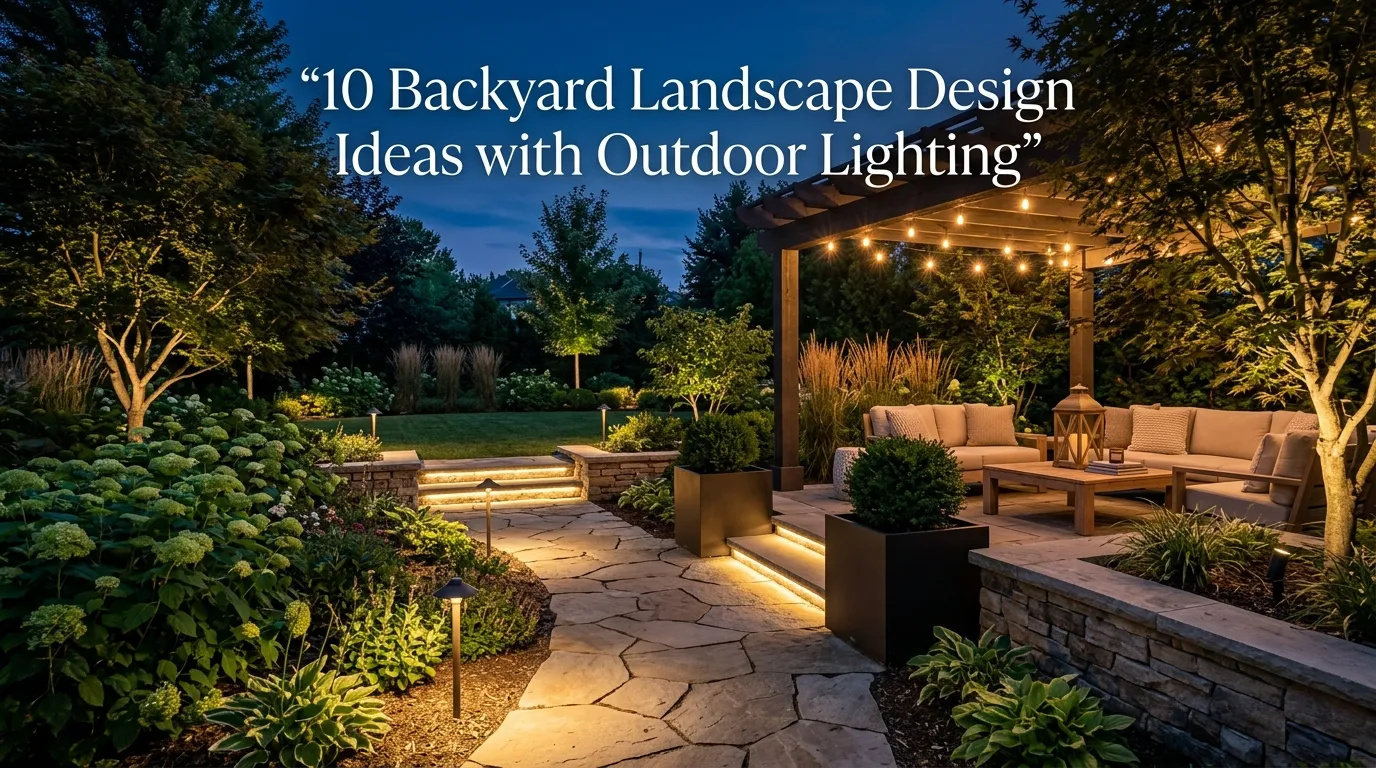
10 Backyard Landscape Design Ideas with Outdoor Lighting
A beautiful backyard can look completely different after the sun goes down.
During the day, landscaping is defined by plants, pathways, patios, trees, and outdoor furniture. At night, lighting becomes part of the landscape itself. The right fixtures can highlight a garden bed, make a walkway easier to navigate, create a warm atmosphere around a patio, or draw attention to an architectural feature.
Outdoor lighting doesn’t have to mean filling the entire yard with bright fixtures. In fact, some of the most inviting backyard landscapes use a combination of subtle light and intentional darkness. A softly illuminated tree can become a focal point, while low pathway lights can quietly guide guests through the garden.
In my experience, the most successful approach is to think about lighting at the same time as the landscape design rather than treating it as an afterthought. Consider where people walk, where they gather, which plants deserve attention, and which areas already receive enough natural or architectural light.
You can also build the look gradually. Start with the patio or main walkway, then add lighting to trees, planting beds, steps, or water features as your outdoor space develops.
The ideas below combine practical landscape planning with attractive lighting techniques. They work for suburban backyards, smaller gardens, entertaining spaces, and larger properties where you want different areas to feel connected after dark.
Whether you’re planning a complete backyard refresh or simply looking for an easy way to make your outdoor space more usable in the evening, these ideas can help you create a landscape that feels beautiful both day and night.
Table of Contents
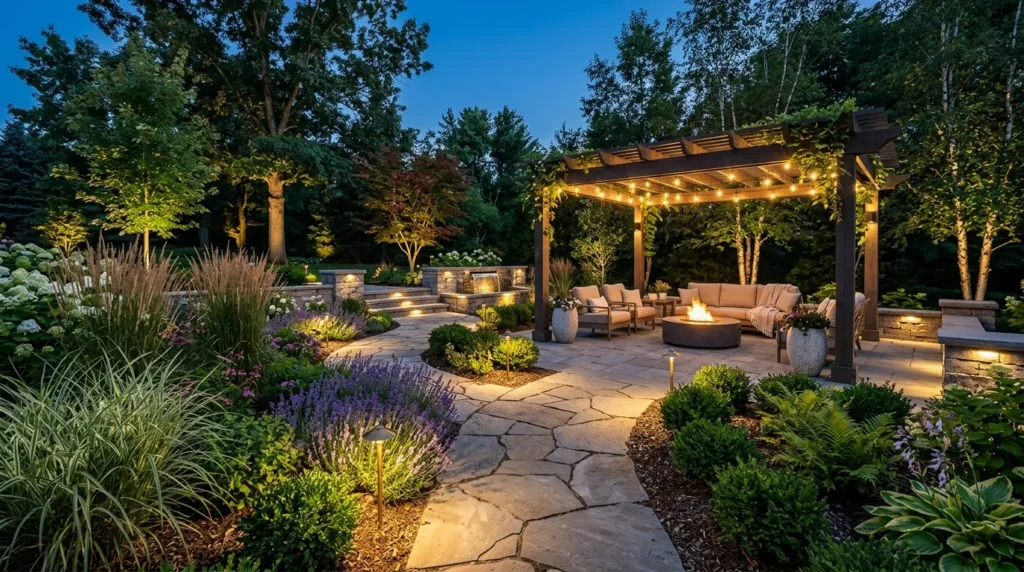
1. Illuminated Garden Beds
Highlight planting areas with low, carefully positioned lighting for depth and nighttime color.
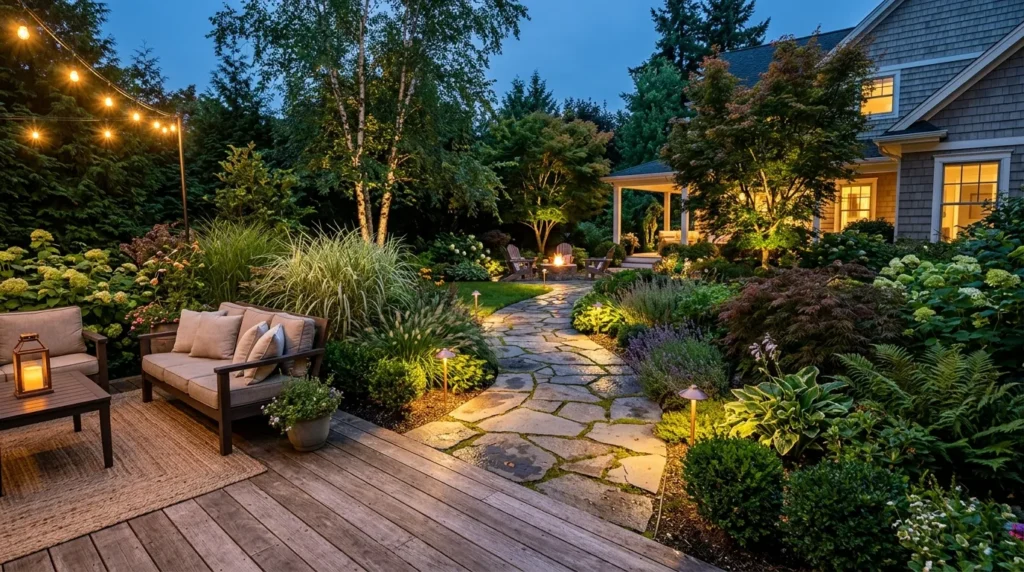
2. Glowing Pathways
Guide guests through the yard with subtle lighting along walkways and garden paths.
3. Tree Uplighting
Turn mature trees and distinctive plants into dramatic nighttime focal points.
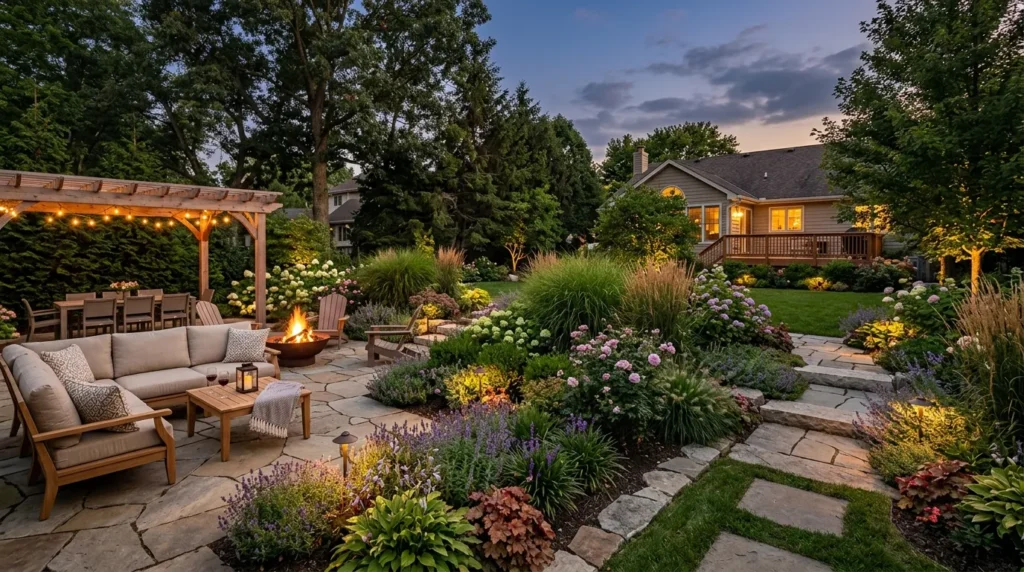
4. Patio String Lights
Create a relaxed entertaining area with warm overhead illumination.
5. Layered Step Lighting
Make changes in elevation easier to navigate while adding architectural detail.
6. Outdoor Lanterns
Use decorative lanterns to bring portable warmth to patios, porches, and seating areas.
7. Poolside Illumination
Combine landscape lighting with soft pool and surrounding-area illumination.
8. Pergola Lighting
Transform a pergola or covered seating area into a comfortable evening destination.
9. Water Feature Glow
Use carefully placed light to emphasize fountains, ponds, and other water elements.
10. Layered Landscape Lighting
Combine multiple lighting techniques to create a cohesive backyard at night.
1. Illuminated Garden Beds
Quick Benefits
- Highlights landscaping after dark
- Adds depth to planting areas
- Creates attractive focal points
- Makes the yard feel more finished
- Works with both small and large gardens
Why It Works
Garden beds can almost disappear after sunset, especially when they sit away from the house.
Low landscape lighting brings those areas back into view while adding another layer to the backyard.
Instead of lighting every plant equally, focus on interesting shapes, mature shrubs, ornamental grasses, flowering plants, or changes in height.
This creates a more natural appearance.
The goal is to see the landscape rather than simply see the fixtures.
A few carefully positioned lights can create shadows between plants, making the garden appear deeper and more dimensional.
How To Style It
Use low-voltage landscape fixtures designed for outdoor use and position them so they illuminate plants without producing harsh glare.
Place lights at different distances from the planting bed.
A light closer to a textured tree trunk can emphasize bark, while another positioned farther away can wash a broader area with soft illumination.
Avoid placing identical lights in a perfectly straight row unless you’re intentionally creating a formal design.
Mix illuminated areas with darker sections.
That contrast helps the garden feel more natural.
Choose fixtures that blend into the landscape during the daytime.
2. Glowing Pathways
Quick Benefits
- Helps define walking routes
- Improves nighttime visibility
- Adds structure to the landscape
- Makes the yard feel welcoming
- Works for straight or curved paths
Why It Works
A pathway provides one of the clearest opportunities for useful outdoor lighting.
The lights don’t need to be bright.
Their job is to make the route visible and help establish where the walkway begins and ends.
Path lighting can also emphasize the shape of your landscape.
A gently curved garden path looks especially attractive when small pools of light follow its direction.
For a more formal yard, evenly spaced fixtures can create a structured appearance.
For a relaxed garden, slightly varied positioning can feel more natural.
How To Style It
Choose pathway fixtures with enough spacing to avoid creating a continuous runway effect.
Position them so the light overlaps naturally without creating excessive brightness.
For wider paths, consider placing fixtures on alternating sides rather than directly opposite one another.
Keep fixtures clear of areas where they could become obstacles.
Solar options can be convenient for some locations, while wired low-voltage systems can offer more consistent illumination.
Select fixtures rated for outdoor conditions and install them according to manufacturer instructions.
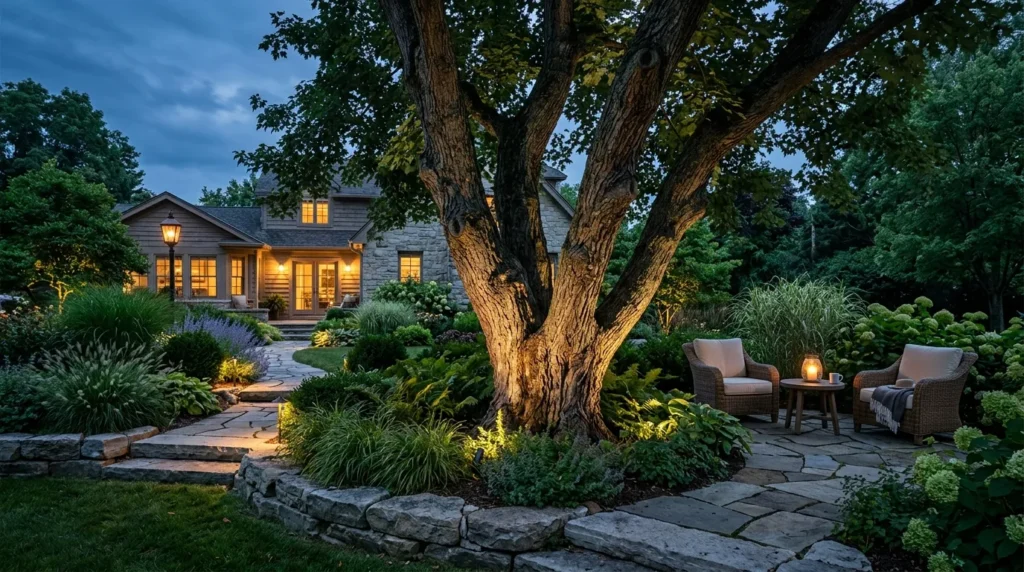
3. Tree Uplighting
Quick Benefits
- Creates dramatic focal points
- Highlights mature trees
- Adds vertical dimension
- Makes large yards feel layered
- Shows off interesting bark and branches
Why It Works
Most backyard lighting stays relatively close to the ground.
Uplighting changes that by directing attention upward.
A mature tree can become one of the most striking elements in a nighttime landscape when light emphasizes its trunk and branches.
The effect is especially attractive with trees that have interesting bark, multiple trunks, or distinctive branching structures.
You don’t need to illuminate the entire tree.
Sometimes lighting only the lower trunk creates enough shadow and contrast to make the canopy feel larger.
How To Style It
Position the fixture near the base of the tree and angle the beam toward the trunk or canopy.
Experiment with placement before permanently installing the light.
A fixture positioned directly against the trunk creates a different effect from one placed several feet away.
For larger trees, multiple carefully positioned lights may create a more balanced appearance.
Avoid aiming bright light directly toward seating areas or neighboring properties.
The goal is to illuminate the tree, not the viewer.
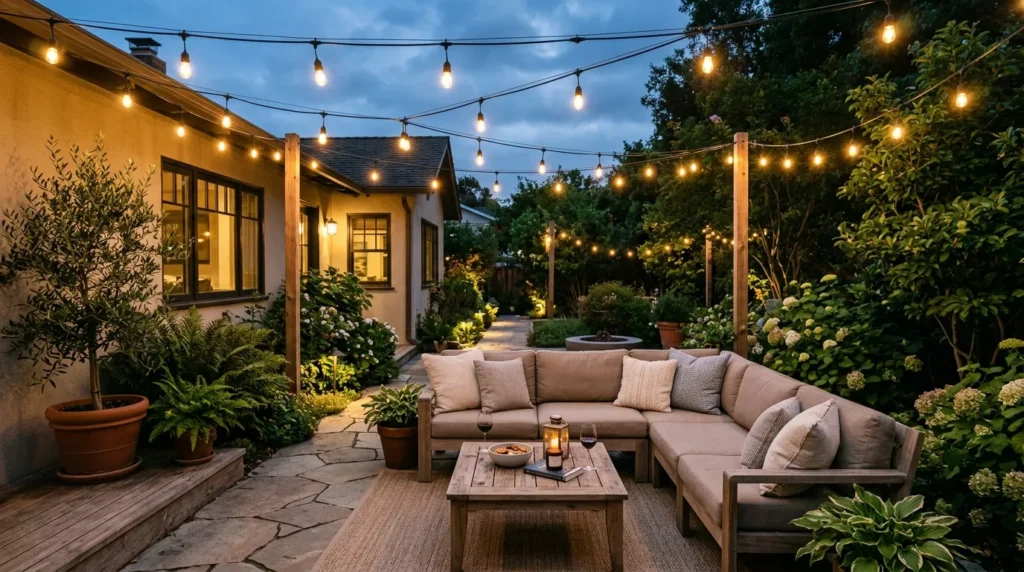
4. Patio String Lights
Quick Benefits
- Creates a relaxed atmosphere
- Adds overhead illumination
- Defines entertaining areas
- Works with many design styles
- Creates an easy focal point
Why It Works
String lights have become a popular backyard feature because they provide both decoration and useful ambient illumination.
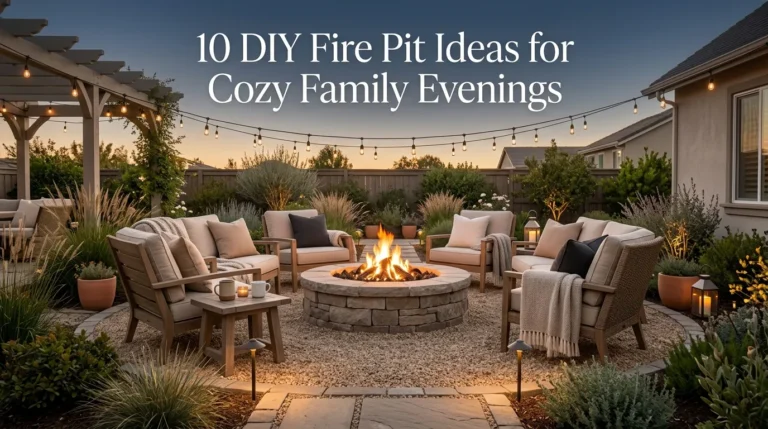
They work particularly well over patios, outdoor dining areas, fire pit seating, and pergolas.
Unlike directional landscape lights, string lights create a gentle canopy of illumination.
They can make an outdoor area feel like an extension of the living room.
Warm-toned bulbs are often especially inviting for evening gatherings.
How To Style It
Attach string lights securely to suitable structures designed to support them.
You can run them around the perimeter of a patio, between posts, or across a pergola.
Keep the pattern intentional.
A simple straight arrangement can look clean and modern, while a gentle zigzag can create a more casual atmosphere.
Choose outdoor-rated products and follow the manufacturer’s installation and electrical guidance.
Avoid allowing cords to cross walking areas where they could become tripping hazards.
For a polished appearance, combine string lights with lower-level landscape lighting rather than relying on them as the only source of illumination.
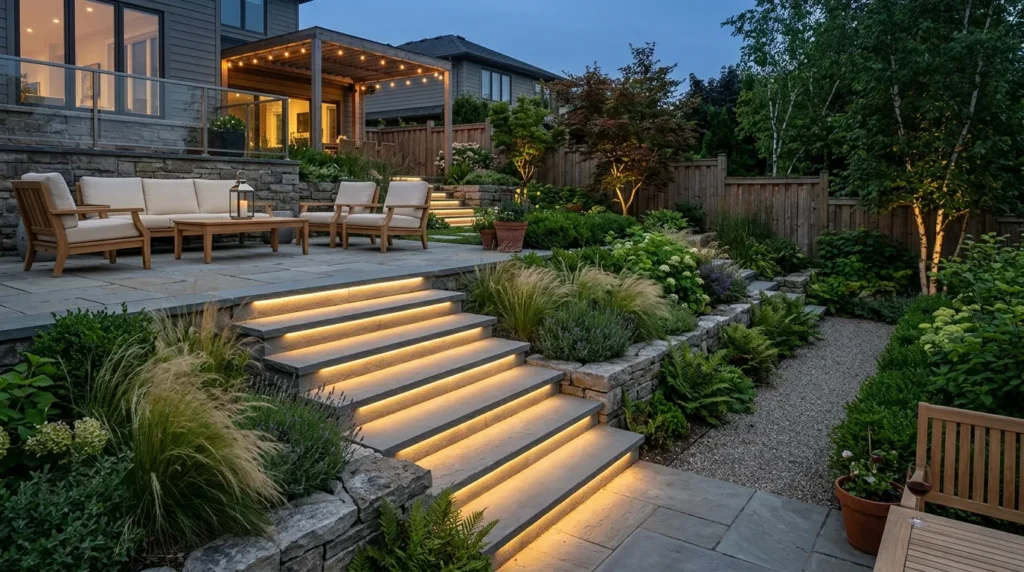
5. Layered Step Lighting
Quick Benefits
- Improves visibility on steps
- Adds architectural interest
- Defines elevation changes
- Makes entertaining areas safer to navigate
- Creates a polished appearance
Why It Works
Steps are both a landscape feature and a practical consideration.
Changes in elevation can become difficult to see after dark, particularly around patios, retaining walls, pools, and garden paths.
Step lighting makes the transition more visible while adding a subtle architectural element.
Integrated fixtures can look particularly clean because they become part of the structure rather than appearing as separate objects.
How To Style It
Consider lighting the vertical face of each step, the adjacent wall, or the surrounding landscape depending on the design.
Avoid excessive brightness that creates glare.
The light should help define the step without shining directly into people’s eyes.
For stairs near a seating area, choose fixtures that provide enough visibility while maintaining the relaxed mood.
Always follow applicable electrical and building requirements for outdoor installations.
If you’re unsure about wiring, placement, or code requirements, consult a qualified professional.
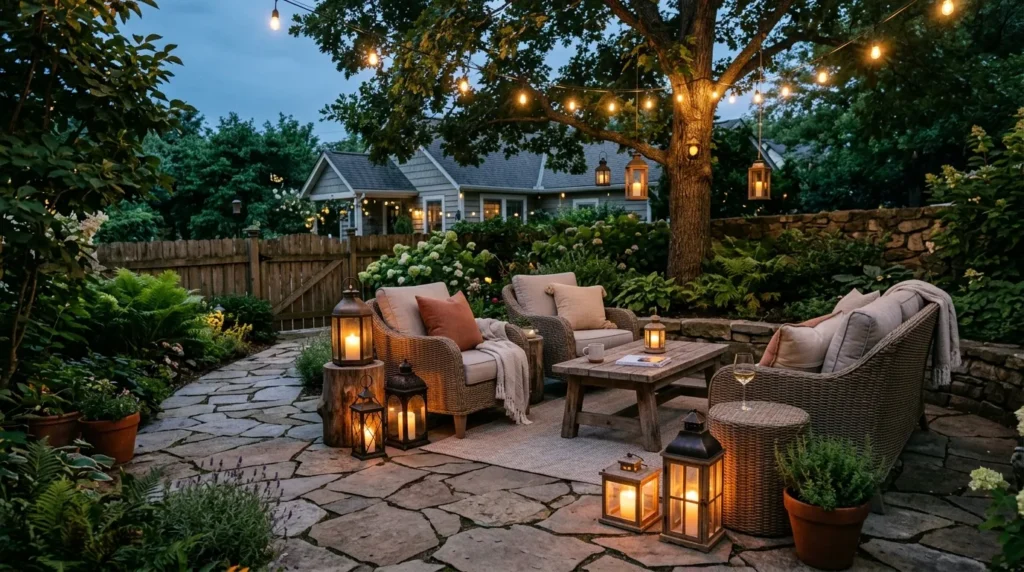
6. Outdoor Lanterns
Quick Benefits
- Adds decorative character
- Provides flexible lighting
- Works on patios and decks
- Creates warm focal points
- Can complement many landscape styles
Why It Works
Lanterns provide a different kind of outdoor lighting because they can function as decorative objects during the day and light sources at night.
A pair of lanterns beside a patio seating area can establish symmetry.
A larger lantern near an outdoor dining table can become a centerpiece.
Portable rechargeable options can also make it easy to change the arrangement for different occasions.
How To Style It
Choose lanterns that coordinate with the architecture and furniture.
Black metal works well with modern and farmhouse-inspired landscapes.
Natural woven materials can complement relaxed or coastal spaces when designed for outdoor use.
Glass lanterns can create a more traditional appearance.
Use several lanterns at different heights rather than placing everything on the same surface.
Keep open flames away from dry landscaping, fabrics, children, pets, and high-traffic areas.
For many backyards, outdoor-rated LED lanterns offer a practical alternative to open flames.
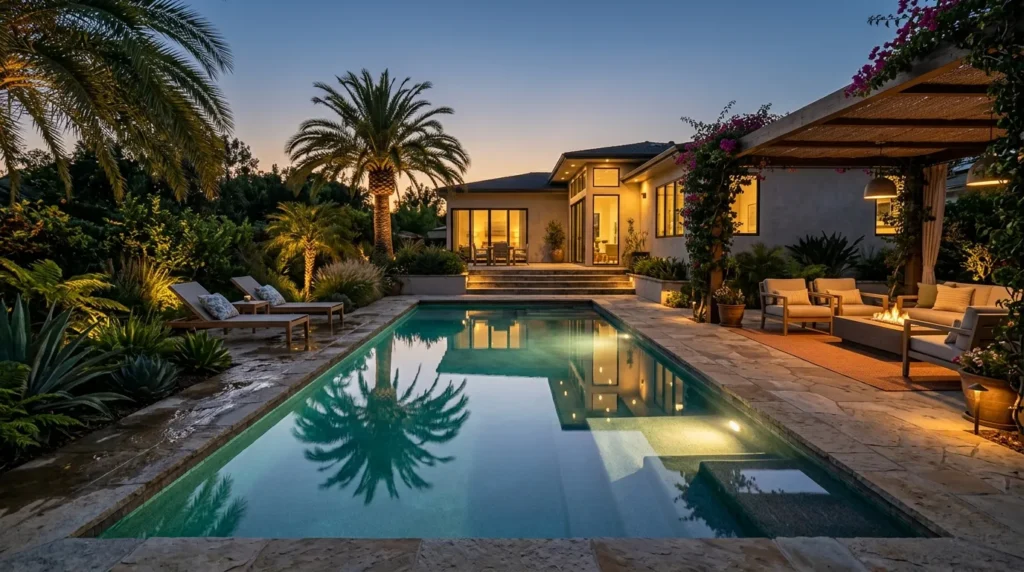
7. Poolside Illumination
Quick Benefits
- Defines the pool area
- Creates an evening focal point
- Helps distinguish wet and dry zones
- Enhances surrounding landscaping
- Supports outdoor entertaining
Why It Works
A pool can become the visual center of a backyard after dark.
The water naturally reflects light, which means even subtle illumination can create a noticeable effect.
The surrounding landscape matters just as much as the pool itself.
Soft lighting around nearby plants, pathways, steps, and seating can create a more cohesive composition.
Avoid treating the pool as an isolated bright rectangle.
Instead, think about how the pool connects to the rest of the backyard.
How To Style It
Use only lighting products specifically designed and approved for pool or spa environments where required.
Illuminate surrounding pathways and transitions between wet and dry areas.
Highlight nearby trees or planting beds with restrained landscape lighting.
Keep fixtures positioned so they don’t create uncomfortable glare for swimmers or people seated nearby.
Pool electrical work has important safety requirements, so use a qualified professional for installations involving pool wiring or permanently installed electrical equipment.
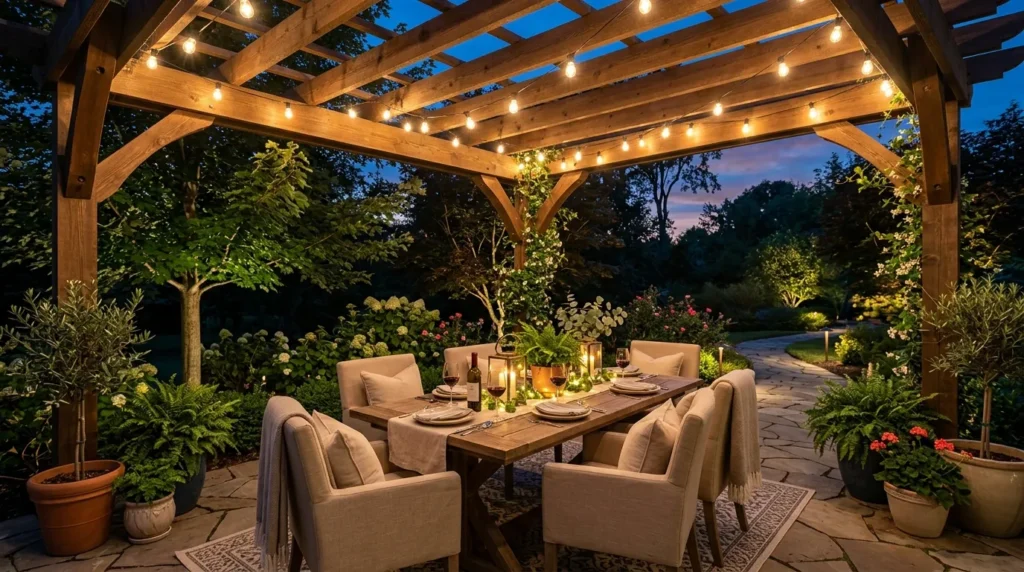
8. Pergola Lighting
Quick Benefits
- Creates an outdoor room
- Extends evening usability
- Adds overhead ambiance
- Defines seating areas
- Supports entertaining
Why It Works
A pergola naturally creates a sense of enclosure.
Adding lighting makes that structure feel even more like a dedicated outdoor room.
The ceiling structure provides convenient places for carefully planned lighting, while the posts can support additional fixtures or string lights.
This works especially well when the pergola contains an outdoor dining table, lounge furniture, kitchen, or fire feature.
How To Style It
Use a combination of overhead and lower-level lighting.
String lights can create a relaxed atmosphere across the beams.
Small downlights can provide more focused illumination over dining or preparation areas.
Wall-mounted or post-mounted fixtures can provide additional light around the perimeter.
Avoid making the entire pergola equally bright.
Keep some shadows so the structure maintains depth.
Choose fixtures that suit the material of the pergola.
Wood structures often pair beautifully with warm metal finishes, while contemporary pergolas may suit simple black or architectural fixtures.
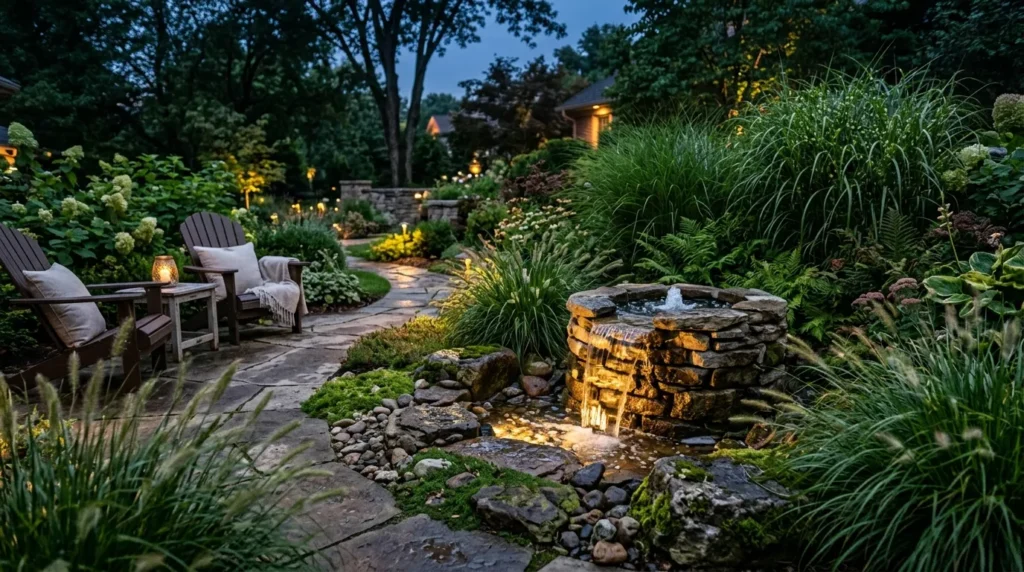
9. Water Feature Glow
Quick Benefits
- Highlights movement
- Creates reflections
- Adds nighttime atmosphere
- Turns a feature into a focal point
- Works with ponds and fountains
Why It Works
Water naturally interacts with light.
A fountain, pond, stream, or small water feature can become especially attractive when illuminated carefully.
Moving water creates reflections and changing patterns that add visual interest without requiring additional decoration.
The effect can be subtle.
You don’t necessarily need bright underwater lighting.
Light directed toward the water from nearby landscaping can sometimes create a more natural appearance.
How To Style It
Position fixtures where they highlight movement and reflections.
Use outdoor-rated equipment specifically designed for the environment.
For ponds or water features with electrical components, follow all safety requirements and manufacturer instructions.
Avoid creating glare that makes it difficult to see the water’s surface.
Surround the feature with low planting or textured landscaping to create a layered composition.
A small fountain surrounded by greenery and softly illuminated stones can become a beautiful nighttime focal point.
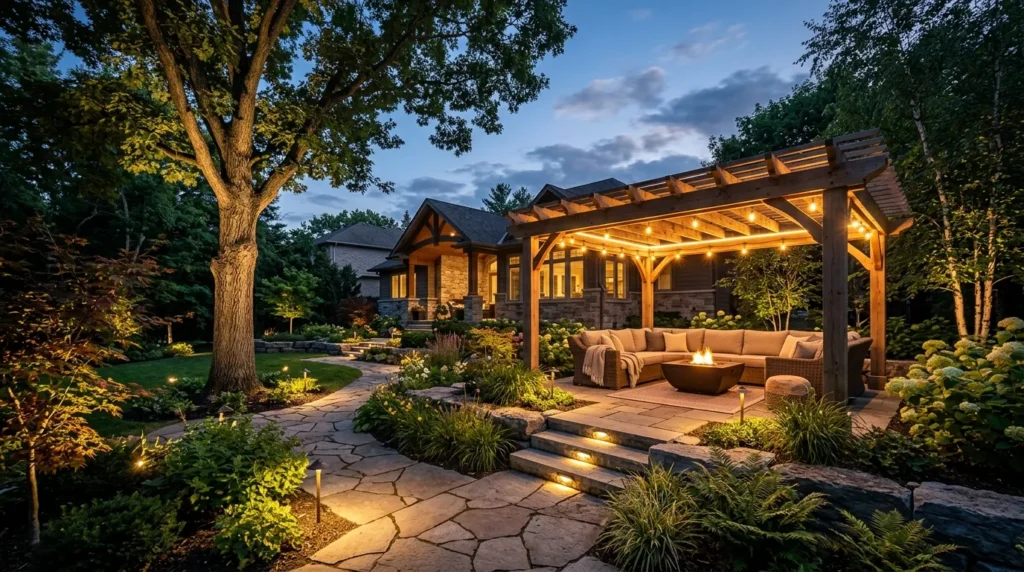
10. Layered Landscape Lighting
Quick Benefits
- Creates a cohesive backyard
- Balances practical and decorative light
- Highlights multiple landscape features
- Creates depth
- Makes the yard feel professionally planned
Why It Works
The most successful outdoor lighting plans rarely depend on one type of fixture.
Instead, they combine several layers.
Pathway lights provide orientation.
Uplights highlight trees.
Accent lights draw attention to planting beds.
Patio lights create an entertaining zone.
Step lights address elevation changes.
Together, these elements create depth.
The backyard feels illuminated without looking uniformly bright.
How To Style It
Begin by identifying the most important areas of your yard.
Mark the main entrance route, patio, seating area, steps, trees, garden beds, and architectural features.
Then decide which areas need functional lighting and which simply deserve visual emphasis.
Use brighter illumination where people need to see clearly and softer light for decorative features.
Leave some areas darker.
This creates contrast and helps the illuminated features stand out.
Keep fixture styles relatively consistent so the landscape feels connected.
The goal is a backyard that feels naturally illuminated rather than covered in visible lights.
How to Plan Backyard Lighting Before You Buy Fixtures
A little planning can prevent a lot of unnecessary purchases.
Start by walking through the backyard after sunset.
Look at it from the house, patio, driveway, and other areas where you’ll actually spend time.
Identify dark pathways, steps, seating areas, and features you want to highlight.
Then create three categories:
Functional Lighting
Areas where people need enough visibility to move comfortably.
Examples include:
- Steps
- Walkways
- Outdoor kitchens
- Entry areas
- Transitions between surfaces
Accent Lighting
Features that deserve visual attention.
Examples include:
- Trees
- Sculptures
- Garden beds
- Water features
- Architectural walls
Ambient Lighting
Lighting that creates atmosphere.
Examples include:
- String lights
- Lanterns
- Pergola lighting
- Patio fixtures
- Soft wall illumination
This simple classification makes it easier to avoid over-lighting the entire yard.
Warm or Cool Outdoor Lighting?
For many residential landscapes, warmer light creates a comfortable and welcoming atmosphere.
Warm light can complement:
- Natural wood
- Stone
- Brick
- Green foliage
- Beige patios
- Outdoor furniture
Cooler light can appear crisper and may work well in some contemporary settings.
The best choice depends on the architecture and landscape.
If your goal is a relaxed backyard that feels like an extension of the home, a warm, restrained lighting approach is often a natural fit.
Whatever color temperature you choose, consistency matters.
Avoid mixing noticeably different light colors throughout one small area unless the contrast is intentional.
How to Make a Backyard Look Expensive With Lighting
You don’t need dozens of fixtures.
A polished landscape lighting plan usually depends more on placement than quantity.
Highlight Mature Trees
One beautifully illuminated tree can have more impact than several random lights.
Light the Path
A clear route immediately makes the backyard feel more intentional.
Illuminate Vertical Features
Walls, trees, fences, and pergolas add height to the nighttime landscape.
Keep Fixtures Hidden
Whenever possible, position fixtures so the light is visible but the hardware is not the main attraction.
Create Contrast
Allow some areas to remain darker.
Coordinate Finishes
Use fixtures that complement your outdoor furniture, fencing, and architectural materials.
Avoid Excessive Brightness
A backyard that is uniformly bright can lose the atmosphere created by shadows and layered illumination.
Outdoor Lighting Ideas for Small Backyards
Small yards can benefit from landscape lighting just as much as large properties.
In fact, fewer fixtures may be necessary.
Focus on the features that define the space.
A small patio can use string lights overhead and a few subtle pathway fixtures.
A compact garden can use one or two accent lights to highlight a tree or planting bed.
Wall-mounted fixtures can illuminate vertical boundaries without consuming floor space.
If the backyard is narrow, use lighting to emphasize length by drawing the eye toward the far end.
Avoid filling every corner with fixtures.
A smaller landscape often looks better when the lighting plan is simple and intentional.
Common Backyard Landscape Lighting Mistakes
Over-Lighting Everything
Too much light can flatten the landscape and eliminate the contrast that makes nighttime gardens interesting.
Ignoring Glare
Fixtures aimed toward seating areas, windows, or neighboring properties can be uncomfortable.
Using Too Many Fixture Styles
A mixture of unrelated designs can make the landscape look disconnected.
Forgetting Pathway Transitions
Steps, changes in elevation, and transitions between surfaces deserve special attention.
Placing Lights Too Close Together
Overlapping pools of intense light can create a harsh appearance.
Focusing Only on the Patio
The surrounding landscape helps make the patio feel connected to the rest of the yard.
Neglecting Maintenance
Fixtures can become covered with dirt, leaves, or vegetation. Periodic cleaning and trimming helps maintain the intended effect.
Treating Safety Lighting as Decoration
Outdoor electrical installations, especially around pools and water features, require appropriate products, installation methods, and professional attention where necessary.
Frequently Asked Questions
What is the best outdoor lighting for a backyard?
The best approach usually combines several types of lighting rather than relying on one fixture. Path lights can define walkways, uplights can highlight trees, accent lights can emphasize gardens, and ambient fixtures can illuminate patios and seating areas. The right combination depends on the backyard’s layout and how you use the space.
How do I make my backyard look good at night?
Start by identifying the features you want to emphasize. Illuminate pathways, steps, mature trees, planting beds, patios, or water features with subtle layers of light. Avoid making every area equally bright. A mixture of illuminated and darker areas creates more depth and visual interest.
Is warm light better for outdoor landscaping?
Warm lighting is often well suited to residential landscapes because it complements natural materials and creates a relaxed atmosphere. However, the best color temperature depends on your home’s architecture, landscape, and personal preference. Consistency throughout the lighting plan is generally more important than choosing one universal color.
How many landscape lights do I need?
There is no fixed number. The size of the backyard, number of features, fixture brightness, spacing, and desired effect all matter. Begin with essential areas such as walkways and steps, then add accent lighting selectively. It is usually easier to add fixtures gradually than to install too many at once.
Can outdoor lighting make a small backyard look bigger?
Yes. Lighting can draw attention toward the far end of a yard, emphasize vertical features, and create visual depth. Illuminating a pathway or mature plant near the back boundary can encourage the eye to move through the space. Keeping the lighting subtle helps prevent a small yard from feeling visually crowded.
Are solar landscape lights worth using?
Solar lights can be convenient in locations where running wiring would be difficult. Their performance depends on sunlight, battery capacity, weather, and product quality. They can work well for decorative pathway lighting, while wired systems may provide more consistent performance for areas where dependable illumination is important.
Should landscape lights be professionally installed?
Simple outdoor-rated fixtures may be suitable for some homeowner projects when installed according to manufacturer instructions. More complex systems involving electrical wiring, hardwired fixtures, pools, water features, or local code requirements are better handled by a qualified professional. Always use products rated for their intended outdoor environment.
Conclusion
Outdoor lighting can completely change how a backyard feels after sunset.
The key isn’t to make the entire landscape bright. It’s to create layers that guide movement, highlight beautiful features, and make outdoor spaces more comfortable.
Start with the areas that matter most.
Illuminate the main walkway. Add subtle light beneath or around mature trees. Highlight a garden bed. Give the patio a warm glow. If you have steps, make their edges or transitions easy to see. Then look at the backyard from a distance and decide whether another layer would improve the overall balance.
Remember that darkness is part of the design, too.
A softly illuminated tree surrounded by darker planting can be more visually striking than a yard filled with bright fixtures.
Choose outdoor-rated products, keep glare under control, and pay particular attention to safety around stairs, pools, water features, and electrical installations.
You don’t have to transform the entire backyard in one weekend.
Start with one area and build gradually.
With thoughtful placement and a mix of functional, accent, and ambient lighting, your landscape can become just as inviting in the evening as it is during the day.
Related Articles
- 10 Backyard Landscape Design Ideas for a Dream Backyard
- 10 Backyard Privacy Ideas for a More Peaceful Outdoor Space
- 10 Small Backyard Ideas That Make the Most of Limited Space
- 10 Backyard Patio Ideas for Outdoor Entertaining
- 10 Garden Decor Ideas That Feel Like a Resort