
Polymeric Sand vs Regular Concrete Sand: Why Regular Sand Breeds Weeds
Choosing between polymeric sand and regular concrete sand is the most critical decision you will make when installing or maintaining a hardscape. If you have ever wondered why your patio pavers seem to sprout greenery every few months, the answer lies in the composition of the filler material you chose.
Understanding the difference between these two products will save you from the endless cycle of pulling weeds and reapplying loose grit. This article breaks down exactly why one locks out nature while the other acts as a fertile nursery for unwanted growth.
The Core Difference in Composition
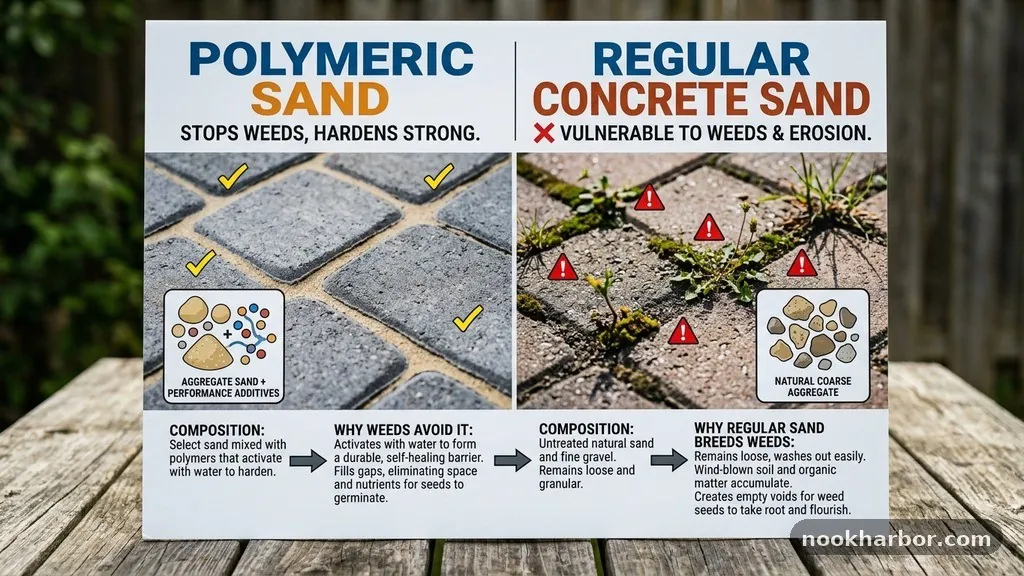
Regular concrete sand is essentially finely crushed rock or natural sand. It consists of loose particles that never bind together, regardless of how much you compact them. Because there is no chemical adhesive, the material remains porous and loose, providing a perfect home for organic matter.
When dust, dirt, and organic debris blow into the gaps between your pavers, they settle into the loose sand. This creates a nutrient-rich layer that is essentially topsoil for seeds.
Polymeric sand is a sophisticated blend of fine sand mixed with specialized chemical additives. These additives are typically polymers, which are substances that react when they come into contact with water.
Once you activate the sand with a light spray from a hose, the polymer binders turn the mixture into a solid, flexible mass. This chemical bond creates a barrier that is far too dense for weed seeds to penetrate or establish roots.
Why Regular Sand Breeds Weeds
The primary reason regular sand fails is its inability to resist the elements. Every time it rains, the water flows through the gaps, carrying fine silt and organic particles with it.
Over time, the volume of sand in the joint decreases as it washes away, creating deeper cavities. These cavities are perfect traps for seeds that blow in on the wind or are dropped by birds.
Once a seed finds its way into the damp, loose sand, the environment is ideal for germination. The sand holds moisture long enough for the seed to sprout, and the lack of a solid surface means the roots can easily reach the base layer beneath your pavers.
Because the sand is not locked, there is no physical barrier to inhibit growth. You are essentially providing a garden bed directly inside your driveway or walkway.
The Mechanism of Weed Prevention
Polymeric sand functions by physically sealing the joint. When you sweep the product into the gaps, it sits as a dry, loose powder.
Once activated with water, the polymers expand and then harden as they dry, effectively gluing the sand particles to the walls of the pavers. This creates a rigid, non-porous seal that extends from the top of the paver down to the bedding layer.
Because the joint is now a solid mass, there is no space for organic matter to collect. Seeds that land on the surface have nowhere to go; they simply sit on top of the hardened sand until they are blown away or swept off.
Without the ability to bury themselves in a loose medium, these seeds cannot access the moisture and nutrients they need to grow. This is the fundamental reason why professional installers prefer it for high-end projects.
Comparing Material Performance
To understand why contractors often steer clients toward one product over the other, it is helpful to look at how they perform under real-world conditions. While regular sand is cheaper upfront, the long-term maintenance costs associated with weeding and topping off the joints often outweigh the initial savings.
| Feature | Regular Concrete Sand | Polymeric Sand |
|---|---|---|
| Binding Agent | None (Loose) | Chemical Polymers |
| Weed Resistance | Poor | Excellent |
| Erosion Potential | High | Low |
| Maintenance Needs | Frequent replenishment | Minimal |
The table above illustrates that while regular sand is a simpler material, it lacks the functional properties required to maintain a pristine aesthetic. If you value your time, the higher cost of the polymeric product is essentially an investment in labor reduction.
The Role of Joint Width and Drainage
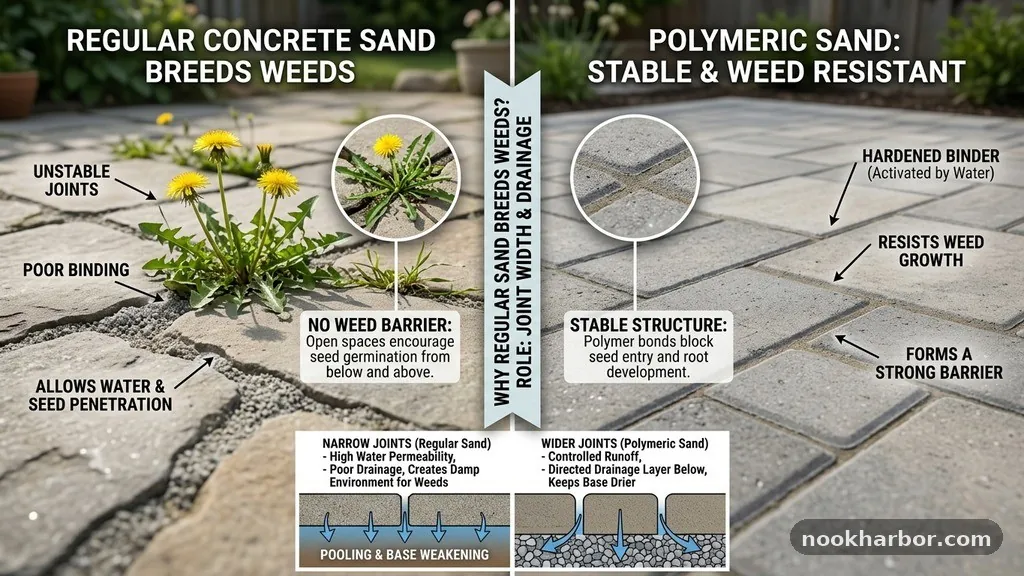
The success of your installation depends heavily on the width of the gaps between your pavers. If the joints are too wide, even the best polymeric sand can struggle to maintain a structural bond.
Most manufacturers recommend specific joint widths—usually between 1/8 inch and 3/4 inch—to ensure the polymer can bridge the gap effectively. If the joints are wider than the manufacturer’s recommendation, the sand may crack or crumble under foot traffic.
Poor drainage is another factor that often causes homeowners to blame the sand when the problem is actually the base layer. If water pools under your pavers due to poor soil grading, the constant moisture will eventually break down the polymer bonds.
Ensure your hardscape has a proper slope—typically a 1% to 2% grade—to direct water away from the structure. When the sub-base is well-drained, the sand stays dry and the weeds stay away.
Challenges with Polymeric Sand
While it is superior at preventing weeds, this material is not without its own specific challenges. The most common issue is the dreaded “haze” that can appear on the surface of your pavers if the product is not installed correctly.
This happens when the fine polymer dust is not completely swept off the paver surface before the water is applied. Once the water hits the surface, the residue turns into a sticky glue that is notoriously difficult to remove.
To avoid this, you must be meticulous during the cleaning phase. Use a leaf blower on a low setting to remove every trace of dust from the textured surface of the stones.
Some installers also use a damp cloth or a specialized brush to ensure the pavers are perfectly clean before the final misting. If you leave a thin layer of sand on top, you will be scrubbing for days to get it off.
Why It Is Rarely Used in Florida
You might notice that in certain climates, such as Florida, some contractors express hesitation about using traditional polymeric sand. This is largely due to the extreme frequency of afternoon storms and high humidity levels.
If the sand is not given a sufficient window of dry weather to cure, the polymers can fail to set properly. Instead of a hard, locked joint, you end up with a gummy, unstable mess that attracts mold and mildew.
In these high-moisture environments, installers often look for specialized “all-weather” or fast-setting products designed to cure quickly. Even then, the risk of a sudden downpour washing away the polymers before they have a chance to bond is a real concern.
If you live in a region with high rainfall, you must plan your installation around the local weather forecast. Always check the manufacturer’s technical data sheet for the required “dry time” before you buy.
The Correct Installation Process
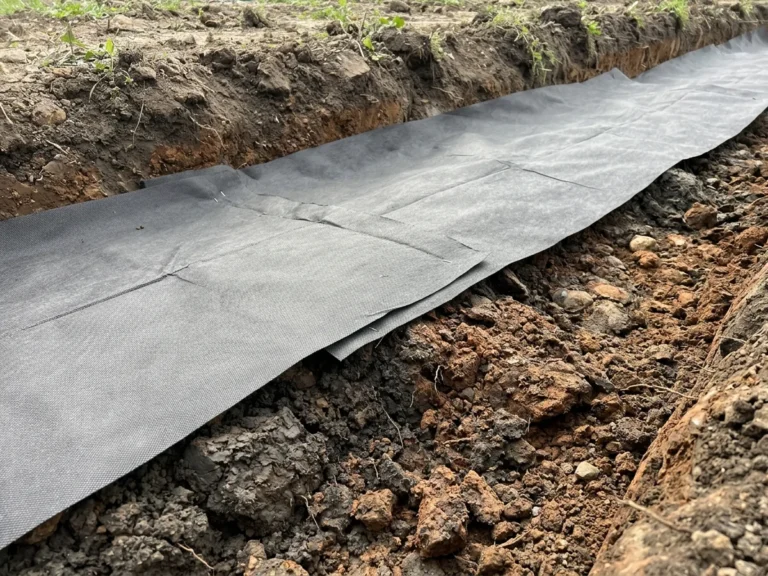
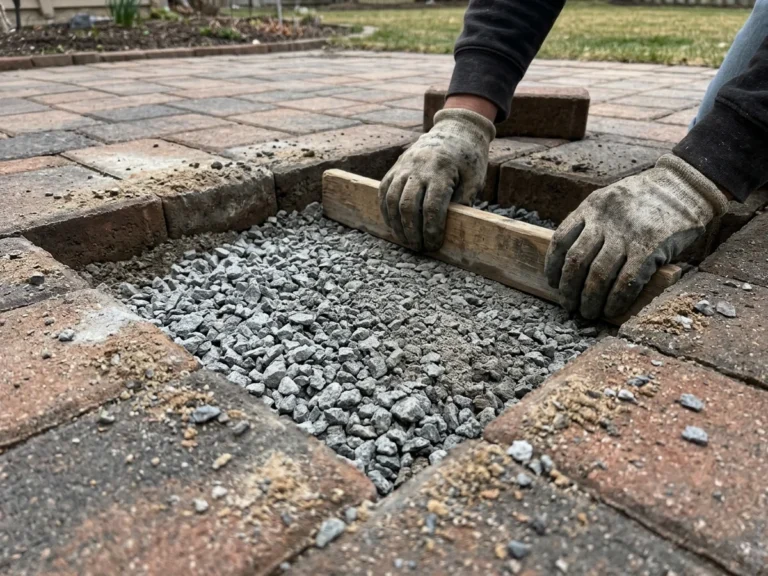
The secret to a long-lasting hardscape is the preparation of the base. Before you even think about the sand, you must ensure the base layer of crushed stone is compacted to at least 95% density.
If the base shifts, the pavers will shift, and no amount of sand—polymeric or otherwise—will hold the joints together. Once the pavers are laid, use a plate compactor to seat them firmly into the bedding layer.
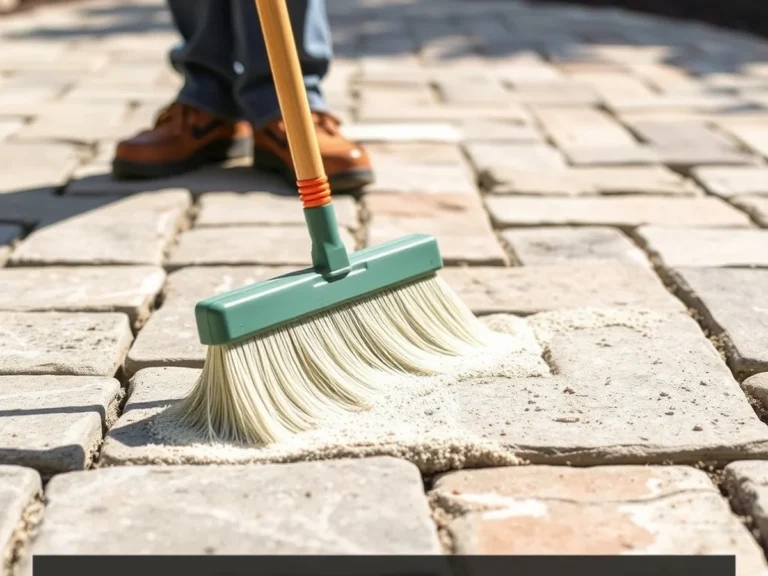
Only after the pavers are perfectly set should you begin the filling process. Pour the sand over the area and sweep it into the joints using a specialized broom. Work the sand in multiple directions to ensure it reaches the bottom of the gap.
After the joints are full, use a leaf blower to remove all excess dust. Finally, use a fine mist to activate the polymers, being careful not to soak the joints to the point of pooling water.
Common Mistakes to Avoid
Many DIYers fail because they try to save money by using a pressure washer to clean the joints. This is a massive mistake, as the high-pressure water will blast out the sand you just installed and potentially undermine the stability of the entire project. If you need to clean your pavers, use a gentle hose spray or a stiff-bristled brush.
Another common error is using the wrong sand for the wrong joint size. If you have large gaps between stones, you cannot use standard polymeric sand; you need a product specifically formulated for wide joints.
Always read the product label to see the maximum joint width it can support. For more information on proper drainage and structural integrity, you can visit the Interlocking Concrete Pavement Institute for industry-standard guidelines.
Frequently Asked Questions
Is it possible to put polymeric sand over old, existing regular sand?
You should never apply new sand directly over the top of old, dirty sand. The old material is likely contaminated with organic debris that will prevent the new polymers from bonding to the sides of the pavers. You must remove the old sand to a depth of at least one inch before installing the new product.
Will weeds grow through polymeric sand if I ignore it for a few years?
Even the best polymeric sand can eventually succumb to nature if it is neglected for long periods. If dirt and organic mulch are allowed to sit on top of the joints for years, seeds can germinate in that layer of debris. While they won’t be rooted deep in the joint, you might see small surface weeds that are easily pulled.
Is polymeric sand toxic to my pets or garden?
Most standard polymeric sands are non-toxic once they have fully cured and dried. However, you should keep pets and children off the area while you are applying the water and during the initial drying phase. Always check the specific safety data sheet for the brand you purchased, as some specialized industrial products may have different chemical profiles.
Can I use polymeric sand on a driveway that isn’t perfectly stable?
If your driveway is shifting or sinking, you have a structural issue that sand cannot fix. Polymeric sand is designed to be rigid, and if the pavers move, the sand will crack. You must repair the base layer and ensure the pavers are stable before you invest in high-quality joint filler.
Conclusion
Choosing between polymeric sand and regular concrete sand comes down to your priorities regarding maintenance and longevity. Regular sand is an inexpensive, traditional option, but its tendency to wash away and harbor weeds makes it a poor choice for most modern homeowners. Polymeric sand offers a clean, stable, and weed-resistant solution that keeps your hardscape looking professional for years.
By investing the time to install the product correctly—ensuring clean joints, proper compaction, and a dry window for curing—you eliminate the most frustrating part of patio ownership. If you are tired of the constant weeding, switching to a polymer-based filler is the most effective step you can take for your outdoor space. Start by assessing your joint widths and local climate, then choose a high-quality product to lock in your hardscape for the long haul.