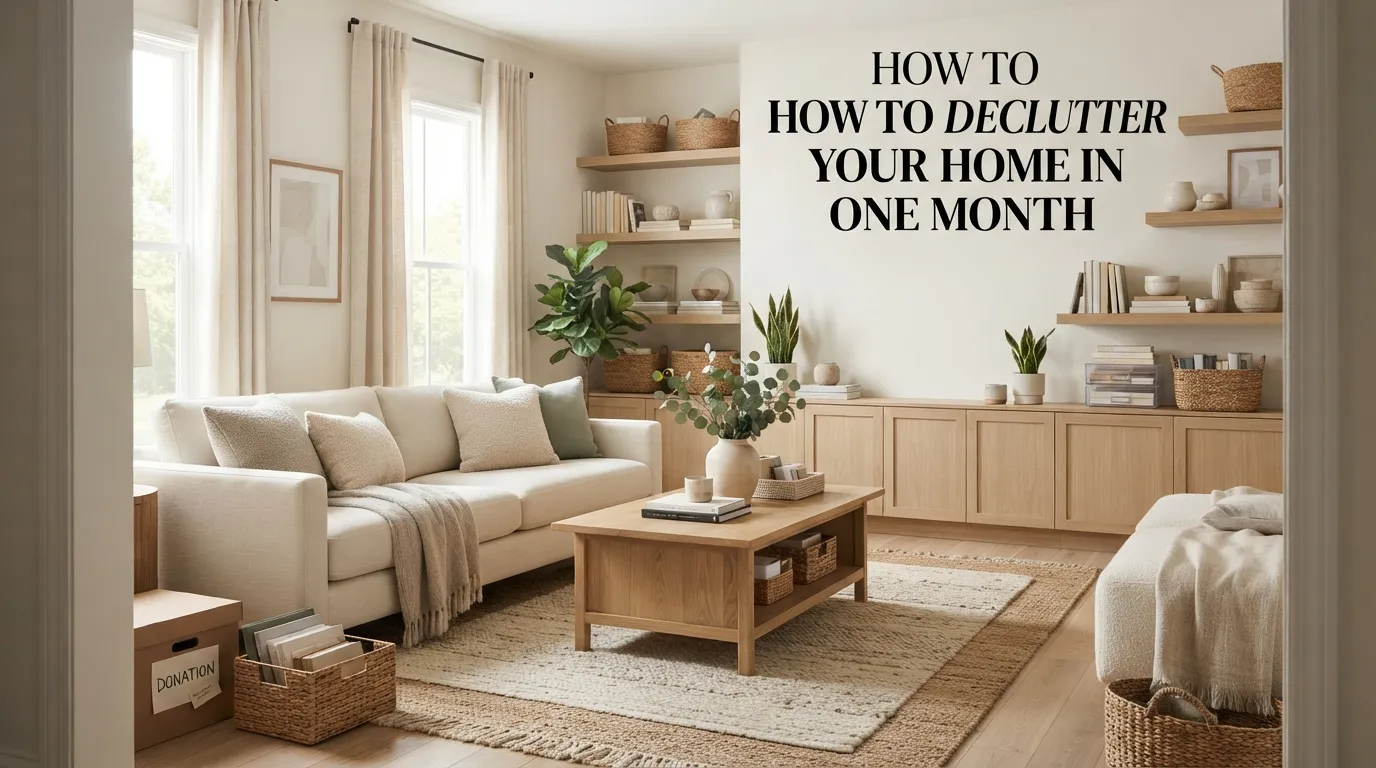
How to Declutter Your Home in One Month
Decluttering an entire home can feel overwhelming when every room seems to contain a different pile, drawer, closet, or cabinet waiting for attention. The good news is that you don’t need to empty the house in one weekend to make meaningful progress.
A month gives you enough time to work systematically without turning your home upside down.
The key is having a simple plan. Instead of walking from room to room whenever you find a spare moment, divide the month into manageable stages. Focus on one category or area at a time, make quick decisions, and remove unwanted items from the house before they have a chance to return to the same drawer.
I’ve noticed that decluttering becomes much easier when the goal isn’t a perfectly minimalist home. The goal is a home where the things you own have a purpose, a place, or genuine meaning.
That distinction matters.
You don’t need to get rid of everything you rarely use. You also don’t need to keep something simply because it was expensive, once belonged to someone else, or might become useful someday.
A practical decluttering process asks better questions: Do I use this? Do I like having it? Does it fit my current life? Would I choose to bring it home today?
Over four weeks, you can work through the major areas of your home while keeping everyday life moving.
This guide breaks the process into four simple weekly phases, with specific tasks for bedrooms, bathrooms, kitchens, living areas, storage spaces, paperwork, and miscellaneous clutter. It also includes practical rules for deciding what stays, what goes, and what deserves more time.
The result isn’t an empty home.
It’s a home with more breathing room and fewer things competing for your attention.
Table of Contents
1. Create Your Plan
Set realistic goals and prepare simple sorting supplies.
2. Declutter Entryways
Clear the first areas you see when entering your home.
3. Simplify Bedrooms
Reduce clothing, accessories, and bedside clutter.
4. Clear Bathrooms
Remove expired, unused, and duplicate products.
5. Organize the Kitchen
Create more usable space by reducing unnecessary kitchen items.
6. Refresh Living Areas
Clear surfaces, shelves, drawers, and entertainment clutter.
7. Tackle Storage
Work through closets, utility areas, garages, and miscellaneous storage.
8. Sort Paperwork
Reduce unnecessary papers and create a simple filing system.
9. Remove Outgoing Items
Make sure donations, recycling, trash, and returns leave the home.
10. Maintain Your Progress
Build simple habits that prevent clutter from returning.
1. Create Your Plan
Quick Benefits
- Makes decluttering manageable
- Prevents decision fatigue
- Creates measurable progress
- Reduces unnecessary mess
- Gives every week a clear purpose
Why It Works
Decluttering becomes much less intimidating when the entire home isn’t treated as one enormous project.
Instead, divide the month into four weekly phases.
Week 1: Visible clutter and frequently used rooms
Week 2: Bedrooms and bathrooms
Week 3: Kitchen and living areas
Week 4: Storage, paperwork, and final cleanup
You can adjust the order according to your home.
The important part is creating boundaries.
A mistake many homeowners make is pulling everything out of a closet before deciding what to do with it. That can create a bigger mess than the one you started with.
Work in small sections.
A drawer.
One shelf.
One cabinet.
One category of clothing.
Finish that section before moving on.
How To Style It
You don’t need an elaborate organizing system to begin.
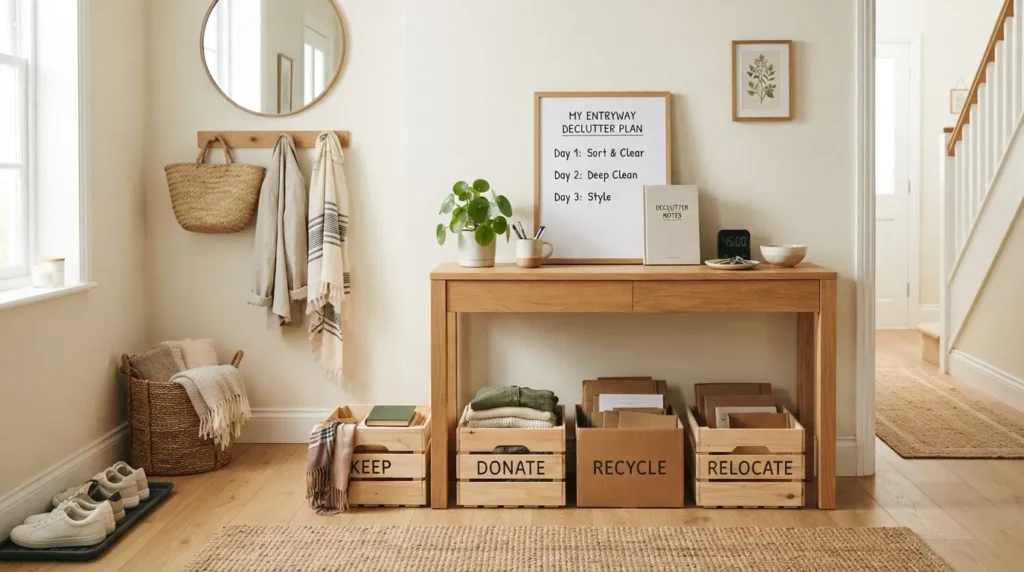
Gather:
- Trash bags
- Donation boxes or bags
- Recycling containers
- A box for items that belong elsewhere
- Cleaning cloths
- Labels if helpful
- A timer
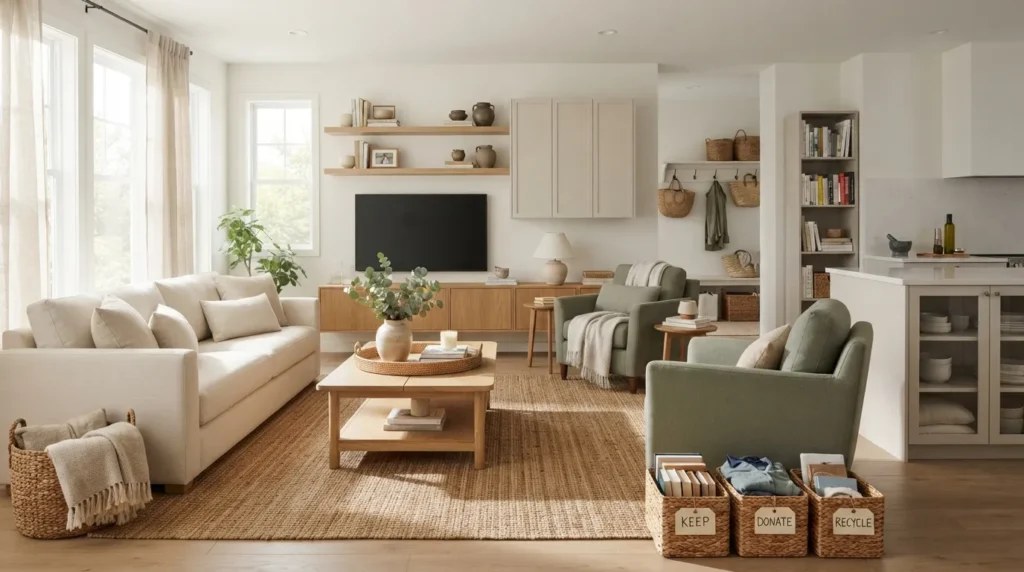
Create four basic categories:
Keep
Items that belong in your home and support your current life.
Donate
Useful items you no longer want.
Recycle or Trash
Items that are damaged, expired, unusable, or unsuitable for donation.
Relocate
Items that belong somewhere else in the home.
Keep the system simple.
The fewer decisions you make about the sorting process itself, the more energy you have for the actual decluttering.
2. Declutter Entryways
Quick Benefits
- Creates an immediate sense of order
- Makes mornings easier
- Reduces visible clutter
- Improves storage efficiency
- Establishes momentum
Why It Works
Entryways often collect items because everyone passes through them.
Shoes, bags, mail, jackets, umbrellas, keys, packages, and miscellaneous objects can quickly accumulate.
Clearing this area first gives you a visible result early in the process.
It also establishes a useful rule for the rest of the house: frequently used items deserve convenient storage, while rarely used items don’t need prime real estate.
How To Style It
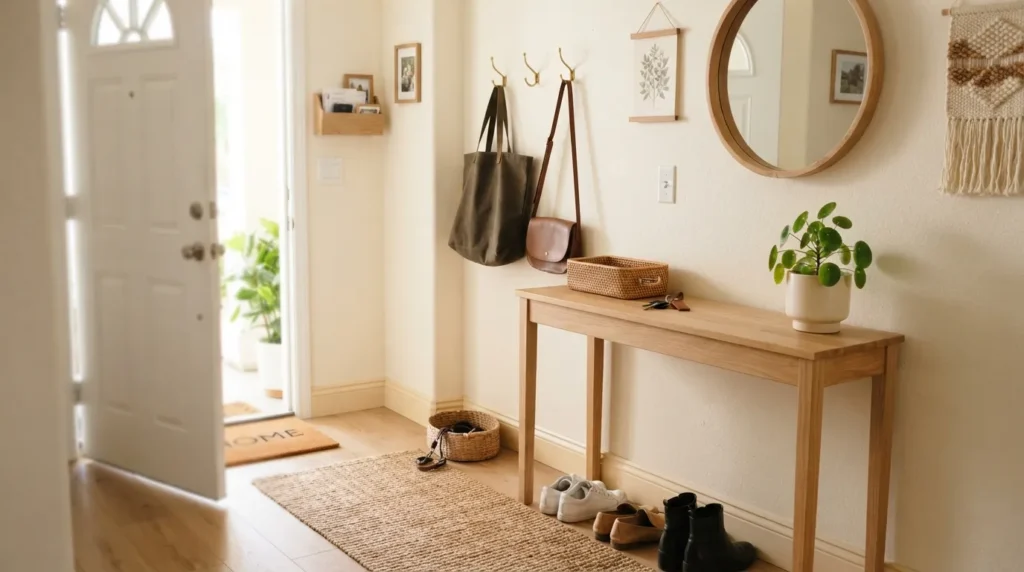
Start with the floor.
Remove shoes and bags that don’t belong there.
Then clear the entry table, console, bench, or nearby shelf.
Keep only the items that genuinely belong in the area.
Create simple zones:
- Daily shoes
- Frequently used bags
- Keys
- Incoming mail
- Seasonal accessories
If possible, use hooks for bags and coats rather than allowing them to collect on chairs or floors.
Place a small basket near the entrance for items that frequently travel between rooms.
At the end of the week, return everything to its designated location.
3. Simplify Bedrooms
Quick Benefits
- Creates a calmer sleeping environment
- Makes clothing easier to manage
- Reduces visual clutter
- Improves storage
- Makes cleaning simpler
Why It Works
Bedrooms often contain more possessions than we realize.
Clothing that no longer fits, accessories that haven’t been worn in years, extra bedding, old shoes, and miscellaneous items can quietly consume valuable storage.
The bedroom is also one of the easiest places to notice the psychological effect of clutter because it is associated with rest.
The goal isn’t an empty bedroom.
It’s a room where the things you see and use support relaxation rather than creating another list of tasks.
How To Style It
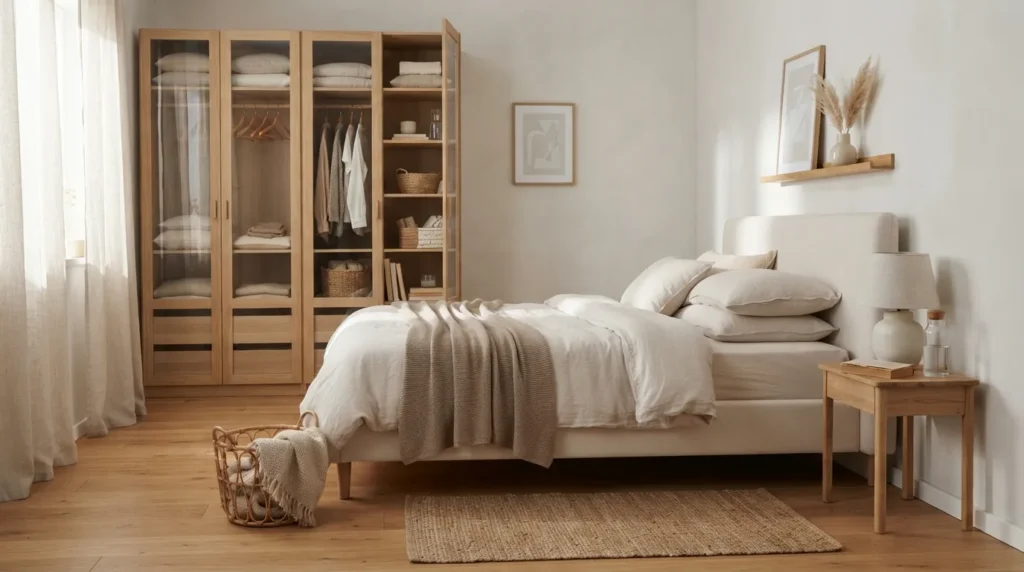
Start with clothing.
Remove everything from one small category at a time.
For each item, ask:
- Does it fit?
- Have I worn it recently?
- Is it comfortable?
- Does it suit my current lifestyle?
- Would I choose it again?
Create a separate pile for items that require repair.
Set a deadline for repairs.
If something remains in the repair pile beyond that deadline, reconsider whether it’s worth keeping.
Then move to shoes, accessories, bedside tables, and extra linens.
Keep frequently used items easy to reach.
Store seasonal items separately when appropriate.
4. Clear Bathrooms
Quick Benefits
- Creates more usable storage
- Makes cleaning easier
- Removes expired products
- Reduces duplicate purchases
- Keeps daily routines simpler
Why It Works
Bathrooms are natural accumulation zones for products.
A half-used bottle here, an old sample there, and several duplicate toiletries can quickly fill cabinets and drawers.
Bathroom decluttering also has a practical safety component because some products have expiration dates or specific storage requirements.
The best approach is to inspect products rather than simply rearranging them.
How To Style It
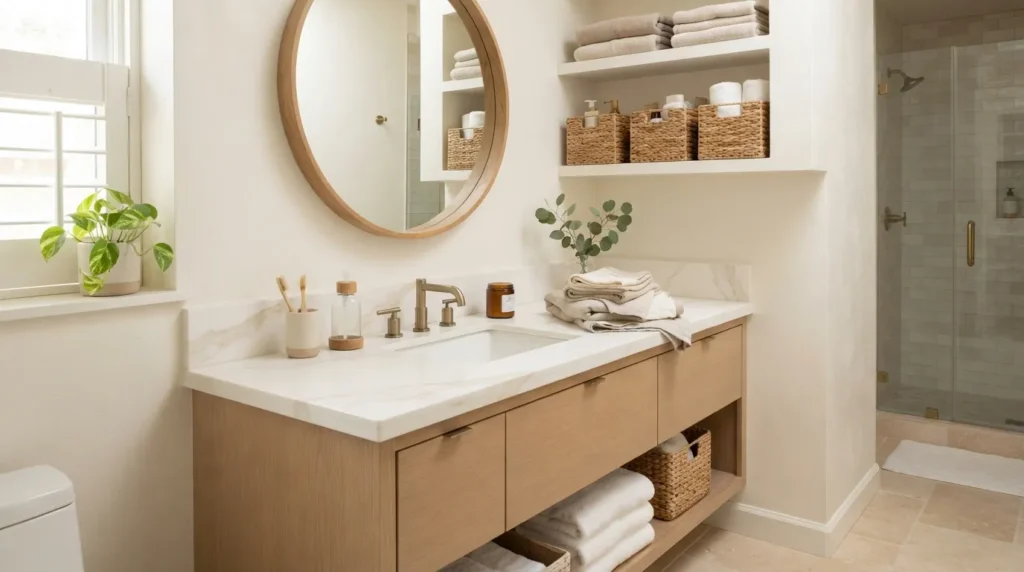
Start with one cabinet or drawer.
Remove everything.
Group similar products together.
Check expiration information where applicable.
Discard products that are expired, contaminated, damaged, or no longer appropriate for use according to their labels.
Then identify duplicates.
If you have several versions of the same type of product, decide which ones realistically belong in your routine.
Keep daily products accessible.
Move occasional-use items into less convenient storage.
Avoid buying new containers until you know exactly what needs to be stored.
A decluttered bathroom often needs fewer organizers than expected.
5. Organize the Kitchen
Quick Benefits
- Creates more cabinet space
- Makes cooking easier
- Reduces duplicate items
- Improves counter space
- Makes everyday tools easier to find
Why It Works
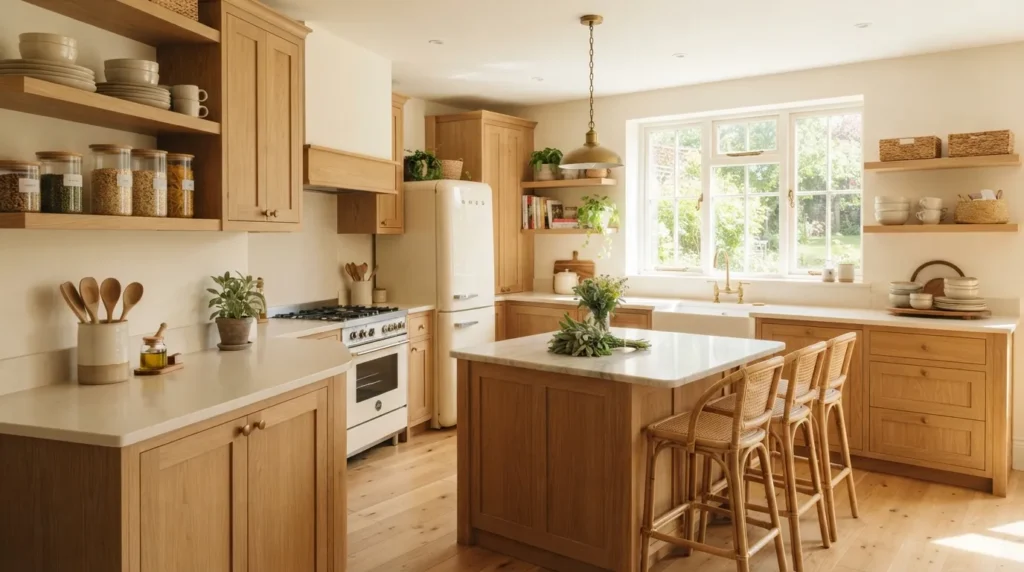
Kitchen clutter often comes from duplicates.
Three similar spatulas.
Several water bottles.
Too many food storage containers without matching lids.
Gadgets used once.
Mugs that never make it into regular rotation.
Because kitchens are highly functional spaces, reducing unnecessary items can have an immediate practical effect.
How To Style It
Start with one category rather than an entire kitchen.
Good starting points include:
- Food storage containers
- Mugs
- Water bottles
- Baking supplies
- Cooking utensils
- Small appliances
- Serving dishes
Match containers with their lids.
Recycle or discard damaged pieces according to local guidelines.
For appliances, consider how frequently each one is used and whether another tool already performs the same job.
Clear the countertops last.
Countertop clutter becomes easier to evaluate after cabinets and drawers have been simplified.
6. Refresh Living Areas
Quick Benefits
- Creates more visual breathing room
- Makes cleaning easier
- Improves furniture layouts
- Highlights meaningful decor
- Reduces surface clutter
Why It Works
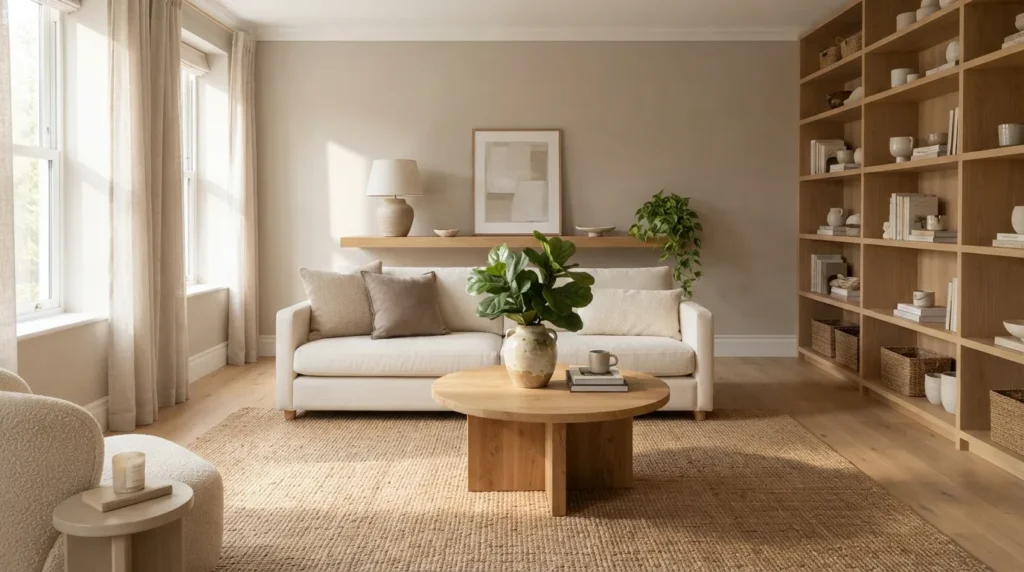
Living rooms often become the collection point for everything that doesn’t have a clear home.
Books, toys, mail, chargers, blankets, remote controls, decorative objects, and unfinished projects can accumulate on visible surfaces.
Decluttering this room isn’t about removing personality.
It’s about allowing the pieces you genuinely enjoy to become more noticeable.
How To Style It
Start with the obvious surfaces:
- Coffee table
- Console
- Shelves
- Side tables
- Media cabinet
Remove everything.
Sort items by category.
Return only what belongs there.
For shelves, use a combination of books, artwork, plants, and meaningful objects.
Leave some open space between groups.
For the coffee table, a simple tray can gather frequently used objects without making the entire surface look scattered.
Don’t reorganize furniture until the room is decluttered.
Once unnecessary objects are gone, the best layout often becomes easier to see.
7. Tackle Storage
Quick Benefits
- Reduces hidden clutter
- Frees valuable storage
- Makes seasonal items easier to find
- Prevents forgotten possessions
- Finishes difficult areas
Why It Works
Storage spaces are often where difficult decisions go to disappear.
The closet gets full, so something moves to the basement.
The basement gets full, so something goes into the garage.
Eventually, storage becomes a holding area rather than a useful system.
Week four is the time to address these spaces.
How To Style It
Choose one storage zone at a time.
Work through:
- Linen closets
- Coat closets
- Laundry areas
- Utility cabinets
- Garage storage
- Basement storage
- Attic storage
- Holiday decorations
Ask why each item is being stored.
If the answer is “just in case,” pause before automatically keeping it.
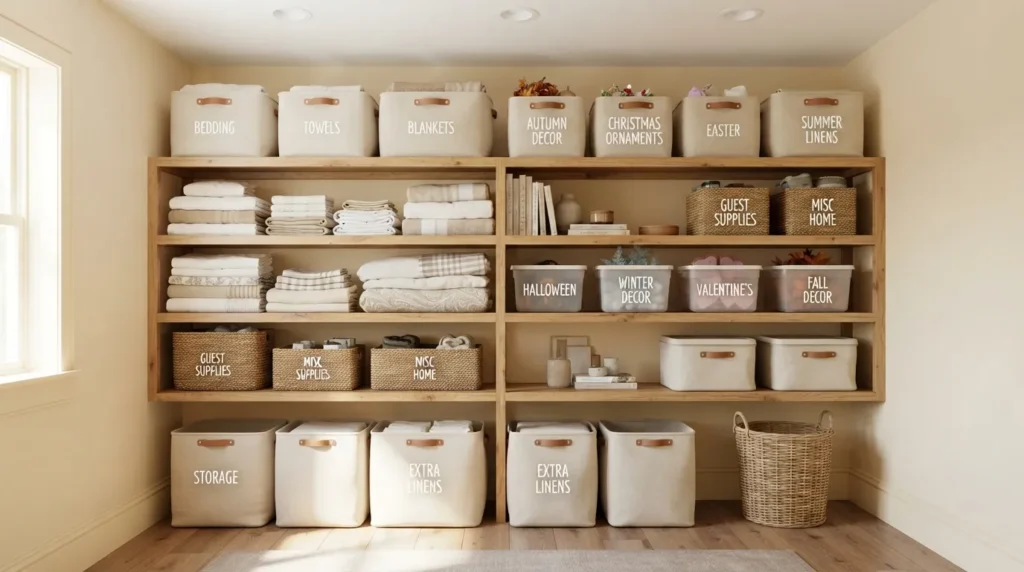
For seasonal items, use clearly labeled containers.
Group similar possessions together.
Avoid buying large amounts of storage equipment before decluttering.
Storage products organize possessions.
They don’t decide which possessions deserve space in your home.
8. Sort Paperwork
Quick Benefits
- Reduces paper piles
- Makes important documents easier to find
- Clears desk and counter space
- Creates a repeatable system
- Prevents unnecessary accumulation
Why It Works
Paper clutter can feel particularly stressful because some documents are important while others are disposable.
The solution is separating the two.
Don’t make every piece of paper a permanent possession.
At the same time, don’t discard important records simply because you want a cleaner desk.
How To Style It
Create categories such as:
Action
Items that require a response or follow-up.
Keep
Important documents that require retention.
Reference
Information that may be useful but doesn’t need to remain on the main desk.
Recycle
Unneeded papers that can be safely discarded.
For sensitive documents, use an appropriate shredding method.
Digitize documents only when that approach makes sense and you have a secure backup.
For important records, follow applicable retention requirements and professional guidance rather than relying on a generic decluttering rule.
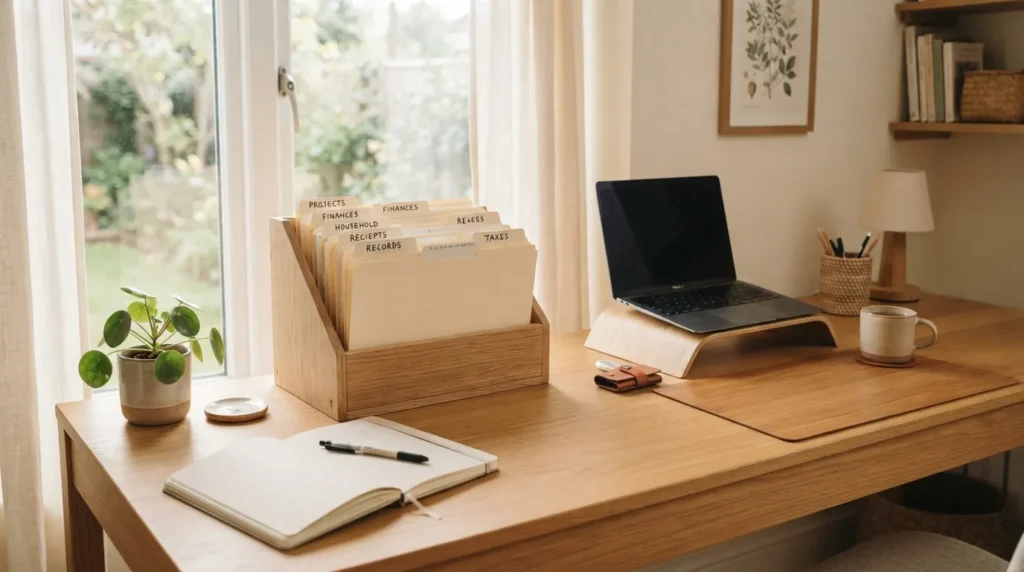
Once sorted, keep paperwork in a simple labeled system.
9. Remove Outgoing Items
Quick Benefits
- Prevents clutter from returning
- Creates immediate visible progress
- Clears donation bags
- Completes unfinished decisions
- Makes the final week satisfying
Why It Works
One of the biggest decluttering mistakes is creating bags of unwanted items and leaving them inside the house for weeks.
The items are technically sorted, but they still occupy space.
Worse, some eventually find their way back into closets.
Create an exit system.
Once something is designated for donation, recycling, return, or disposal, move it toward its final destination.
How To Style It
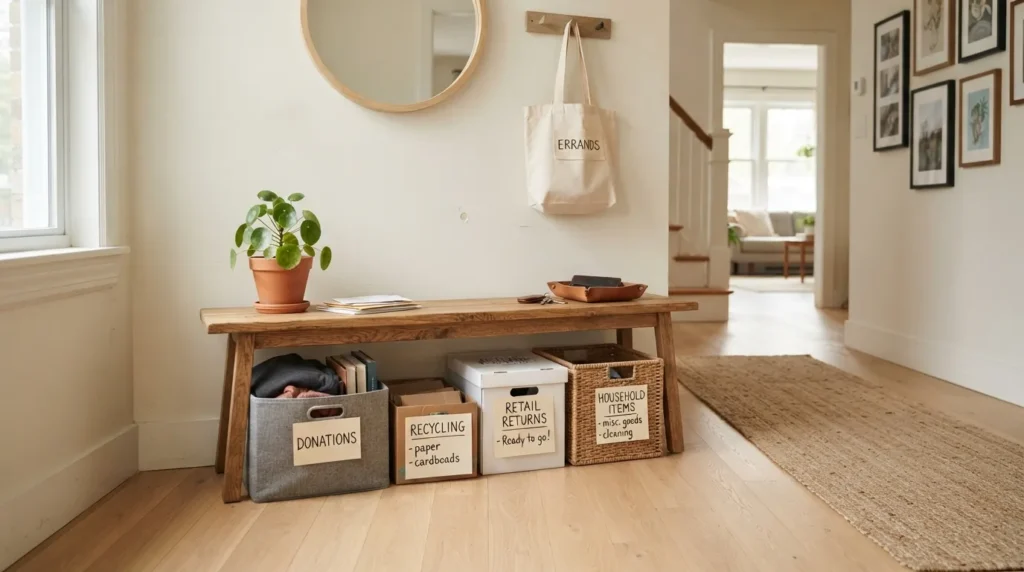
Keep outgoing items in a clearly defined area.
Create separate containers for:
- Donations
- Recycling
- Returns
- Trash
- Items going to another person
Schedule donation drop-offs rather than allowing bags to sit indefinitely.
Handle returns before the deadline.
Recycle materials according to local rules.
Dispose of damaged items appropriately.
The final step of decluttering isn’t deciding what leaves.
It’s actually getting it out.
10. Maintain Your Progress
Quick Benefits
- Prevents clutter from rebuilding
- Makes future cleaning easier
- Reduces decision fatigue
- Keeps rooms manageable
- Turns decluttering into a routine
Why It Works
A one-month decluttering project works best when it changes what happens afterward.
You don’t need to spend every weekend reorganizing your house.
Small habits can prevent another large buildup.
The goal is maintenance, not constant decluttering.
How To Style It
Create a few simple rules.
One In, One Out
When you buy something new in a category with limited storage, consider whether an older item can leave.
Five-Minute Reset
Spend a few minutes each evening returning misplaced items.
Weekly Surface Check
Clear kitchen counters, bathroom surfaces, entryways, and living room tables.
Monthly Mini Declutter
Choose one drawer, shelf, or small category each month.
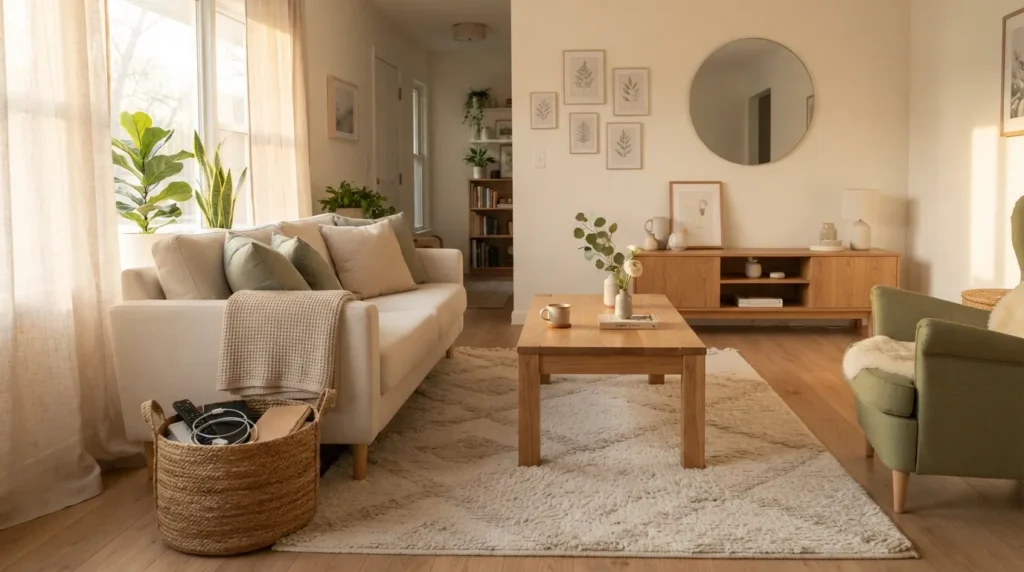
Donation Basket
Keep a designated place for items you already know you no longer want.
These habits keep the amount of clutter manageable without turning organization into a full-time project.
Your Four-Week Decluttering Schedule
Week 1: Visible Clutter
Focus on areas that create an immediate visual difference.
Day 1
Entryway and shoes
Day 2
Living room surfaces
Day 3
Paper piles and mail
Day 4
Bedroom surfaces
Day 5
Miscellaneous drawers
Day 6
Catch-up day
Day 7
Remove outgoing items
Don’t aim for perfection.
Use this first week to establish momentum.
Week 2: Bedrooms and Bathrooms
Day 8
Everyday clothing
Day 9
Shoes and accessories
Day 10
Closets
Day 11
Bedside tables and drawers
Day 12
Extra linens
Day 13
Bathroom cabinets
Day 14
Bathroom drawers and products
Finish the week by removing donations and trash.
Week 3: Kitchen and Living Spaces
Day 15
Food storage containers
Day 16
Cooking utensils
Day 17
Mugs and dishes
Day 18
Small appliances
Day 19
Pantry and food storage
Day 20
Living room shelves
Day 21
Media and miscellaneous items
Use this week to simplify the areas your household uses most often.
Week 4: Storage and Final Cleanup
Day 22
Linen and utility storage
Day 23
Coats and seasonal items
Day 24
Garage or basement
Day 25
Holiday and occasional items
Day 26
Paperwork
Day 27
Donation and recycling run
Day 28
Final home reset
Day 29
Review problem areas
Day 30
Create your maintenance routine
Thirty days gives you enough flexibility to handle busy days without abandoning the project.
How To Decide What To Keep
Decluttering becomes easier when you have consistent decision criteria.
Ask yourself:
Do I Use It?
Frequent use is a strong reason to keep something.
Do I Enjoy It?
Not everything needs to be practical.
Something meaningful or beautiful can deserve space.
Does It Fit My Current Life?
Your possessions can reflect who you are today rather than an older version of your lifestyle.
Would I Buy It Again?
This is especially useful for clothing, decor, kitchen gadgets, and miscellaneous purchases.
Do I Have Another One?
Duplicates are often easy candidates for reduction.
Is It Worth the Space?
Storage is limited.
An item can be useful and still not justify the amount of space it occupies.
What Not To Do While Decluttering
Avoid turning the process into a massive renovation.
Don’t pull every possession out at once.
Don’t buy dozens of organizers before sorting.
Don’t make decisions when you’re exhausted.
Don’t keep everything because you might use it someday.
Don’t throw away important documents without checking their significance.
Don’t create donation bags without planning where they are going.
And don’t compare your home with highly styled images online.
Your home has its own needs.
A useful decluttering system works around your household rather than forcing your household into someone else’s version of minimalism.
FAQ
Can I really declutter my whole house in one month?
Yes, if the goal is a meaningful reduction rather than achieving a perfectly minimalist home. Divide the house into manageable zones and work consistently throughout the month. Larger homes or households with many possessions may require more time, so use the schedule as a framework rather than a strict deadline.
What is the fastest way to start decluttering?
Start with a small, visible area such as an entryway, countertop, drawer, or coffee table. Remove everything from that specific area, sort the items, clean the surface, and return only what belongs there. Finishing a small area creates momentum without producing a house-wide mess.
How do I declutter without getting rid of things I need?
Use practical questions before making decisions. Consider how often you use the item, whether it has a clear purpose, whether you already own something similar, and how difficult it would be to replace. For important documents, specialized equipment, and sentimental belongings, take more time before deciding.
How do I stop clutter from coming back?
Create simple maintenance habits. Return items after use, process mail regularly, keep an outgoing donation area, and review one small category each month. Reducing unnecessary purchases also helps because fewer new possessions enter the home.
What should I declutter first?
Start with visible, low-emotional-clutter areas such as entryways, countertops, junk drawers, duplicate kitchen items, expired bathroom products, and clothing that clearly no longer fits. Save highly sentimental belongings for later, when you’ve developed confidence with the decision-making process.
Should I organize before decluttering?
Declutter first and organize afterward. Organizing items you don’t actually want often creates more work. Once unnecessary belongings have left, you’ll have a clearer picture of the storage space and systems your home actually needs.
How do I declutter sentimental items?
Save sentimental belongings for the end. Give yourself more time with these decisions and consider whether the memory can be preserved through a photograph, a small keepsake collection, or another meaningful method. You don’t need to discard everything sentimental to create a less cluttered home.
Conclusion
Decluttering your home in one month isn’t about creating a perfectly empty house.
It’s about making deliberate decisions about what deserves your time, space, and attention.
A four-week plan gives you structure without requiring an exhausting weekend-long cleanout. Start with visible clutter, move through bedrooms and bathrooms, simplify the kitchen and living spaces, then finish with storage and paperwork.
Work in small sections.
Finish what you start.
Move unwanted items out of the house.
Most importantly, don’t measure success by how many bags you fill.
Measure it by how much easier your home becomes to use.
A clear kitchen counter gives you more room to cook.
A simplified closet makes getting dressed easier.
An organized entryway makes leaving the house smoother.
A less crowded living room gives your favorite furniture and decor more room to stand out.
Once the month ends, keep the system simple. A few minutes of daily resetting and a small monthly decluttering session can prevent another major buildup.
Start with one drawer today.
Small decisions add up, and a month of consistent progress can create a home that feels noticeably lighter, calmer, and easier to live in.
Related Articles
- How to Declutter Your Home Without Feeling Guilty
- How to Organize a Small Bedroom Without Extra Cabinets
- How to Organize a Small Bedroom Without Spending Money
- 10 Small Living Room Ideas with Modern Comfort
- 10 Home Organization Ideas for a Clutter-Free Space