
Hand Tamper vs Vibratory Plate Compactor: Can You Really Hand-Tamp a Patio?
Choosing between a hand tamper vs vibratory plate compactor is the most common dilemma for DIY patio builders. While you might want to save money by using a manual tool, the structural integrity of your project depends on proper base preparation. You can physically hand-tamp a small area, but achieving the density required for a long-lasting patio is difficult and labor-intensive.
Most professional contractors will tell you that for anything larger than a small garden path, mechanical force is the only way to ensure your pavers don’t sink or shift over time. This article explores the specific limitations of manual labor versus powered equipment to help you decide which tool is right for your project.
Can You Really Hand-Tamp a Patio?

The short answer is that you can, but you should only attempt it for very small, non-load-bearing projects. If you are building a small decorative landing or a narrow walkway, a heavy steel hand tamper can achieve sufficient soil density if you are patient. However, for a full-sized patio meant to hold furniture and foot traffic, hand tamping is rarely sufficient.
The primary issue is the force applied per square inch. A mechanical plate compactor delivers thousands of pounds of force per vibration, which is necessary to lock granular base materials together.
A manual tool relies entirely on your physical strength and the weight of the metal head. Most users overestimate their own output, leading to a loose base that will settle unevenly after the first heavy rain.
Understanding Soil Compaction Principles
Compaction is the process of removing air pockets from soil or aggregate to create a stable, load-bearing surface. When you place a base of gravel or crushed stone, the individual rocks need to be forced into a tight arrangement. If these voids remain, water will eventually wash the finer particles into the gaps, causing the ground to shift.
A plate compactor uses vibration to rearrange these particles, filling the spaces effectively. A hand tamper simply pushes down on the top layer, which often creates a hard crust while leaving the deeper layers loose. This “bridging” effect gives the illusion of a solid base while the material beneath remains unstable.
Limitations of Manual Tamping
Manual tamping is limited by the operator’s fatigue and the physics of gravity. After the first hour of work, most people naturally reduce the force of their strikes without realizing it. This inconsistency creates a base that varies in density across the patio surface.
You will likely end up with soft spots where the pavers will eventually dip or tilt. Additionally, a manual tool cannot reach the depths required for a standard 4-to-6-inch patio base.
You would need to tamp in very thin layers—perhaps only an inch at a time—to achieve any real depth. This makes the project take five times longer than it would with a motorized machine.
When a Vibratory Plate Compactor is Required
A vibratory plate compactor is the industry standard for any project involving pavers, asphalt, or sub-base preparation. These machines are designed to vibrate at a high frequency, which causes the aggregate particles to settle into their most stable position. If you are laying a base of crushed concrete or dense-graded aggregate, this vibration is essential for the material to “lock” together.
Without this mechanical action, your pavers will lack the firm foundation needed to support the weight of a grill, a table, or a group of people. Rental costs for these machines are surprisingly low, often ranging between $60 and $100 per day at local hardware stores. Given the labor saved and the quality gained, it is almost always the better financial choice.
Comparing Tool Efficiency and Performance
The difference in performance between these two tools is dramatic. A hand tamper is a static tool, whereas a plate compactor is dynamic. The following table highlights the key differences you should consider before starting your construction.
| Feature | Hand Tamper | Vibratory Plate Compactor |
|---|---|---|
| Primary Power | Human Muscle | Gasoline or Electric Motor |
| Compaction Depth | 1 to 2 inches | 6 to 12 inches |
| Output Force | Low (variable) | High (consistent) |
| Efficiency | Very Low | High |
| Best Use | Tight corners, small repairs | Patios, driveways, walkways |
Managing Tight Spaces and Corners
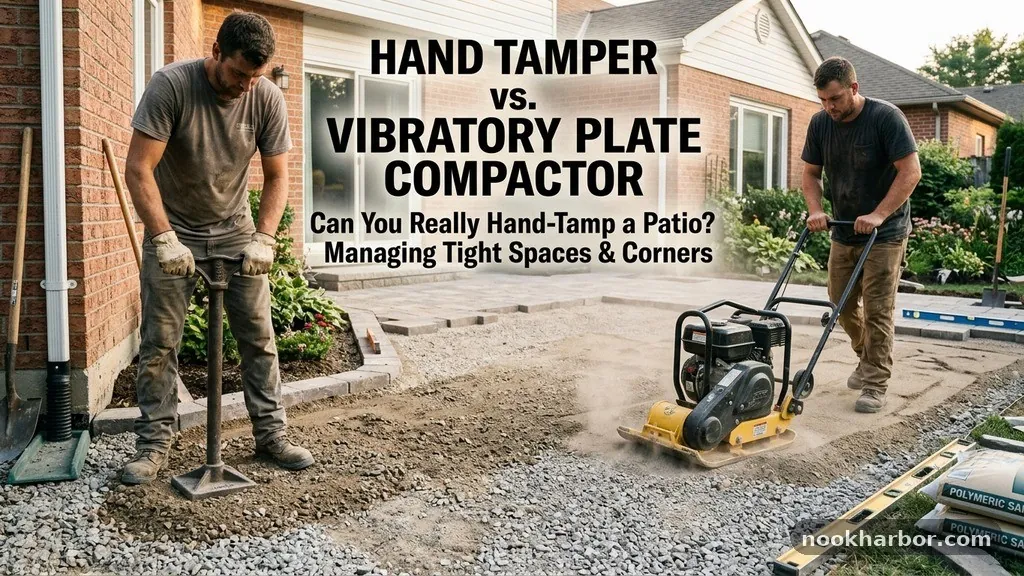
There is one specific scenario where the debate of hand tamper vs vibratory plate compactor swings back toward the manual tool: tight corners. Large plate compactors are heavy and difficult to maneuver against a wall or around a tight curve. In these instances, you will need a hand tamper to finish the edges that the machine cannot reach.
Think of your project as a hybrid approach where the machine does 95% of the heavy lifting. You then use the hand tool to address the small, awkward areas where the plate is too bulky to fit. Professional landscapers always keep a hand tamper on the truck for these finishing touches.
Safety Considerations for Compaction
Operating a plate compactor requires more attention than using a hand tool. These machines are heavy, often weighing between 150 and 300 pounds, and they move forward on their own once the engine is engaged. You must wear steel-toed boots and ear protection, as the vibration and noise are intense.
A hand tamper is physically safer in terms of equipment hazards, but it carries a risk of strain or injury from repetitive motion. Always use proper lifting techniques and maintain a stable stance when using a manual tool to avoid lower back issues. Never attempt to use a heavy plate compactor on a steep slope where you might lose your footing and have the machine run over your feet.
The Role of Base Materials
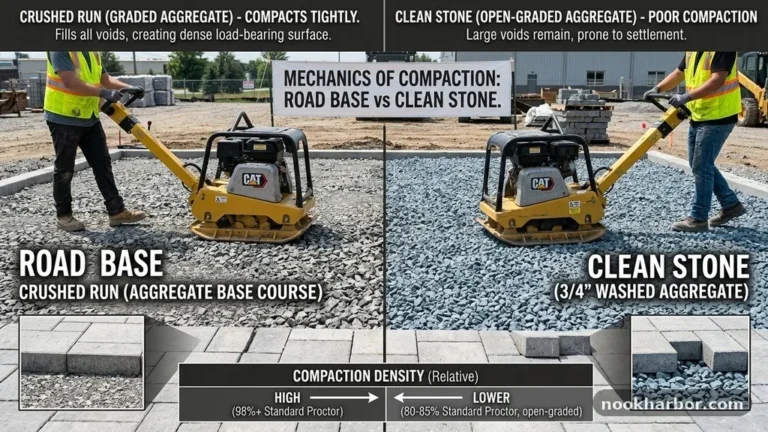
The type of stone you use affects how well it will compact. If you are using “crusher run” or “dense-graded aggregate,” which contains a mix of stone dust and larger rocks, you absolutely need a vibratory plate. The vibration helps the fine dust settle into the gaps between the larger rocks, creating a concrete-like finish.
If you try to use a hand tamper on this material, you will never achieve that density. For those interested in the technical aspects of soil mechanics, the Federal Highway Administration provides extensive documentation on how different base materials react to various levels of compaction pressure. Using the right material is just as important as choosing the right tool for the job.
Common Mistakes to Avoid
Many DIYers make the mistake of trying to compact a base that is too wet or too dry. If your gravel is bone dry, it will not lock together regardless of how much you tamp it. If it is soaking wet, the water will prevent the particles from settling and might even turn the base into a slurry.
You want the material to be slightly damp, like a wrung-out sponge. Another mistake is trying to compact a 6-inch layer of gravel all at once. Even with a plate compactor, you must work in 2-to-3-inch lifts to ensure the entire depth is properly stabilized.
Project Planning and Budgeting
When planning your patio, factor in the rental cost of a plate compactor right from the start. It is a small expense relative to the total cost of pavers, sand, and stone. If you decide to skip the rental, you are essentially gambling with the long-term stability of your patio.
If the ground settles, you will have to lift the pavers, add more base, and re-level the entire surface. This is a far more expensive and time-consuming process than simply renting the right equipment for a day. Always check your local rental shop’s inventory before you buy your materials.
Frequently Asked Questions
Is a hand tamper as good as a plate compactor?
No, a hand tamper cannot match the force or the depth of a vibratory plate compactor. It is strictly a secondary tool for small areas or tight spots where a machine cannot fit.
Can you use a hand tamper on pavers?
You can use a specialized hand tamper with a rubber pad to settle pavers into the sand bed, but you should never use one to compact the base material underneath the pavers.
How deep can a hand tamper compact?
A hand tamper is generally only effective for the top 1 to 2 inches of loose material. Any deeper than that, and you are simply compressing the surface while leaving the rest of the base unstable.
Does a plate compactor make a big difference for a small patio?
Yes, even on a small patio, the difference in density is significant. A plate compactor will ensure that your patio stays level for years, whereas a hand-tamped base is much more likely to develop dips over time.
What if I cannot rent a plate compactor?
If renting is not an option, you should consider reducing the size of your patio or choosing a project that doesn’t require a deep base. Otherwise, be prepared for regular maintenance and potential repairs as the ground settles.
Final Thoughts
The debate of hand tamper vs vibratory plate compactor really comes down to whether you value your time and the longevity of your project. While manual tools have their place in tight corners or small touch-ups, they are not a substitute for the consistent mechanical force provided by a plate compactor. If you want a patio that remains level and looks professional, prioritize renting the right equipment.
The extra cost is minimal compared to the headache of fixing a sunken patio a year later. Plan your base in thin layers, ensure your material has the right moisture content, and let the machinery do the hard work for you. Most rental centers provide simple instructions, and you will find that the process is much faster and more satisfying than manual labor.