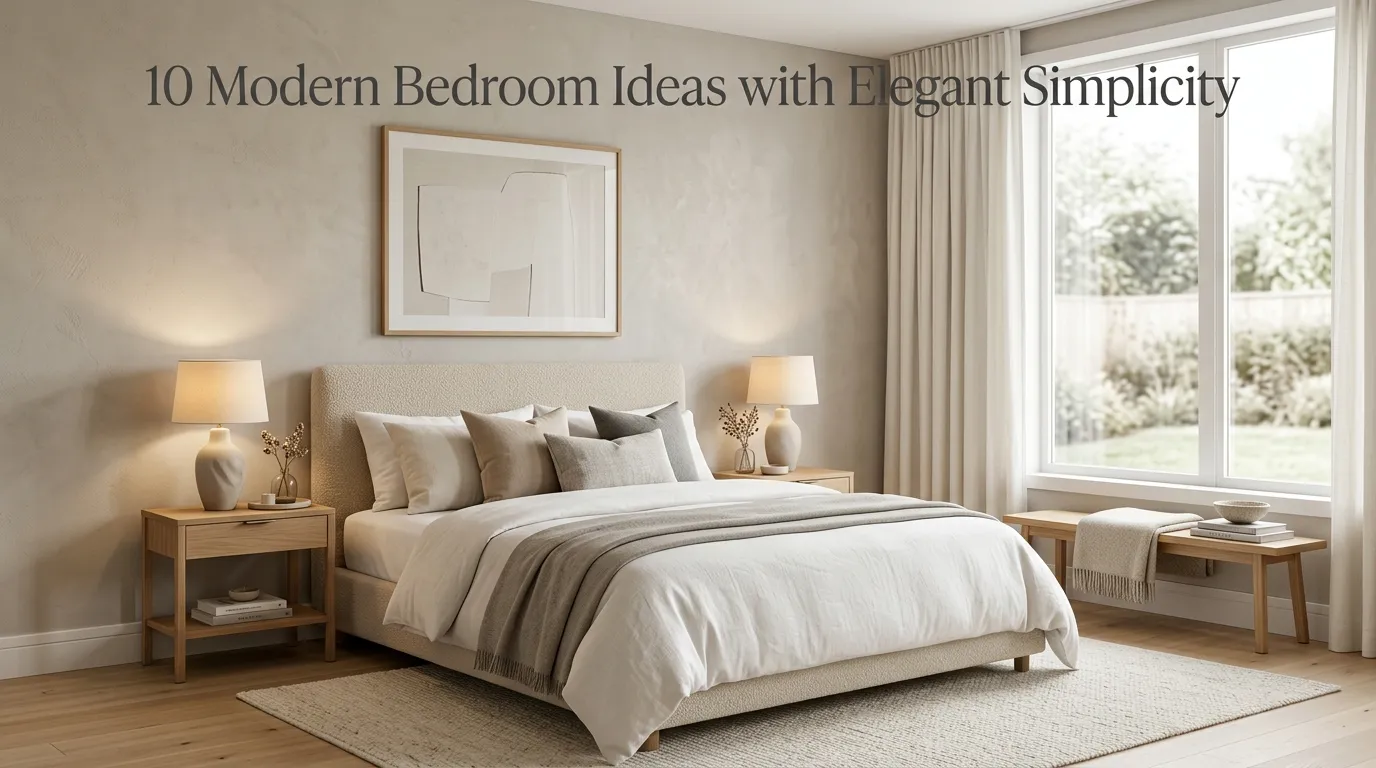
10 Modern Bedroom Ideas with Elegant Simplicity
A beautiful bedroom doesn’t need layers of decoration to feel special. Some of the most inviting modern bedrooms rely on a quieter approach: a restrained color palette, comfortable bedding, natural materials, thoughtful lighting, and just enough decoration to give the room personality.
That is the appeal of elegant simplicity.
The idea isn’t to create a completely empty room. It’s about choosing fewer elements and making each one count. A well-proportioned bed can become the focal point. Soft linen bedding can add depth without introducing busy patterns. A simple pendant can replace several small decorative lights. Even an ordinary nightstand can feel elevated when its surface is intentionally styled.
I’ve found that bedrooms often feel more relaxing when the visual environment is easy to read. When colors, textures, and furniture shapes work together, the room feels calm without becoming boring.
This approach also works beautifully in real homes because it doesn’t depend on having a huge bedroom or a luxury renovation budget. You can make gradual changes. Start with the bedding, simplify the nightstands, improve the lighting, or add one substantial piece of artwork.
The goal is a bedroom that looks polished but still feels comfortable enough for everyday life.
Whether you’re furnishing a primary bedroom, guest room, apartment bedroom, or smaller space, these ideas focus on practical choices that create a refined atmosphere without excessive ornamentation.
Here are ten ways to bring modern elegance into your bedroom while keeping the overall look simple, warm, and livable.
Table of Contents
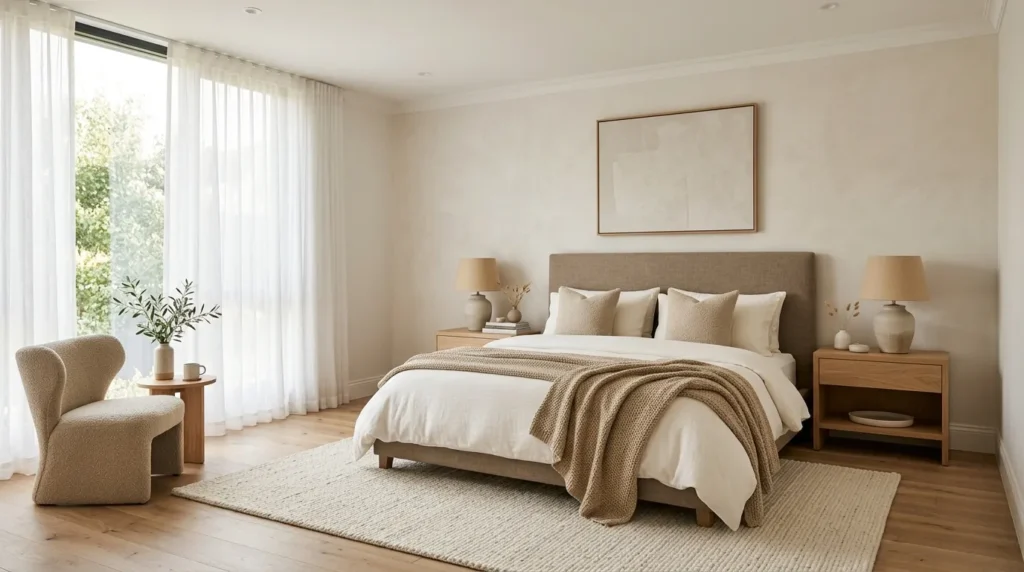
1. Soft Neutral Palette
Build a calm foundation with warm whites, beige, taupe, and gentle earthy tones.
2. Tailored Bedding
Create a polished bed using simple layers, quality-looking textures, and restrained colors.
3. Minimal Nightstands
Keep bedside surfaces functional and uncluttered with carefully selected essentials.
4. Statement Headboard
Give the bed architectural presence with a substantial upholstered or wood headboard.
5. Layered Bedroom Lighting
Combine overhead, bedside, and accent lighting for a flexible atmosphere.
6. Natural Wood Details
Bring warmth into the room through oak, walnut, rattan, and other natural finishes.
7. Oversized Bedroom Artwork
Use one substantial artwork piece to create personality without wall clutter.
8. Textured Area Rug
Add softness and visual depth beneath the bed with a carefully scaled rug.
9. Floor Length Curtains
Emphasize the bedroom’s height with simple, generously sized window treatments.
10. Calm Decorative Styling
Finish the room with a small collection of meaningful, coordinated accessories.
1. Soft Neutral Palette
Quick Benefits
- Creates a calm atmosphere
- Makes the bedroom feel cohesive
- Works with different furniture styles
- Highlights texture
- Provides a timeless foundation
Why It Works
Color has a major influence on how a bedroom feels.
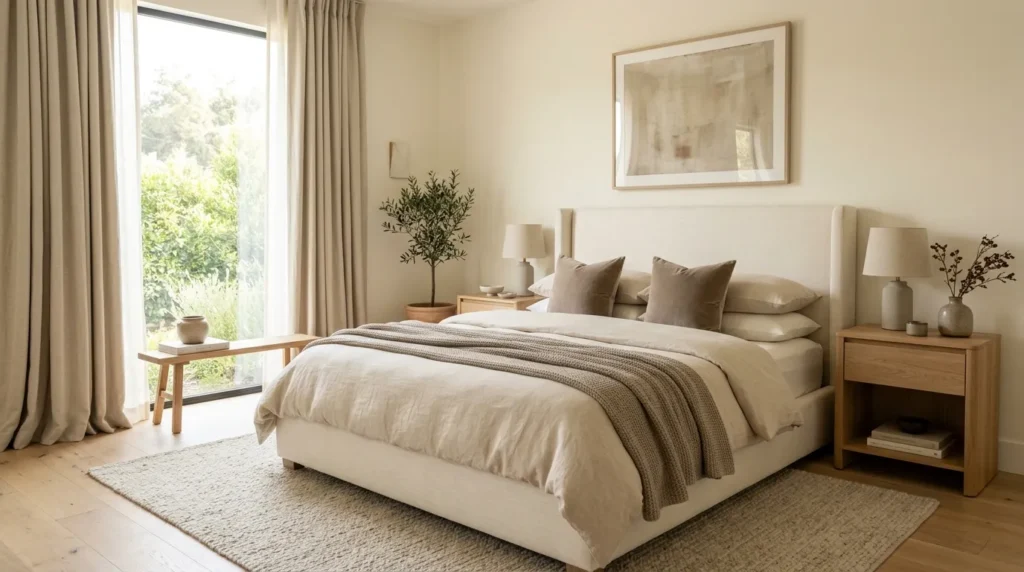
A restrained palette of warm white, ivory, beige, taupe, soft gray, and earthy brown creates a visually quiet backdrop that works particularly well in a room designed for rest.
The key is layering rather than matching everything exactly.
A creamy wall can work with warm beige bedding, a taupe rug, and natural wood furniture. Each shade is slightly different, but the overall effect remains cohesive.
Natural variation also keeps neutral rooms from feeling flat.
When there are fewer colors competing for attention, textures and silhouettes become more noticeable.
How To Style It
Start with the largest surfaces.
Choose a wall color, flooring tone, and bedding palette that work together.
Then introduce two or three supporting neutrals.
For example, combine an ivory duvet with taupe pillows, a warm beige throw, and an oak nightstand.
Add darker brown or charcoal accents sparingly for definition.
If the room receives limited natural light, warmer neutrals can prevent the space from feeling cold.
Sample wall colors in the actual bedroom before committing, since natural and artificial lighting can significantly change how neutral colors appear.
2. Tailored Bedding
Quick Benefits
- Makes the bed the room’s focal point
- Adds comfort
- Creates visual layers
- Works with simple furniture
- Gives the bedroom a polished appearance
Why It Works
The bed usually occupies the largest visual area in a bedroom.
That makes bedding one of the easiest places to create an elegant transformation.
You don’t need an elaborate arrangement of decorative pillows.
A few well-chosen layers can look much more sophisticated.
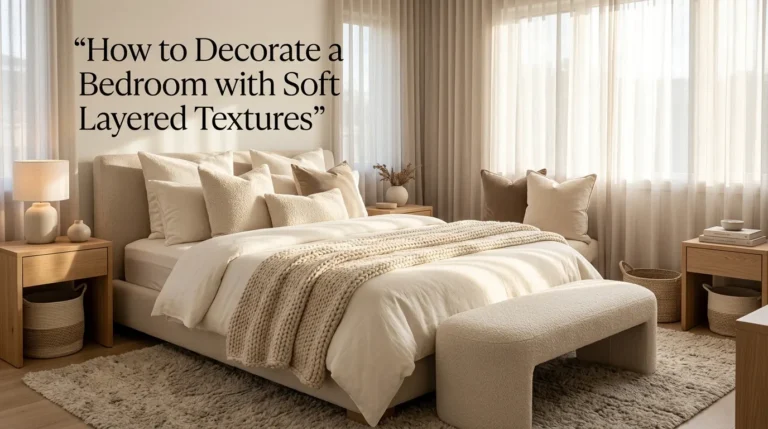
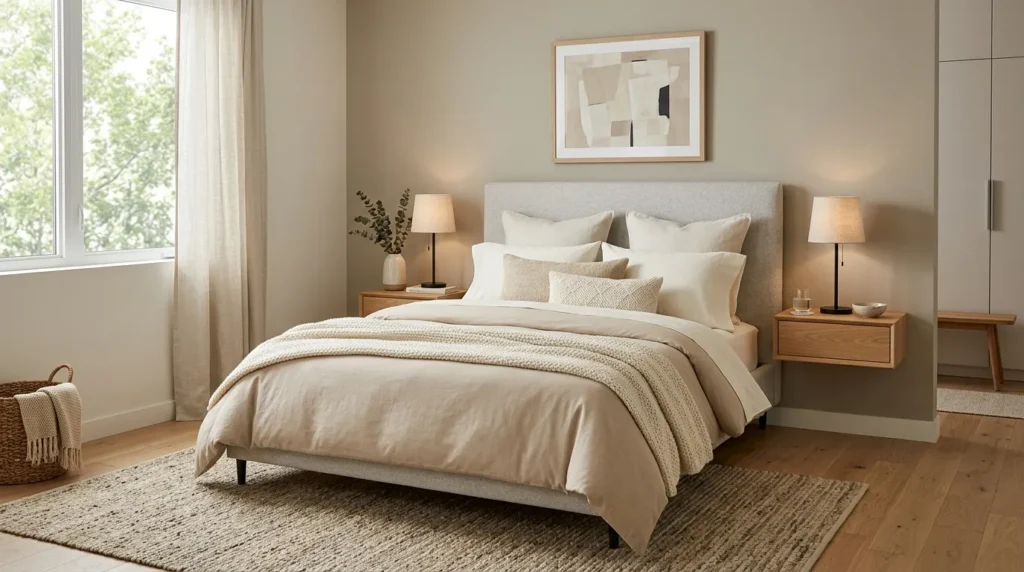
Natural-looking fabrics such as linen, cotton, quilted textiles, and textured throws introduce depth without relying on bold patterns.
The result feels comfortable rather than overly styled.
How To Style It
Begin with simple sheets in white, cream, or another soft neutral.
Add a duvet or quilt in a complementary tone.
Fold a textured blanket across the lower portion of the bed.
Use a small number of pillows with different shapes or fabric textures.
For a more tailored appearance, choose bedding with clean edges and avoid excessive decorative detailing.
If you prefer a relaxed bedroom, allow the duvet to drape naturally rather than making every layer perfectly symmetrical.
The goal is polished comfort.
3. Minimal Nightstands
Quick Benefits
- Reduces visual clutter
- Keeps essentials accessible
- Creates symmetry
- Makes the bedroom feel calmer
- Highlights furniture design
Why It Works
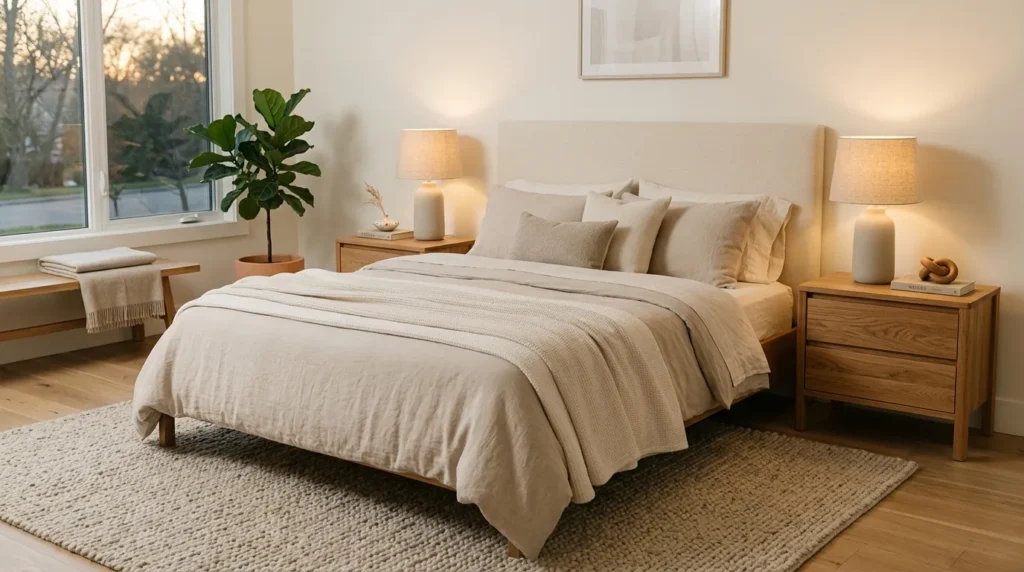
Nightstands are small surfaces, but they can quickly become cluttered.
Books, chargers, water glasses, skincare, decorative objects, and miscellaneous items can accumulate.
A simpler arrangement creates an immediate sense of calm.
This doesn’t mean your nightstand needs to be empty.
It simply means each object has a purpose.
A lamp, a book, and one small decorative object can be enough.
The negative space becomes part of the design.
How To Style It
Start by removing everything from the nightstand.
Return only what you regularly use.
Choose one attractive lamp with a scale appropriate to the bedside table.
Add a small ceramic vessel, framed photograph, or other meaningful object.
Keep charging cables organized and as visually discreet as practical.
If you have matching nightstands, symmetry can create a classic appearance.
For a more relaxed look, use complementary rather than identical pieces.
Keep the surface partially open.
4. Statement Headboard
Quick Benefits
- Establishes a strong focal point
- Adds softness or texture
- Defines the bed
- Creates visual height
- Works with simple decor
Why It Works
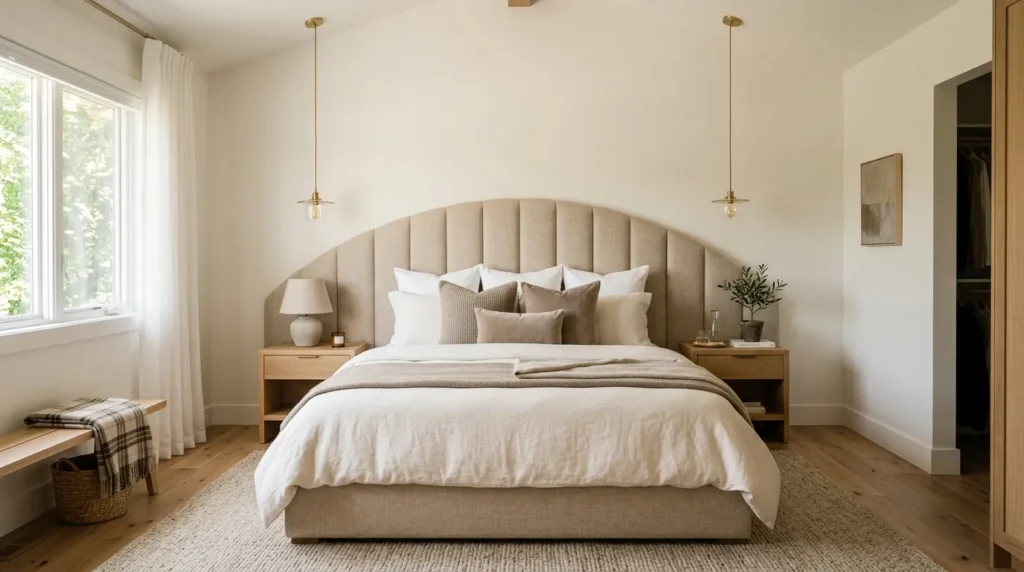
A substantial headboard can transform an otherwise simple bedroom.
Because the bed is usually the main feature, the headboard gives it architectural presence without requiring additional wall decoration.
Upholstered headboards can introduce softness.
Wood designs add warmth.
Curved shapes can soften a room dominated by straight lines.
Tall headboards can also emphasize ceiling height.
The most successful designs are proportional to both the bed and the wall.
How To Style It
Choose a headboard that complements the overall architecture.
An oatmeal or cream upholstered headboard works beautifully with warm neutral bedding.
Natural oak or walnut can introduce contrast.
If the headboard has a strong silhouette, keep the surrounding wall relatively simple.
Avoid adding several competing decorative features directly behind the bed.
Use the headboard as the primary focal point.
Then support it with understated bedding and lighting.
5. Layered Bedroom Lighting
Quick Benefits
- Creates a relaxing atmosphere
- Provides task lighting
- Adds visual depth
- Highlights textures
- Makes the room adaptable
Why It Works
A single overhead light rarely creates the most comfortable bedroom environment.
Layered lighting gives you more control.
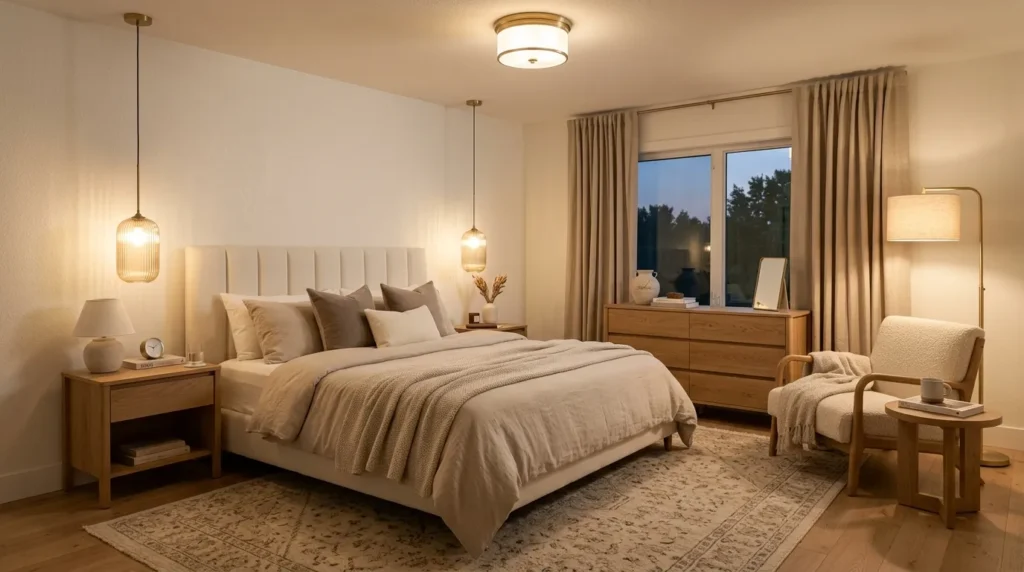
A ceiling fixture provides general illumination.
Bedside lamps provide focused light for reading.
Wall sconces can save space.
A small accent lamp can add a softer glow.
This variety also creates visual depth.
Warm pools of light make fabrics, wood, and artwork more noticeable in the evening.
How To Style It
Begin with your main ceiling fixture.
Then add bedside lighting.
If the nightstands are small, consider wall-mounted sconces or pendant lights.
Place a floor lamp in a reading corner if space allows.
Use bulbs and fixtures appropriate for the desired atmosphere and task.
Keep the overall lighting scheme coordinated.
You don’t need every fixture to match exactly.
Repeating a finish, shape, or material can create enough visual connection.
6. Natural Wood Details
Quick Benefits
- Adds warmth
- Balances neutral colors
- Introduces organic texture
- Works with modern furniture
- Creates visual contrast
Why It Works
Modern bedrooms can sometimes feel overly cool when they rely heavily on white, gray, glass, and metal.
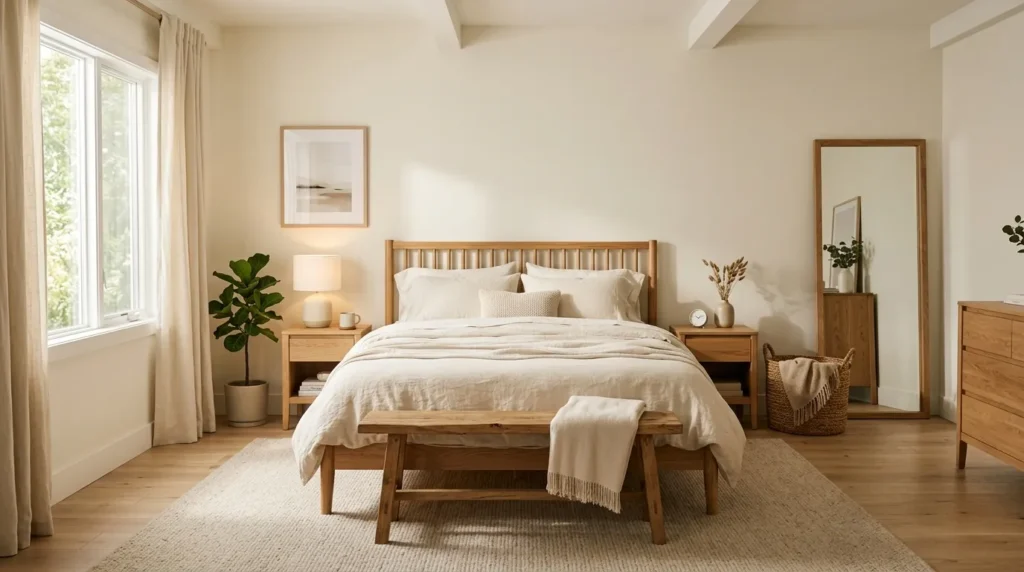
Natural wood brings warmth without requiring a stronger color palette.
Oak can create a light Scandinavian-inspired feeling.
Walnut adds depth.
Rattan and woven wood introduce a more relaxed texture.
The material also ages visually in a way that can make the bedroom feel more personal over time.
How To Style It
Choose one or two wood tones rather than mixing many unrelated finishes.
A walnut bed can pair with matching or complementary nightstands.
Oak furniture works beautifully with cream, beige, and white.
Add a wooden bench at the foot of the bed if the room has enough space.
You can also introduce wood through picture frames, trays, lamps, or small decorative pieces.
Don’t cover every surface with wood.
A few intentional elements provide plenty of warmth.
7. Oversized Bedroom Artwork
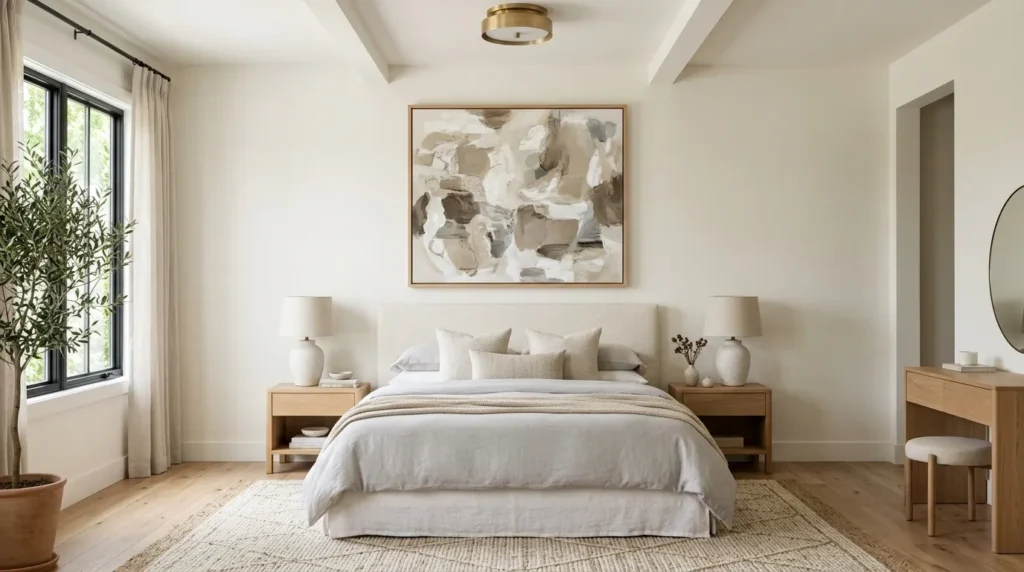
Quick Benefits
- Creates personality
- Fills large walls elegantly
- Reduces the need for small decorations
- Establishes a focal point
- Works with neutral interiors
Why It Works
A large artwork can make a bedroom feel finished without creating visual clutter.
Instead of filling the wall with several small frames, one substantial piece can establish a clear focal point.
Abstract artwork, photography, botanical prints, architectural drawings, and textured canvas can all work.
The colors don’t need to match the bedding exactly.
They simply need to relate to the room’s overall palette.
How To Style It
Choose artwork based on the wall’s scale.
A tiny frame above a large headboard can feel lost.
A wider piece can visually balance the bed.
Keep the frame simple.
Natural wood works well with warm interiors.
Black can provide definition.
A tonal frame can create a more seamless appearance.
If the artwork is bold, simplify the surrounding decor.
Let one major feature have the attention.
8. Textured Area Rug
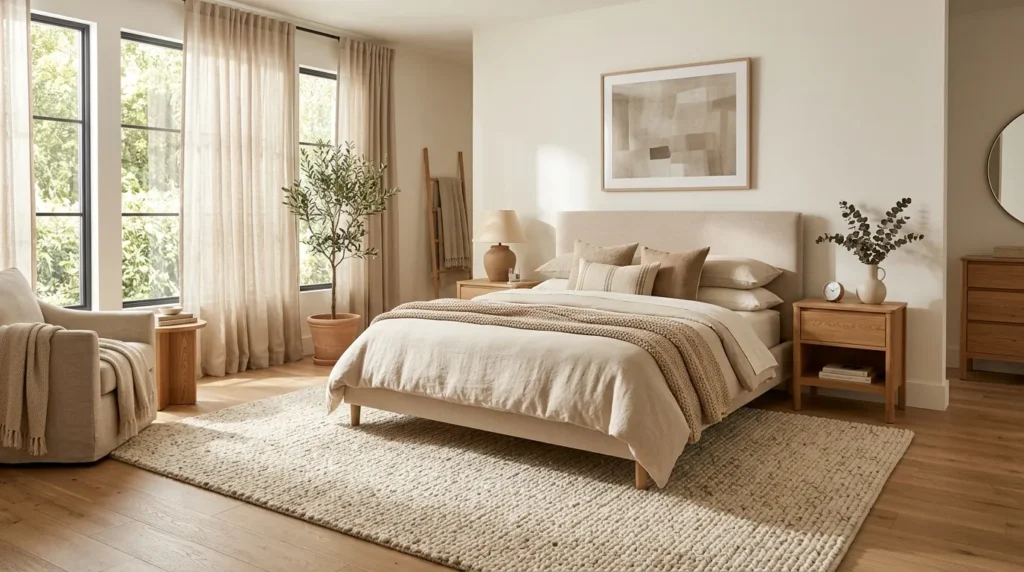
Quick Benefits
- Adds softness
- Creates warmth underfoot
- Defines the bed area
- Introduces texture
- Makes the room feel finished
Why It Works
A bedroom benefits from softness, especially around the bed.
A properly sized area rug adds comfort while visually connecting the bed, nightstands, and surrounding furniture.
Texture becomes particularly important in a neutral room.
A wool rug, woven design, subtle pattern, or plush surface can add dimension without introducing another strong color.
Scale matters more than complexity.
How To Style It
Choose a rug large enough to extend beyond the sides of the bed.
For larger bedrooms, a generously sized rug can sit beneath the entire bed and nightstands.
For smaller spaces, a strategically positioned rug can still create softness around the bed.
Choose colors that relate to the bedding and flooring.
Cream, beige, taupe, muted gray, and natural tones are versatile.
If you have pets or children, consider durability and cleaning requirements before selecting the material.
9. Floor Length Curtains
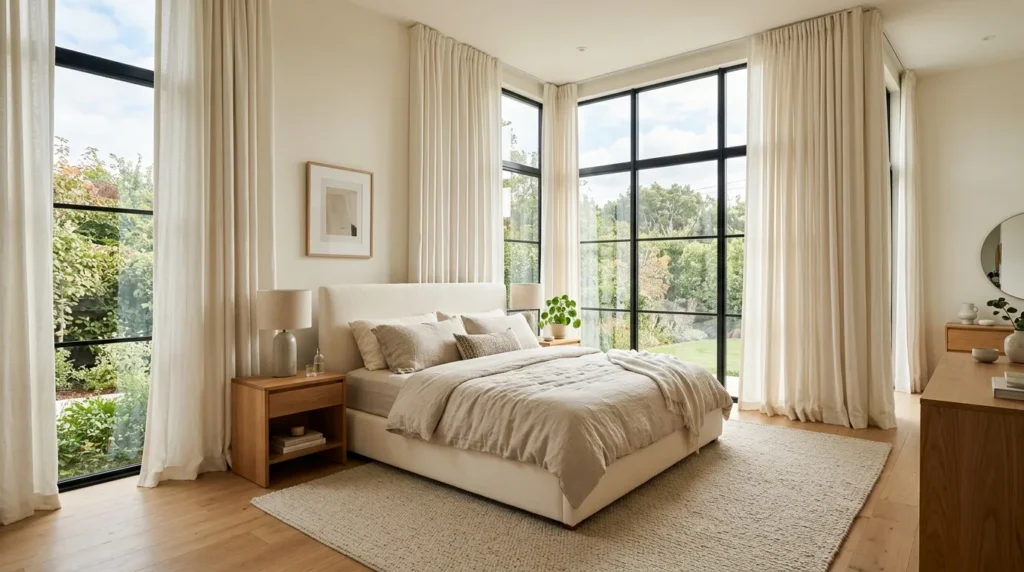
Quick Benefits
- Creates visual height
- Softens windows
- Adds privacy
- Controls daylight
- Gives the room a polished finish
Why It Works
Curtains can dramatically change the proportions of a bedroom.
Panels that extend from near the ceiling toward the floor emphasize vertical lines.
This can make a bedroom feel taller and more elegant.
Simple fabrics are particularly effective with modern design.
Instead of elaborate patterns, focus on texture and drape.
Linen-look curtains, cotton blends, and softly woven neutral fabrics can add warmth without overwhelming the room.
How To Style It
Choose curtain colors that coordinate with the walls.
Ivory, cream, beige, and soft taupe are easy to layer.
Install the hardware at an appropriate height to create a generous vertical line.
Allow the curtains to reach the floor.
Use enough fabric width for a full appearance when closed.
If the bedroom receives strong sunlight, combine curtains with appropriate shades or blinds.
The result should look elegant while still supporting comfortable sleep and privacy.
10. Calm Decorative Styling
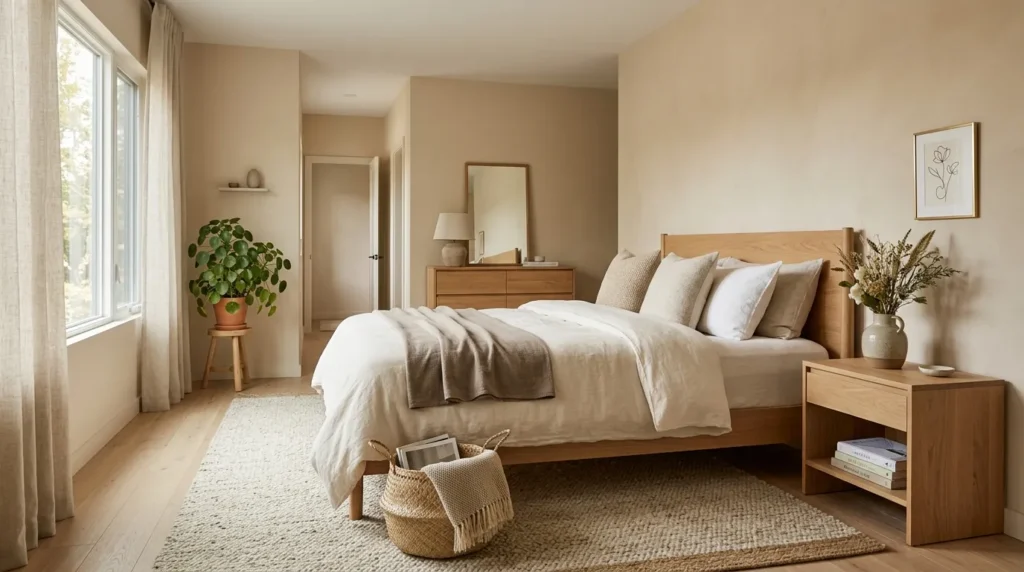
Quick Benefits
- Adds personality
- Prevents the room from feeling sterile
- Creates visual balance
- Keeps clutter controlled
- Completes the design
Why It Works
Elegant simplicity doesn’t mean removing every personal detail.
A bedroom needs warmth and character.
The difference is in how much you display.
Instead of covering every dresser, shelf, and nightstand, select a small collection of objects that genuinely contribute to the room.
A ceramic vase, framed photograph, stack of books, sculptural object, or small plant can be enough.
Negative space allows those objects to stand out.
How To Style It
Choose accessories that repeat the bedroom’s existing colors and materials.
A ceramic vase can connect to a stone lamp.
A wood frame can repeat the furniture finish.
A woven basket can complement linen bedding.
Group objects in odd-numbered arrangements when it feels natural, but don’t force the rule.
Leave open areas between displays.
The room should feel collected rather than staged.
How To Make a Bedroom Look Elegant Without Making It Feel Cold
Modern simplicity can sometimes become too stark.
The easiest way to prevent that is through texture and warmth.
Layer Soft Fabrics
Combine cotton sheets, linen bedding, wool rugs, and textured throws.
Add Natural Materials
Wood, stone, ceramic, and woven fibers introduce organic variation.
Use Warm Neutrals
Cream, beige, taupe, sand, and warm gray often feel softer than stark white and cool gray.
Add Curved Shapes
A rounded lamp, curved chair, or softly shaped headboard can balance straight architectural lines.
Keep Personal Items
Photographs, books, artwork, and meaningful objects give the room character.
Use Warm Lighting
A room that feels cool during the day can become much more inviting with thoughtful evening lighting.
Elegant Bedroom Color Combinations
A simple palette can make the entire bedroom easier to decorate.
Ivory + Beige + Natural Oak
Light, warm, and timeless.
Cream + Taupe + Walnut
Richer and more sophisticated.
Warm White + Soft Gray + Oak
Clean without feeling stark.
Sand + Cream + Muted Brown
Earthy and relaxing.
Beige + Charcoal + Natural Wood
A neutral palette with stronger contrast.
Soft White + Sage + Light Wood
Fresh and subtly organic.
Choose one primary neutral and build around it.
Then repeat the supporting colors in the bedding, rug, curtains, artwork, and accessories.
Materials That Add Quiet Luxury
When the color palette is simple, materials become especially important.
Consider layering:
- Linen
- Cotton
- Wool
- Boucle
- Natural wood
- Stone
- Ceramic
- Rattan
- Woven fibers
- Matte metal
- Soft upholstery
- Textured glass
You don’t need to use all of them.
Three or four different textures can create plenty of depth.
For example, linen bedding, an oak nightstand, a wool rug, and a ceramic lamp already provide a strong combination of tactile materials.
Small Bedroom Tips for Elegant Simplicity
A smaller bedroom can benefit from this decorating approach because fewer visual elements help preserve a sense of openness.
Choose furniture with appropriate proportions.
Use a bed with built-in or concealed storage when practical.
Mount lighting on the wall if bedside surfaces are limited.
Choose curtains that emphasize the height of the room.
Keep the floor as visually open as possible.
Use one large artwork rather than many small pieces.
Select a rug that fits the bed arrangement without overwhelming the walking areas.
And most importantly, avoid buying furniture simply because there is an empty corner.
Empty space can be useful.
Common Mistakes To Avoid
Making Everything White
A completely white room can lack warmth and dimension.
Adding Too Many Pillows
A bed can look more polished with fewer, better-chosen layers.
Using Tiny Artwork
Large furniture often requires artwork with comparable visual weight.
Ignoring Scale
Furniture, rugs, lighting, and accessories need to relate to the room’s dimensions.
Mixing Too Many Wood Tones
A small number of coordinated finishes usually looks more cohesive.
Cluttering Nightstands
Keep bedside surfaces useful and visually calm.
Using Only Overhead Lighting
Additional light sources make the bedroom more comfortable at night.
Choosing Style Over Comfort
The bedroom is a room for rest. Beautiful furniture still needs to support everyday use.
FAQ
What makes a bedroom look elegant?
A bedroom looks elegant when its furniture, colors, lighting, and accessories feel cohesive. Appropriate scale is important, as is a restrained color palette. Natural materials, quality-looking textiles, layered lighting, and uncluttered surfaces can create sophistication without excessive decoration.
What colors make a bedroom look luxurious?
Warm neutrals such as cream, ivory, beige, taupe, sand, soft brown, and warm gray work particularly well. Natural wood tones can add warmth, while charcoal or muted green can provide controlled contrast. The most important factor is creating a coordinated palette rather than using many unrelated shades.
How can I make my bedroom look modern but cozy?
Combine clean-lined furniture with soft textures. Linen bedding, wool rugs, upholstered furniture, natural wood, warm lighting, and neutral colors can soften modern shapes. Keep decorative objects limited but personal so the room feels comfortable rather than overly staged.
How do I decorate a bedroom without making it cluttered?
Start with the essential furniture and then add only decor that serves a visual or personal purpose. Keep nightstands partially clear, use one or two larger artworks instead of many small pieces, and avoid filling every shelf or surface. Negative space helps the room feel calmer.
How can I make a small bedroom feel elegant?
Use appropriately scaled furniture, a restrained color palette, vertical curtains, layered lighting, and simple bedding. Wall-mounted lighting can preserve nightstand space, while one substantial artwork can create impact without filling the walls with multiple small pieces.
Should bedroom furniture match?
Bedroom furniture doesn’t need to be identical. Matching pieces can create symmetry, while complementary furniture can create a more relaxed and collected appearance. Repeat one or two materials or colors to connect different pieces visually.
How do I create a luxury bedroom on a budget?
Start with changes that have a large visual impact, such as simplifying the color palette, upgrading bedding, improving lighting, adding a textured rug, and reducing clutter. You can also introduce natural materials through smaller accessories rather than replacing all of the furniture.
Conclusion
Elegant simplicity is about creating a bedroom that feels beautiful without asking the eye to process too much.
Start with a calm palette.
Build the bed with comfortable, layered textiles. Choose furniture with clean proportions. Add warmth through natural wood, softness through rugs and curtains, and personality through one or two meaningful pieces of artwork.
Then look at the room again and edit.
Remove anything that feels unnecessary.
Clear the nightstands.
Give the artwork room to breathe.
Make sure the rug and curtains are appropriately scaled.
Finally, layer the lighting so the bedroom feels just as inviting in the evening as it does during the day.
The result doesn’t have to look perfectly staged. In fact, the most successful bedrooms usually have a little personality and evidence of real life.
A book beside the bed, a favorite photograph, a soft throw, or a handmade ceramic piece can make the space feel like yours.
Modern elegance doesn’t require more.
It often comes from choosing less, but choosing it thoughtfully.
Start with one area of your bedroom and build from there. A few intentional changes can create a calmer, warmer, and more polished space that feels good to return to every night.
Related Articles
- 10 Modern Cozy Aesthetic Bedroom Ideas
- 10 Modern Bedroom Ideas with Cozy Hotel Vibes
- 10 Bedroom Wall Decor Ideas That Make a Room Feel Larger
- How to Decorate a Bedroom with Elegant Decor
- How to Make a Small Bedroom Feel Bigger with Light Colors