
How Deep Should You Dig for a Paver Patio (The 4″ to 6″ Base Rule)?
{“title”:”How Deep Should You Dig for a Paver Patio (The 4\” to 6\” Base Rule)?”}
Understanding how deep should you dig for a paver patio (the 4\” to 6\” base rule) remains the most critical factor in preventing your hardscape from shifting, sinking, or cracking over time. Many homeowners mistakenly assume that a shallow trench is sufficient, only to find their patio uneven after a single rainy season. By following the standard 4-inch to 6-inch base recommendation, you ensure that your patio has the necessary structural integrity to handle both foot traffic and the natural movement of the earth.
This article provides the technical details required to execute a professional-grade installation, covering excavation, material selection, and the vital importance of proper drainage.
Determining Your Excavation Depth
For most pedestrian-only patios, a 4-inch compacted base is the absolute minimum requirement for stable ground. If your soil is heavy clay or experiences high moisture, you should increase this excavation depth to 6 inches or more to accommodate a thicker sub-base.
The Role of Soil Bearing Capacity
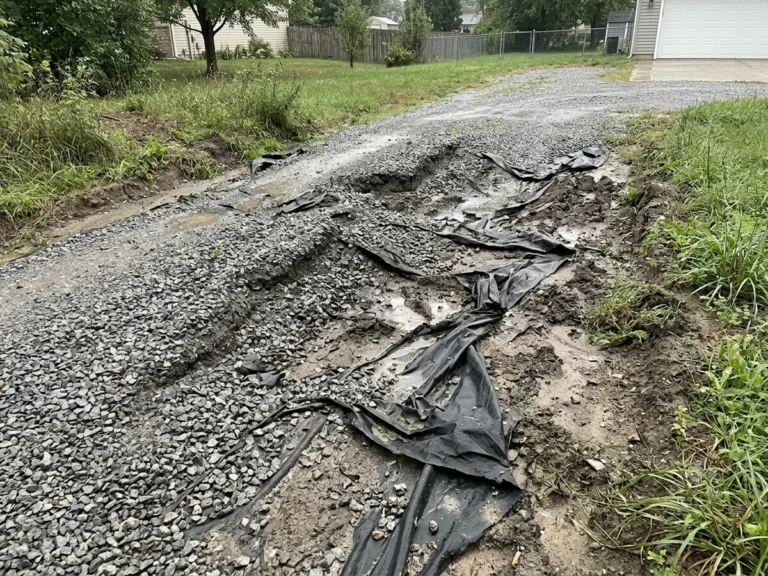
Your subgrade, or the native soil at the bottom of your excavation, dictates the success of the entire project. If the soil is loose or organic, it will compress under weight, leading to depressions in your finished surface.
You should aim to reach firm, undisturbed soil during your excavation process. If you encounter soft spots, you must dig deeper and replace that material with additional compacted crushed stone. Ignoring the soil bearing capacity often leads to long-term failures that are expensive to repair once the pavers are locked in place.
Preparing the Aggregate Base
The aggregate base is the foundation that distributes weight across the subgrade.
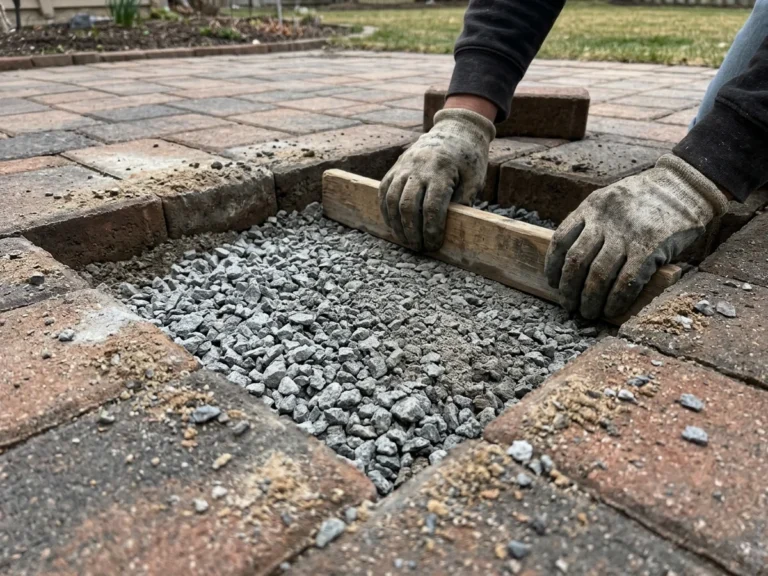
For this layer, you should use 3/4-inch minus crushed stone, which contains a mix of stones and stone dust that locks together tightly when vibrated. You must install this material in lifts, which are thin layers of 2 to 3 inches at a time. Each lift requires thorough mechanical compaction using a plate compactor to reach maximum density.
If you try to compact the entire 4 to 6 inches at once, the bottom layer will remain loose, causing the patio to settle unevenly over time.
Managing Drainage and Slope
Proper drainage is the primary defense against the damaging effects of the freeze-thaw cycle. You must ensure your patio has a consistent slope of at least 1/8 inch to 1/4 inch per linear foot away from your house foundation. This pitch allows water runoff to move away from your home, preventing water from pooling against the structure.
Without this slope, water will saturate the base, leading to hydrostatic pressure that can heave your pavers during winter months. Always verify your slope with a level before you begin laying your bedding sand.
Using Geotextile Fabric
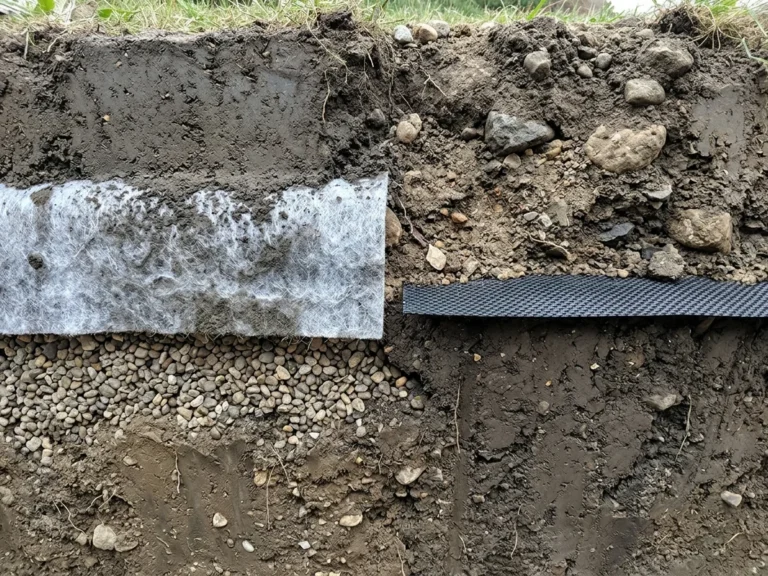
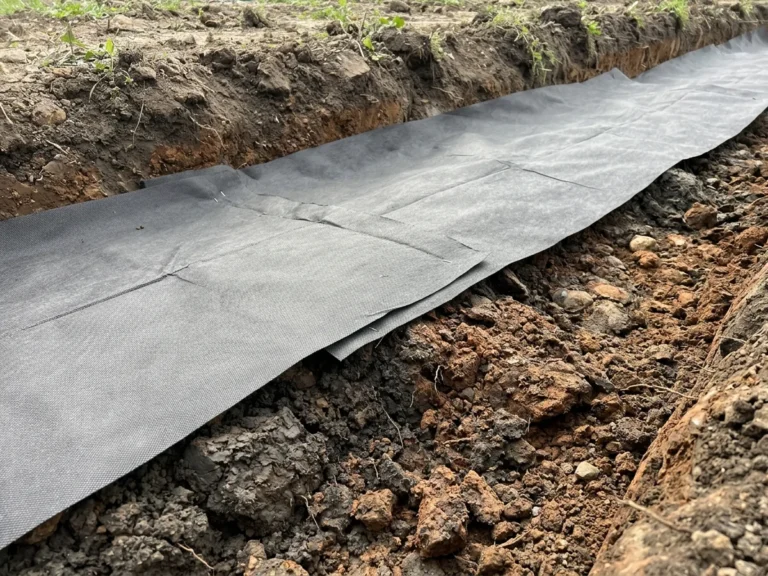
Installing a layer of high-quality geotextile fabric between the subgrade and your aggregate base is a simple step that provides massive benefits. This landscape fabric acts as a separator, preventing the fine particles in your native soil from migrating upward into your clean base material.
When soil mixes with your stone base, it destroys the drainage capabilities and weakens the entire structure. By keeping these layers separate, you maintain the load-bearing capacity of the base for many years. Ensure you overlap the edges of the fabric by at least 6 to 12 inches to create a continuous barrier.
Selecting the Right Materials
Professionals typically recommend using a crushed angular stone rather than round pea gravel, as angular edges interlock to form a rigid platform. You can find detailed technical specifications for various base materials through the Interlocking Concrete Pavement Institute, which provides industry standards for hardscape design. Avoid using sand or topsoil as a base material, as these substances shift too easily and will not provide the necessary support for pavers.
| Layer Component | Typical Depth | Function |
|---|---|---|
| Paver Thickness | 2.375 inches | Surface finish |
| Bedding Sand | 1 inch | Leveling and grip |
| Aggregate Base | 4 to 6 inches | Structural support |
| Geotextile Fabric | Negligible | Soil separation |
Bedding Sand and Screeding
Once your base is compacted and level, you apply a 1-inch layer of coarse concrete sand. This layer is not meant to be structural; it is merely a bedding material that allows you to level the pavers perfectly. Use two lengths of 1-inch outer diameter pipe as rails to screed the sand across the surface. Once you pull the screed board across the pipes, remove them and fill the voids with a small amount of sand. Do not walk on the screeded sand, as this will create footprints that transfer to the surface of your pavers.
Edge Restraints and Containment
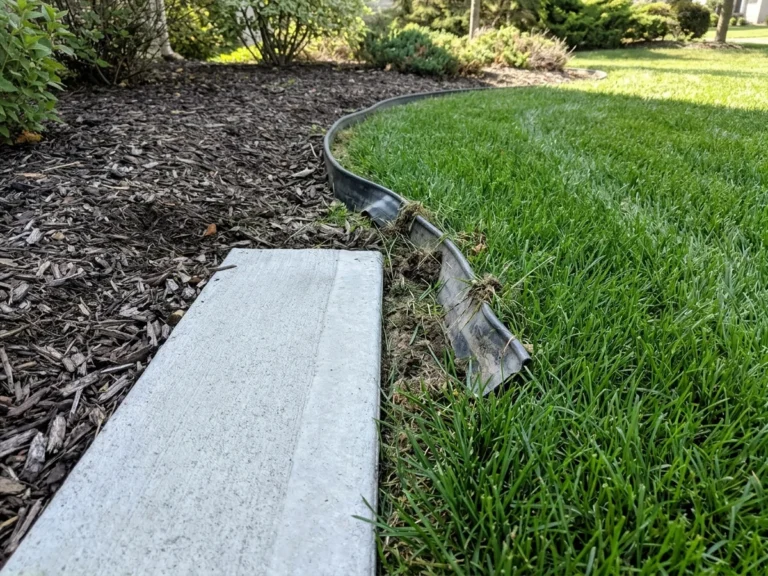
Edge restraints are mandatory for any paver installation, as they prevent the pavers from creeping outward over time. You can use plastic, metal, or concrete borders secured with steel spikes driven into the compacted base. Without these restraints, the sand beneath the pavers will wash out, and the pavers will lose their tight fit. Ensure that your edge restraint is installed flush or slightly below the surface of the pavers so it remains hidden by mulch or grass. This containment is the final step in ensuring the integrity of your hardscape design.
Finishing with Polymeric Sand
After laying your pavers, you must fill the joints to prevent weed growth and sand erosion. Polymeric sand is the modern standard for this, as it contains polymers that harden when activated with water. Sweep the sand into the joints thoroughly, ensuring it reaches the full depth of the paver. Use a plate compactor with a protective mat to vibrate the pavers once more, which helps settle the sand into the joints. Finally, mist the area with water to activate the binding agents, but be careful not to flood the surface.
Common Installation Mistakes
Many DIY projects fail because they skip the compaction phase or fail to dig deep enough. Relying on hand-tamping rather than a mechanical plate compactor is a common mistake that leads to weak spots. Another frequent error is using too much bedding sand; if your sand layer is thicker than 1 inch, it will compress unevenly and cause the pavers to rock. Always measure your excavation depth accurately before you start, and never attempt to build a patio over soft, wet, or uncompacted ground.
Frequently Asked Questions
Can I lay pavers directly on dirt?
No, you should never lay pavers directly on topsoil. Dirt is organic and will compress, shift, and support plant growth, which will inevitably ruin the level surface of your patio. You must remove the topsoil and replace it with a properly compacted aggregate base to ensure stability.
Do I really need to use a plate compactor?
Yes, a plate compactor is essential for achieving the density required for a long-lasting base. Hand tamping is insufficient for the 4 to 6 inches of stone required, as it cannot exert enough force to lock the aggregate particles together. You can rent these machines from most local hardware stores for a daily fee.
What happens if I don’t use geotextile fabric?
Without geotextile fabric, the fine particles from your native soil will migrate into your base material over time. This process, known as subgrade contamination, ruins the drainage properties of the crushed stone and leads to soft spots and sinking. Using fabric is a cheap insurance policy for your hardscape.
How do I know if my base is compacted enough?
A properly compacted base should feel solid and firm underfoot, like a paved road. If you can leave a deep footprint in the stone after it has been compacted, it needs more passes with the machine. You can perform a simple test by driving a screwdriver into the surface; it should meet significant resistance.
Can I use sand for the base instead of stone?
Sand is not a suitable base material because it does not lock together and can be washed away by water. Crushed stone is required because its angular edges interlock, creating a rigid structure that can handle heavy loads. Sand should only be used as a thin 1-inch bedding layer for leveling.
Conclusion
Knowing how deep should you dig for a paver patio (the 4\” to 6\” base rule) is the difference between a project that lasts a decade and one that needs repair within a year. By strictly adhering to the depth requirements, utilizing a high-quality aggregate, and ensuring proper compaction, you create a stable foundation that resists the elements. Proper drainage and the use of geotextile fabric further protect your investment from the freeze-thaw cycle and soil movement. Take the time to prepare your subgrade correctly, as this invisible work provides the strength for your finished surface. If you follow these technical steps, your patio will remain level, functional, and attractive for years to come. Start your planning by measuring your site and confirming your local frost line requirements today.