
Road Base (Crushed Run) vs Clean Stone: Which Compacts Tighter Under Pavers?
Choosing between road base (crushed run) and clean stone involves understanding how different aggregates behave under pressure. When evaluating Road Base (Crushed Run) vs Clean Stone: Which Compacts Tighter Under Pavers?, the answer is definitive: road base is the superior choice for achieving high density. Because it contains a mixture of stone sizes and fine particles, it locks together to create a solid, stable foundation.
Clean stone lacks these fines, meaning it will never achieve the same level of rigidity. Homeowners and contractors often debate these materials, but prioritizing the right sub-base is the most critical step for ensuring your patio or walkway remains level and functional for many years.
The Mechanics of Compaction

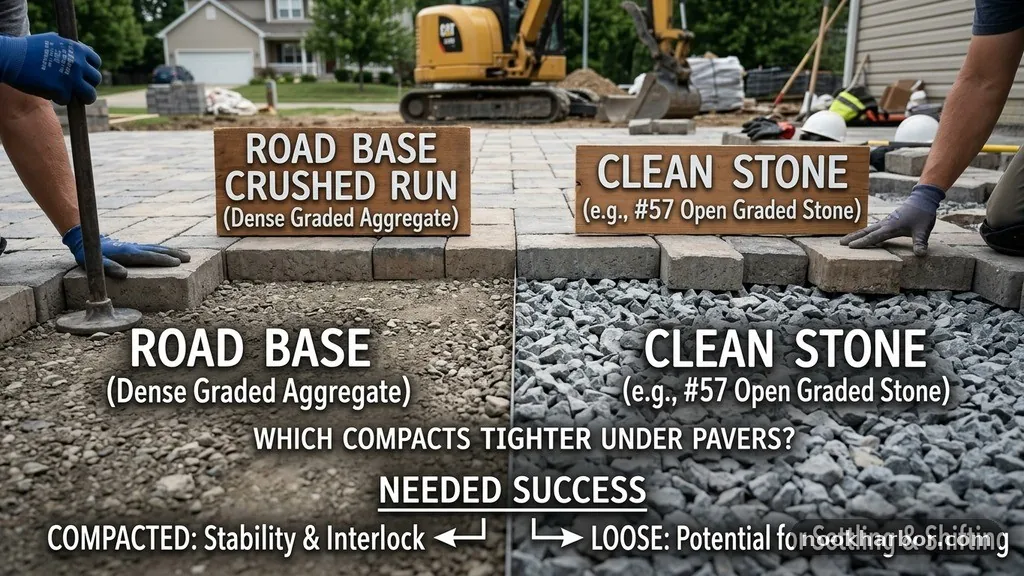
The primary difference between these materials lies in their particle distribution. Road base, often called quarry process, includes everything from small dust-like particles to larger, angular rocks.
When you run a plate compactor over this mixture, the vibrations cause the smaller pieces to fill the voids between the larger stones. This process creates a dense, interlocking matrix that resists movement even under significant weight.
In contrast, clean stone, such as #57 gravel, consists of rocks that are all roughly the same size. Because there are no smaller particles to fill the gaps, the stones essentially sit next to each other with empty space, or voids, between them.
No matter how much you vibrate or compact clean stone, those gaps remain. This structural difference is why road base reaches a much higher ultimate compaction density than any uniform aggregate can.
Why Fines Matter for Stability
The secret to a rock-solid foundation is the presence of “fines.” These are the smallest particles, often resembling sand or dust, found within crushed run.
When moisture is introduced to these fines during the compaction process, they act like a mild binding agent. They effectively glue the larger aggregate pieces into a singular, immovable mass.
Without these fines, clean stone remains loose and prone to shifting. If you place pavers directly on top of loose stone, the weight of foot traffic or outdoor furniture will eventually cause the stones to migrate.
This migration leads to uneven surfaces, dips, and broken paver joints. Road base prevents this by creating a rigid, load-distributing base that stays in place throughout the freeze-thaw cycles of the year.
Load-Bearing Capacity Requirements
Hardscaping projects require a base that can support more than just the weight of the pavers themselves. You must also account for the weight of people, heavy grills, and potentially vehicles.
Road base is engineered specifically for these high-stress environments. Its ability to distribute weight across a wider surface area is what makes it the industry standard for driveways and walkways.
Clean stone, however, is not designed for heavy load-bearing capacity. While it is excellent for drainage, it tends to settle over time if it is not confined perfectly.
If you use it as a sub-base, you are essentially building on a layer of marbles. Over time, that structure will inevitably lose its shape, leading to costly repairs.
Drainage vs Density Trade-offs
While road base is clearly the winner for compaction, clean stone does have a specific utility. Because clean stone contains so many voids, it allows water to pass through it almost instantly. This is vital in areas with high water tables or poor soil drainage where you need to prevent water from pooling under your pavers.
However, modern paver installation techniques have solved this problem without sacrificing stability. Many professionals now use a layer of compacted road base for the main support, topped with a thin layer of bedding sand or fine stone dust.
This method ensures that the structure is both solid and capable of managing water runoff. You get the best of both worlds: a firm, long-lasting foundation and a managed drainage path.
The Role of Geotextile Fabric
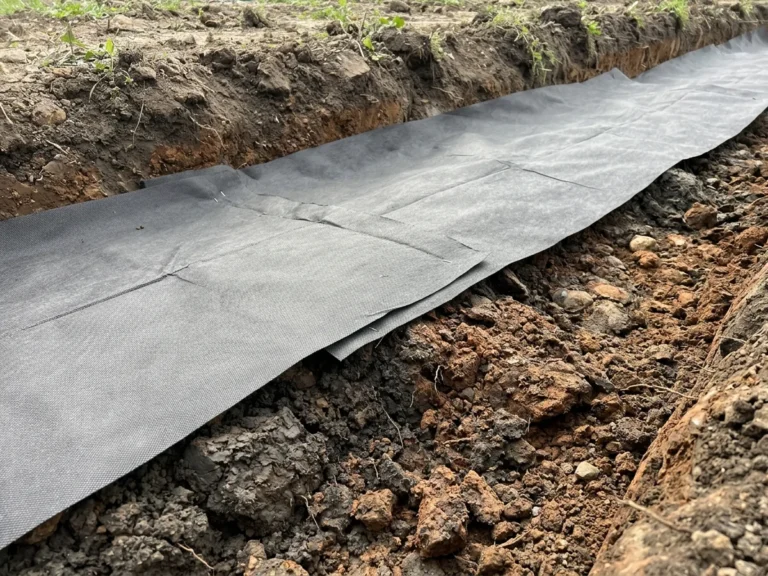
Regardless of which material you choose, the preparation of the subgrade is just as important as the stone itself. Before laying any aggregate, you should install a layer of high-quality geotextile fabric.
This fabric acts as a barrier between your native soil and the stone base. It prevents the soil from migrating up into your aggregate, which would eventually weaken the entire structure.
By keeping the layers separate, the fabric ensures that your road base remains clean and able to maintain its interlocking properties. If you skip this step, the weight of the pavers will eventually force the stone down into the mud, causing the surface to sink. You can find more information on proper site preparation through the Intermodal Concrete Paver Institute, which provides comprehensive standards for residential and commercial hardscaping.
Equipment Needed for Success
You cannot achieve the necessary density with a hand tamper alone. A gas-powered plate compactor is an absolute requirement for any paver project involving road base.
These machines deliver high-frequency vibrations that settle the aggregate into its final, dense state. You should aim to compact the base in several thin layers, often called lifts, rather than trying to do it all at once.
If you try to compact a six-inch layer of road base in one go, the bottom half will remain loose. By compacting in two-inch or three-inch lifts, you ensure that the entire depth of the base reaches its maximum potential for strength. This attention to detail is what separates a DIY project that fails after one winter from one that stays safe and durable for decades.
Common Mistakes During Installation
The most frequent error is failing to use enough water during the compaction process. Adding a small amount of water to the road base helps the fines lubricate the larger stones, allowing them to slide into their tightest possible configuration. Without water, the friction between the dry stones prevents them from settling completely.
Another common mistake is placing pavers directly onto the sub-base without a bedding layer. Even well-compacted road base is slightly textured; it is not perfectly flat.
A thin layer of bedding sand or stone screenings is required to provide a smooth, consistent surface for the pavers to sit on. Without this “cushion,” your pavers will be prone to wobbling and cracking under pressure.
Comparison of Aggregate Types
When choosing your materials, it is helpful to look at how different stone sizes function in a landscape. The following table highlights the differences between common options:
| Material Type | Best Use Case | Compaction Ability |
|---|---|---|
| Road Base (Crushed Run) | Structural sub-base for pavers | High (locks together) |
| #57 Stone | Drainage and pipe bedding | Low (remains loose) |
| Stone Screenings | Bedding layer for pavers | Medium (packs well) |
| Pea Gravel | Decorative ground cover | Very Low (shifts easily) |
Selecting the Right Stone for Your Project
When you head to the local quarry, you might be overwhelmed by the choices. Always ask for “quarry process” or “crusher run” when you need a structural base.
If the person at the scale house asks for a size, look for a mix that includes everything from 3/4-inch stone down to dust. This variety is the key to achieving that tight, interlocking finish.
Avoid the temptation to use “clean” stone because it is easier to shovel or transport. While it is true that clean stone is less dusty, it will not support your pavers long-term. If you are worried about the mess of road base, simply wear gloves and keep a water hose nearby to rinse off any dust that settles on nearby surfaces.
Frequently Asked Questions
Can I use clean stone as a base if I have good drainage?
Even if your soil drains well, clean stone lacks the structural integrity required to keep pavers from shifting. While it might work for a very small, low-traffic path, it is not recommended for patios or driveways. The stones will eventually migrate, leading to uneven gaps and potential tripping hazards.
How thick should the road base layer be for a patio?
For a standard residential patio, a four-inch to six-inch layer of compacted road base is the industry standard. If you are building a driveway that will support vehicles, you should increase this to at least eight or ten inches. Always check your local building codes, as some regions require deeper bases due to severe frost cycles.
Is it possible to over-compact the base?
It is nearly impossible to over-compact road base. The more you vibrate it, the more the fines settle into the voids, which only increases the strength of the foundation. The only danger is if you are working over soft, clay-heavy soil, in which case you should ensure your subgrade is stable before adding the stone.
Do I need to add sand on top of the road base?
Yes, a bedding layer of roughly one inch of coarse concrete sand is essential. This layer is not for structural support, but rather for leveling. It allows you to screed a perfectly flat surface, which ensures that your pavers are level and do not rock when you walk on them.
Why does my road base look like it has too much dust?
The dust is actually a vital component of the mixture. Without those fine particles, the stone would not lock together, and your base would be unstable. If you feel like there is too much, you can lightly mist the pile to help the dust settle, but do not try to remove it, as it is necessary for the final compaction.
Practical Next Steps
To ensure your next project is a success, start by accurately measuring the square footage of your area. Calculate the volume of road base needed by multiplying the area by the required depth, usually four to six inches.
Remember that stone compacts, so order about 10-15% more material than your initial calculation suggests. This ensures you have enough to fill every corner and account for the settling that occurs during the compaction process.
Once you have your materials, rent a heavy-duty plate compactor for the day. Clear your site, lay your geotextile fabric, and begin adding your road base in thin, manageable layers. By following these steps and choosing the right aggregate for the job, you will create a foundation that lasts for decades.
Road base (crushed run) remains the gold standard for anyone who values a stable, professional-grade finish. If you take the time to do the base work correctly now, you will avoid the frustration of uneven pavers and settling issues in the future.