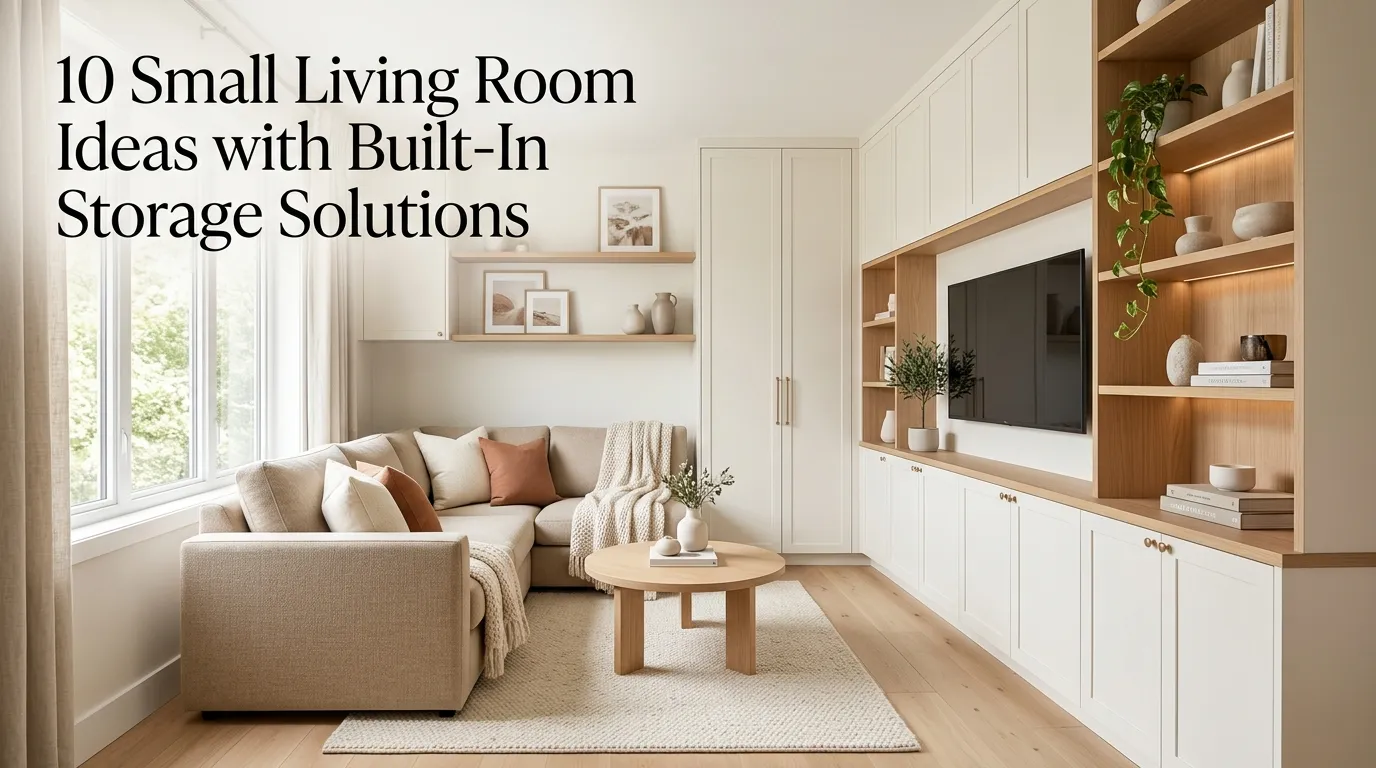
10 Small Living Room Ideas with Built-In Storage Solutions
A small living room has to work harder than a large one. It may need to accommodate a sofa, television, books, toys, blankets, electronics, and everyday belongings while still leaving enough open space to relax.
That’s where built-in storage can make a meaningful difference.
Instead of adding another freestanding cabinet or storage basket to an already crowded room, built-ins use the architecture of the space itself. Shelving around a television, cabinets beneath a window, a recessed bookcase, or storage tucked into an awkward corner can provide useful capacity while keeping the floor more open.
The best built-in solutions aren’t simply about hiding clutter. They also help a living room feel intentional. When storage is designed around the room’s dimensions, furniture can fit more naturally, visual lines become cleaner, and everyday objects have a designated home.
I’ve noticed that the most successful small living rooms don’t necessarily have the most storage. They have storage that matches how the room is actually used. Closed cabinets can hide electronics and miscellaneous items, while open shelves can display books and meaningful pieces. A combination of the two often feels more balanced than either approach alone.
You also don’t necessarily need a major renovation. Some ideas can be recreated with modular shelving, freestanding cabinets fitted carefully into an alcove, or custom-looking units designed to mimic a true built-in.
Whether you’re working with a compact apartment, older home, townhouse, or small family living room, these ideas can help you think vertically and make underused areas more useful.
Table of Contents
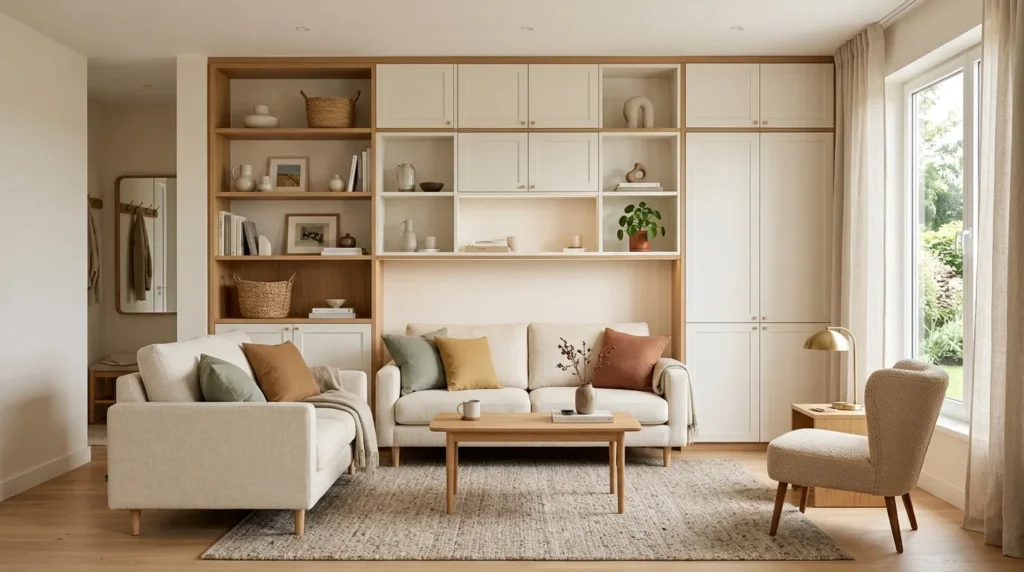
1. TV Wall Storage
Combine media storage, shelving, and cabinets around the television.
2. Window Seat Storage
Turn the space beneath a window into comfortable seating with hidden storage.
3. Recessed Bookcases
Use wall recesses to create storage without projecting heavily into the room.
4. Alcove Cabinets
Transform awkward wall niches into useful closed storage.
5. Built In Shelving
Use floor-to-ceiling shelves to maximize vertical storage.
6. Bench Storage
Combine extra seating with concealed compartments for everyday belongings.
7. Fireplace Built Ins
Use the areas beside a fireplace for balanced shelving and cabinetry.
8. Entry Wall Storage
Create a compact drop zone for items that frequently enter the living room.
9. Hidden Toy Storage
Keep family spaces organized with attractive cabinets for children’s belongings.
10. Floor To Ceiling Cabinets
Maximize every inch of vertical wall space with integrated closed storage.
1. TV Wall Storage
Quick Benefits
- Uses one major wall efficiently
- Hides electronics and cables
- Provides display space
- Keeps the floor clearer
- Creates a finished focal point
Why It Works
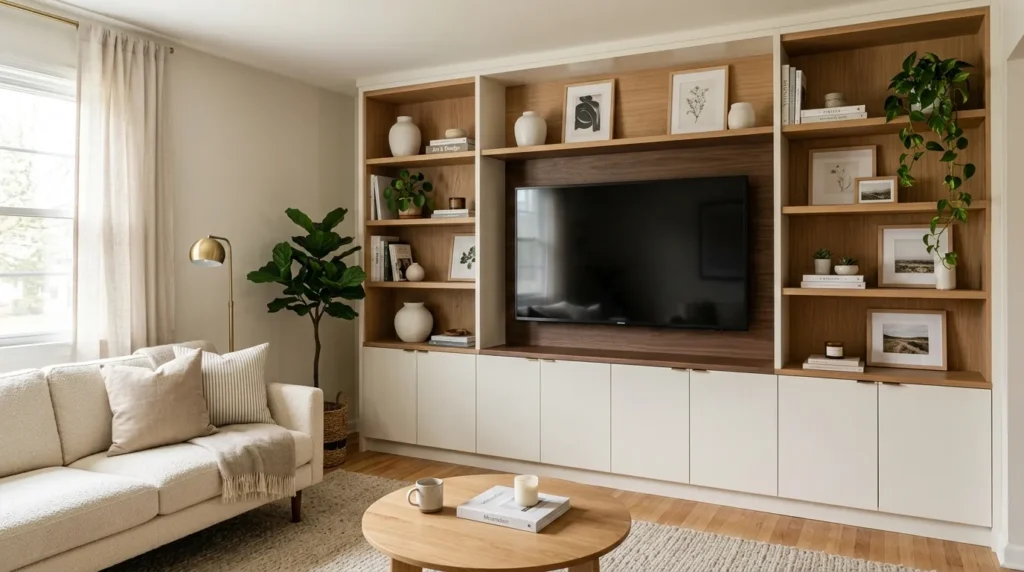
The television is often one of the largest visual elements in a small living room, so building storage around it can make the entire wall work harder.
Instead of placing the television on a standalone console and adding separate shelves elsewhere, an integrated media wall can combine several functions in one area.
Open shelves can hold books, artwork, and decorative pieces, while lower cabinets hide gaming equipment, remotes, cables, and other items.
This approach also gives the room a more cohesive appearance because the storage feels connected rather than pieced together.
How To Style It
Keep the television centered within the overall composition when the room layout allows.
Use closed cabinets below and open shelving around or beside the screen.
Choose cabinetry that coordinates with the room’s existing colors.
Avoid filling every shelf.
A few books, ceramics, framed photographs, and plants can provide visual interest without making the wall feel crowded.
Plan cable management before installation so wires can be routed neatly and remain accessible for future equipment changes.
2. Window Seat Storage
Quick Benefits
- Adds seating
- Creates hidden storage
- Uses otherwise overlooked space
- Works well in family rooms
- Adds architectural character
Why It Works
The space beneath a window can be awkward for traditional furniture, particularly when the sill is low.
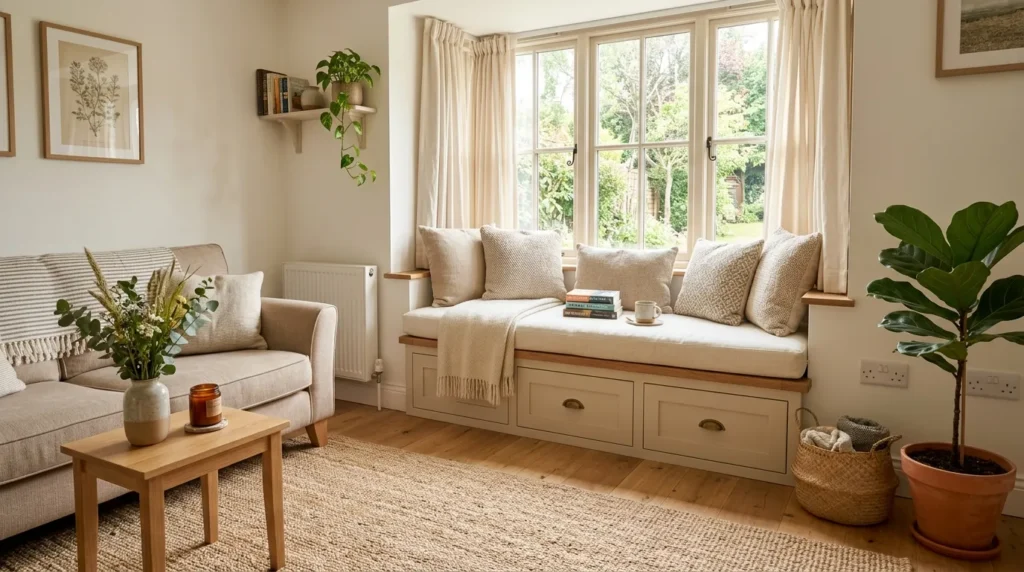
A built-in window seat transforms that unused area into both seating and storage.
The seat can provide a comfortable place to read while drawers or lift-up compartments beneath it hold blankets, pillows, board games, books, or other household items.
This solution is especially useful in compact living rooms because one architectural feature can serve several purposes.
How To Style It
Use durable upholstery if the seat will receive frequent use.
Choose drawers for belongings you access regularly.
Lift-up storage can work well for larger, less frequently used items.
Add a tailored cushion in a neutral fabric and a few removable pillows.
Keep the surrounding area relatively simple so the window remains the visual focus.
If you’re planning a custom installation, measure carefully around radiators, vents, electrical outlets, and window trim before construction.
3. Recessed Bookcases
Quick Benefits
- Uses wall depth
- Creates substantial storage
- Keeps walkways open
- Provides display space
- Adds architectural detail
Why It Works
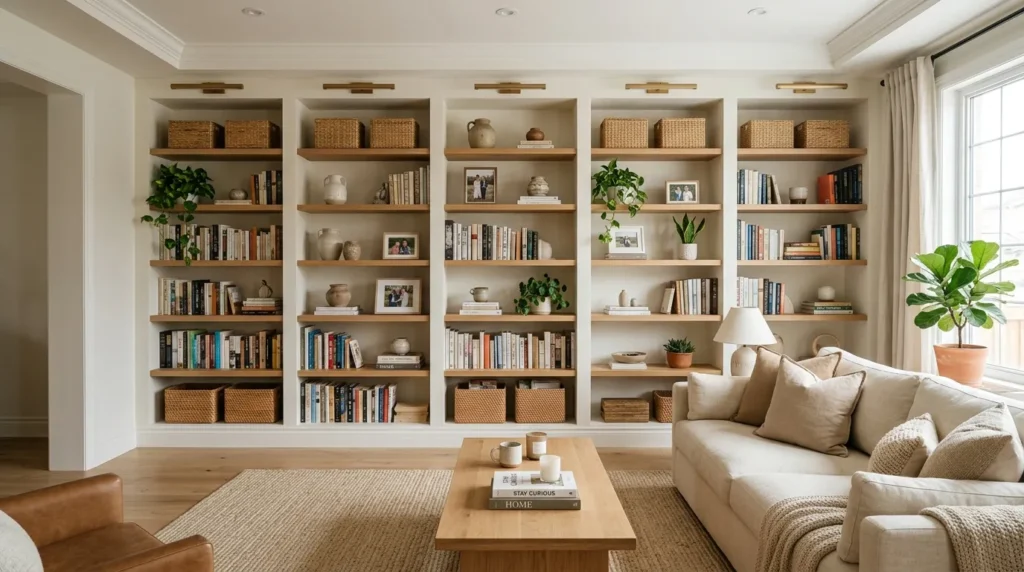
A recessed bookcase can turn an otherwise unused wall cavity into a functional storage area.
Because the shelving sits within the wall rather than projecting significantly into the room, it can preserve more usable floor space.
This is particularly valuable in narrow living rooms where every extra inch matters.
Recessed shelves are also visually appealing because they can make the room look more intentionally designed.
However, wall cavities can contain electrical wiring, plumbing, or structural elements, so proper assessment is important before cutting into a wall.
How To Style It
Use adjustable shelves when possible.
Organize books by category or size, then mix in a few decorative objects.
Place heavier books on lower shelves.
Use baskets to contain small items.
Paint the shelving the same color as the surrounding wall for a seamless look, or use a contrasting material such as natural wood if you want the storage to stand out.
4. Alcove Cabinets
Quick Benefits
- Makes awkward spaces useful
- Hides clutter
- Provides customized capacity
- Works beside furniture
- Creates a polished appearance
Why It Works
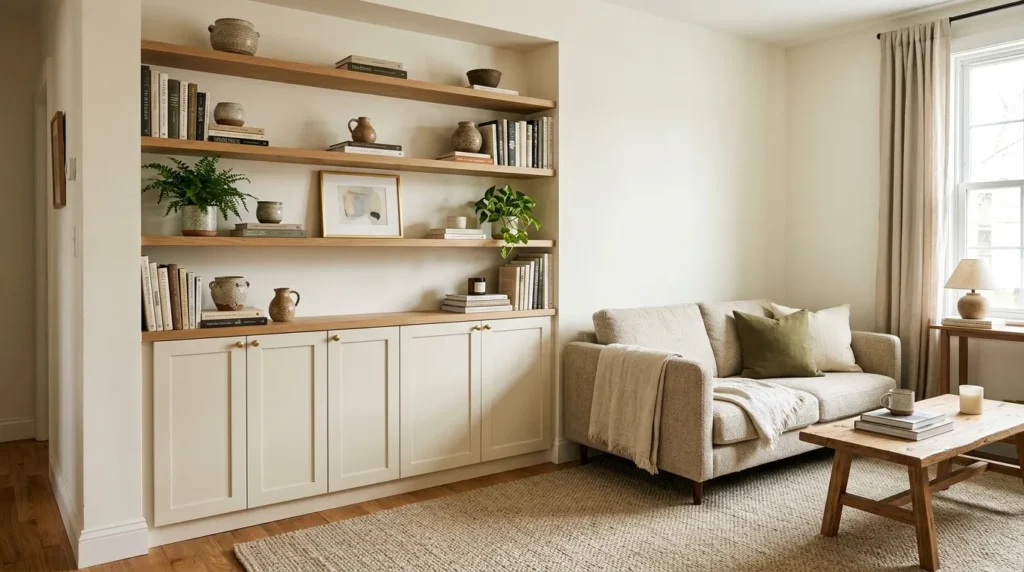
Many living rooms contain awkward alcoves created by chimneys, architectural projections, doorways, or unusual wall dimensions.
These spaces can be difficult to furnish with standard furniture.
Built-in cabinets can be designed specifically for the available width and depth, turning an otherwise frustrating corner into valuable storage.
Closed cabinetry is particularly useful when you want the living room to feel calm because everyday clutter can disappear behind doors.
How To Style It
Use the lower portion for closed cabinets and reserve upper areas for shelves when appropriate.
Store less attractive household items behind doors.
Use the shelves for books, framed photographs, plants, and carefully selected decor.
Paint the cabinetry to coordinate with the walls for a built-in appearance.
If custom cabinetry isn’t within your budget, look for modular units that closely match the dimensions of the alcove and add appropriate trim for a more integrated look.
5. Built In Shelving
Quick Benefits
- Uses vertical space
- Maximizes storage capacity
- Creates a strong focal wall
- Keeps belongings organized
- Works in narrow rooms
Why It Works
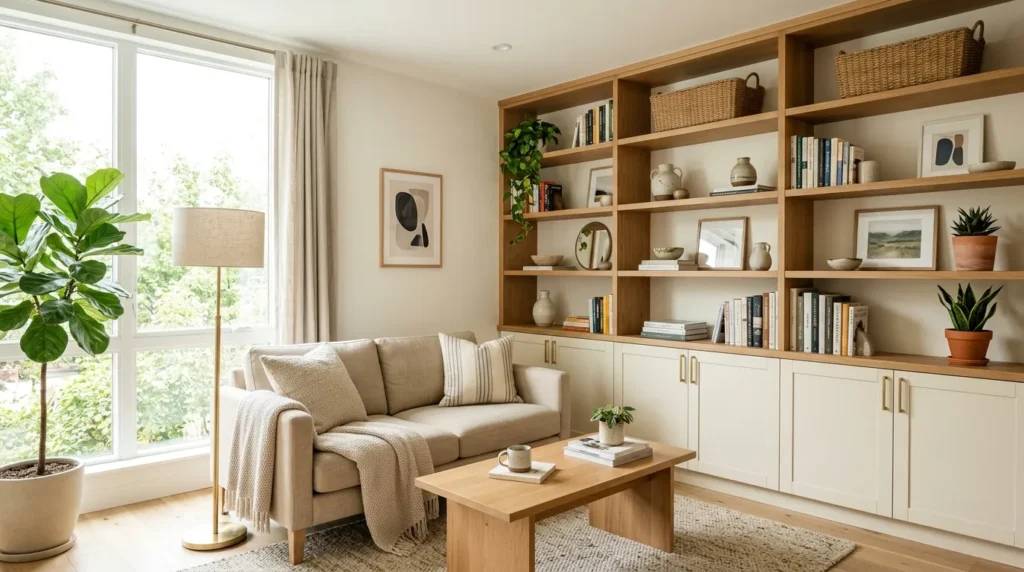
When floor space is limited, going upward is one of the most practical storage strategies.
Floor-to-ceiling shelving uses wall height that would otherwise remain unused.
This is particularly useful for books, baskets, decorative objects, and household belongings that don’t require enclosed storage.
Tall shelving can also make a small room feel more intentional because it draws the eye upward.
The key is balancing open storage with visual breathing room.
How To Style It
Use baskets or boxes for small items.
Keep frequently accessed belongings between waist and eye level.
Place decorative pieces at varying heights.
Don’t fill every shelf completely.
If the room is already visually busy, consider closed cabinets along the bottom portion.
A combination of lower cabinetry and upper shelving can provide both hidden storage and display space.
6. Bench Storage
Quick Benefits
- Provides extra seating
- Adds concealed storage
- Uses wall edges efficiently
- Works for families
- Can define a zone
Why It Works
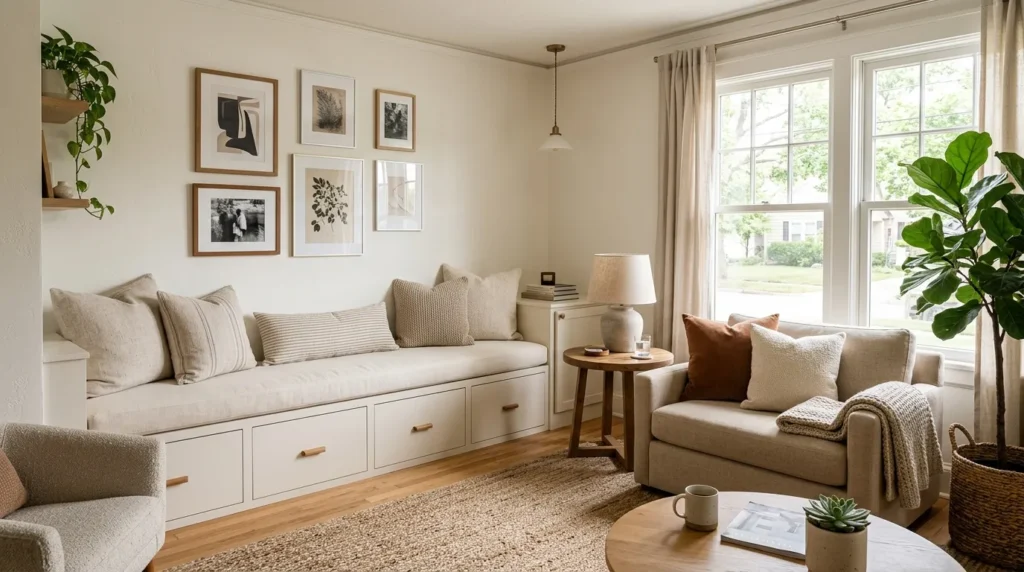
A built-in bench can be particularly useful when a living room needs additional seating but doesn’t have space for another full-size chair.
Storage underneath makes the furniture even more practical.
The compartment can hold throw blankets, children’s books, games, pillows, or seasonal accessories.
This type of storage is also useful along a wall where a conventional sofa or cabinet wouldn’t fit comfortably.
How To Style It
Choose a cushion fabric that coordinates with the sofa.
Use drawers if the bench will be accessed frequently.
For occasional-use storage, lift-up compartments can provide more capacity.
Add a few cushions for comfort, but don’t overcrowd the bench.
A small wall-mounted shelf above it can create another layer of useful storage without taking additional floor space.
7. Fireplace Built Ins
Quick Benefits
- Uses space beside the fireplace
- Creates visual symmetry
- Adds display storage
- Provides hidden cabinets
- Makes the fireplace feel integrated
Why It Works
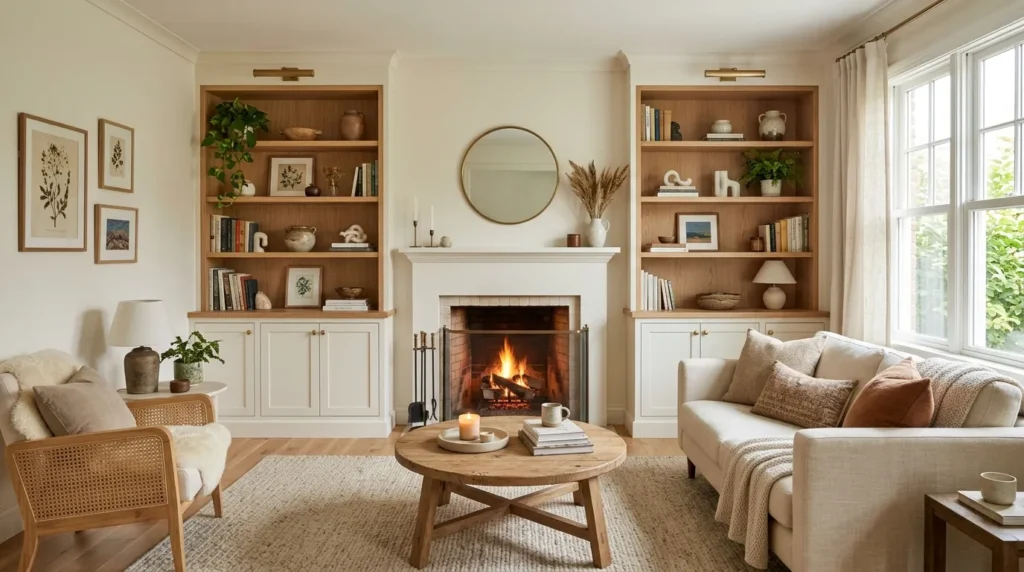
If your living room has a fireplace, the areas on either side often become natural candidates for built-in storage.
Rather than placing mismatched cabinets beside the fireplace, custom shelving can frame the architectural feature and make it feel like part of a larger composition.
The result can combine open shelves, closed cabinets, books, artwork, and decorative objects.
For small rooms, this can be particularly effective because it consolidates several functions onto one wall.
How To Style It
Consider closed cabinets at the bottom with open shelving above.
Keep the fireplace as the visual anchor.
Use similar shelf spacing on both sides for a balanced appearance.
Repeat the room’s primary wood or paint finish.
Add books, ceramics, framed art, and greenery selectively.
Because fireplaces can involve heat and safety requirements, follow applicable installation guidance and maintain appropriate clearances for combustible materials.
8. Entry Wall Storage
Quick Benefits
- Creates a drop zone
- Keeps small items contained
- Uses wall space
- Reduces clutter
- Helps organize everyday essentials
Why It Works
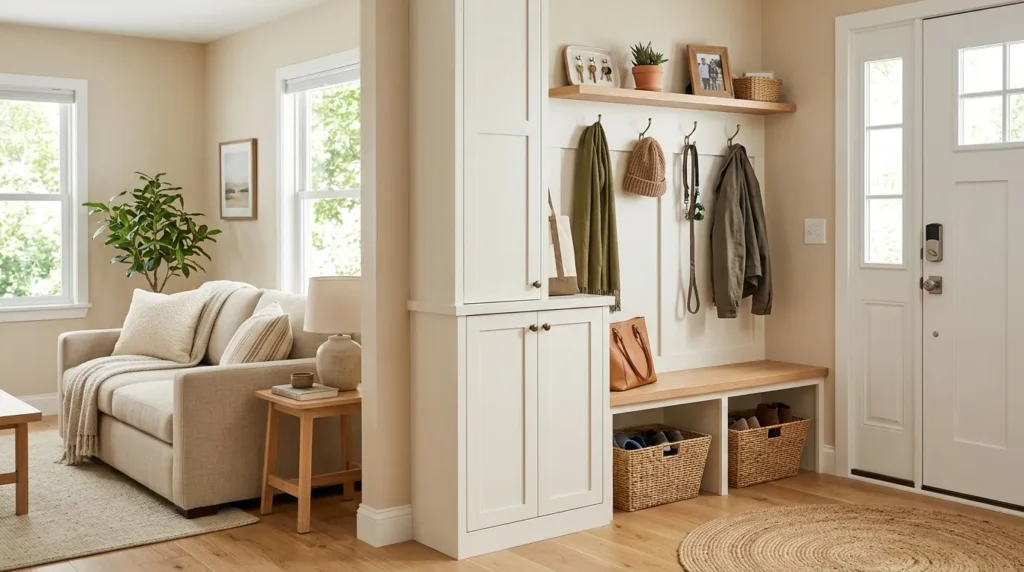
In smaller homes, the living room often becomes the first place where people drop keys, bags, shoes, mail, coats, and other belongings.
A compact built-in wall unit near the entrance can give those items a designated home.
This can be as simple as a narrow cabinet with hooks or as extensive as a small integrated mudroom-style wall.
The purpose isn’t to store everything.
It’s to prevent frequently used belongings from spreading across the room.
How To Style It
Use hooks for bags and lightweight outerwear.
Add a small shelf or drawer for keys and everyday accessories.
Keep a closed cabinet for less attractive items.
If shoes are stored there, provide adequate ventilation and easy cleaning.
Use a durable finish because entry areas receive more daily wear than decorative portions of the room.
9. Hidden Toy Storage
Quick Benefits
- Keeps toys accessible
- Reduces visual clutter
- Helps families stay organized
- Creates flexible storage
- Keeps the living room adult-friendly
Why It Works
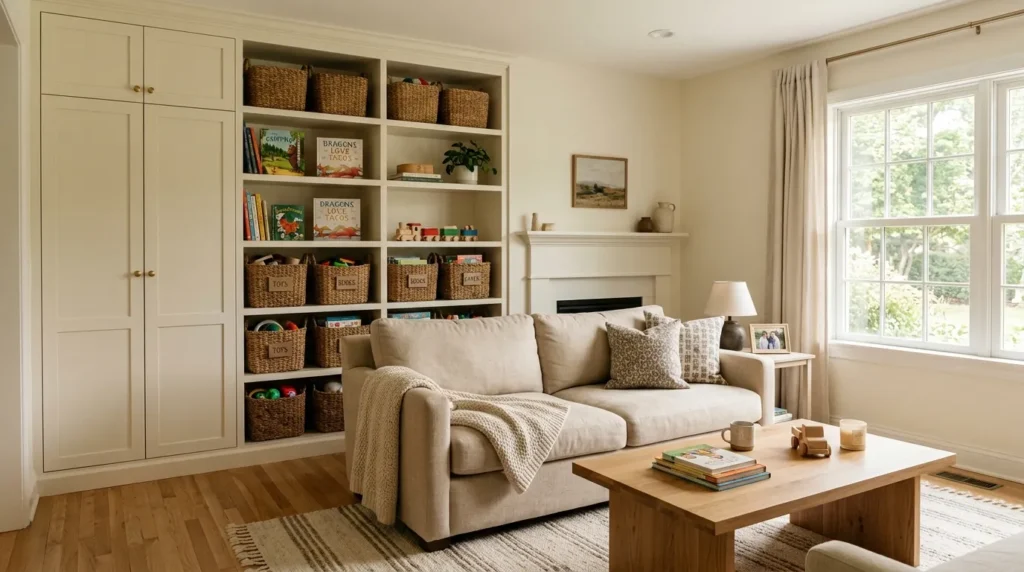
When a living room doubles as a family play area, toys can quickly take over valuable floor space.
Built-in cabinets provide a simple way to contain them without requiring a collection of colorful plastic storage bins.
Closed doors allow the room to transition from playtime to a more relaxed adult space quickly.
Open cubbies can hold baskets that children can access independently.
How To Style It
Use durable, easy-to-clean cabinet finishes.
Choose baskets that can be pulled out easily.
Create one storage area for toys and another for books or craft supplies.
Labeling baskets can help older children maintain the system.
Keep heavier items low.
Avoid storing objects in high areas that children might try to climb toward.
The best family storage system is one that is simple enough to use every day.
10. Floor To Ceiling Cabinets
Quick Benefits
- Maximizes wall height
- Provides extensive hidden storage
- Reduces visual clutter
- Works in compact rooms
- Creates a streamlined appearance
Why It Works
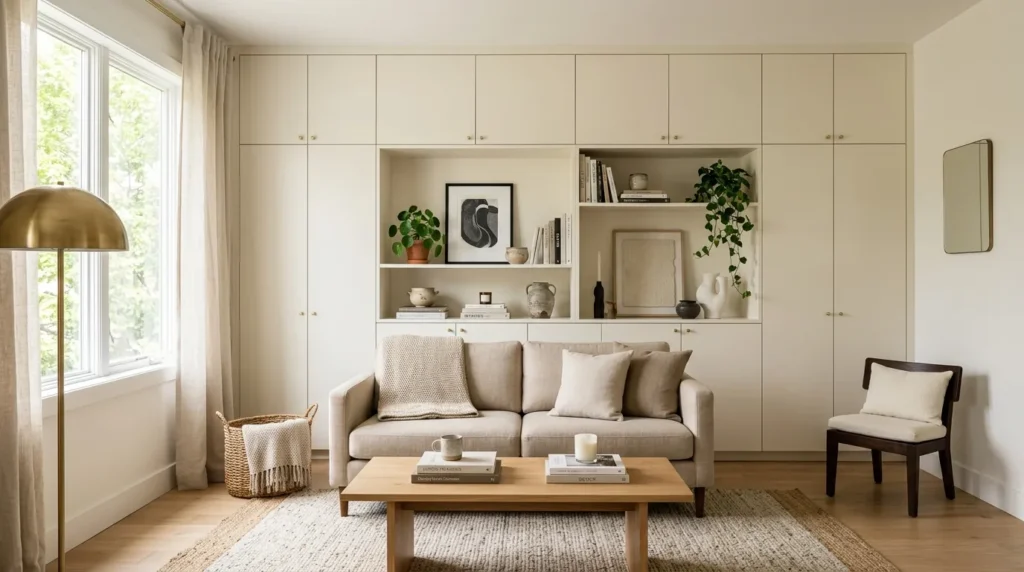
If storage needs are substantial, floor-to-ceiling cabinetry can provide an impressive amount of capacity without spreading furniture across multiple walls.
The vertical design uses the full height of the room while keeping the storage visually unified.
Closed doors are particularly helpful for living rooms because they allow everything from electronics to household supplies to disappear from view.
This can make a small room feel calmer even when it contains a lot of belongings.
How To Style It
Use simple cabinet fronts with minimal hardware for a streamlined appearance.
Consider painting the cabinets the same color as the walls so they blend into the architecture.
Use upper sections for seasonal or rarely accessed belongings.
Keep everyday items in the lower and middle zones.
If the cabinetry is very tall, make sure the installation is appropriately secured and designed for the wall structure.
How to Plan Built-In Storage for a Small Living Room
Before deciding on a storage design, identify what you actually need to store.
Make a list of the categories that currently create clutter:
- Books
- Electronics
- Board games
- Toys
- Blankets
- Decorative items
- Paperwork
- Pet supplies
- Remote controls
- Seasonal decorations
- Media equipment
Then divide those belongings into two groups:
Items you want visible
Books, artwork, plants, photographs, and meaningful decorative objects can work well on open shelves.
Items you want hidden
Cables, chargers, toys, paperwork, electronics, and miscellaneous household belongings generally benefit from closed cabinets or drawers.
This simple distinction can help you determine how much open shelving versus concealed storage you actually need.
Built-In Storage Doesn’t Always Mean Custom Construction
The term “built-in” can sound expensive, but there are several ways to achieve a similar visual effect.
You can combine:
- Modular shelving
- Ready-made cabinets
- Bookcases
- Wall-mounted shelves
- Storage benches
- Freestanding cabinets
- Custom trim
- Paint or matching finishes
For example, several narrow bookcases placed together and finished with trim can create the appearance of one continuous wall unit.
The important thing is making sure the solution is safely secured and appropriately sized for the room.
If you’re renting, freestanding modular furniture may provide a more practical alternative to permanent construction.
How to Make Built-In Storage Look Less Bulky
Storage can solve a clutter problem while creating a visual one if the design is too heavy.
A few strategies can help.
Match the Walls
Painting cabinetry the same or a closely related color as the walls can help it visually recede.
Use Flat Fronts
Simple cabinet doors generally look cleaner in compact rooms than heavily decorative fronts.
Mix Open and Closed Storage
Open shelves add breathing room while closed cabinets hide clutter.
Leave Empty Space
Not every shelf needs to be filled.
Use Consistent Materials
Repeating wood tones, cabinet colors, and hardware helps the room feel cohesive.
Common Built-In Storage Mistakes
Designing for Objects You Don’t Use
More storage isn’t always better. Start by decluttering before planning the cabinetry.
Using Only Open Shelves
Open shelving can quickly look messy when every item is visible.
Forgetting Electrical Access
Media walls need thoughtful planning for outlets, cables, and future equipment.
Ignoring Furniture Scale
A wall of cabinetry can overwhelm a small room if it isn’t proportioned correctly.
Filling Every Shelf
Empty space helps built-in storage look intentional.
Installing Without Checking the Wall
Electrical wiring, plumbing, structural elements, vents, and other hidden conditions must be considered before cutting or mounting.
Choosing Style Over Function
Beautiful storage that is difficult to access won’t remain organized for long.
Frequently Asked Questions
Is built-in storage good for a small living room?
Yes. Built-in storage can use wall height and awkward architectural spaces without requiring several separate pieces of furniture. Cabinets, shelving, window seats, and media walls can combine storage and design while helping preserve open floor space.
Is built-in storage expensive?
Custom built-ins can be expensive because they involve tailored materials, labor, installation, and finishing. However, modular shelving, cabinets, and freestanding units can create a similar appearance at a lower cost. The best option depends on your budget, home, and whether you want permanent construction.
Should small living room storage be open or closed?
A combination often works best. Open shelving can display books and meaningful decor, while closed cabinets hide electronics, toys, paperwork, and miscellaneous belongings. In a small room, too much open storage can look cluttered, so concealed storage is useful for maintaining a calmer appearance.
How do I make built-in storage look less bulky?
Choose simple cabinet fronts, use a finish that coordinates with the walls, and combine closed cabinets with open shelves. Avoid filling every available shelf. Leaving negative space and using consistent materials can make a large storage unit feel more integrated with the room.
Can I create the look of built-ins without remodeling?
Yes. Modular bookcases, cabinets, shelving systems, and storage benches can be arranged to create a built-in appearance. Adding appropriate trim and using a coordinated finish can make separate pieces look more unified. Always follow manufacturer instructions for securing furniture safely.
What should I store in living room built-ins?
Store items according to how frequently you use them. Everyday items can go in easily accessible drawers and cabinets. Books and decorative objects can occupy open shelves, while seasonal decorations, extra blankets, toys, electronics, and miscellaneous household items can be placed in closed storage.
Are built-ins a good idea for renters?
Permanent built-ins may not be appropriate for rental properties without permission. Renters can instead use freestanding bookcases, modular cabinets, storage benches, and removable shelving solutions. The goal is to gain the organizational benefits without making unauthorized structural changes.
Conclusion
A small living room doesn’t necessarily need more furniture. It often needs better-integrated storage.
Built-in shelving, media walls, window seats, alcove cabinets, storage benches, and floor-to-ceiling cabinetry can turn overlooked parts of the room into useful storage zones.
The most effective approach is to start with the belongings that currently create clutter. Decide what deserves to be displayed and what you’d rather keep behind closed doors. Then choose a storage solution around those needs rather than designing storage simply because an empty wall is available.
Remember that built-in storage should support the way you live.
If your family uses the living room every day, prioritize easy-access cabinets and baskets. If the room is more formal, emphasize books, artwork, and concealed storage. If you’re working with a rental, consider modular pieces that create a similar effect without permanent construction.
You don’t need to transform every wall.
One well-designed storage zone can make a surprisingly large difference.
Start with the most frustrating clutter problem in your living room, solve that area first, and let the rest of the design develop naturally. A room with fewer visible distractions can feel more spacious, comfortable, and easier to maintain.
Related Articles
- 10 Small Living Room Ideas That Feel Open Without Remodeling
- How to Organize a Small Living Room Without Making It Feel Crowded
- 10 Modern Living Room Ideas with Luxury Style
- How to Decorate a Living Room Using Interior Design Principles
- 10 Living Room Storage Ideas for a Clutter-Free Home