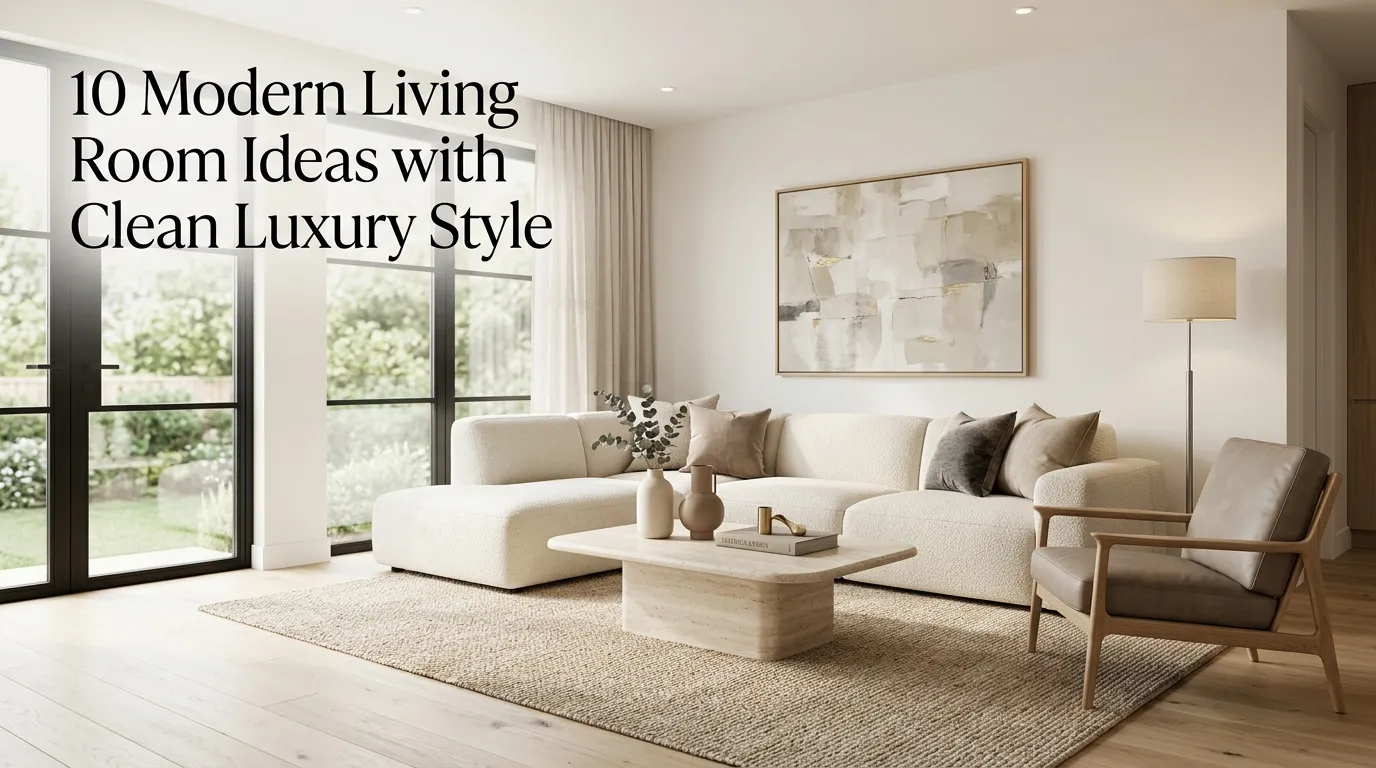
10 Modern Living Room Ideas with Clean Luxury Style
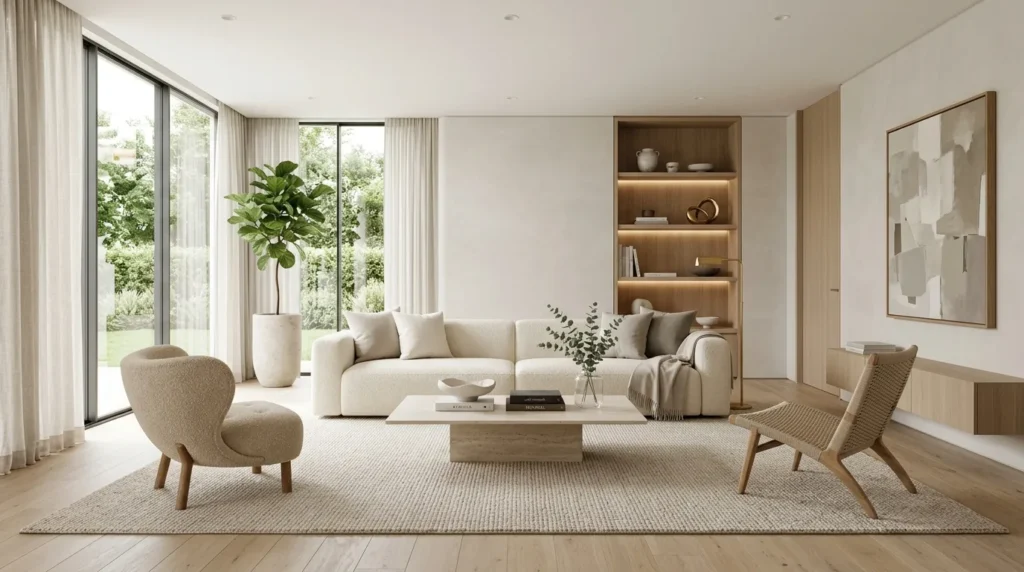
A living room can feel luxurious without looking flashy. In fact, some of the most sophisticated spaces rely on restraint: a quiet color palette, beautifully proportioned furniture, natural materials, thoughtful lighting, and enough open space for every element to stand out.
That balance is the heart of clean luxury style.
The goal isn’t to fill a room with expensive-looking accessories. It’s to create an environment where comfort and refinement work together. A streamlined sofa can feel elevated when paired with a textured rug and sculptural coffee table. Simple curtains can look polished when they’re properly scaled to the windows. Even a mostly neutral room can feel rich when different materials are layered thoughtfully.
I’ve noticed that the rooms that feel most timeless usually have one thing in common: nothing feels accidental. Furniture has breathing room. Colors repeat naturally. Decorative objects are edited rather than scattered across every surface.
This approach also makes sense for real homes. You can introduce a more luxurious feeling without replacing everything at once. Updating the lighting, simplifying the color palette, adding one substantial piece of artwork, or replacing several small accessories with a single sculptural accent can make a noticeable difference.
Whether you’re decorating a spacious family room, an apartment living area, or a smaller open-concept space, these ideas focus on creating a polished room that still feels comfortable enough for everyday life.
The best part is that clean luxury isn’t tied to one particular size or architectural style. It can be adapted to your existing furniture, budget, and personal taste.
Here are ten ways to bring that understated, modern elegance into your living room.
Table of Contents
1. Neutral Layered Palette
Create a sophisticated foundation with warm whites, taupe, beige, and soft natural tones.
2. Sculptural Coffee Table
Give the room a strong focal point with a simple table featuring an interesting silhouette.
3. Tailored Upholstery
Use clean-lined seating with refined proportions and comfortable materials.
4. Statement Lighting
Add architectural interest through a carefully chosen chandelier or contemporary light fixture.
5. Floor To Ceiling Curtains
Use generous window treatments to create height and a polished finish.
6. Natural Stone Accents
Introduce marble, travertine, limestone, or similar materials for subtle visual richness.
7. Oversized Artwork
Create impact with one large piece instead of a collection of small decorations.
8. Refined Area Rug
Anchor the furniture with a generously sized rug featuring subtle texture or pattern.
9. Minimal Styled Shelves
Keep built-ins and shelving elegant by combining books, art, ceramics, and negative space.
10. Warm Ambient Lighting
Layer several gentle light sources to make the room feel inviting after sunset.
1. Neutral Layered Palette
Quick Benefits
- Creates an instantly calm foundation
- Makes the room feel cohesive
- Highlights furniture silhouettes
- Works across decorating styles
- Makes natural materials stand out
Why It Works
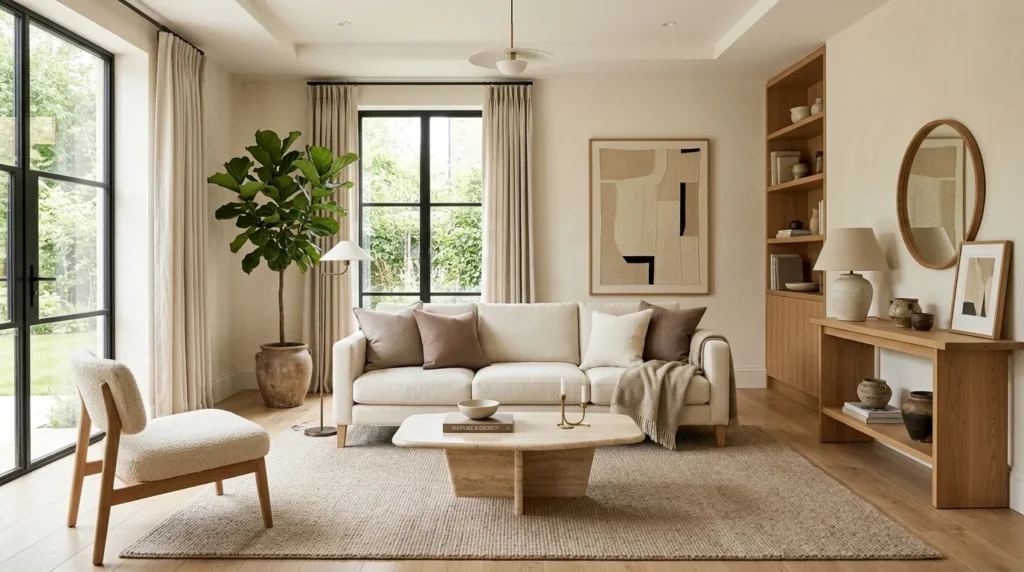
A sophisticated living room doesn’t require a complicated color scheme.
A restrained palette gives architectural details, furniture shapes, and textures more visual importance.
Warm white, ivory, beige, taupe, greige, and soft brown can create a refined foundation without making the room feel flat.
The important distinction is between using several compatible neutrals and making everything exactly the same color.
Subtle variation creates depth.
For example, an ivory sofa can sit against a warm white wall while a taupe rug grounds the seating area. Natural oak and muted brown accents can add additional warmth.
The result feels layered without becoming visually noisy.
How To Style It
Choose one dominant neutral for the largest surfaces.
Use two or three supporting shades throughout the room.
Then introduce contrast through materials rather than bold colors.
A cream sofa can pair with a warm beige rug, oak side table, stone coffee table, and darker brown accents.
Repeat colors in small ways around the room.
For example, if you use warm brown in a chair, repeat it in a picture frame or decorative object.
Avoid adding too many unrelated shades.
A limited palette makes the room feel intentional.
2. Sculptural Coffee Table
Quick Benefits
- Creates a focal point
- Adds architectural interest
- Breaks up straight furniture lines
- Looks sophisticated with minimal decor
- Anchors the seating arrangement
Why It Works
When a living room uses simple furniture, shape becomes especially important.
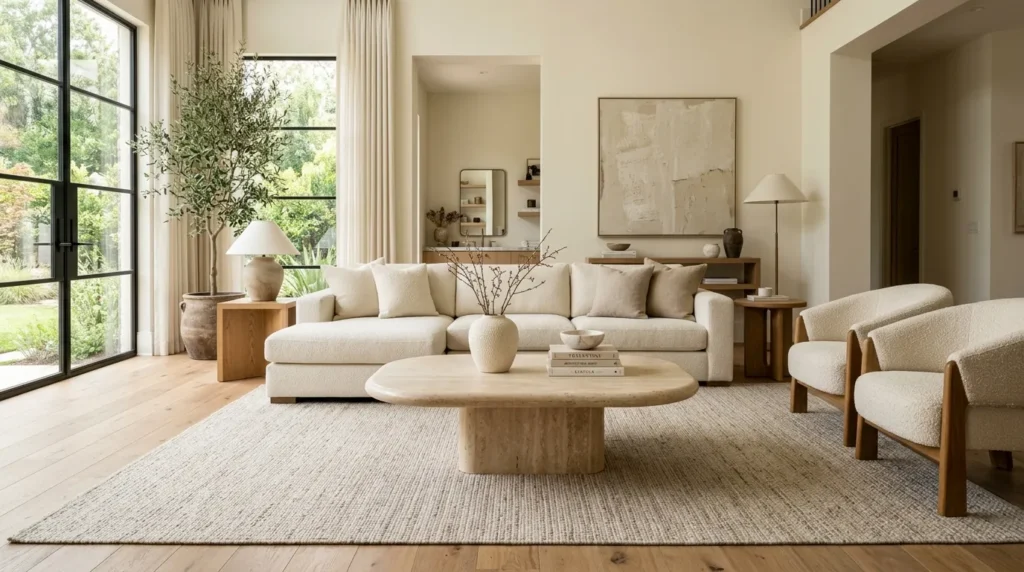
A sculptural coffee table can function almost like a piece of art.
Rounded edges, pedestal bases, thick stone surfaces, irregular silhouettes, and architectural forms can create interest without requiring excessive decoration.
This is especially effective in neutral interiors.
Instead of relying on bright colors or elaborate patterns, the room gains personality from proportion and form.
A sculptural table can also soften a room filled with rectangular furniture.
How To Style It
Choose a table based on the size of your seating area.
A large room can accommodate a substantial stone or wood table.
A smaller living room may benefit from a round or oval design that allows easier movement around it.
Keep the tabletop styling simple.
A low ceramic bowl, coffee-table book, or small sculptural object can be enough.
Leave plenty of surface visible.
If the table itself has an interesting shape or material, it doesn’t need to compete with a large collection of accessories.
3. Tailored Upholstery
Quick Benefits
- Creates a polished appearance
- Supports comfortable everyday use
- Establishes visual structure
- Works with neutral palettes
- Feels timeless
Why It Works
Furniture is usually the largest investment in a living room, so its silhouette has a major effect on the overall style.
Clean luxury works particularly well with seating that has simple, intentional proportions.
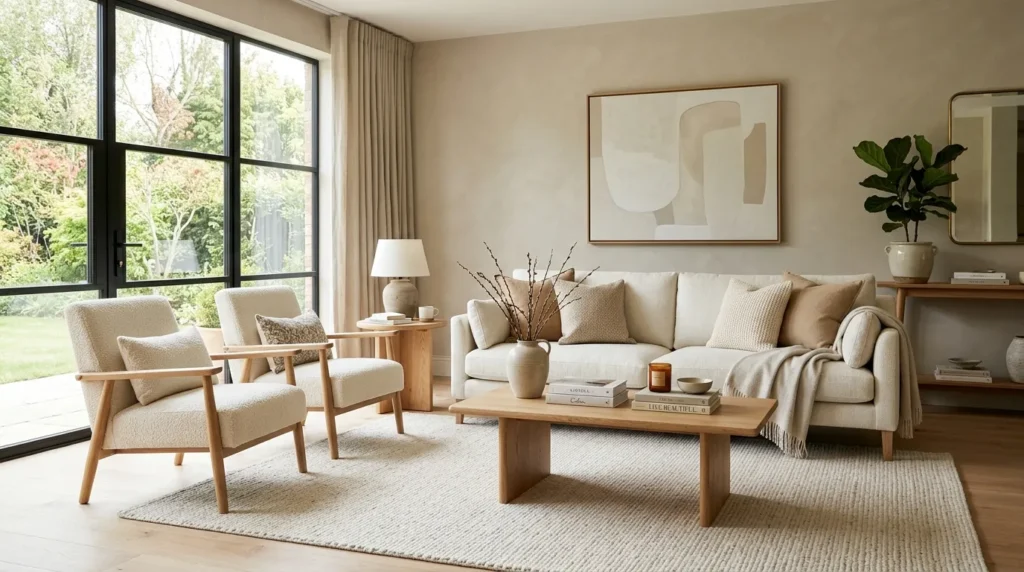
Look for sofas and chairs with defined shapes, quality-looking upholstery, and minimal decorative detailing.
That doesn’t mean choosing uncomfortable furniture.
A luxurious living room still needs to work for movie nights, conversations, reading, and everyday family life.
Comfort and clean lines can coexist.
How To Style It
Choose a sofa that fits the room rather than automatically selecting the largest option available.
Cream, ivory, warm beige, taupe, and muted gray are versatile upholstery choices.
Add a small number of cushions in coordinating textures.
Instead of mixing many patterns, use linen, boucle, velvet, cotton, or woven fabrics to create subtle variation.
Keep the seating arrangement conversational.
Two chairs facing a sofa can create balance.
In a larger room, a sectional can define the main seating zone without requiring numerous individual pieces.
4. Statement Lighting
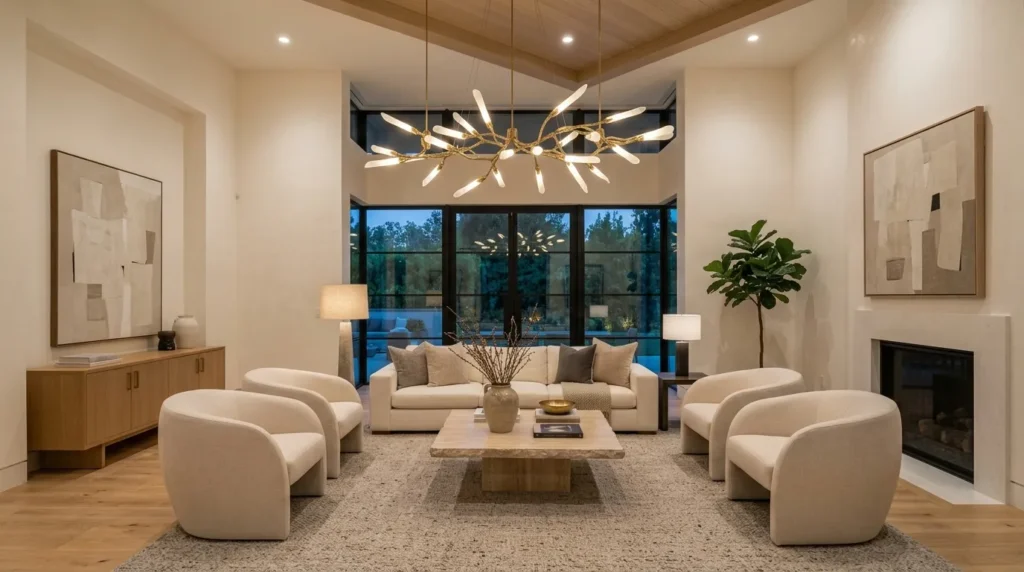
Quick Benefits
- Adds architectural character
- Creates a visual focal point
- Improves evening atmosphere
- Defines the design style
- Reduces the need for excessive decor
Why It Works
Lighting is one of the easiest ways to make a living room feel considered.
A beautiful chandelier, sculptural pendant, or contemporary ceiling fixture can act as functional artwork.
The key is proportion.
A fixture that’s too small can disappear in the room.
One that’s excessively large can overwhelm the furniture.
Clean luxury generally favors fixtures with strong shapes and relatively simple finishes.
Metal, glass, plaster, ceramic, and sculptural forms can all work.
How To Style It
Consider the room’s ceiling height and furniture arrangement before selecting the fixture.
Center a ceiling fixture appropriately over the main seating area or room zone.
For open-concept spaces, use lighting to help define the living room from adjacent areas.
Supplement overhead lighting with table lamps and floor lamps.
This creates flexibility throughout the day.
Keep the fixture itself relatively uncluttered.
If the chandelier has a strong sculptural shape, allow it to remain the focal point.
5. Floor To Ceiling Curtains
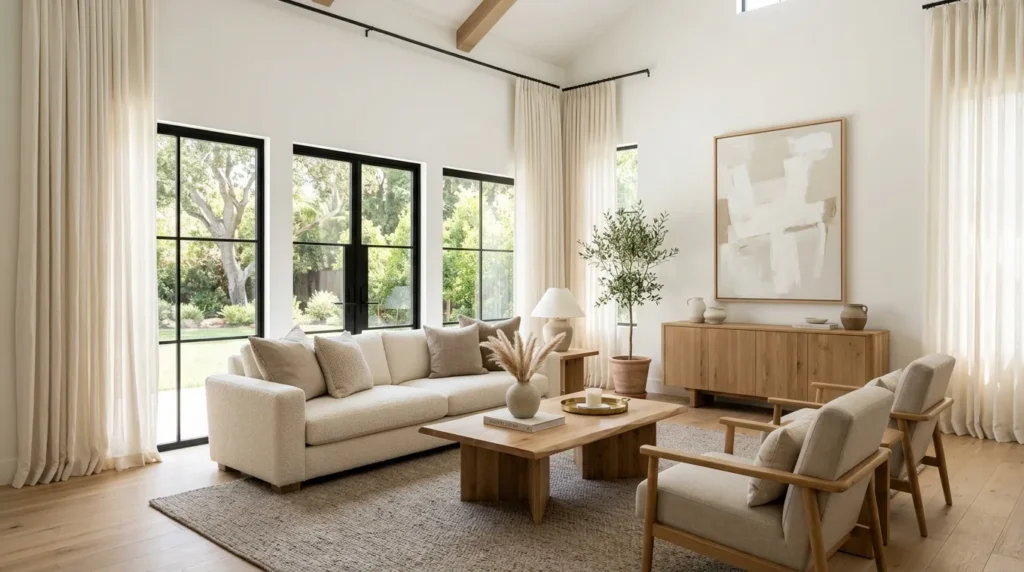
Quick Benefits
- Emphasize ceiling height
- Make windows feel larger
- Add softness
- Improve privacy
- Create a finished appearance
Why It Works
Window treatments can dramatically change the proportions of a living room.
Curtains that extend from near the ceiling toward the floor create strong vertical lines.
That can make the room feel taller and more elegant.
For a clean luxury aesthetic, simple fabrics usually work better than highly decorative treatments.
Linen-look fabrics, soft cotton blends, and subtle textured materials can create an elevated appearance without becoming formal.
How To Style It
Choose a curtain color close to the walls for a seamless appearance.
Warm white, ivory, beige, and soft taupe are versatile options.
Use enough width for the panels to look full when closed.
If possible, position the curtain hardware beyond the window frame so the glass remains visually open when the curtains are drawn back.
Allow the panels to reach the floor.
Avoid overly short curtains.
If the room receives strong sunlight, combine attractive curtains with suitable shades or blinds for practical light control.
6. Natural Stone Accents
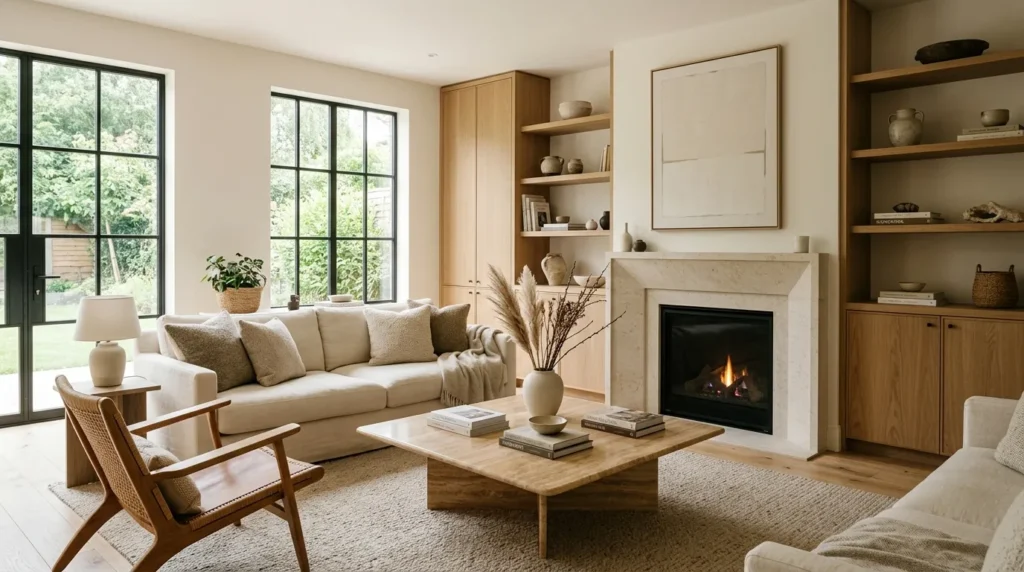
Quick Benefits
- Adds natural visual richness
- Creates material contrast
- Works beautifully with neutrals
- Feels substantial
- Adds timeless character
Why It Works
Natural stone has variation built into the material.
Veining, subtle color changes, texture, and natural patterns create interest without relying on bold decoration.
A travertine coffee table, marble side table, limestone fireplace surround, or stone accessory can add a luxurious quality to an otherwise simple room.
The trick is moderation.
One substantial stone element often has more impact than many small decorative pieces.
How To Style It
Choose stone based on the existing palette.
Warm travertine and limestone can complement beige, cream, and oak.
Marble can introduce cooler contrast when paired with gray or crisp neutral tones.
Use stone alongside softer materials such as linen upholstery, wool rugs, and woven accessories.
If you’re decorating on a budget, a small stone tray or lamp base can introduce the material without requiring a major furniture purchase.
Let the stone’s natural variation remain visible.
7. Oversized Artwork
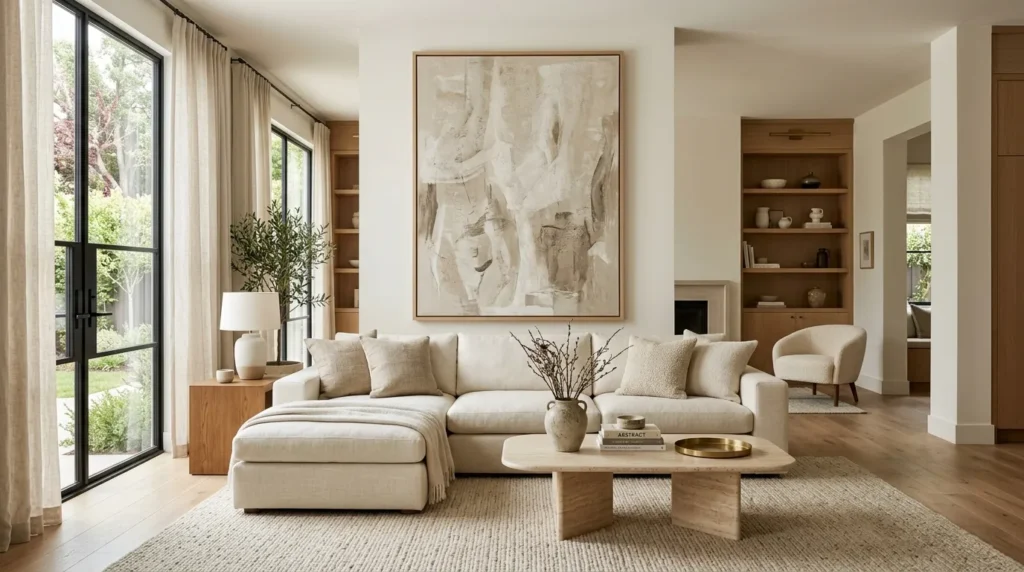
Quick Benefits
- Creates instant visual impact
- Reduces wall clutter
- Establishes a focal point
- Works well above large sofas
- Adds personality
Why It Works
One large artwork can create a more sophisticated appearance than many small pieces competing for attention.
This is particularly useful in clean luxury interiors because the style relies on visual simplicity.
A large abstract painting, textured canvas, oversized photograph, or simple architectural artwork can fill a wall while maintaining a calm atmosphere.
The artwork doesn’t need to match the furniture exactly.
It simply needs to share a compatible color relationship.
How To Style It
Choose a piece large enough to relate to the furniture beneath it.
Above a sofa, the artwork generally looks more balanced when its width relates to the sofa rather than appearing like a tiny island on a large wall.
Use a simple frame.
Natural wood, black, brushed metal, or a tonal frame can work depending on the palette.
Keep surrounding wall decor limited.
Allow the artwork to become the focal point.
8. Refined Area Rug
Quick Benefits
- Defines the seating area
- Adds softness
- Creates visual cohesion
- Introduces subtle texture
- Makes furniture feel connected
Why It Works
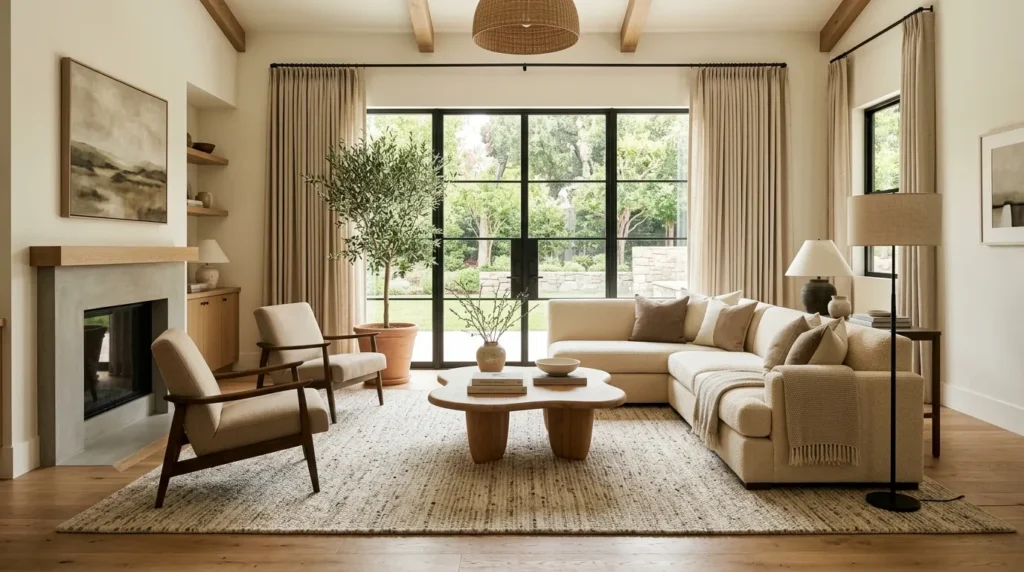
An appropriately sized rug can make the difference between furniture that feels scattered and a seating area that feels intentionally designed.
A common mistake is choosing a rug that’s too small.
In many living rooms, at least the front legs of the major seating pieces can sit on the rug, depending on the layout.
A generously sized rug creates a visual boundary around the furniture.
For clean luxury, subtle patterns and tonal textures usually work beautifully.
How To Style It
Choose the largest size that works comfortably with your room and furniture arrangement.
Consider wool, wool blends, jute, or other appropriate materials based on your lifestyle.
Cream and beige rugs can create a soft foundation.
Muted geometric or organic patterns can add interest without dominating.
If you have children or pets, prioritize durability and ease of maintenance.
Luxury is more practical when the room can actually be lived in.
9. Minimal Styled Shelves
Quick Benefits
- Adds personality without clutter
- Creates vertical interest
- Provides useful storage
- Displays meaningful objects
- Makes built-ins feel intentional
Why It Works
Shelving can quickly become visually overwhelming.
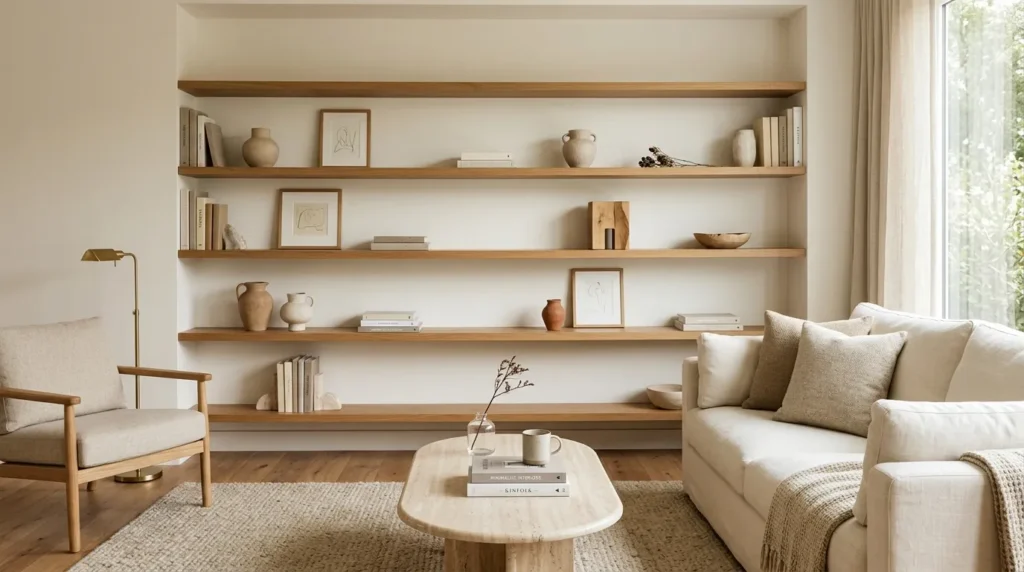
The clean luxury approach is to treat shelves almost like a gallery.
Instead of filling every inch, leave open spaces between objects.
Mix a few categories: books, ceramics, artwork, photographs, and natural elements.
Vary the height and scale.
A tall vase beside a horizontal stack of books creates more visual interest than several objects of identical size.
How To Style It
Begin by removing everything from the shelves.
Place the largest pieces first.
Then add books and smaller objects around them.
Repeat colors from the rest of the living room.
For example, a cream ceramic vase can connect to the sofa while a wooden frame echoes the coffee table.
Leave some shelves partially empty.
Don’t feel obligated to decorate every level.
Negative space helps the arrangement feel edited.
10. Warm Ambient Lighting
Quick Benefits
- Makes evenings feel inviting
- Adds depth
- Highlights textures
- Creates flexible lighting
- Supports a relaxed atmosphere
Why It Works
A room can look beautiful during the day and completely different at night.
That is why lighting deserves consideration beyond the main ceiling fixture.
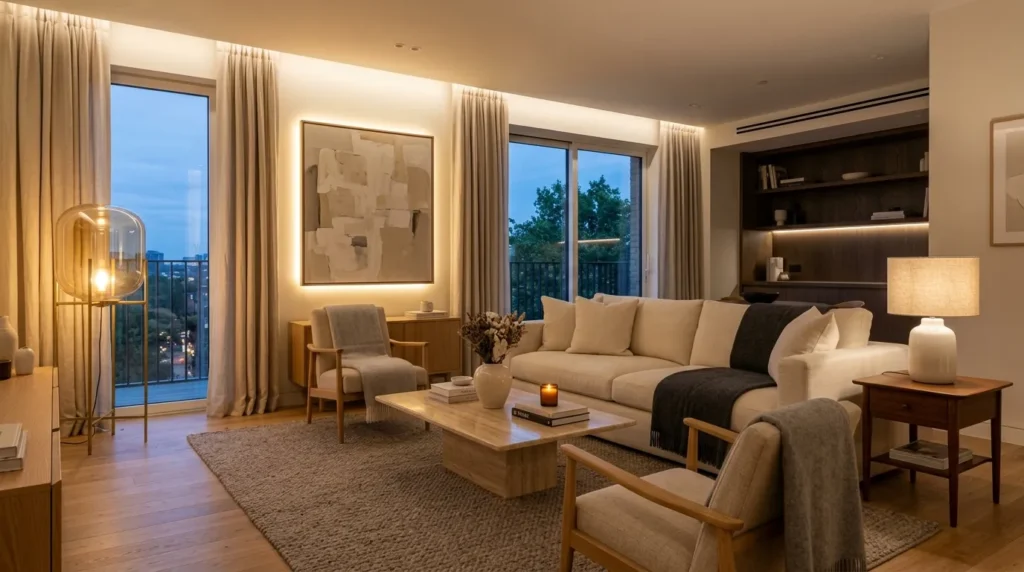
Warm ambient light can emphasize the textures that make a clean luxury room interesting: linen, wood grain, stone, upholstery, and artwork.
Several smaller sources also allow you to adjust the atmosphere depending on what you’re doing.
Bright general lighting works for cleaning and practical tasks.
Lower, layered lighting works beautifully for relaxing or entertaining.
How To Style It
Combine ceiling lighting with floor lamps, table lamps, sconces, or other suitable fixtures.
Place a floor lamp beside a reading chair.
Use a table lamp on a console or side table.
Highlight artwork or architectural features where appropriate.
Choose bulbs and fixtures according to the mood and function you want.
Avoid making every light source equally bright.
The variation creates depth.
How To Make a Living Room Look Luxurious Without Overspending
Luxury style doesn’t require buying an entirely new living room.
Often, the biggest improvement comes from editing.
Start With the Layout
Pull furniture away from walls when the room allows it.
Create a conversation area rather than pushing every piece around the perimeter.
Reduce Small Decor
Several inexpensive objects can create more visual clutter than one substantial piece.
Remove accessories that don’t contribute to the room.
Improve the Lighting
Replace harsh bulbs with warmer options appropriate for the fixtures.
Add one floor lamp or table lamp where practical.
Upgrade Textiles
A well-chosen rug, curtains, cushions, or throw can introduce texture and softness.
Choose Larger Artwork
One appropriately scaled piece can make a wall feel more intentional.
Repeat Materials
Use similar wood tones, metals, and neutral colors throughout the room.
Keep Surfaces Clear
An uncluttered coffee table and console instantly make a space feel more considered.
The goal is not to make the room look expensive.
It’s to make it look intentional.
Clean Luxury Living Room Color Combinations
A restrained palette can make decorating easier.
Warm White + Taupe + Oak
Soft, welcoming, and timeless.
Cream + Beige + Walnut
Richer and slightly more dramatic.
Ivory + Greige + Black
Modern with subtle contrast.
Sand + White + Travertine
Natural and sophisticated.
Warm Gray + Cream + Natural Wood
Balanced and understated.
Beige + Muted Brown + Brass
Warm with a refined metallic accent.
Choose one primary color, one supporting neutral, and one accent material.
This keeps the room cohesive without making it monotonous.
Clean Luxury Materials To Consider
Materials are particularly important when the color palette is restrained.
Look for opportunities to combine:
- Natural wood
- Linen
- Wool
- Cotton
- Stone
- Ceramic
- Glass
- Boucle
- Brushed metal
- Woven fibers
- Leather
- Textured plaster
You don’t need every material in one room.
Three or four complementary materials can create plenty of visual interest.
For example, a cream sofa, oak console, wool rug, and stone coffee table already provide several distinct textures and surfaces.
Common Clean Luxury Decorating Mistakes
Too Many Decorative Objects
Luxury style benefits from editing.
Furniture That’s Too Small
Tiny furniture can make a large room feel unfinished.
An Oversized Sofa
A large sofa can overwhelm a smaller living room.
Matching Everything
A coordinated room doesn’t mean every piece comes from the same collection.
Ignoring Scale
Artwork, rugs, lighting, and furniture all need to relate to the room’s proportions.
Using Only One Light Source
Layered lighting creates much more depth.
Making the Room Too Formal
A living room still needs to function for real life.
Forgetting Texture
A neutral room without texture can feel flat.
FAQ
What is clean luxury interior design?
Clean luxury combines modern simplicity with refined materials, thoughtful proportions, comfortable furniture, restrained colors, and carefully selected decor. Instead of relying on excessive ornamentation, it creates sophistication through quality-looking textures, architectural shapes, natural materials, lighting, and visual balance.
What colors make a living room look luxurious?
Warm white, cream, beige, taupe, greige, soft brown, muted gray, and natural wood tones work particularly well. Darker accents such as charcoal, walnut, or restrained black can add contrast. A limited palette usually creates a more cohesive appearance than many competing colors.
How can I make my living room look expensive?
Focus on proportion, texture, lighting, and editing. Choose an appropriately sized rug, hang curtains at a visually appropriate height, simplify decorative surfaces, add layered lighting, and introduce materials such as natural wood, stone, linen, or ceramic. These changes can create a polished appearance without replacing every piece of furniture.
What furniture works with clean luxury style?
Streamlined sofas, tailored chairs, simple consoles, sculptural coffee tables, natural wood furniture, and understated storage pieces all work well. Select furniture based on the size of the room and prioritize comfortable proportions. Avoid filling the space with pieces that don’t serve a purpose.
Does a luxury living room have to be neutral?
No. Clean luxury can incorporate color, but the palette usually feels intentional and controlled. Muted greens, dusty blues, rich browns, terracotta, or deeper accent colors can work beautifully when balanced with neutral architectural elements and natural materials.
How do I make a small living room feel luxurious?
Use appropriately scaled furniture, a generously sized rug when possible, simple window treatments, layered lighting, and a limited color palette. Keep pathways clear and reduce unnecessary accessories. A sculptural coffee table or one large artwork can create impact without requiring numerous decorative objects.
What makes a living room look sophisticated?
Sophistication usually comes from visual consistency, appropriate scale, comfortable proportions, thoughtful lighting, and restrained decoration. Repeating a few colors and materials throughout the room helps create cohesion. Leaving some surfaces and wall areas open also gives the important elements room to stand out.
Conclusion
Clean luxury is less about decoration and more about intention.
A beautiful living room doesn’t need a dozen statement pieces. It needs the right balance of furniture, light, texture, color, and open space.
Start with a restrained neutral palette.
Then build layers through natural wood, stone, linen, wool, tailored upholstery, and carefully selected artwork. Use a substantial rug to anchor the seating area and thoughtful lighting to make the room feel inviting after dark.
If your current living room feels cluttered, editing may make a bigger difference than shopping.
Remove pieces that no longer serve the room.
Rearrange the furniture.
Clear the coffee table.
Replace a collection of small decorations with one meaningful object.
Then add only what genuinely improves the space.
The most successful modern interiors aren’t necessarily the most expensive ones. They are the ones where every element feels considered and where beauty doesn’t interfere with everyday comfort.
Start with one change and build gradually.
With a little restraint and attention to scale, your living room can feel polished, warm, modern, and effortlessly sophisticated.
Related Articles
- 10 Modern Living Room Ideas with Timeless Elegance
- 10 Small Living Room Ideas with Modern Comfort
- How to Decorate a Living Room with Stylish Accessories
- How to Decorate a Living Room Like a Professional
- 10 Modern Cozy Living Room Ideas for Everyday Comfort