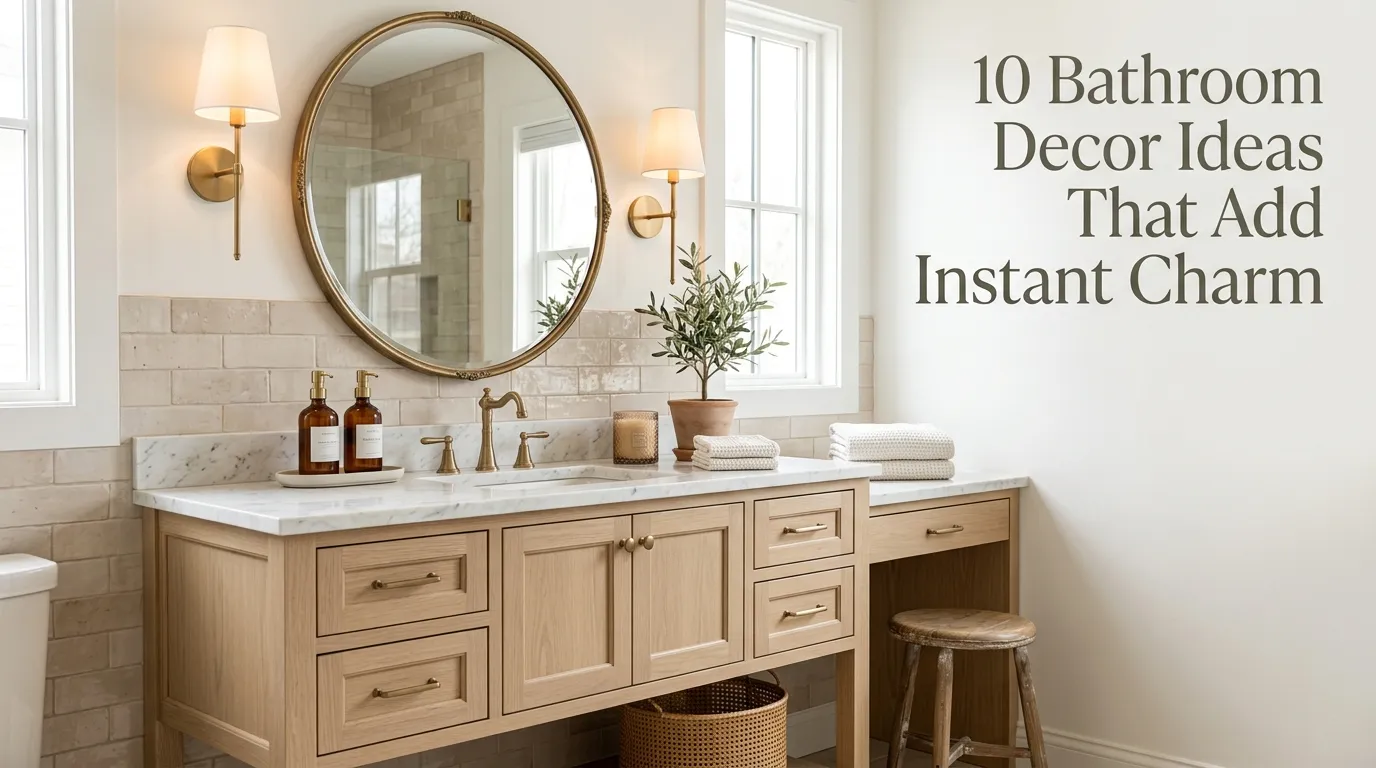
10 Bathroom Decor Ideas That Add Instant Charm
A bathroom can be practical and still have plenty of personality.
Even a small bathroom with standard fixtures can feel inviting when the details are chosen thoughtfully. A warm wood accent, attractive lighting, fresh towels, a framed piece of artwork, or a simple plant can completely change how the room feels without requiring a full renovation.
I’ve found that bathroom decorating works best when you focus on the elements you see every day. Instead of trying to change everything at once, start with the surfaces, colors, lighting, and accessories that have the greatest visual impact. A few intentional updates can make an ordinary bathroom feel much more finished.
The good news is that charm doesn’t depend on having a large bathroom or an expensive budget. Renters can work with removable accessories, textiles, artwork, and hardware where permitted. Homeowners can take things further with paint, mirrors, lighting, cabinetry, or tile.
The ideas below focus on approachable ways to make a bathroom feel warmer, more personal, and visually cohesive. Some are quick weekend updates, while others can inspire a larger decorating project.
Whether you’re refreshing a powder room, guest bathroom, primary bathroom, or compact apartment bath, the goal is the same: create a space that feels clean, comfortable, and thoughtfully decorated while remaining practical for everyday use.
Table of Contents
1. Warm Wood Accents
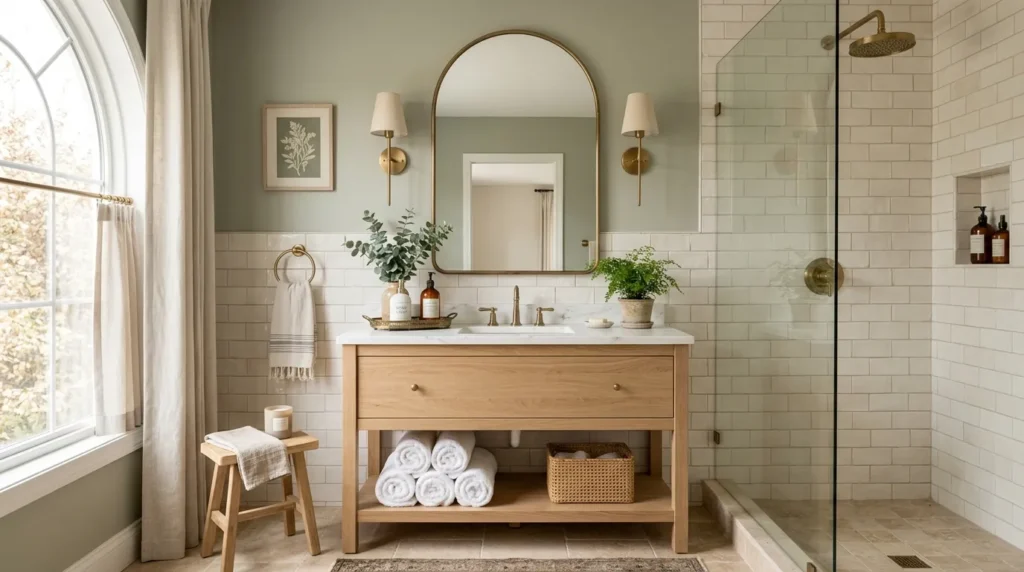
Introduce natural wood to soften hard bathroom surfaces and add warmth.
2. Statement Mirrors
Use an attractive mirror to create a strong focal point above the vanity.
3. Layered Textiles
Bring softness and color into the room with towels, rugs, and shower curtains.
4. Decorative Lighting
Use attractive fixtures and warm illumination to make the bathroom feel inviting.
5. Simple Greenery
Add plants and natural elements for freshness and organic character.
6. Framed Wall Art
Give blank bathroom walls personality with carefully selected artwork.
7. Styled Open Shelves
Turn practical shelving into an organized and decorative feature.
8. Coordinated Hardware
Create a more polished appearance by repeating complementary finishes.
9. Charming Countertop Details
Use a few useful accessories to make the vanity feel intentional.
10. Soft Color Accents
Introduce gentle color through paint, textiles, accessories, and decor.
1. Warm Wood Accents
Quick Benefits
- Adds warmth to hard surfaces
- Softens white bathrooms
- Creates natural contrast
- Works with many decorating styles
- Makes the room feel more inviting
Why It Works
Bathrooms contain many hard materials: porcelain, glass, tile, stone, and metal.
Natural wood introduces a warmer visual element that can balance those surfaces.
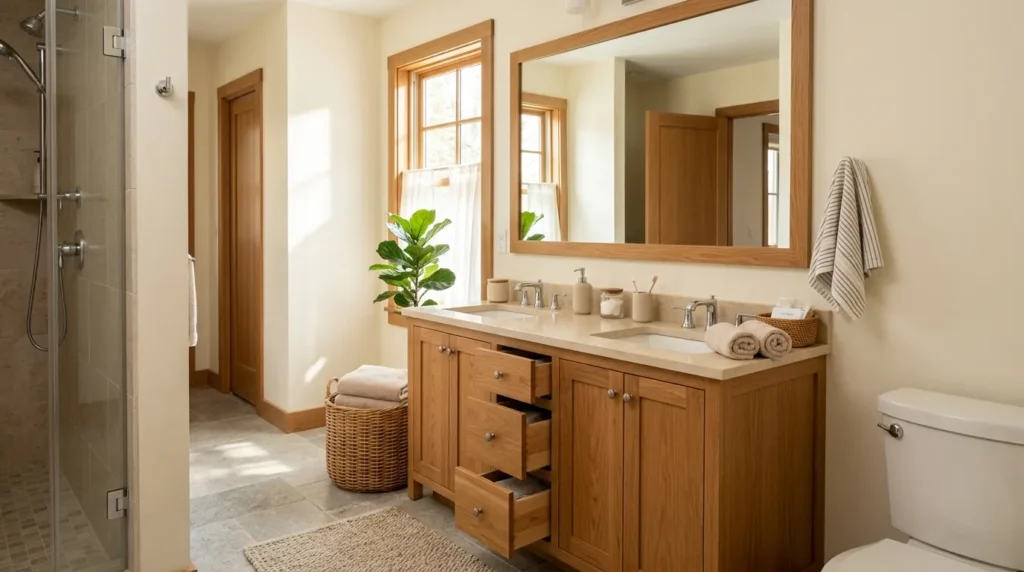
Even a small amount can make a noticeable difference. A wooden stool beside the tub, an oak-framed mirror, a teak bath mat, or a simple wood vanity can make an otherwise cool bathroom feel considerably more welcoming.
Wood also works across decorating styles. Light oak can suit Scandinavian or modern spaces, while walnut or medium-toned wood can create a richer traditional atmosphere.
How To Style It
Start with one significant wood element rather than mixing several unrelated finishes.
A wood-framed mirror is an easy option because it occupies a prominent position without requiring much floor space.
For larger bathrooms, consider a small wooden stool beside the bathtub.
Teak accessories can work particularly well in moisture-prone areas when properly maintained.
Repeat the wood tone once or twice elsewhere through a tray, frame, or small accessory to create visual continuity.
2. Statement Mirrors
Quick Benefits
- Creates a focal point
- Makes a bathroom feel more finished
- Reflects light
- Adds personality
- Can visually expand a small space
Why It Works
The mirror is often one of the first things people notice when they enter a bathroom.
Replacing a basic builder-grade mirror with a more distinctive shape or frame can therefore have a surprisingly strong effect.
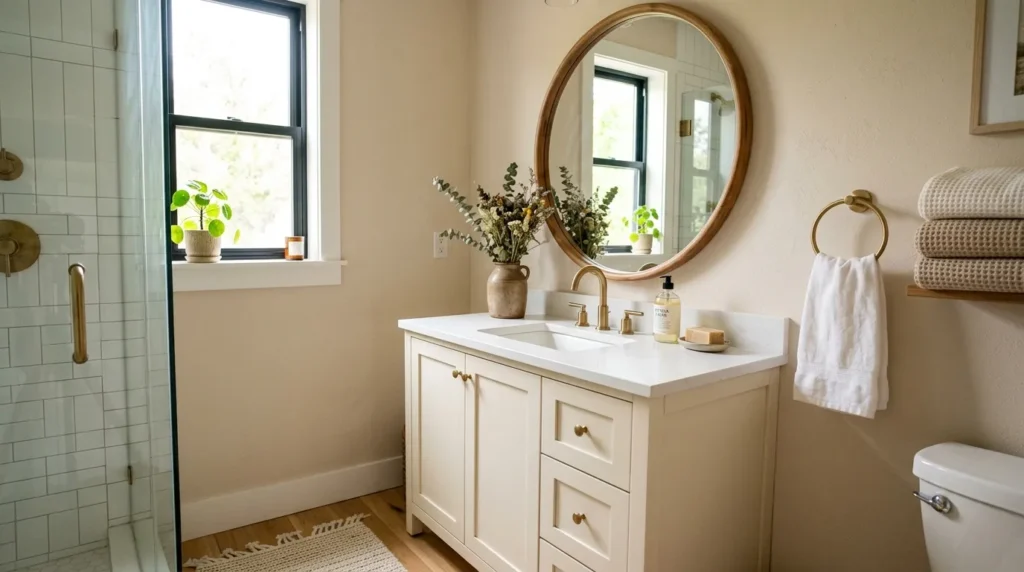
Arched mirrors soften bathrooms filled with straight lines. Round mirrors introduce contrast above rectangular vanities. Decorative frames can add traditional or vintage character.
A mirror can also reflect natural or artificial light, helping a compact bathroom feel brighter.
How To Style It
Choose the mirror based on the vanity’s proportions.
A very small mirror above a wide vanity can feel disconnected, while an oversized mirror may overwhelm a narrow wall.
For a modern bathroom, consider a simple rounded or frameless design.
For a more traditional space, look for a wood, brass, black, or decorative frame.
Make sure the installation is secure and suitable for the bathroom environment.
If there are two sinks, consider either one wide mirror or two appropriately sized mirrors depending on the overall design.
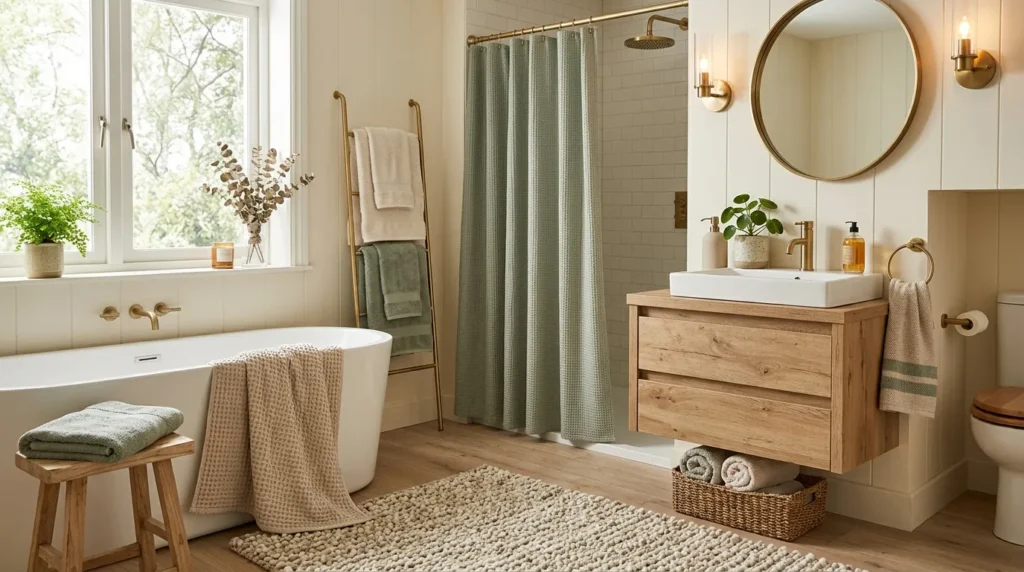
3. Layered Textiles
Quick Benefits
- Adds softness
- Introduces color
- Makes the room feel comfortable
- Creates visual texture
- Offers an easy seasonal update
Why It Works
Textiles are among the easiest ways to decorate a bathroom because they are relatively simple to replace.
Fresh towels, a bath mat, a shower curtain, and a small window treatment can completely shift the room’s appearance.
They also soften the visual hardness of tile and porcelain.
For a cohesive result, choose textiles that share a common color family rather than selecting every piece independently.
Cream towels with a warm beige rug and muted sage shower curtain, for example, can create a relaxed palette without overwhelming the space.
How To Style It
Use towels in two or three complementary shades.
Choose a bath mat with a texture that adds interest while remaining practical and appropriate for wet areas.
If the bathroom has a shower curtain, treat it as a major decorative element.
Linen-look or textured curtains can add softness, while simple solid colors provide a cleaner appearance.
Avoid overcrowding the floor with multiple rugs.
Choose pieces that dry properly and can be washed regularly.
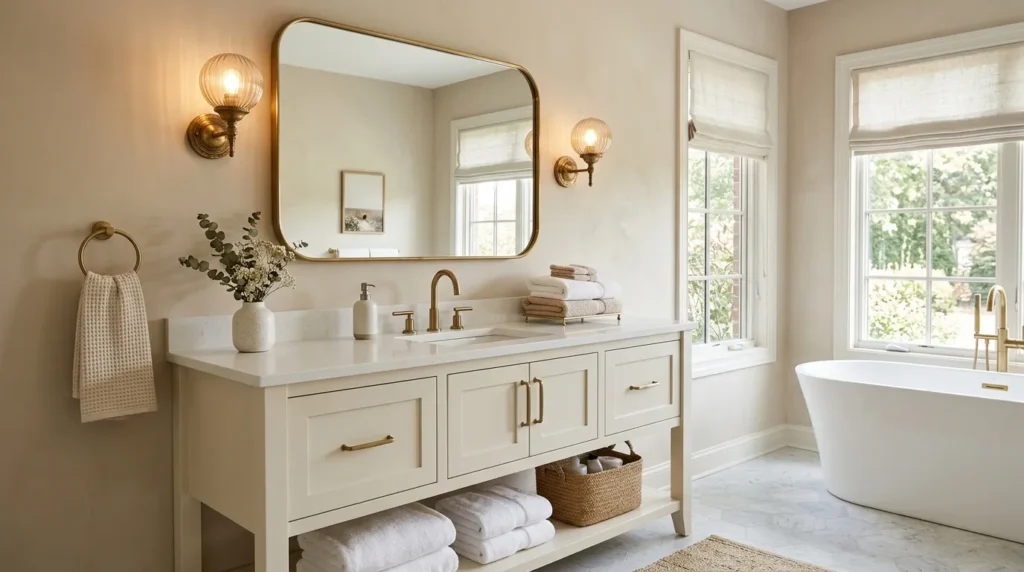
4. Decorative Lighting
Quick Benefits
- Improves atmosphere
- Adds visual character
- Highlights the vanity
- Creates warmer evenings
- Can update an older bathroom
Why It Works
Lighting is functional, but it is also part of the room’s design.
A bathroom with attractive fixtures can feel much more intentional than one relying entirely on a basic ceiling light.
Vanity sconces, pendant-style fixtures where appropriate, or a distinctive overhead fixture can become decorative features in their own right.
Layered lighting also gives you more flexibility.
Bright, appropriate task lighting is useful around the vanity, while softer ambient lighting can make the bathroom feel more relaxed.
How To Style It
Choose fixtures that complement the bathroom’s existing hardware and architecture.
Place vanity lighting so that the face is illuminated evenly and shadows are minimized.
Use appropriately rated fixtures for damp or wet locations and follow local electrical requirements.
If you’re updating an existing bathroom, even replacing outdated vanity fixtures can create a noticeable visual improvement.
Warm-toned lighting can complement beige, cream, wood, and other inviting materials.
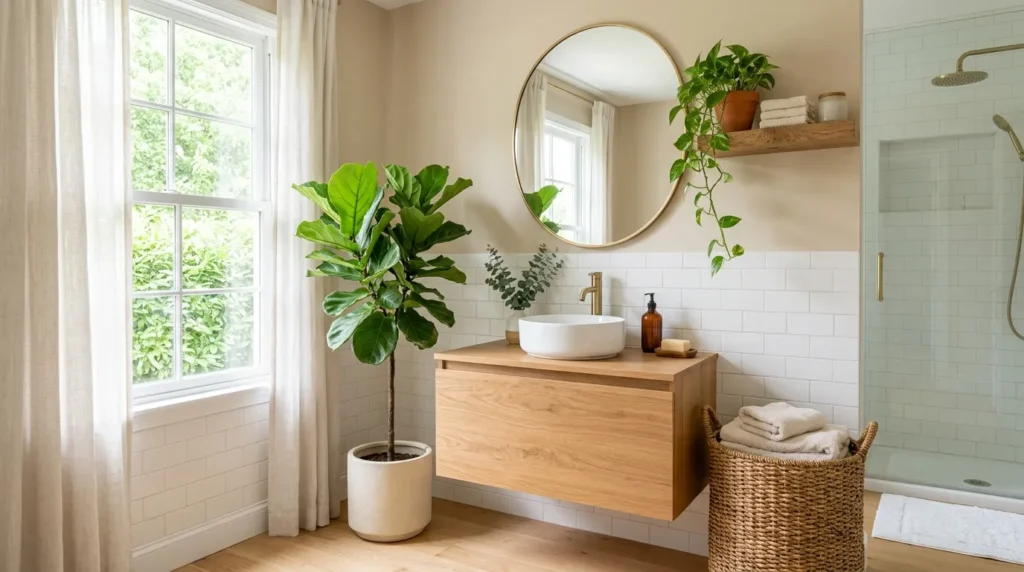
5. Simple Greenery
Quick Benefits
- Adds natural color
- Softens hard surfaces
- Creates organic shapes
- Makes the room feel fresh
- Works in small bathrooms
Why It Works
Bathrooms are natural candidates for greenery because many plants appreciate humid environments.
More importantly from a decorating perspective, plants add an organic shape that contrasts with the straight lines of cabinets, tile, and mirrors.
You don’t need a collection of plants.
One trailing plant on a shelf or a taller plant in an empty corner can be enough.
The right choice depends on the bathroom’s available light and humidity.
How To Style It
Place plants where they won’t interfere with sinks, showers, or everyday movement.
A small plant can sit on a vanity if there is enough counter space.
Use a wall shelf for trailing greenery in a compact bathroom.
For low-light bathrooms, select plants suited to those conditions rather than choosing solely for appearance.
Simple ceramic or terracotta-style planters can complement neutral bathrooms beautifully.
If live plants aren’t practical, high-quality faux greenery can provide a similar visual effect without requiring maintenance.
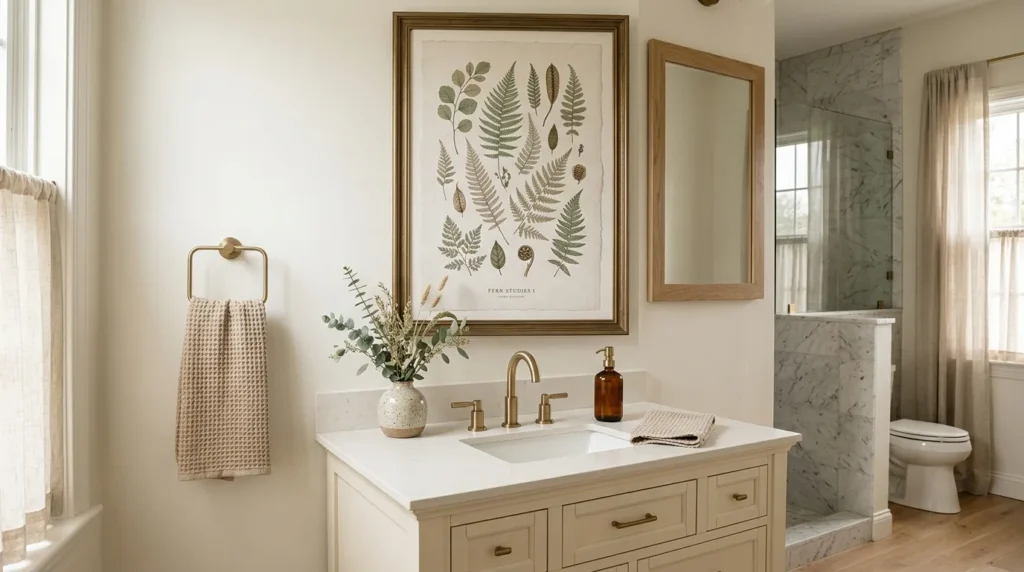
6. Framed Wall Art
Quick Benefits
- Personalizes the bathroom
- Fills blank walls
- Adds color and pattern
- Creates a finished appearance
- Works with many styles
Why It Works
Bathroom walls are often overlooked when decorating.
A framed print can instantly make the room feel more like part of the home rather than a purely functional space.
Botanical artwork, abstract prints, vintage-inspired illustrations, landscapes, and simple photography can all work.
The key is selecting artwork that can tolerate the bathroom environment.
High humidity can affect some papers, frames, and finishes, particularly when artwork is placed directly beside a shower.
How To Style It
Choose art that picks up colors already present in the room.
A botanical print can reinforce green towels or plants.
Warm abstract artwork can complement wood and brass.
Use one large piece when you want a clean focal point.
A small gallery arrangement can work on a larger wall, but keep the composition simple.
For humid bathrooms, consider protective glazing and materials appropriate for the environment.
7. Styled Open Shelves
Quick Benefits
- Adds useful storage
- Creates display space
- Makes essentials accessible
- Adds vertical interest
- Works in compact bathrooms
Why It Works
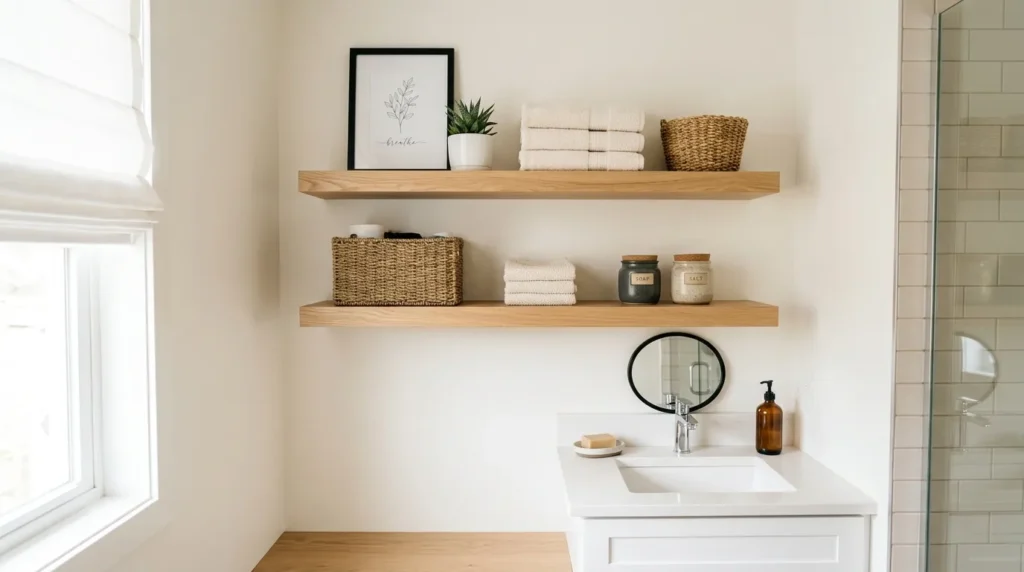
Open shelving can be both practical and decorative.
Instead of hiding every bathroom item inside a cabinet, shelves allow you to display attractive towels, baskets, jars, and a few decorative pieces.
They are particularly useful when vanity storage is limited.
The challenge is preventing the shelves from becoming cluttered.
A successful display combines useful items with intentional empty space.
How To Style It
Use woven baskets to group small toiletries.
Fold towels consistently and stack them in small quantities.
Add one or two decorative objects such as a ceramic vase or small artwork.
Keep everyday products organized rather than displaying dozens of different containers.
Choose shelf materials that coordinate with the bathroom’s other finishes.
Wood shelves can add warmth, while glass shelves can preserve a lighter appearance in very small bathrooms.
8. Coordinated Hardware
Quick Benefits
- Creates visual consistency
- Makes the bathroom look more polished
- Updates dated fixtures
- Adds personality
- Helps connect different elements
Why It Works
Small details can have a major effect when repeated throughout a room.
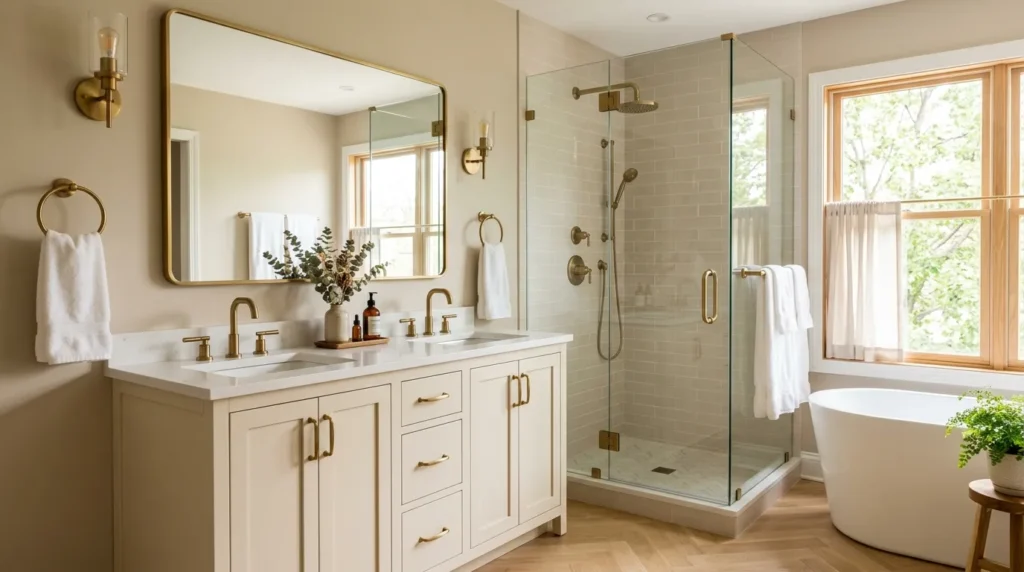
Cabinet pulls, towel bars, hooks, faucets, shower fixtures, and mirror frames all contribute to the overall visual language.
When these elements feel unrelated, the bathroom can look unfinished.
Coordinating finishes creates a stronger sense of design.
This doesn’t mean every metal must always match perfectly, but intentional repetition generally looks more cohesive than accidental mixing.
How To Style It
Choose a dominant finish based on the style you want.
Brushed brass can create warmth.
Matte black can add contrast.
Chrome can provide a clean, traditional appearance.
Brushed nickel offers a softer metallic look.
If you mix finishes, repeat each intentionally.
For example, a brass faucet can coordinate with a brass mirror frame or cabinet hardware.
Always consider the existing fixtures before replacing individual pieces so the final combination feels deliberate.
9. Charming Countertop Details
Quick Benefits
- Makes the vanity feel intentional
- Keeps essentials organized
- Adds texture
- Creates a finished look
- Requires minimal changes
Why It Works
A bathroom countertop is one of the easiest places to add personality, but it can also become cluttered quickly.
The goal isn’t to display every product you own.
Instead, move everyday necessities into attractive containers where practical and leave enough open counter space to keep the vanity functional.
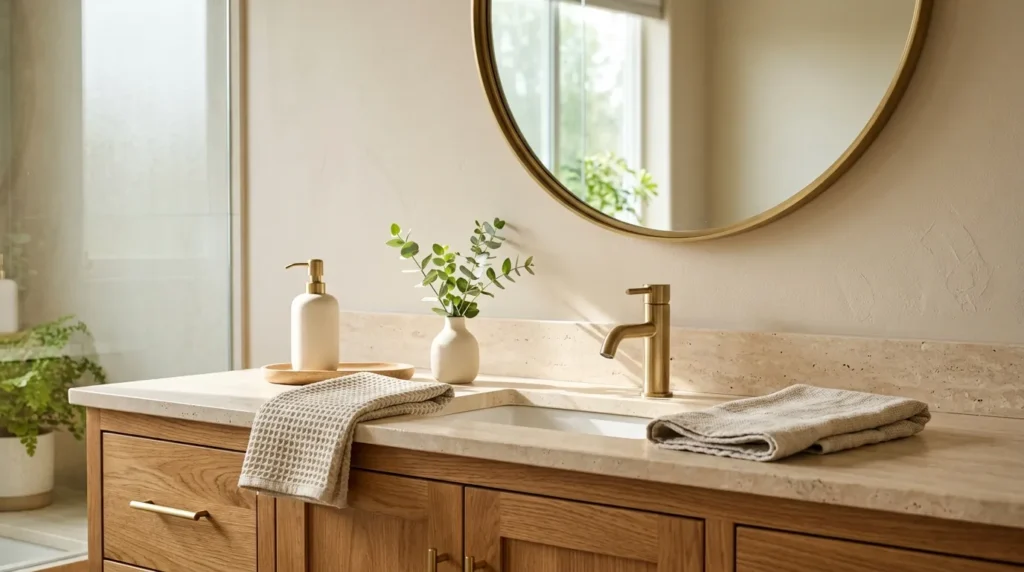
A ceramic soap dispenser, small tray, vase, or candle can add charm without taking over the surface.
How To Style It
Start by removing everything from the countertop.
Return only the products you use frequently.
Use one tray to group small items.
Choose a coordinated soap dispenser rather than leaving several mismatched bottles visible.
Add one small vase or plant if space allows.
Keep cleaning and personal-care products that don’t contribute to the room’s appearance in drawers or cabinets.
The empty space between accessories is just as important as the accessories themselves.
10. Soft Color Accents
Quick Benefits
- Adds personality
- Prevents neutral rooms from feeling flat
- Makes updates easy
- Creates visual warmth
- Works with existing fixtures
Why It Works
Color doesn’t need to dominate a bathroom to make an impression.
Small doses of color can add personality while keeping the overall room calm.
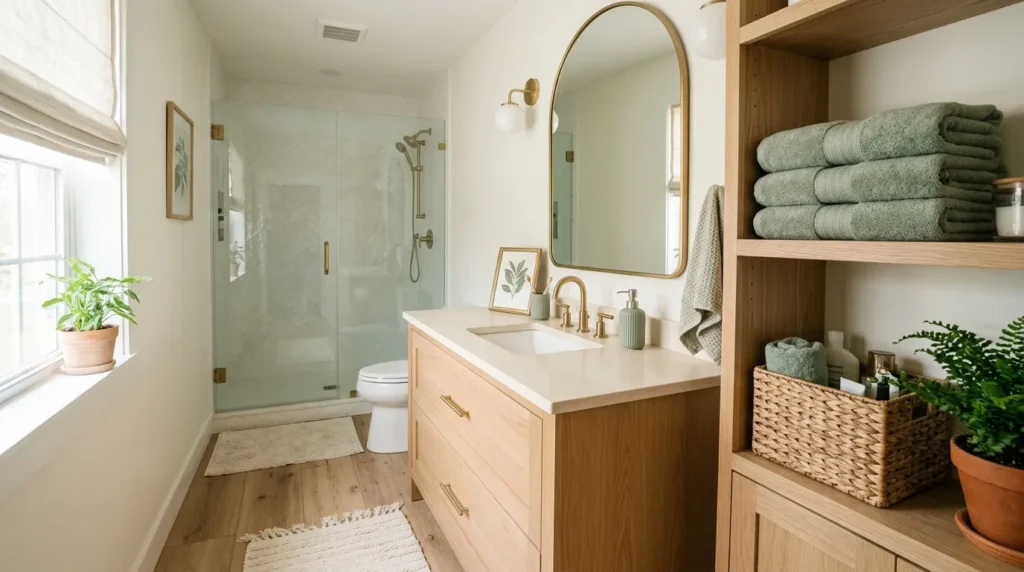
Muted sage, dusty blue, terracotta, soft blush, warm taupe, and creamy yellow can all work beautifully depending on the existing finishes.
The easiest way to experiment is through removable elements such as towels, artwork, rugs, and accessories.
How To Style It
Choose one accent color and repeat it across two or three elements.
For example, muted sage could appear in a plant pot, hand towels, and artwork.
Dusty blue could work through a shower curtain and small framed print.
Terracotta can bring warmth through ceramics and textiles.
If you’re painting, test samples under both daylight and artificial lighting before committing.
Bathrooms can look dramatically different depending on the time of day.
How to Add Bathroom Charm Without Remodeling
You don’t need new tile or cabinetry to make a bathroom feel more inviting.
Start with the easiest changes.
Replace the Towels
Choose a coordinated set in a color that complements the existing bathroom.
Update the Mirror
A new frame or replacement mirror can become an immediate focal point.
Simplify the Counter
Remove unnecessary products and introduce one attractive tray or container.
Add Warmth
Use wood, woven materials, or warm-toned accessories.
Improve the Lighting
Replace outdated fixtures with appropriately rated options that provide better illumination and complement the room.
Add Artwork
A carefully selected print can make a bathroom feel more connected to the rest of the home.
Introduce Greenery
One suitable plant can soften a room dominated by tile and porcelain.
The most effective strategy is to make one change at a time and evaluate how it affects the whole room.
Small Bathroom Decorating Tips
Small bathrooms benefit from restraint.
When floor space is limited, focus on vertical surfaces and visual details rather than adding bulky furniture.
A large mirror can reflect light and make the room feel more open.
Wall-mounted shelves can provide storage without consuming floor space.
Light-colored textiles can maintain an airy appearance, while a darker accent can add depth.
Keep countertops relatively clear.
If you use baskets, choose one or two rather than filling every corner with storage containers.
Most importantly, maintain clear pathways around the toilet, vanity, shower, and tub.
Decor should enhance the bathroom without interfering with how comfortably you use it.
How to Choose a Bathroom Color Palette
A simple three-part palette can make decorating much easier.
Base Color
This might be white, cream, beige, gray, or another existing wall or tile color.
Supporting Color
Use a second neutral or natural material such as wood.
Accent Color
Add a small amount of muted green, blue, black, brass, terracotta, or another complementary shade.
For example:
Warm white + oak + muted sage
creates a fresh organic look.
Cream + walnut + brushed brass
feels warmer and more traditional.
Soft gray + white + matte black
creates a crisp modern appearance.
The exact combination matters less than consistency.
Common Bathroom Decorating Mistakes
Too Many Small Accessories
Several tiny objects can make a bathroom look cluttered rather than charming.
Ignoring Practicality
Decor should be able to withstand the bathroom’s humidity and everyday use.
Poorly Chosen Rugs
Use rugs and mats designed for bathroom conditions and keep them where they won’t interfere with doors or fixtures.
Overcrowded Countertops
Leave enough space for normal routines.
Too Many Finishes
Mixing metals and materials without a clear plan can make the room feel visually disconnected.
Blocking Natural Light
Keep windows and light sources as open as practical.
Forgetting Scale
Large bathrooms can support larger artwork and furniture, while compact bathrooms generally benefit from appropriately scaled pieces.
Frequently Asked Questions
How can I make my bathroom look more inviting?
Focus on warmth, texture, and organization. Fresh towels, natural wood, warm lighting, greenery, framed artwork, and a few coordinated accessories can make a bathroom feel much more welcoming without requiring a renovation.
What decor looks good in a small bathroom?
Mirrors, wall-mounted shelves, framed artwork, small plants, attractive towels, and streamlined accessories work particularly well. Choose pieces that use vertical or wall space and avoid adding bulky objects that reduce usable floor area.
How can I decorate my bathroom cheaply?
Start with textiles and accessories. New towels, a bath mat, shower curtain, soap dispenser, small plant, or framed print can create noticeable changes for relatively little cost. Rearranging and decluttering what you already own can also make the room feel refreshed.
What colors make a bathroom feel warm?
Cream, beige, warm white, soft taupe, muted green, dusty blue, terracotta, and natural wood tones can make a bathroom feel warmer. The right choice depends on the existing tile, flooring, cabinetry, and amount of natural light.
Should bathroom decor match the rest of the house?
It doesn’t need to match exactly, but a connection between rooms can create a more cohesive home. Repeating a wood tone, metal finish, neutral color, or design style can help the bathroom feel like a natural extension of the rest of your interiors.
Can I put artwork in a bathroom?
Yes, but consider humidity and placement. Artwork located away from direct steam and water exposure is generally easier to protect. Use appropriate frames, glazing, and materials for the environment, particularly in bathrooms with frequent high humidity.
How do I make a bathroom look expensive without remodeling?
Focus on proportion, consistency, and restraint. Coordinate hardware finishes, use quality-looking textiles, choose an attractive mirror, improve lighting, reduce countertop clutter, and introduce one or two natural materials. A simple, cohesive design often looks more polished than a room filled with accessories.
Conclusion
Adding charm to a bathroom doesn’t require starting from scratch.
The biggest improvements often come from small details that change how the room feels every day. A warm wood accent can soften tile. A beautiful mirror can become a focal point. Fresh textiles can introduce color and texture. Better lighting can make ordinary finishes feel more inviting.
Start by looking at what your bathroom already has.
If the room feels cold, introduce wood or warmer colors. If it feels cluttered, simplify the countertop and add concealed organization. If it feels plain, try artwork, greenery, or a more distinctive mirror.
You don’t have to use every idea in this list.
Choose two or three that fit your space, budget, and decorating style, then build from there.
The most charming bathrooms are usually not the ones with the most decoration. They’re the ones where every visible detail feels intentional, practical, and connected to the rest of the room.
With a few thoughtful changes, even a basic bathroom can become a space that feels comfortable, personal, and inviting.
Related Articles
- 10 Small Bathroom Ideas That Make the Space Feel Bigger
- 10 Bathroom Organization Ideas for a Clutter-Free Space
- 10 Modern Bathroom Decor Ideas with Warm Neutral Colors
- How to Make a Small Bathroom Feel More Spacious
- 10 Bathroom Vanity Decor Ideas for a Polished Look