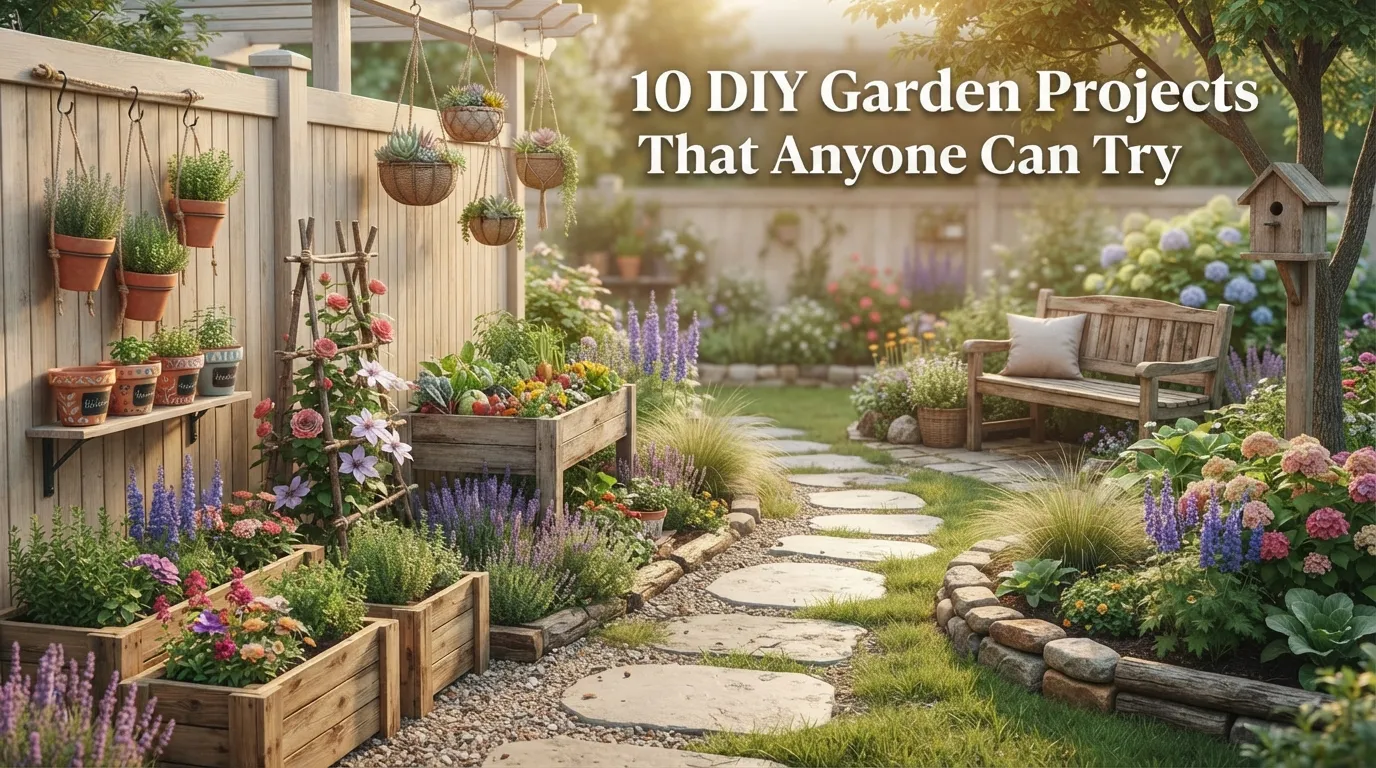
10 DIY Garden Projects That Anyone Can Try
A garden doesn’t have to be professionally landscaped to feel beautiful. Some of the most charming outdoor spaces come together through simple projects that add personality, function, and a little creativity.
DIY garden projects are especially useful when you want to refresh an outdoor space without taking on a major renovation. A few boards can become a planter box. An unused corner can become a small herb garden. Simple containers can bring flowers to a patio, balcony, or narrow side yard.
The best part is that many garden projects can be adapted to the space you already have.
You don’t need a huge backyard or a workshop full of specialized tools. Start with the amount of sunlight available, the size of the area, and the way you actually use your garden. From there, choose projects that solve a real problem or add something you genuinely enjoy.
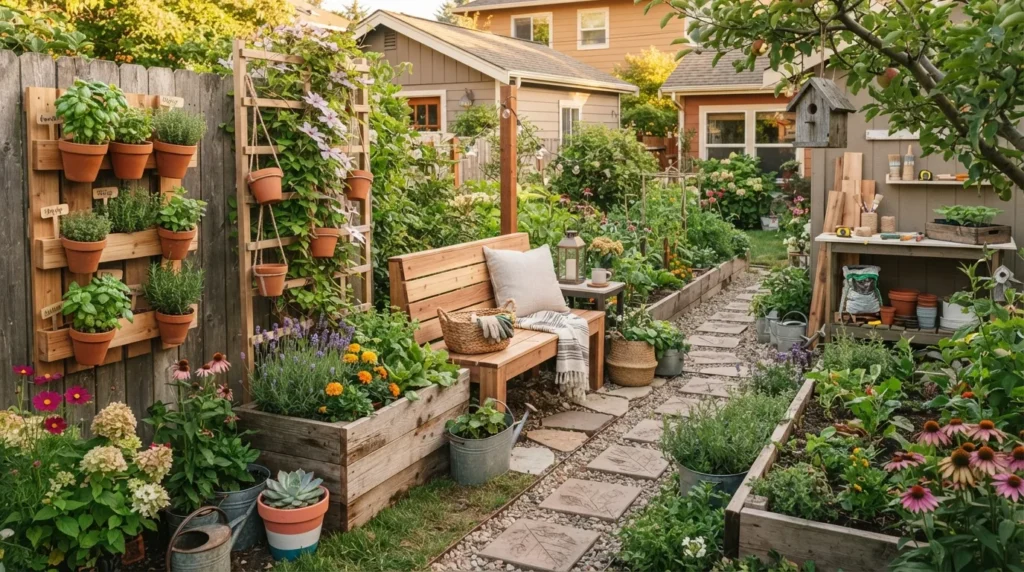
I’ve found that the most satisfying DIY garden projects are often the ones that make everyday gardening easier. A raised planter reduces bending. A vertical garden uses empty wall space. A simple potting station keeps supplies together. A homemade trellis gives climbing plants the support they need.
There is also plenty of room for creativity.
Use reclaimed wood for rustic planters, terracotta pots for a classic garden look, stones to define pathways, or painted containers to add a small pop of personality.
The projects below range from very simple updates to slightly more involved weekend creations. Each one can be adjusted to suit your garden, available materials, budget, and skill level.
Before starting any project, check that materials are suitable for outdoor use and that structures are stable and appropriate for their location. For electrical, structural, or permanently installed projects, follow local requirements and manufacturer instructions.
The goal isn’t to build the most complicated garden.
It’s to create an outdoor space that feels more useful, personal, and enjoyable with each project.
Table of Contents
1. Wooden Planter Box
Build a simple container for flowers, herbs, or compact vegetables.
2. Vertical Herb Garden
Turn a wall or unused vertical area into a productive growing space.
3. Painted Garden Pots
Refresh ordinary containers with simple color and creative finishes.
4. DIY Garden Trellis
Give climbing plants a practical and decorative support structure.
5. Stone Garden Path
Create a simple pathway that adds structure and visual direction.
6. Hanging Planter Display
Bring plants upward with an attractive hanging arrangement.
7. Simple Potting Station
Create a dedicated place for planting, pruning, and storing supplies.
8. Upcycled Garden Containers
Give suitable household items a new purpose as outdoor planters.
9. Garden Marker Set
Make attractive plant labels that bring organization to garden beds.
10. Cozy Garden Seating
Create a simple outdoor spot for relaxing among the plants.
1. Wooden Planter Box
Quick Benefits
- Adds structure to the garden
- Works in small spaces
- Suitable for herbs and flowers
- Easy to customize
- Creates portable planting areas
Why It Works
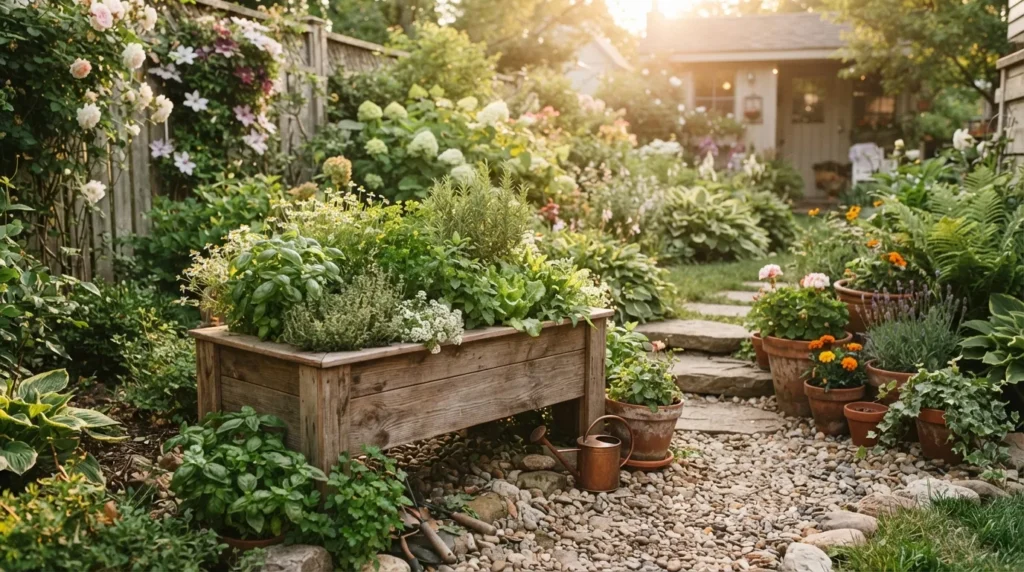
A wooden planter box is one of the most useful beginner-friendly garden projects because it can be adapted to almost any outdoor space.
It works along a patio, beside a walkway, against a fence, or on a small deck.
You can make the box as long, narrow, tall, or compact as the location requires.
A planter box also gives you more control over where certain plants grow. This can be useful when your existing soil isn’t suitable for the plants you want to grow.
How To Style It
Use untreated or appropriately outdoor-rated materials suitable for garden construction.
A simple rectangular design is easiest for beginners.
Before building, decide what you’ll grow and choose a depth appropriate for those plants.
Add drainage openings where appropriate so excess water can escape.
For a natural look, leave the wood unfinished or use an outdoor-appropriate finish.
For a cottage-inspired garden, fill the box with flowers.
For a practical kitchen garden, grow herbs or compact vegetables suited to your climate.
Place the planter where the plants receive the amount of sunlight they require.
2. Vertical Herb Garden
Quick Benefits
- Saves floor space
- Makes herbs easy to access
- Adds greenery to blank walls
- Works in small gardens
- Creates a useful focal point
Why It Works
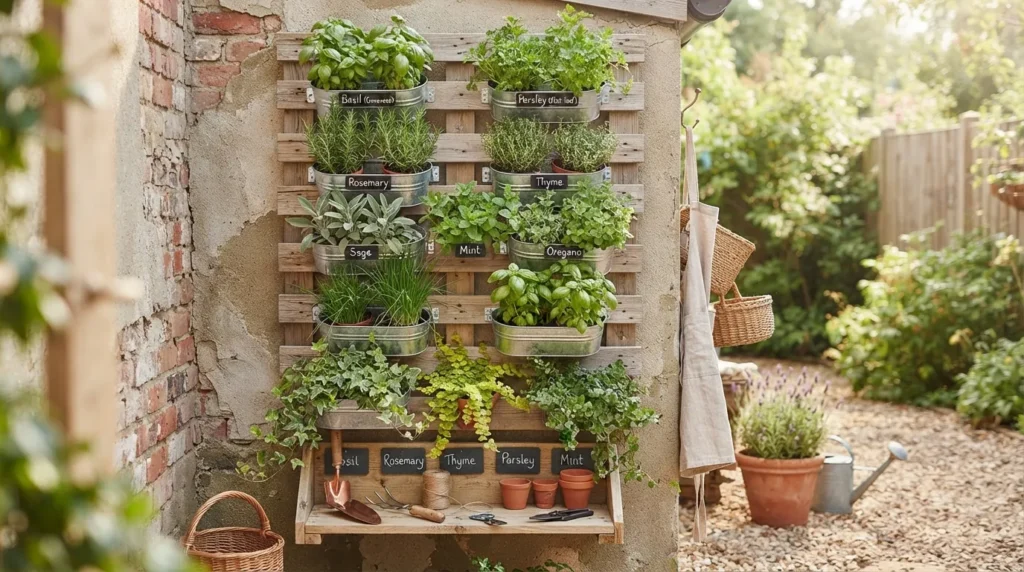
Vertical gardening makes use of space that often goes completely unused.
A fence, exterior wall, railing, or sturdy freestanding frame can become a place for growing herbs.
This approach is especially helpful when you have a small yard or patio but still want a productive garden.
It also brings plants closer to eye level, making it easier to monitor growth and harvest herbs.
How To Style It
Start with a sturdy vertical support.
Attach suitable containers, pockets, or shelves designed for outdoor use.
Choose herbs based on their sunlight and growing requirements.
Basil, parsley, thyme, mint, oregano, and rosemary are common choices, although conditions vary by climate.
Keep plants with similar watering needs together.
Label each container with a simple garden marker.
For a cohesive appearance, use matching containers or paint different containers in a coordinated palette.
Leave enough space between pots for growth and airflow.
3. Painted Garden Pots
Quick Benefits
- Refreshes old containers
- Adds personality
- Works for patios and gardens
- Requires minimal materials
- Creates an inexpensive visual update
Why It Works
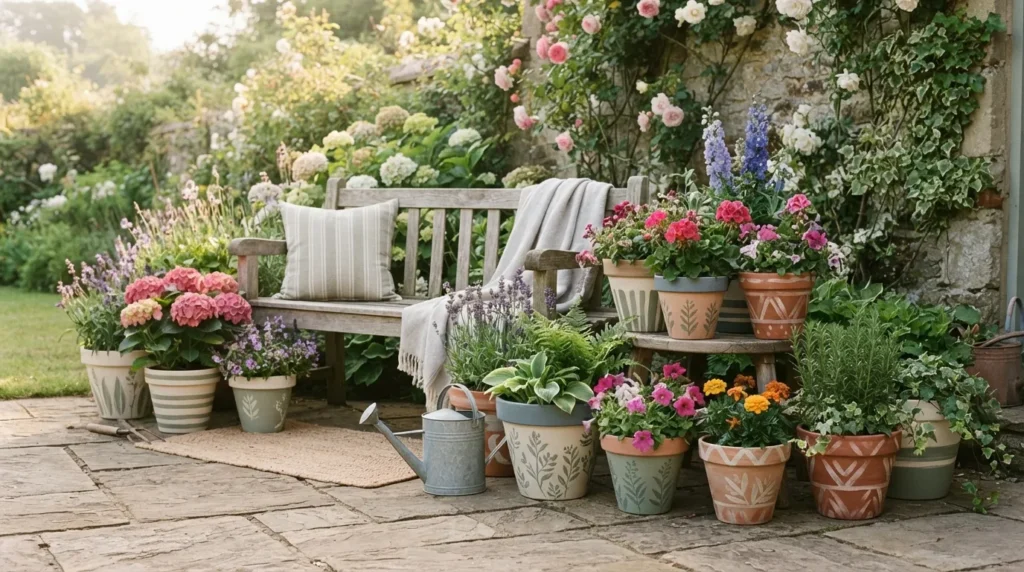
Garden containers don’t have to match perfectly, but a coordinated group can make an outdoor space feel more intentional.
Painting suitable pots is an easy way to change their appearance without replacing them.
You can create a modern monochromatic collection, a colorful cottage garden look, or a simple earthy palette.
This project is also useful when you have mismatched containers that are still structurally sound.
How To Style It
Clean the pots thoroughly and allow them to dry.
Use a coating appropriate for the container’s material and outdoor exposure.
For a modern garden, consider cream, charcoal, soft green, or terracotta-inspired shades.
For a playful garden, use several complementary colors.
Keep the plant itself in mind.
A bright flowering plant may look best in a quiet neutral container.
A simple green plant can stand out beautifully against a more decorative finish.
Make sure drainage openings remain clear.
4. DIY Garden Trellis
Quick Benefits
- Supports climbing plants
- Uses vertical space
- Adds architectural interest
- Creates garden structure
- Can increase privacy
Why It Works
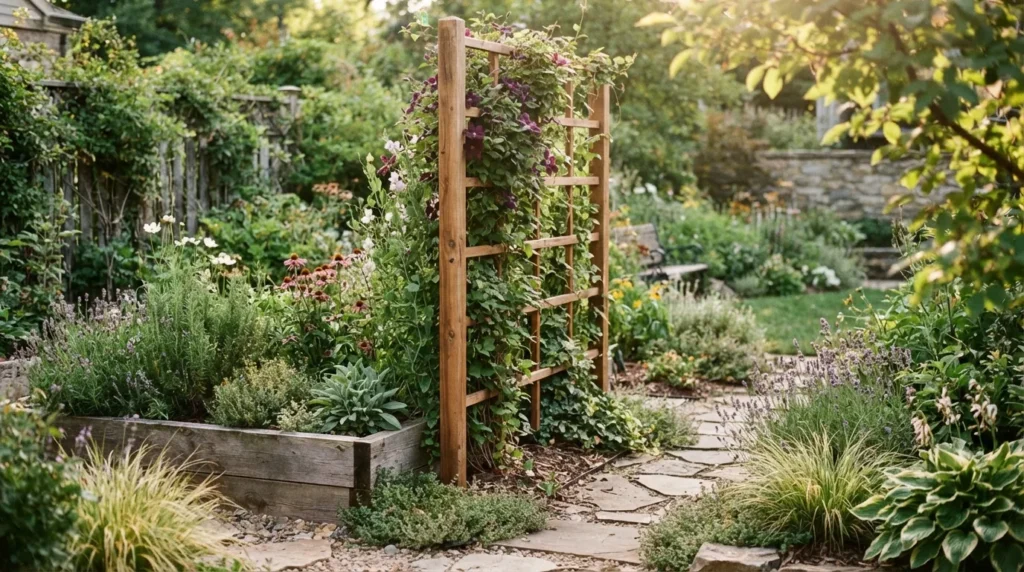
A trellis combines function and decoration.
Climbing plants naturally want something to grow against, and a trellis gives them a defined structure.
It can also break up a large blank fence or add height to a garden border.
Depending on its size and placement, a trellis can create a subtle sense of separation between different areas of the garden.
How To Style It
A simple grid made from appropriately sized outdoor wood is an approachable design.
You can also create a geometric pattern using narrow outdoor-rated strips.
Position the trellis where it can support the specific plant you plan to grow.
Suitable climbers vary by region and conditions.
Secure the structure firmly.
Don’t rely on the plant itself to stabilize the trellis.
For a classic look, leave the material natural.
For a modern garden, paint it in a restrained color that coordinates with the home’s exterior.
5. Stone Garden Path
Quick Benefits
- Defines walking areas
- Adds garden structure
- Protects planting beds
- Creates visual direction
- Can suit casual gardens
Why It Works
A pathway can make a garden feel more organized even when the planting itself is informal.
You don’t necessarily need a professionally constructed walkway.
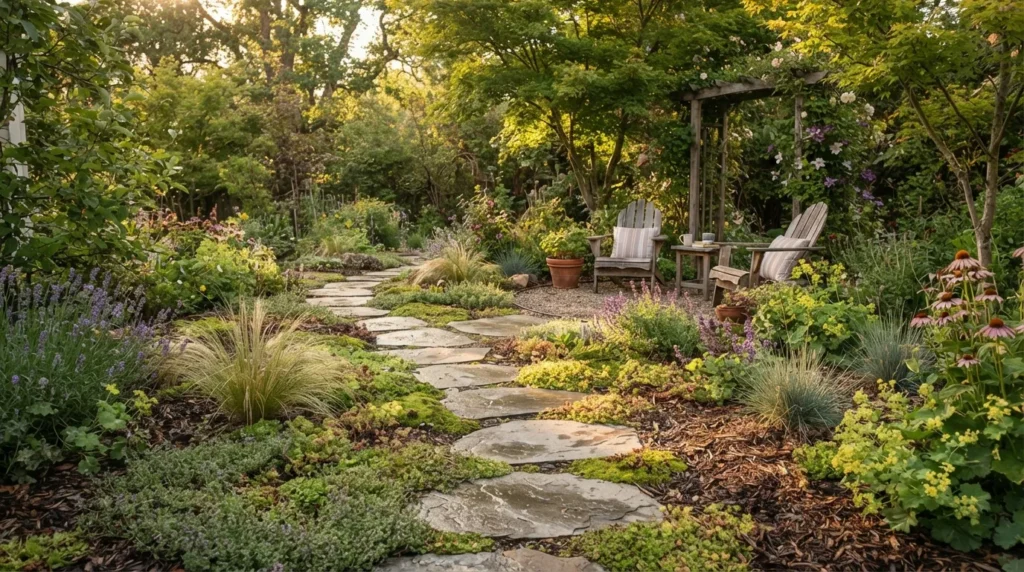
A simple arrangement of appropriately sized stepping stones can create a practical route through a garden.
The path can lead toward a seating area, shed, planting bed, or focal point.
How To Style It
Plan the route before placing stones.
Keep the path comfortable to walk through.
For stepping stones, position them at a natural walking distance.
Choose stones that are stable and suitable for outdoor use.
Set them securely rather than simply placing them loosely on uneven ground.
Surround the pathway with low-growing plants, mulch, gravel, or groundcover.
For a relaxed garden, allow planting to soften the edges.
For a cleaner modern look, keep the border more defined.
Check the area after rain to ensure water drains appropriately.
6. Hanging Planter Display
Quick Benefits
- Adds vertical interest
- Saves ground space
- Creates a focal point
- Works on patios and porches
- Adds movement through trailing plants
Why It Works
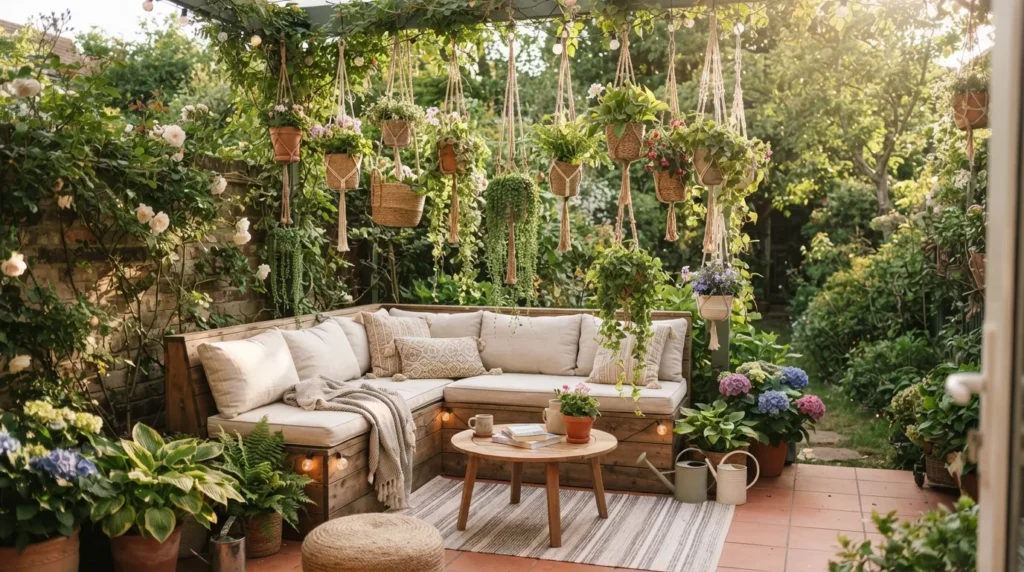
Hanging planters can turn an empty overhead area into part of the garden.
They’re particularly useful when floor space is limited.
Trailing plants also create a softer appearance because their foliage extends downward rather than remaining confined to a container.
A group of hanging planters can become a visual feature above a seating area, along a porch, or beside a garden wall.
How To Style It
Use sturdy containers and hanging hardware appropriate for their combined weight.
Remember that a planter becomes heavier after watering.
Position hanging containers where they won’t interfere with walkways or doorways.
Choose plants according to available sunlight.
Trailing flowers and foliage plants can create a lush effect.
For a more modern look, use matching containers at different heights.
For a relaxed garden, combine several natural textures.
Always check the mounting surface before attaching anything overhead.
7. Simple Potting Station
Quick Benefits
- Keeps gardening supplies together
- Makes planting easier
- Uses small outdoor areas
- Creates useful storage
- Adds practical charm
Why It Works
If you regularly repot plants, start seeds, or work with garden containers, a dedicated potting area can make those tasks much easier.
You don’t need a full outdoor shed.
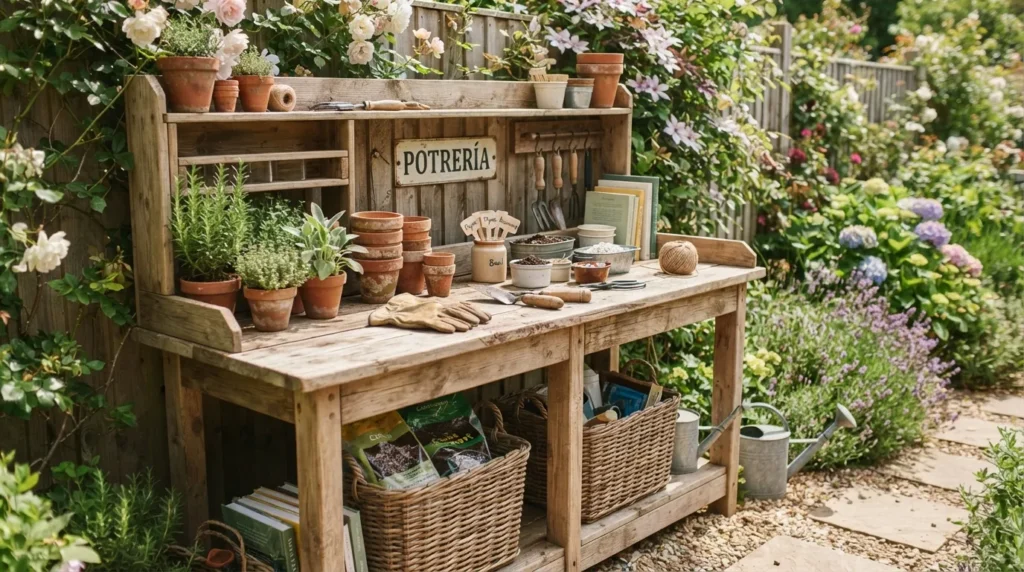
A sturdy table, shelf, or repurposed work surface can become a compact potting station.
Keeping soil, pots, gloves, tools, and labels nearby prevents gardening supplies from spreading throughout the yard.
How To Style It
Choose a location protected from excessive weather where practical.
Use a sturdy outdoor-appropriate table or repurpose a suitable piece of furniture.
Add hooks for hand tools.
Use containers for plant labels, twine, and smaller supplies.
Keep potting soil in a suitable sealed container.
Place frequently used tools at arm’s reach.
A few potted herbs or flowers can make the area decorative without reducing its usefulness.
For a small garden, position the station against a wall or fence to preserve open floor space.
8. Upcycled Garden Containers
Quick Benefits
- Gives old items a new purpose
- Adds character
- Reduces unnecessary purchases
- Creates unique displays
- Works with many garden styles
Why It Works
Some of the most interesting garden containers don’t begin life as planters.
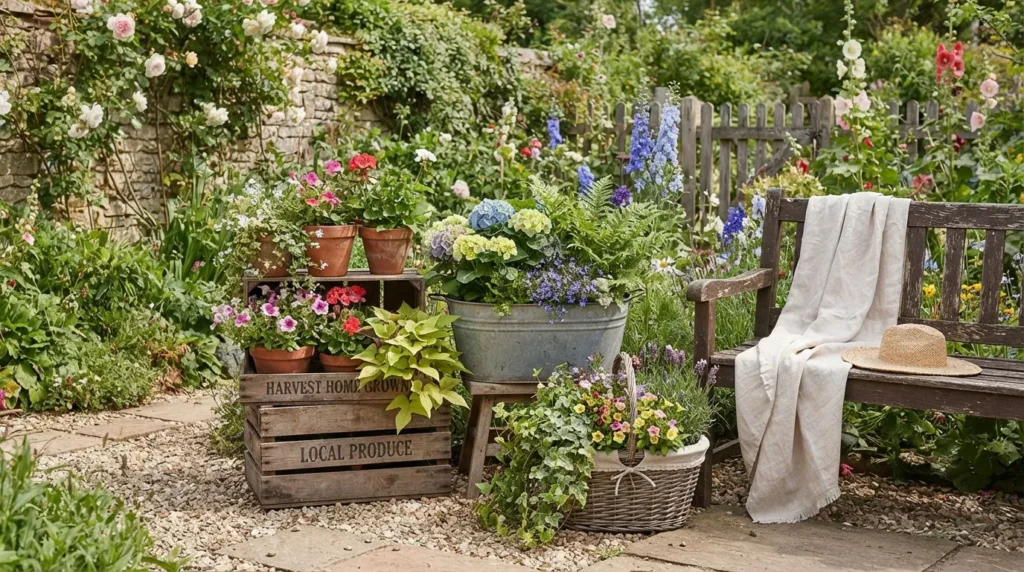
Old buckets, suitable wooden boxes, baskets, metal containers, and other household items can become planting vessels when they are appropriate for outdoor use.
This creates a more collected and personal look than buying every container from the same collection.
However, not every object is suitable for growing plants.
Materials must be safe and stable, and drainage is essential.
How To Style It
Choose objects that can withstand outdoor conditions.
Add drainage where appropriate without compromising the container’s structural integrity.
Use a suitable liner when needed.
Avoid containers that may contain harmful residues or materials unsuitable for gardening.
Group different containers together instead of spreading them randomly throughout the yard.
A collection of weathered wooden boxes can suit a cottage garden.
Simple metal containers can work with a modern rustic style.
Terracotta-colored vessels create a classic Mediterranean feeling.
9. Garden Marker Set
Quick Benefits
- Keeps plants organized
- Makes herbs easy to identify
- Adds decorative detail
- Helps new gardeners
- Creates a cohesive garden look
Why It Works
Plant markers are small, but they can add both organization and personality.
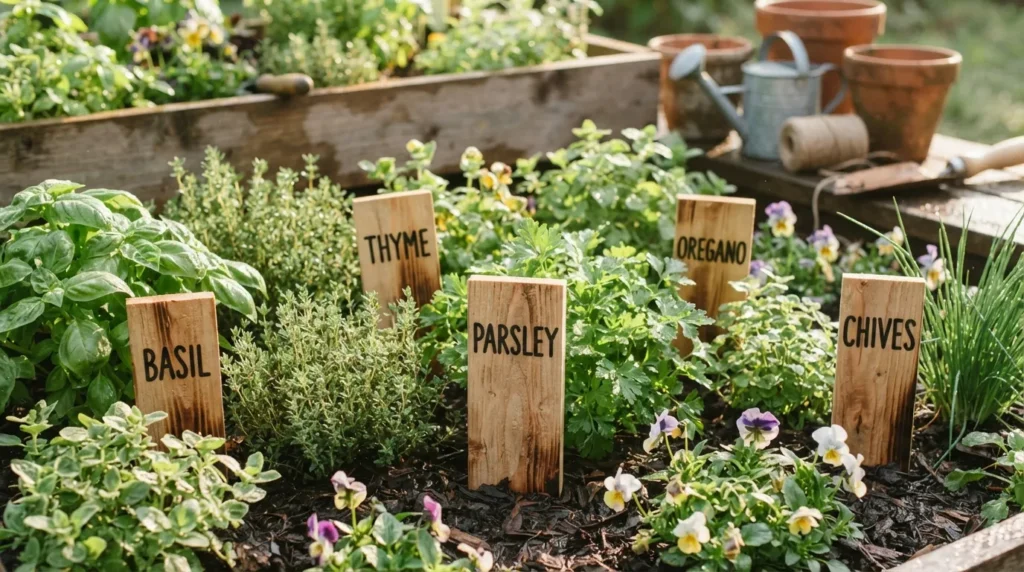
They’re particularly useful in herb gardens, vegetable beds, seedling areas, and mixed plantings where varieties can become difficult to identify.
Making your own markers also lets you coordinate them with the rest of your garden.
How To Style It
Use weather-resistant materials such as suitable wood, stone, metal, or outdoor-rated materials.
Write plant names clearly.
For a rustic garden, use small wooden stakes.
For a modern garden, simple dark labels with clean lettering can look polished.
Paint the stakes if you want a stronger visual connection with your planters.
Place markers where they remain visible without interfering with plant growth.
Keep the design consistent across the garden.
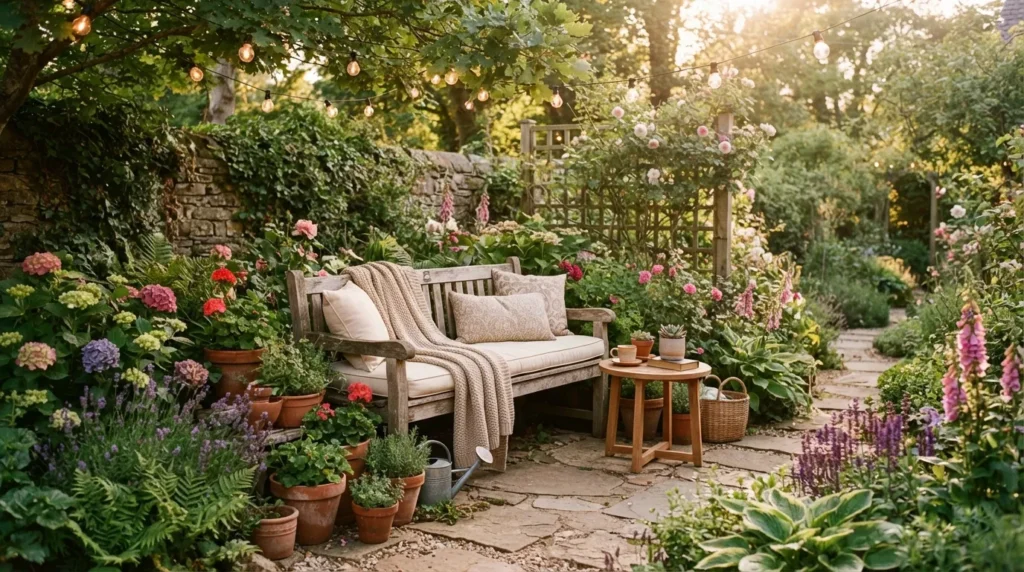
10. Cozy Garden Seating
Quick Benefits
- Makes the garden more usable
- Creates a destination
- Encourages outdoor relaxation
- Adds personality
- Works with small spaces
Why It Works
A garden is more enjoyable when there is somewhere comfortable to experience it.
You don’t need a complete outdoor living room.
One bench, two chairs, or a small bistro set can create a destination within the garden.
Positioning seating among plants can also make the garden feel more immersive.
Instead of simply looking at the garden from the house, you become part of it.
How To Style It
Choose furniture appropriate for outdoor conditions.
Place seating where you can enjoy the garden view.
A bench beneath a tree can create a natural retreat.
A small bistro table can work beside a flower bed.
Add outdoor cushions where appropriate.
A small rug can define a patio seating area.
Finish with potted plants or a nearby trellis.
Keep the arrangement comfortable enough for the way you actually plan to use the space.
Easy DIY Garden Projects by Skill Level
Not every project requires the same amount of time or equipment.
Beginner
Start with:
- Painted garden pots
- Garden markers
- Upcycled containers
- Simple hanging planters
These projects require relatively little construction.
Intermediate
Try:
- Wooden planter boxes
- Vertical herb gardens
- Simple potting stations
- Basic trellises
These require more measuring, assembly, or installation.
More Involved
Consider:
- Stone pathways
- Larger garden structures
- Built-in seating
- Permanent garden installations
For structural or permanently installed projects, use appropriate materials, follow local requirements, and consider professional help where the project exceeds your experience.
How To Make DIY Garden Projects Look Expensive
DIY doesn’t have to look homemade in the unfinished sense.
A few design choices can make simple projects look much more polished.
Repeat Materials
Use the same wood finish across planter boxes, trellises, and garden furniture.
Keep a Consistent Color Palette
Choose two or three main colors instead of using every available shade.
Create Groups
Three coordinated planters often look more intentional than several unrelated pots scattered around the yard.
Pay Attention to Proportion
A tiny planter beside a large wall may disappear.
A properly scaled piece creates stronger visual impact.
Hide the Functional Details
Keep soil bags, tools, hoses, and miscellaneous supplies organized rather than leaving them visible.
Leave Empty Space
Not every part of the garden needs decoration.
Open areas give your DIY projects room to stand out.
Common DIY Garden Mistakes
Choosing the Wrong Materials
Outdoor projects face sunlight, rain, humidity, temperature changes, and wind.
Choose materials suitable for those conditions.
Forgetting Drainage
Plants need appropriate drainage.
Containers without drainage can create problems for roots.
Making Structures Too Weak
Trellises, shelves, hanging planters, and seating need appropriate support.
Don’t underestimate the weight of wet soil or mature plants.
Overcrowding the Garden
A project may look attractive by itself but feel cluttered when combined with ten others.
Plan the overall space.
Ignoring Sunlight
A beautiful planter won’t thrive if the plant doesn’t receive the conditions it requires.
Observe the garden before selecting plants.
Skipping Maintenance
Choose projects you can realistically maintain.
A garden is most attractive when its plants and structures are cared for consistently.
FAQ
What is the easiest DIY garden project for beginners?
Painted garden pots, simple plant markers, and suitable upcycled containers are among the easiest projects. They require little construction and can create an immediate visual change. Once you’re comfortable with those, planter boxes and simple trellises are natural next projects.
What can I make for my garden at home?
You can make planter boxes, trellises, plant markers, vertical herb gardens, potting stations, garden paths, hanging displays, and simple seating areas. The best project depends on the available space, your tools, your gardening needs, and the materials you already have.
How can I make a small garden more attractive?
Use vertical space, group containers, add a defined seating area, and create clear garden zones. A small trellis, vertical planter, hanging containers, and a simple pathway can add structure without consuming much floor space.
What materials work best for DIY garden projects?
Outdoor-rated wood, stone, suitable metals, weather-resistant plastics, and appropriate outdoor fabrics can all work. The correct material depends on the project and local conditions. Choose materials that can handle moisture, sunlight, temperature changes, and the weight they need to support.
How do I make DIY planters with good drainage?
Use a suitable container with drainage openings that allow excess water to escape. Position the planter where water can drain safely, and avoid blocking drainage holes. The number and size of openings depend on the container and plant, so choose an approach appropriate for the specific setup.
Are DIY garden projects expensive?
Many simple projects can be completed inexpensively, particularly when you reuse suitable materials or repurpose existing containers. Costs increase with lumber, hardware, tools, structural materials, and larger installations. Setting a project-specific budget before buying supplies can help prevent unnecessary spending.
What DIY garden project adds the most visual impact?
A vertical garden, large planter box, trellis, or defined seating area can create a strong focal point. The most effective option depends on the size and layout of your garden. A good project fills an existing visual or functional need rather than simply adding another object.
Conclusion
DIY garden projects are a practical way to make an outdoor space feel more personal without requiring a complete landscape makeover.
You can start small.
Paint a few suitable pots.
Make simple garden markers.
Create a vertical herb display.
Then move toward larger projects such as planter boxes, trellises, pathways, or a dedicated seating area.
The best projects aren’t necessarily the most complicated ones. They’re the ones that improve the way you use your garden.
A planter creates space for something you enjoy growing.
A trellis gives climbing plants somewhere to go.
A potting station makes gardening easier.
A pathway gives the garden structure.
A comfortable chair gives you a reason to stay outside a little longer.
Before starting any project, think about the garden as a whole. Consider sunlight, drainage, materials, maintenance, scale, and how each new feature fits with the existing landscape.
You don’t need to complete everything in one weekend.
Choose one project, gather the appropriate materials, and build from there.
With a few thoughtful additions, even an ordinary yard can become a more functional, inviting, and distinctly personal garden.
Related Articles
- 10 DIY Garden Projects That Transform Small Yards
- 10 Garden Decor Ideas That Bring Nature Closer
- 10 Garden Decor Ideas That Look Expensive on a Budget
- 10 Small Garden Ideas for Beautiful Outdoor Spaces
- 10 Backyard Landscape Design Ideas with Beautiful Greenery