
Why Polymeric Sand Leaves a White Haze on Pavers (And How to Clean It)?
Discovering that your beautiful new patio or walkway has developed a milky, chalky film is frustrating, but understanding why polymeric sand leaves a white haze on pavers (and how to clean it) is the first step toward restoring your hardscape. This issue often stems from improper installation techniques, specifically the failure to remove excess material before hydration or the introduction of too much water during the activation process.
While the sight of this residue can be alarming, it is rarely a permanent defect. By utilizing the right cleaning agents and methods, you can strip away the unsightly film and reveal the natural, vibrant color of your stones without damaging the structural integrity of the joints.
Why the Haze Forms During Installation
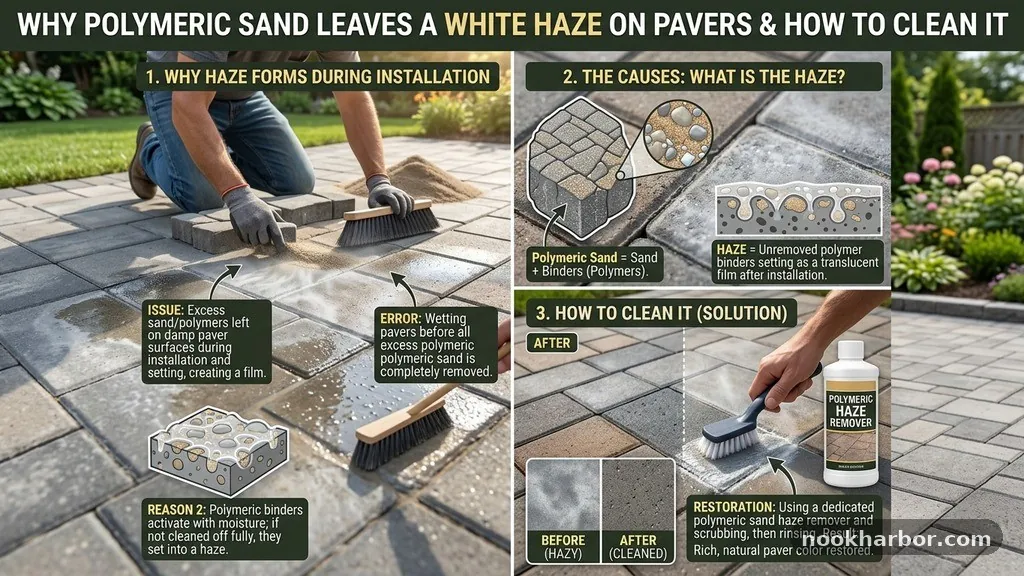
The primary culprit behind a white, powdery film is residual polymer dust that was not adequately swept away before the activation stage. When you spread polymeric sand across your pavers, the fine particles settle into the joints, but a thin layer of dust often remains on the textured surface of the stone. If you begin the wetting process while this dust is still present, the polymers activate and bond directly to the surface of the paver rather than just the sand inside the joints.
Moisture management is the second major factor in this equation. If you apply too much water, the liquid polymer can migrate out of the joints and flow across the surface of the stones.
As the water evaporates, it leaves behind a concentrated film of binders. This phenomenon is particularly common on dark-colored pavers, where the contrast between the stone and the white residue is stark.
Distinguishing Haze from Efflorescence
It is vital to determine if you are dealing with actual sand residue or a natural chemical reaction known as efflorescence. Efflorescence occurs when soluble salts within the concrete or stone migrate to the surface due to moisture. You can typically tell the difference by wetting a small, inconspicuous area of the affected surface.
If the white appearance disappears while the stone is wet but returns as it dries, you are likely dealing with efflorescence. If the surface remains dull or cloudy even when wet, it is almost certainly a polymer residue. While efflorescence often resolves on its own over several months of exposure to rain, polymer haze is a synthetic coating that will not disappear without mechanical or chemical intervention.
The Importance of Proper Surface Preparation
Prevention is significantly easier than remediation when working with high-performance jointing materials. Before you ever reach for the hose, the surface must be completely clear of dust. Use a high-quality, fine-bristled broom to sweep the pavers diagonally across the joints to ensure every grain of excess sand is removed.
Many professionals supplement this with a leaf blower set to a low or medium speed. Blowing the surface helps dislodge microscopic dust particles that a broom might miss, especially on pavers with deep textures or chamfered edges. If you notice any sand sitting on top of the stones, do not proceed to the wetting stage until the surface is pristine.
Assessing the Severity of the Residue
Not all haze is created equal, and the intensity of the film will dictate your cleaning strategy. A light dusting can often be removed with simple agitation and water if caught within the first 24 to 48 hours. However, if the polymer has fully cured and hardened, you will need more aggressive cleaning methods.
| Severity Level | Description | Cleaning Approach |
|---|---|---|
| Light Haze | Thin, dusty film that rubs off easily | Soft brush and water |
| Moderate Haze | Cloudy, semi-opaque film on stone face | Specialized polymer haze remover |
| Severe Haze | Thick, hardened, white crust | Professional-grade acidic cleaner |
Cleaning Methods for Freshly Cured Sand
If the haze is still relatively fresh, you might be able to remove it using a stiff-bristled nylon brush and a gentle spray of water. Start by soaking the area, then scrub in a circular motion to break the bond of the polymer. It is essential to work in small sections to ensure that the material does not re-harden before you can rinse it away.
Avoid using metal brushes, as these can scratch the surface of concrete pavers and permanently mar the finish. If water alone isn’t lifting the film, you can try a mild solution of dish soap and warm water. This can help break down the surface tension of the polymer, making it easier to lift away from the stone face.
Using Specialized Haze Removers
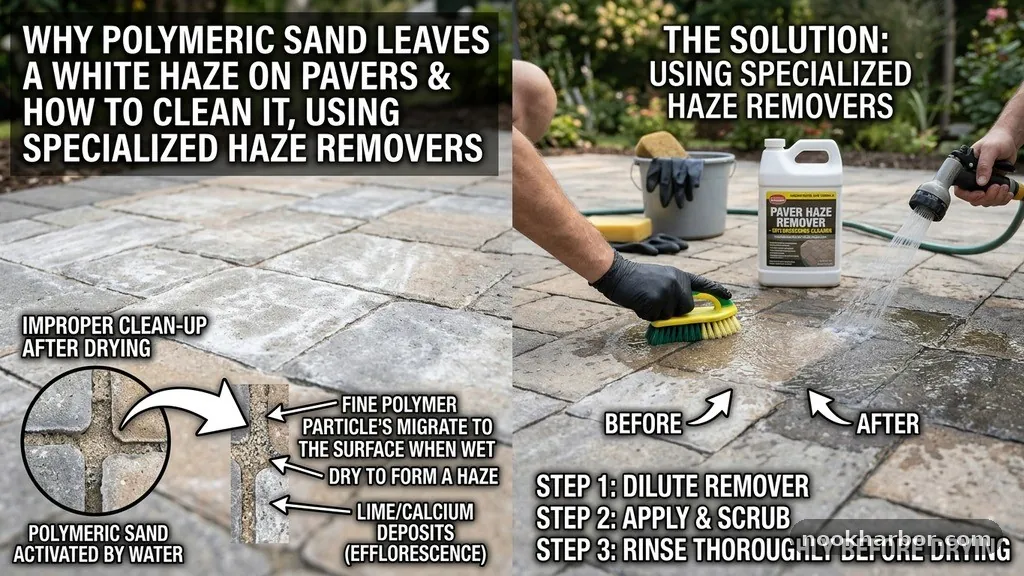
When simple scrubbing fails, you must turn to professional-grade cleaners designed specifically for this purpose. Many manufacturers of paving stones and jointing sand produce proprietary Interlocking Concrete Pavement Institute-approved cleaners that are formulated to dissolve polymer binders without damaging the concrete. These products are usually acid-based or enzyme-based, designed to safely break the chemical bond of the haze.
Always follow the manufacturer’s instructions to the letter, as these chemicals can be potent. Apply the solution to a small test area first to ensure it does not cause discoloration or etching. Once applied, allow the product to dwell for the recommended time, scrub the surface, and rinse thoroughly with clean water to neutralize the area.
The Role of Vinegar in Cleaning
Homeowners often ask about using white vinegar as a DIY solution for removing haze. While vinegar is a weak acid and can sometimes help dissolve minor polymer residues, it is not always effective on fully cured, high-performance polymers. If you choose to use vinegar, dilute it with water—typically a 1:4 ratio—to prevent etching the natural minerals in the stone.
Apply the mixture, scrub gently, and rinse immediately. Be aware that vinegar can leave a lingering scent and may not be strong enough for significant staining. If you decide to go this route, test it on a spare paver or an area hidden from view before applying it to your entire patio.
Avoiding Common Cleaning Mistakes
The most common mistake during the cleaning process is using a pressure washer at too high a setting. While pressure washing can be effective, it can also force the cleaning solution or the removed polymer deeper into the porous structure of the stone. Furthermore, if you get too close to the joints, you will blast out the newly installed sand, effectively ruining your hard work.
Another error is failing to rinse sufficiently. If any cleaning chemical is left behind, it can leave its own residue or continue to react with the paver surface. Always rinse with a generous amount of water to ensure the surface is completely neutralized and free of both the haze and the cleaner.
When to Seek Professional Help
If you have tried multiple cleaners and the haze persists, or if you are dealing with a large-scale installation, it may be time to consult a professional hardscaping contractor. Professionals have access to industrial-strength equipment and cleaning agents that are not available to the general public. They also have the experience to identify whether the issue is indeed a polymer haze or if there is a deeper problem with the paver material itself.
A professional can also assess if the sand was installed correctly in the first place. If the joints are failing because they were not hydrated properly, a simple cleaning won’t fix the underlying structural issue. They can advise you on whether the project needs a partial re-sanding or a full restoration.
Preventative Maintenance for Future Projects
To avoid dealing with this issue again, focus on the details during your next project. Ensure that the pavers are completely dry before you start sweeping in the sand. Moisture in the joints can cause the sand to clump, making it impossible to sweep evenly and increasing the likelihood of leaving residue on the surface.
- Always use a high-quality, leaf blower to clear the surface of all loose dust.
- Work in small sections, sweeping and wetting as you go to maintain control.
- Use the correct water nozzle setting—a fine mist is better than a high-pressure stream.
- Check the weather forecast to ensure no rain is expected for at least 24 hours after application.
- Follow the manufacturer’s specific curing times before walking on or sealing the area.
Frequently Asked Questions
Does the white haze go away on its own?
Generally, no. While some light surface dust might wash away with heavy rain over several months, a true polymer haze is a cured binder that will remain until it is mechanically or chemically removed. It is best to address it as soon as you notice it to prevent it from becoming permanently bonded to the pavers.
Can I seal my pavers if they have a white haze?
Absolutely not. Applying a sealer over a haze will lock the residue in place, making it nearly impossible to remove later. You must ensure the surface is perfectly clean and free of any contaminants before applying any type of protective sealer or finish.
Will pressure washing remove the haze?
It can, but you must be extremely careful. Using a pressure washer can strip away the haze, but it can also damage the joints if the water pressure is too high. Use a fan tip rather than a zero-degree nozzle, keep the wand moving constantly, and stay away from the joints as much as possible.
Is it normal for some haze to appear after rain?
If you see a white film appear only after a rain event that wasn’t there before, you might be looking at efflorescence rather than polymer haze. Efflorescence is a natural occurrence as moisture brings salts to the surface. It usually fades over time, but you can speed up the process with a mild efflorescence cleaner.
Can I use a wire brush to scrub the haze off?
Avoid wire brushes at all costs. They will scratch the surface of concrete and natural stone pavers, leaving permanent marks that look worse than the haze itself. Always use a stiff nylon-bristled brush, which provides enough friction to clean the stone without causing physical damage to the finish.
Addressing the aesthetic challenges of your hardscape requires a mix of patience and the right technical approach. By recognizing why polymeric sand leaves a white haze on pavers (and how to clean it), you can successfully navigate the restoration process and enjoy the long-term beauty of your outdoor living space. If you encounter persistent issues, do not hesitate to reach out to a local masonry expert who can provide a site-specific assessment.
Taking the time to properly clean and maintain your pavers ensures that they remain a focal point of your property for years to come. Whether you tackle the job yourself or hire a professional, the effort will pay off when your patio finally displays the clean, sharp lines you originally envisioned.