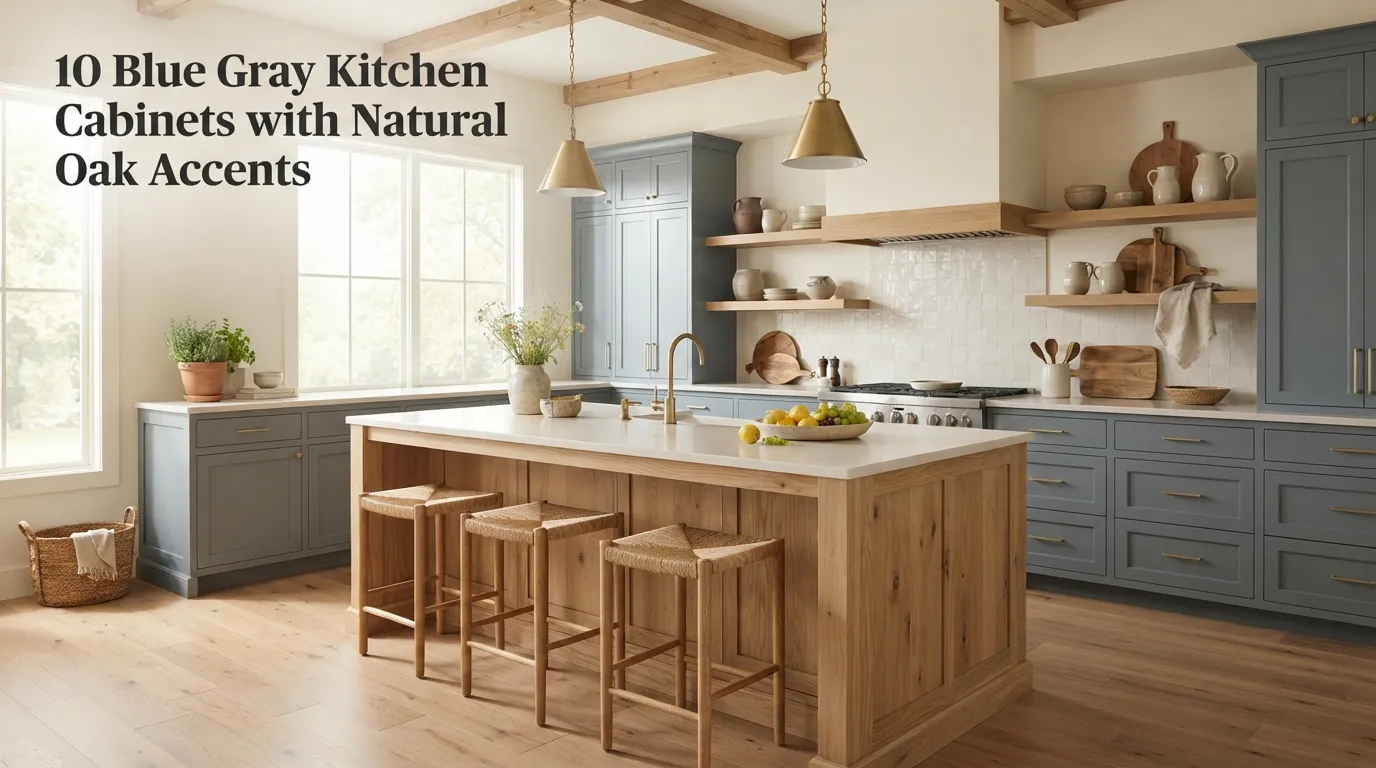
10 Blue Gray Kitchen Cabinets with Natural Oak Accents
A kitchen can feel polished without looking overly coordinated. One of the easiest ways to create that balance is to pair blue gray kitchen cabinets with natural oak accents.
Blue gray sits comfortably between cool blue and understated gray, giving cabinetry a soft, sophisticated appearance. Natural oak brings the warmth that can keep those cooler cabinet tones from feeling flat or distant. Together, they create a palette that feels contemporary enough for a renovated kitchen while still having the warmth and character many homeowners want from an everyday gathering space.
The combination also works across a surprisingly wide range of styles. You can pair blue gray cabinets with pale oak for a light Scandinavian-inspired kitchen, medium oak for a more traditional look, or slightly richer wood tones for a sophisticated transitional space. White countertops can keep the room bright, while creamy surfaces and warm metal finishes create a softer atmosphere.
In my experience, the key is choosing the right balance between the two materials. Oak doesn’t need to appear everywhere. A kitchen island, floating shelves, stools, cutting boards, or a simple range hood detail may provide enough warmth.
The ideas below show different ways to combine these two finishes without making the kitchen feel busy. You’ll find approaches for small kitchens, open-concept spaces, traditional homes, modern interiors, and kitchens where you simply want to refresh the existing cabinetry rather than undertake a complete renovation.
If you’re drawn to blue gray but worry it could make your kitchen feel too cool, natural oak can be one of the most effective ways to warm up the palette.
Table of Contents
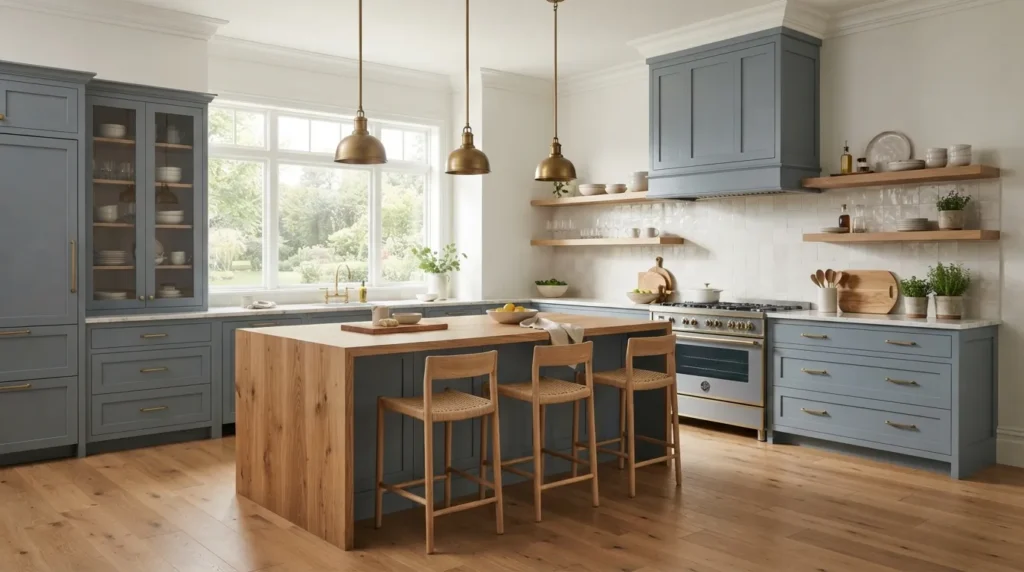
1. Oak Kitchen Island
Use natural oak on the island to create a warm focal point against blue gray perimeter cabinets.
2. Oak Floating Shelves
Add practical open shelving for warmth without introducing another large furniture element.
3. Light Oak Flooring
Ground blue gray cabinetry with natural oak flooring for a cohesive foundation.
4. Oak Range Hood
Use a wood range hood to introduce architectural warmth above the cooking area.
5. Oak Bar Stools
Bring natural texture into the kitchen with simple wooden counter or island seating.
6. Oak Cabinet Inserts
Combine painted cabinet doors with selected oak sections for subtle material contrast.
7. Oak Pantry Details
Use natural wood around pantry storage to create warmth in a hardworking kitchen zone.
8. Oak Open Storage
Balance closed cabinetry with practical wooden storage for a lighter visual effect.
9. Oak Ceiling Accents
Extend the natural wood palette upward for a more architectural kitchen design.
10. Layered Oak Details
Combine several restrained oak elements for a warm, cohesive finished kitchen.
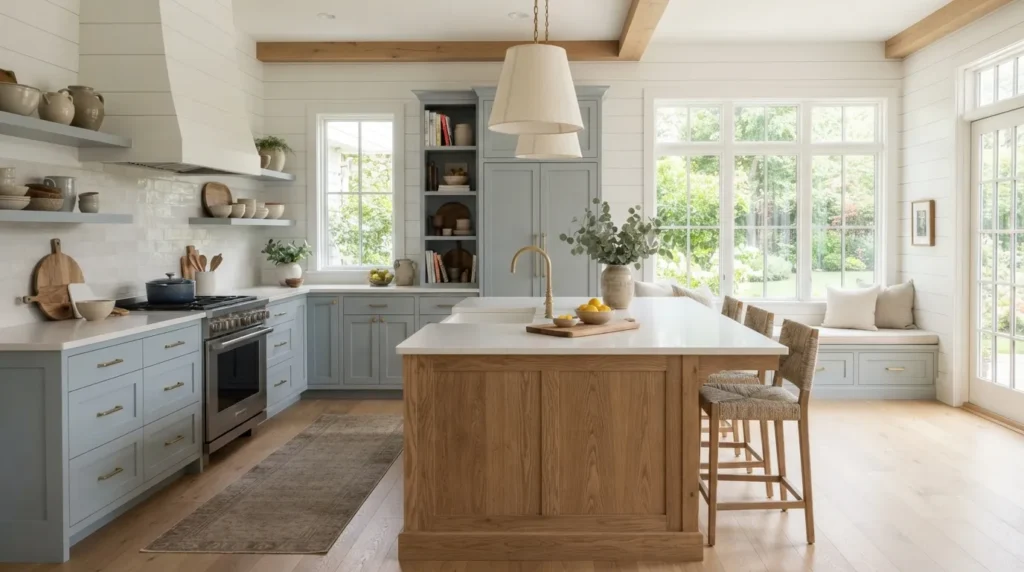
1. Oak Kitchen Island
Quick Benefits
- Creates a warm focal point
- Breaks up blue gray cabinetry
- Adds natural texture
- Works in open kitchens
- Provides visual contrast
Why It Works
The kitchen island is often the largest independent element in the room, which makes it an ideal place to introduce natural oak.
Instead of using blue gray on every cabinet, an oak island can create a deliberate contrast while keeping the rest of the kitchen visually cohesive.
The combination feels especially balanced when the blue gray cabinets have simple, clean fronts.
Natural oak adds grain and variation that painted cabinetry doesn’t provide.
It also makes the island feel more like a piece of furniture rather than simply another bank of cabinets.
This approach works beautifully in transitional, contemporary, Scandinavian-inspired, and modern farmhouse kitchens.
How To Style It
Keep the perimeter cabinets in a soft blue gray with understated hardware.
Use natural oak cabinetry on the island, preferably with a finish that allows the wood grain to remain visible.
Pair the island with a light countertop if you want an airy appearance.
White quartz, warm white stone, or another light surface can work well depending on the rest of the kitchen.
For stools, repeat either the oak or another natural material.
Avoid introducing several competing wood tones.
One consistent oak finish can provide enough warmth.
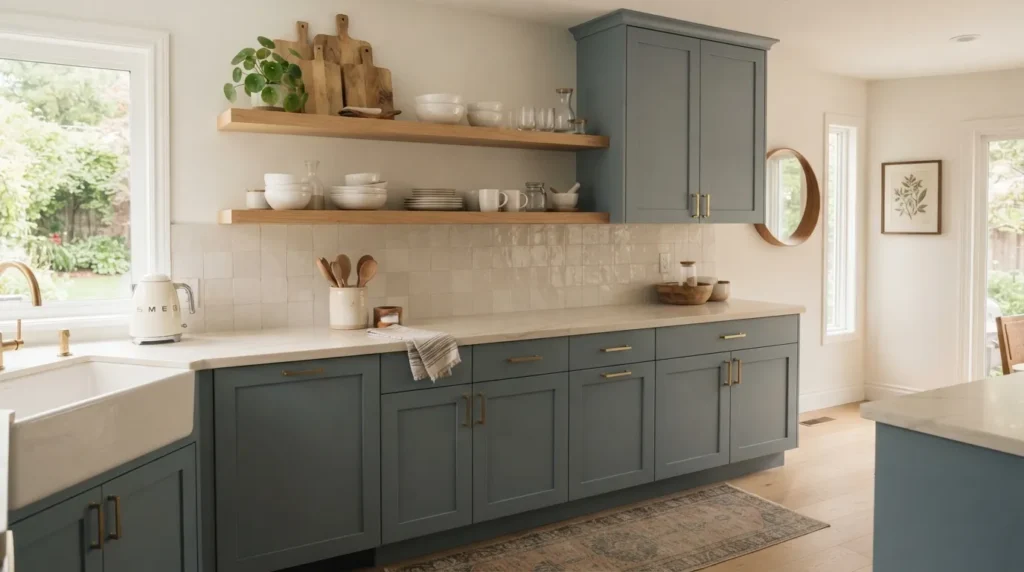
2. Oak Floating Shelves
Quick Benefits
- Adds warmth without bulk
- Creates practical storage
- Opens up wall space
- Highlights everyday dishes
- Works well in smaller kitchens
Why It Works
Blue gray cabinets can create a beautiful sense of depth, but a wall filled entirely with closed cabinetry may feel visually heavy.
Natural oak floating shelves provide a lighter alternative.
They break up the cabinetry while adding warmth and an opportunity to display useful kitchen items.
The shelves also allow you to introduce texture without adding another major color.
Simple white ceramics, wooden cutting boards, glassware, and neutral pottery can complement the oak beautifully.
How To Style It
Install one or two substantial shelves rather than filling the entire wall with small pieces.
Choose oak that coordinates with other wood accents in the kitchen.
Keep displayed items useful and relatively restrained.
Stack a few neutral plates, add a small ceramic bowl, and lean a wooden cutting board against the wall.
A small plant can add freshness.
Don’t overcrowd the shelves.
The combination of blue gray cabinetry and natural oak already provides plenty of visual interest.
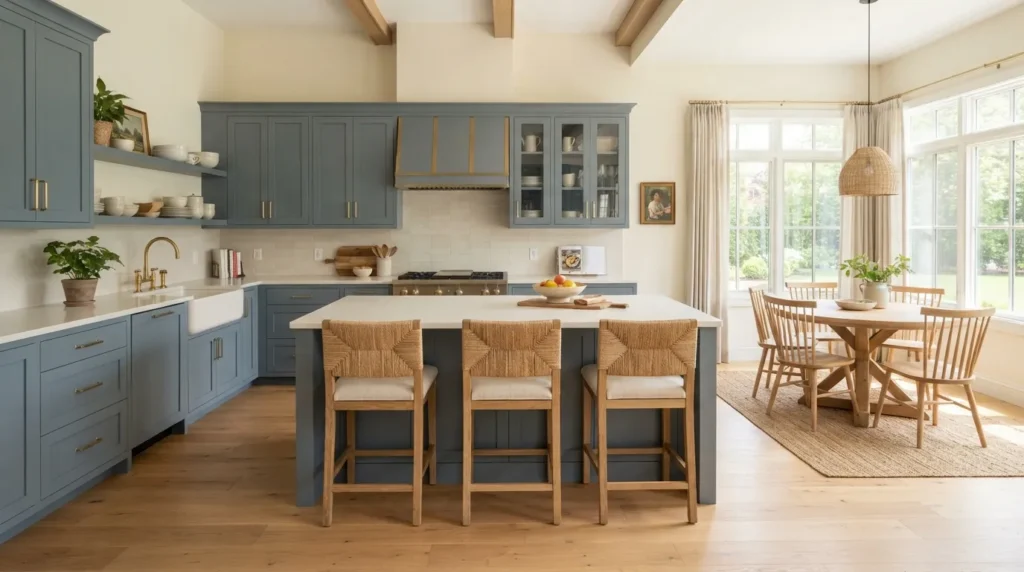
3. Light Oak Flooring
Quick Benefits
- Creates a warm foundation
- Connects cabinets with other rooms
- Makes the kitchen feel cohesive
- Works with open floor plans
- Adds natural texture
Why It Works
Flooring occupies a large portion of a kitchen, so it can influence how cabinet colors are perceived.
Light natural oak flooring creates a warm base beneath blue gray cabinetry.
The contrast helps the blue gray feel softer rather than overly cool.
This combination is particularly useful in open-concept homes because oak flooring can visually connect the kitchen with adjoining living and dining spaces.
A continuous wood floor can make the overall layout feel more unified.
How To Style It
Choose flooring with a natural finish and moderate variation.
Very orange or heavily distressed wood can create a stronger rustic effect, while pale oak tends to feel more contemporary.
Coordinate the floor with the cabinet hardware and countertop.
If your oak flooring already exists, use it as the reference point when selecting additional wood accents.
Avoid trying to match every wood element perfectly.
Instead, aim for compatible undertones.
Blue gray cabinets can work beautifully with both pale and medium natural oak.
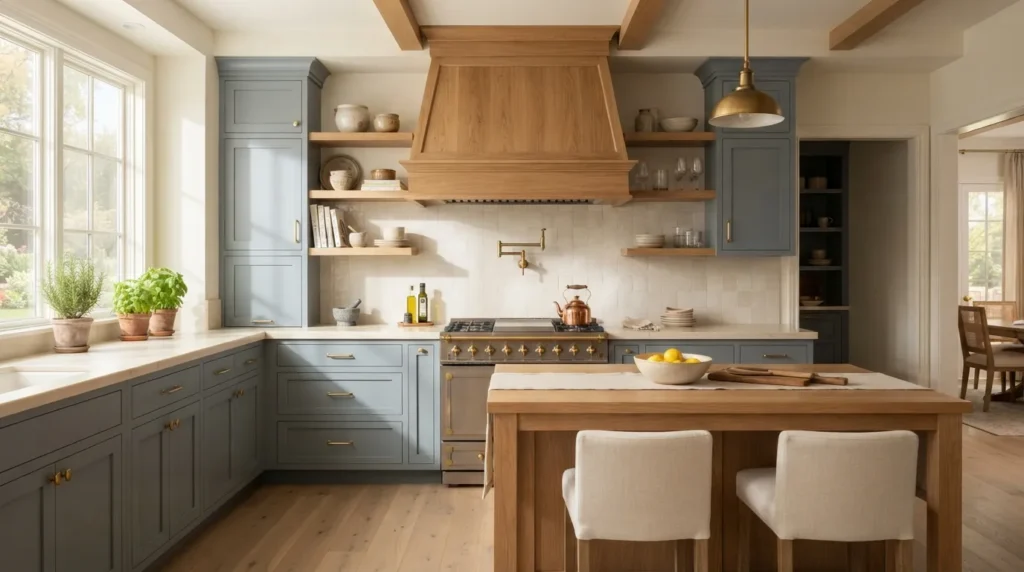
4. Oak Range Hood
Quick Benefits
- Creates an architectural focal point
- Adds warmth at eye level
- Breaks up painted cabinetry
- Highlights the cooking zone
- Gives the kitchen a custom appearance
Why It Works
A range hood occupies a prominent position, making it an excellent opportunity to introduce natural wood.
An oak hood can soften a wall of blue gray cabinetry while giving the cooking area a more furniture-like quality.
The wood adds dimension without requiring an entirely different cabinet color.
This approach is particularly attractive in kitchens where the hood is already designed as an architectural feature.
It can also help connect the cabinetry with an oak island or shelving.
How To Style It
Keep the hood silhouette relatively simple.
A clean rectangular or gently curved design can work with both traditional and contemporary kitchens.
Use an oak finish that coordinates with the island, shelves, or flooring.
Pair the hood with a light backsplash to give the wood room to stand out.
Simple hardware in aged brass, brushed nickel, or matte black can complement the overall palette depending on the kitchen style.
Avoid adding too many decorative elements around the hood.
Let the wood be the focal point.
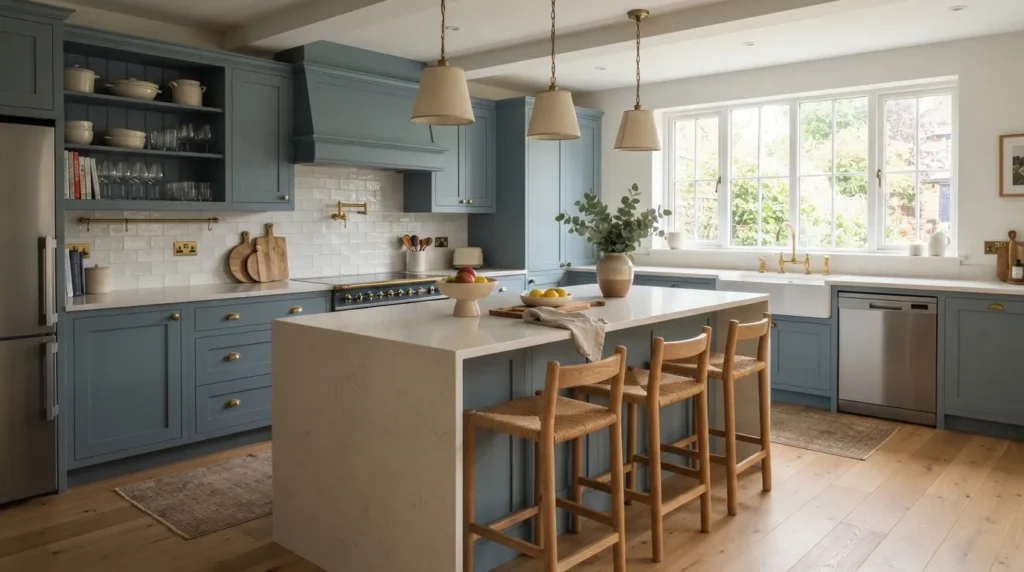
5. Oak Bar Stools
Quick Benefits
- Adds warmth affordably
- Requires no cabinet changes
- Creates comfortable seating
- Works in rental-friendly updates
- Introduces natural texture
Why It Works
You don’t need to renovate your cabinetry to introduce oak.
Counter stools can provide an easy way to bring natural wood into a blue gray kitchen.
Because stools are smaller than an island or cabinet bank, they add warmth without dramatically changing the visual balance.
This can be particularly useful when you’re working with an existing kitchen.
Wooden stools also make the kitchen feel more relaxed and lived-in.
How To Style It
Choose stools with simple silhouettes.
A natural oak seat with a minimalist frame can complement modern blue gray cabinets.
For a more traditional kitchen, consider a wooden stool with a gently curved back.
Keep the upholstery neutral if you choose upholstered seating.
Cream, beige, oatmeal, and warm gray can all work well.
If your kitchen already has an oak island, matching or coordinating stools can reinforce the connection.
Avoid introducing another strongly colored wood finish.
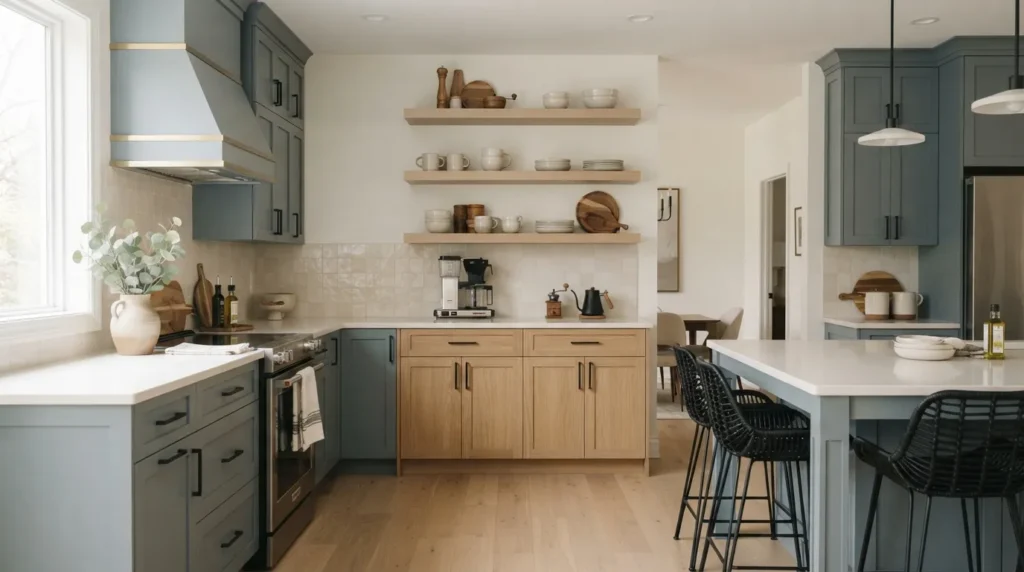
6. Oak Cabinet Inserts
Quick Benefits
- Creates subtle contrast
- Adds custom character
- Breaks up large cabinet runs
- Works with modern kitchens
- Allows selective use of wood
Why It Works
Sometimes a small amount of oak is more effective than covering an entire island in wood.
Oak cabinet inserts can be used selectively within a larger blue gray cabinet design.
For example, a few oak doors in an appliance section or upper cabinet area can create a furniture-like detail.
This approach gives the kitchen visual variation while keeping blue gray as the dominant color.
It is especially useful for large kitchens where one uninterrupted cabinet color could otherwise feel repetitive.
How To Style It
Choose one area where the oak can have a clear purpose.
A coffee station, beverage area, pantry cabinet, or appliance section can work well.
Keep the oak finish consistent with other wood elements.
Use simple hardware so the wood grain remains noticeable.
If you’re remodeling existing cabinetry, talk with a qualified cabinetmaker or installer about whether replacing selected fronts is practical.
For a smaller update, consider introducing oak through removable accessories rather than modifying permanent cabinetry.
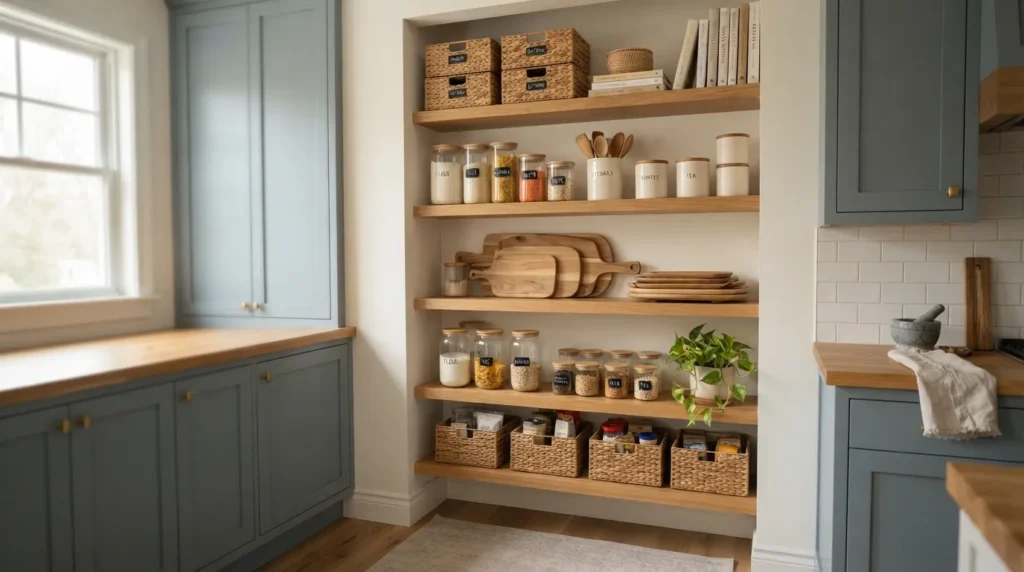
7. Oak Pantry Details
Quick Benefits
- Adds warmth to storage zones
- Makes utility areas feel intentional
- Creates material contrast
- Works with open shelving
- Adds natural character
Why It Works
Pantry and storage areas can sometimes feel purely functional.
Natural oak can make these zones feel more connected to the rest of the kitchen.
Oak shelving, drawer fronts, trim, or a small built-in storage section can introduce warmth without competing with the primary cabinetry.
This is particularly effective when the pantry is visible from the kitchen.
Instead of hiding the storage completely, the wood detail can make it feel like part of the overall design.
How To Style It
Use oak shelving inside an open pantry or breakfast station.
Pair it with simple storage containers in glass, ceramic, or neutral finishes.
Keep labels and packaging visually consistent if the pantry remains open.
For a closed pantry, an oak door or cabinet insert can provide a subtle accent.
Use the same oak tone elsewhere in the kitchen to make the feature feel intentional.
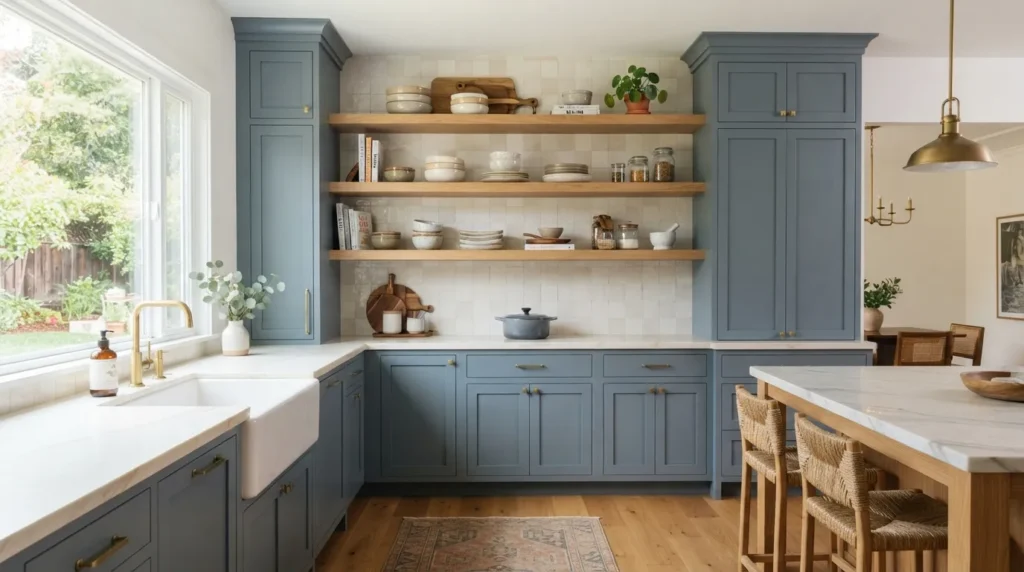
8. Oak Open Storage
Quick Benefits
- Makes cabinetry feel lighter
- Adds practical display space
- Creates warmth
- Shows off natural materials
- Breaks up long cabinet walls
Why It Works
Open storage can change the visual rhythm of a kitchen.
Blue gray cabinets provide the structured foundation, while open oak shelving introduces negative space.
The result can feel less heavy without sacrificing storage.
This is especially useful around coffee stations, breakfast areas, or sections of countertop where everyday dishes are frequently used.
The natural oak provides warmth while the open space keeps the wall from becoming visually dense.
How To Style It
Choose shelves that are substantial enough to feel intentional.
Avoid filling every inch with decorative objects.
Display a few favorite mugs, bowls, wooden boards, cookbooks, or neutral ceramics.
Use the same blue gray and oak palette throughout the display.
If the kitchen is small, limit the number of objects even further.
Open storage looks best when the eye has some empty space between pieces.
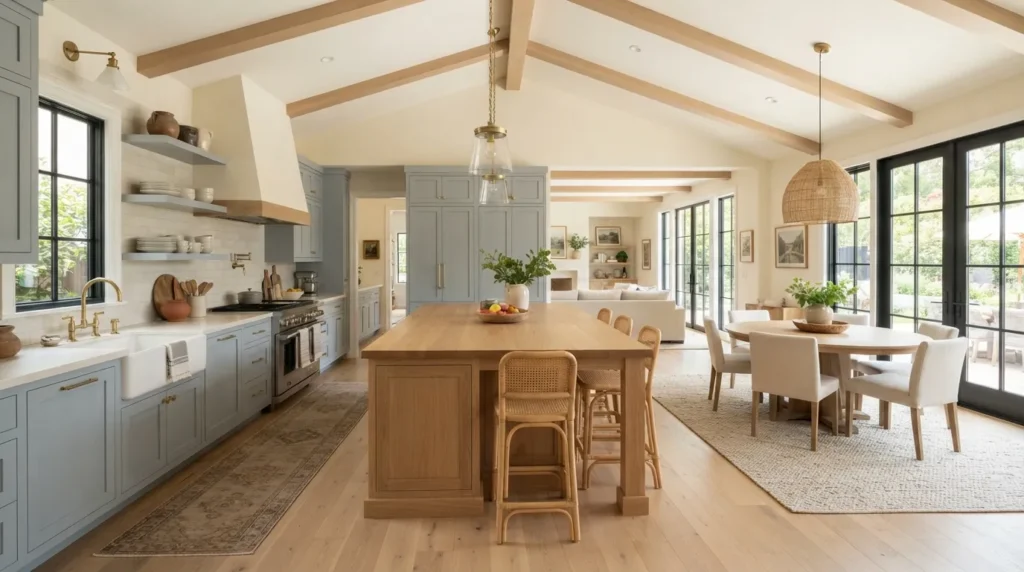
9. Oak Ceiling Accents
Quick Benefits
- Adds architectural warmth
- Draws attention upward
- Works in open-concept kitchens
- Creates visual continuity
- Adds character without more cabinetry
Why It Works
Most kitchen design focuses on walls, cabinets, countertops, and flooring.
The ceiling is often overlooked.
Natural oak beams, slats, or a wood ceiling detail can introduce warmth from above and balance cooler blue gray cabinetry.
This approach can be especially effective in kitchens with high ceilings or open-plan layouts.
The wood overhead also creates a stronger relationship between the kitchen and adjacent living areas.
How To Style It
Keep the wood treatment relatively simple.
A few exposed beams can provide warmth without overwhelming the room.
For a contemporary kitchen, evenly spaced oak slats can create a clean architectural statement.
For a traditional or farmhouse-inspired home, natural beams may feel more appropriate.
Coordinate the ceiling wood with the island, flooring, or shelving where possible.
Avoid using several unrelated wood finishes.
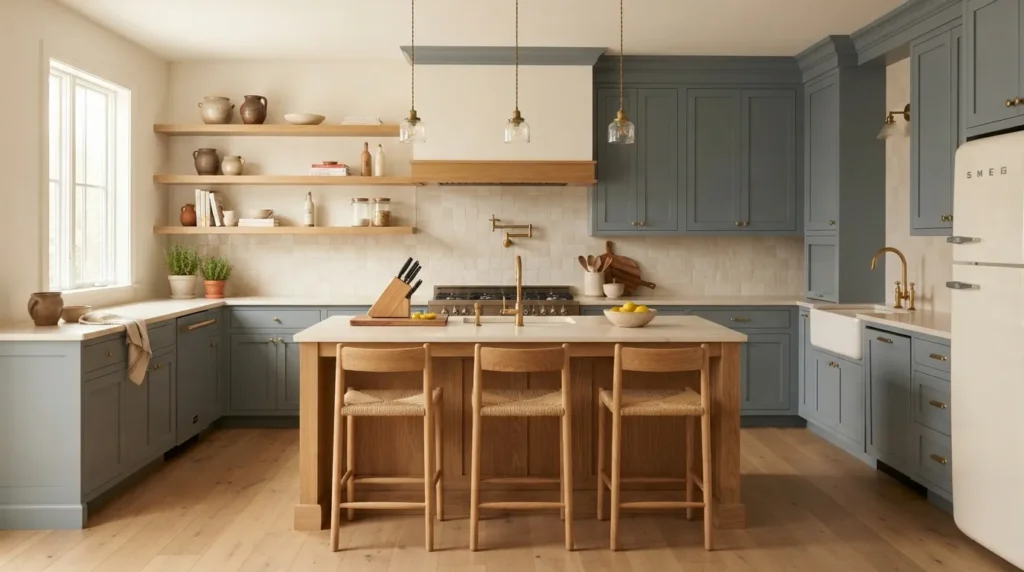
10. Layered Oak Details
Quick Benefits
- Creates a cohesive palette
- Adds warmth throughout the room
- Works with many design styles
- Makes the kitchen feel finished
- Allows flexible decorating
Why It Works
The most natural-looking blue gray and oak kitchens rarely rely on one isolated wood feature.
Instead, they repeat natural oak in small, connected ways.
An oak island might relate to floating shelves.
Those shelves might coordinate with the flooring.
Wooden stools can then reinforce the same palette.
This repetition creates visual continuity without requiring every surface to match.
The result feels considered rather than overly coordinated.
How To Style It
Choose one primary oak tone.
Then repeat it in two or three places.
For example:
- Oak island
- Oak floating shelves
- Natural oak stools
Or:
- Oak flooring
- Oak range hood
- Oak cutting boards
Keep the remaining materials restrained.
Cream countertops, warm white walls, simple hardware, and understated lighting allow the blue gray and oak combination to remain the focus.
How to Choose the Right Blue Gray for Your Kitchen
Not all blue gray paint colors look the same.
Some lean noticeably blue.
Others have stronger gray or green undertones.
The amount of natural light in your kitchen can also change how the color appears throughout the day.
A blue gray that looks soft and neutral in a bright south-facing room may appear significantly cooler in a darker kitchen.
Before committing to cabinetry, test samples in your actual kitchen.
Look at them:
- In morning light
- Around midday
- In the evening
- Under artificial lighting
- Beside your countertop
- Beside your flooring
This matters because cabinet color should be selected as part of the entire material palette rather than in isolation.
Natural oak generally adds warmth, but the exact effect depends on the wood’s undertones and finish.
Best Countertop Colors for Blue Gray and Oak
The countertop can either connect these two materials or make them feel disconnected.
Warm White
A warm white countertop keeps the kitchen bright while complementing natural oak.
Cream
Cream creates a softer, more traditional atmosphere.
Light Gray
Light gray can reinforce the blue gray cabinetry for a more tonal appearance.
Natural Stone
Stone with subtle warm and cool variation can bridge the cabinet and oak finishes.
Quartz With Gentle Veining
A restrained veined surface can add interest without competing with the wood grain.
Avoid selecting a countertop based only on a small sample.
View it alongside the cabinet and oak samples together.
Hardware Ideas for Blue Gray Cabinets
Hardware can shift the personality of the kitchen.
Brushed Brass
Adds warmth and creates an elegant contrast.
Aged Brass
Works especially well in traditional and transitional kitchens.
Matte Black
Creates stronger contrast and a contemporary appearance.
Brushed Nickel
Provides a softer, understated metallic finish.
Polished Chrome
Can work in brighter, more traditional spaces.
The natural oak already introduces warmth, so choose hardware based on the overall look rather than assuming you need another warm metal.
How to Make Blue Gray Cabinets Feel Warmer
If your kitchen feels too cool after installing blue gray cabinetry, you don’t necessarily need to change the cabinet color.
Start with the surrounding materials.
Add natural oak through:
- Shelving
- Flooring
- Stools
- Cutting boards
- A range hood
- An island
- Decorative trays
- Wood-framed artwork
Then consider warmer lighting.
Cream textiles, natural stone, woven accessories, and greenery can also soften the overall appearance.
The key is balance.
Blue gray provides depth and color.
Oak provides warmth and texture.
Neither needs to dominate every part of the kitchen.
Blue Gray and Oak Kitchen Styles
This color combination can adapt to different aesthetics.
Modern
Use flat-front blue gray cabinets, pale oak, minimal hardware, and simple lighting.
Scandinavian
Choose light oak, soft blue gray, white countertops, and understated decor.
Transitional
Combine shaker-style blue gray cabinets with medium oak, classic hardware, and warm stone.
Modern Farmhouse
Use blue gray cabinetry, natural oak shelving, simple pendants, and warm neutral accessories.
Coastal
Choose lighter blue gray, pale oak, white surfaces, and natural woven materials.
The same two core materials can look completely different depending on the supporting finishes.
Frequently Asked Questions
Is blue gray a good color for kitchen cabinets?
Blue gray can be a versatile cabinet color because it combines the softness of gray with the character of blue. It can work in traditional, transitional, modern, Scandinavian-inspired, and coastal kitchens. The best shade depends on the kitchen’s natural light, countertops, flooring, and surrounding materials.
Does natural oak work with blue gray cabinets?
Yes. Natural oak can be particularly effective with blue gray because its warm undertones balance the cooler appearance of blue gray cabinetry. Oak can be introduced through an island, flooring, shelving, stools, a range hood, or smaller decorative details.
What color countertops work with blue gray and oak?
Warm white, cream, light gray, and natural stone surfaces can all work well. The ideal choice depends on the specific cabinet shade and oak finish. Warm white tends to keep the kitchen bright, while cream and natural stone can create a softer and more traditional appearance.
What hardware looks best with blue gray kitchen cabinets?
Brushed brass, aged brass, matte black, brushed nickel, and polished chrome can all work depending on the desired style. Brass adds warmth, black creates stronger contrast, and nickel provides a quieter appearance. Look at hardware samples beside the cabinet and oak finishes before making a final decision.
Does oak make a blue gray kitchen look too rustic?
Not necessarily. The effect depends on the oak finish, cabinet design, hardware, lighting, and surrounding materials. Pale oak with clean-lined blue gray cabinets can look very contemporary, while heavily textured or distressed wood can create a more rustic appearance.
How do I make a blue gray kitchen feel warmer?
Introduce natural oak, warm lighting, cream or beige accessories, natural stone, woven textures, and greenery. You can also choose warmer hardware finishes. These details can balance the cooler cabinet color without requiring you to replace the cabinetry.
Are blue gray cabinets still timeless?
A carefully chosen blue gray can have lasting appeal, particularly when paired with classic materials such as natural oak, simple hardware, and restrained countertops. If long-term flexibility matters, choose a muted cabinet shade rather than an extremely saturated blue and use accessories that can easily be changed.
Conclusion
Blue gray kitchen cabinets and natural oak create a balanced combination that can feel both sophisticated and comfortable.
The blue gray brings color without overwhelming the room, while natural oak introduces warmth, texture, and organic character.
You don’t have to use oak everywhere.
An island can become the main focal point. Floating shelves can provide a lighter accent. Oak stools can bring warmth without renovation. Flooring can connect the kitchen to an open-concept living area. Even a few wooden accessories can soften a cooler cabinet color.
The most important step is to consider all the materials together.
Look at your cabinet color beside the countertop, flooring, backsplash, hardware, and wood finish before making permanent decisions. Natural light can change the appearance of blue gray throughout the day, so samples are worth testing in the actual room.
Then keep the rest of the palette relatively restrained.
Let the blue gray cabinetry provide the color and allow natural oak to provide the warmth.
Whether you’re planning a full kitchen renovation or simply looking for ways to make an existing kitchen feel more inviting, this pairing offers plenty of room for personalization.
Start with one oak element you genuinely love and build from there. The finished kitchen can feel warm, practical, and thoughtfully designed without looking overly matched.
Related Articles
- 10 Blue Gray Kitchen Cabinets with Timeless Style
- 10 Modern Kitchen Ideas with Warm Wood Accents
- 10 Kitchen Cabinet Color Ideas for a Fresh New Look
- 10 Natural Wood Kitchen Ideas for a Warm Interior
- 10 Small Kitchen Ideas That Make the Space Feel Bigger