
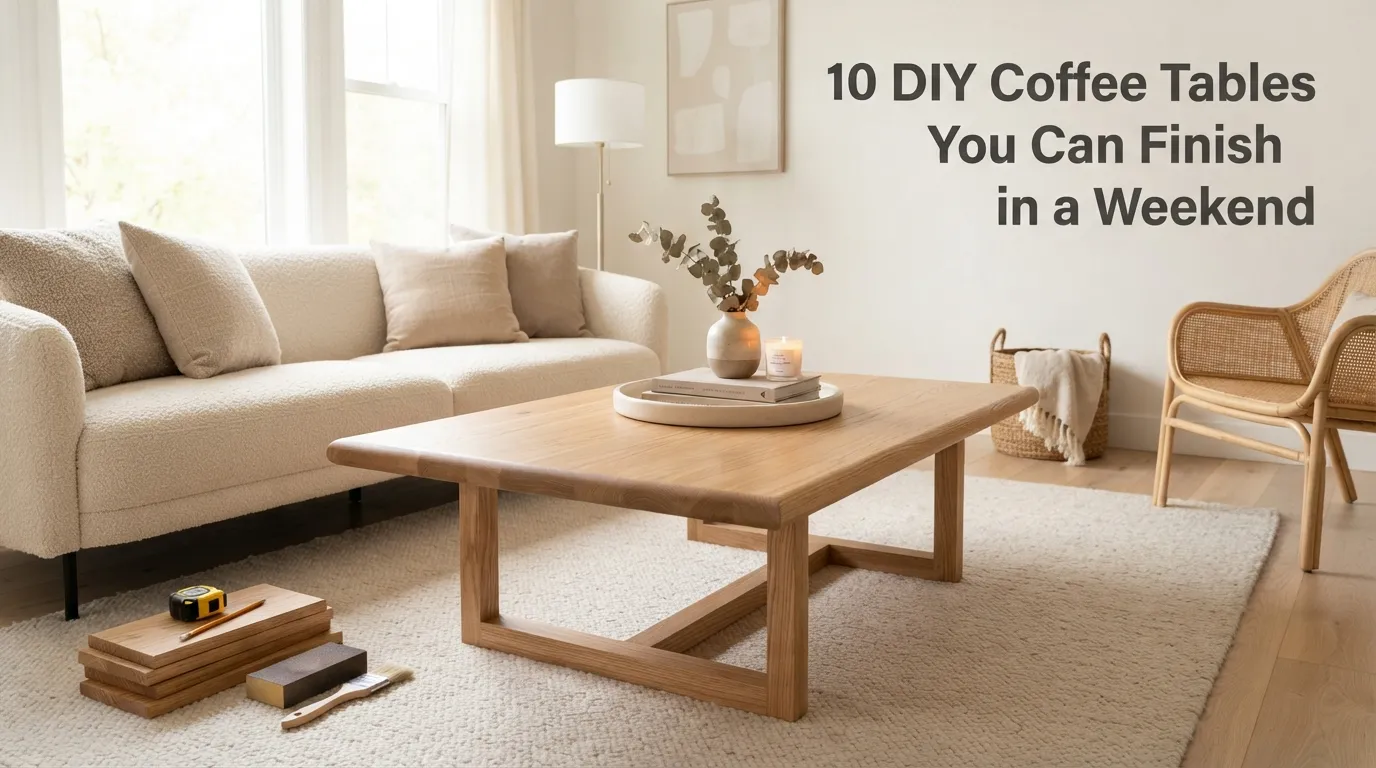
10 DIY Coffee Tables You Can Finish in a Weekend
A coffee table can completely change the way a living room feels, but buying a new one isn’t always necessary. With a few basic materials, simple tools, and a manageable design, you can build a table that looks intentional and fits your space far better than a generic store-bought option.
Weekend furniture projects are especially satisfying because they give you enough time to build something useful without turning your home into a long-term construction zone.
The best DIY coffee tables don’t necessarily require advanced woodworking skills. A simple tabletop combined with sturdy legs can create a beautiful result. You can also repurpose materials, use prefabricated components, or choose designs that rely on straightforward cuts and basic assembly.
In my experience, the biggest mistake with DIY furniture is choosing a project that’s much more complicated than the finished piece needs to be. A clean rectangular tabletop, well-sanded edges, and a thoughtful finish can look remarkably polished without elaborate joinery.
Before starting, measure your living room carefully. Think about the sofa height, walking clearance, storage requirements, and the amount of visual space you want the table to occupy.
The ten ideas below range from simple beginner-friendly builds to slightly more detailed projects. Each one can be approached as a weekend project when materials are prepared ahead of time and the chosen finish has enough time to dry or cure.
Whether your style is modern farmhouse, contemporary, rustic, Scandinavian, or warm minimalist, there’s an approach here that can be adapted to your home.
Table of Contents
1. Simple Plank Table
Create a classic coffee table from joined wooden boards and straightforward legs.
2. Hairpin Leg Table
Combine a simple wood top with metal hairpin legs for an industrial-modern look.
3. Crate Storage Table
Turn wooden crates into practical coffee table storage.
4. Round Pedestal Table
Build a softer silhouette with a circular top and central pedestal base.
5. Two-Tier Coffee Table
Add a lower shelf for books, baskets, and everyday living room essentials.
6. Rustic Farmhouse Table
Use chunky wood and a simple base for a relaxed farmhouse-inspired piece.
7. Concrete Top Table
Create a contemporary table using a smooth concrete-style surface and wood base.
8. Slatted Wood Table
Use evenly spaced wooden slats to create a modern, architectural tabletop.
9. Reclaimed Wood Table
Give salvaged boards a second life as a character-filled coffee table.
10. Minimal Oak Table
Build a clean, understated table with natural wood and simple lines.
1. Simple Plank Table
Quick Benefits
- Beginner-friendly design
- Affordable materials
- Easy to customize
- Works with many decor styles
- Simple to finish
Why It Works
A basic plank coffee table proves that simple furniture can still look beautifully finished.
Several straight wooden boards can be joined to create the tabletop, while four sturdy legs provide the support. The simplicity makes this project particularly approachable for someone building furniture for the first time.
Because the design has very few decorative elements, the quality of the wood and finish becomes the main visual feature.
You can leave the wood natural for a Scandinavian or modern rustic appearance, stain it for more depth, or paint the base while keeping the top natural.
The straightforward shape also makes it easier to adapt the dimensions to your living room.
How To Style It
Measure your available space before cutting the boards.
Use straight, appropriately sized lumber and inspect each board for excessive warping or damage.
Sand the tabletop carefully, especially around the edges.
Attach sturdy legs using appropriate fasteners and follow the hardware manufacturer’s recommendations.
For a softer appearance, slightly round over sharp corners.
Finish the wood with a product appropriate for the intended use and follow its drying and curing instructions.
Keep the tabletop relatively uncluttered once it’s in the room.
A tray, coffee-table book, and small vase can be enough.
2. Hairpin Leg Table
Quick Benefits
- Quick assembly
- Modern appearance
- Requires minimal woodworking
- Easy to customize
- Works well in apartments
Why It Works
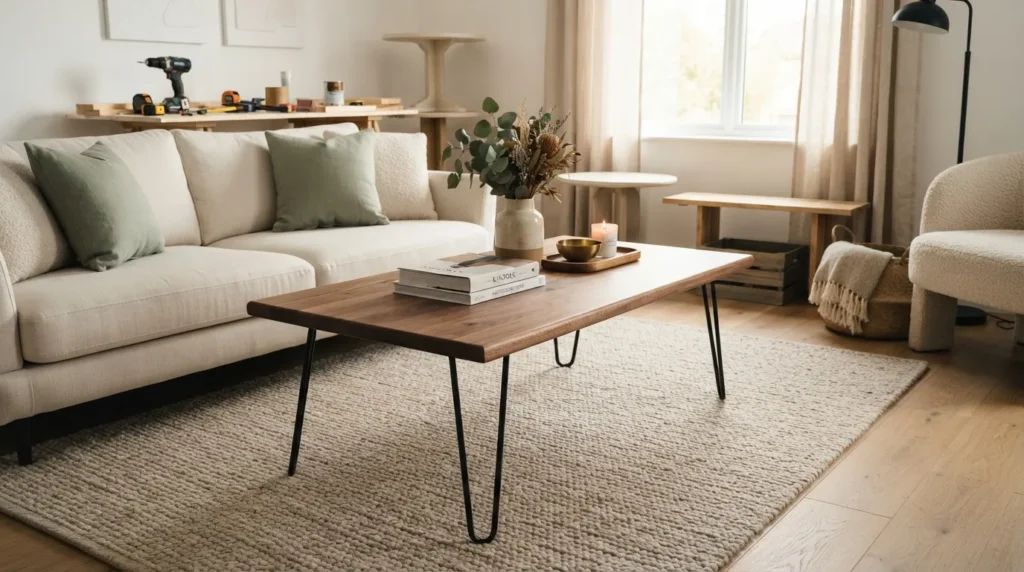
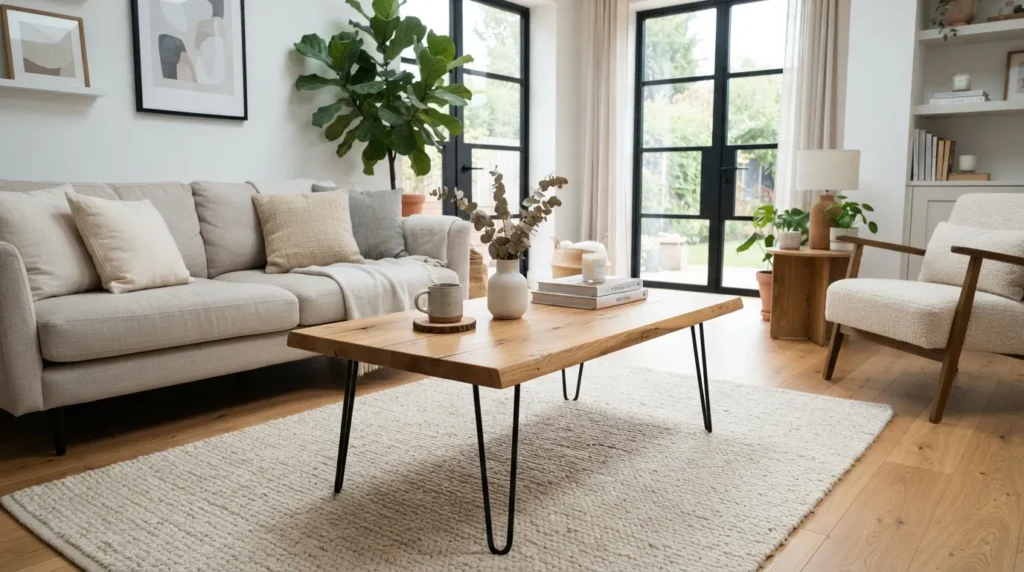
Hairpin legs can transform a simple wooden panel into a stylish coffee table with surprisingly little construction.
The slim metal legs create plenty of visual space beneath the tabletop, which can help a smaller living room feel less crowded.
The combination of wood and metal works particularly well with contemporary, industrial, minimalist, and eclectic interiors.
It’s also a practical choice when you want a weekend project without building a complicated base.
The tabletop can be made from joined boards, a suitable solid-wood panel, or another properly prepared material designed for furniture use.
How To Style It
Choose a tabletop thickness that feels proportionate to the legs.
Natural oak or another attractive wood can create a warm modern look.
For more contrast, stain the top a deeper tone while keeping the metal legs simple.
Position the legs evenly and use suitable fasteners for the tabletop material.
Check that the legs are rated for the intended load.
Add felt pads underneath the feet to help protect flooring.
A simple ceramic bowl or low tray can finish the table without hiding the wood.
3. Crate Storage Table
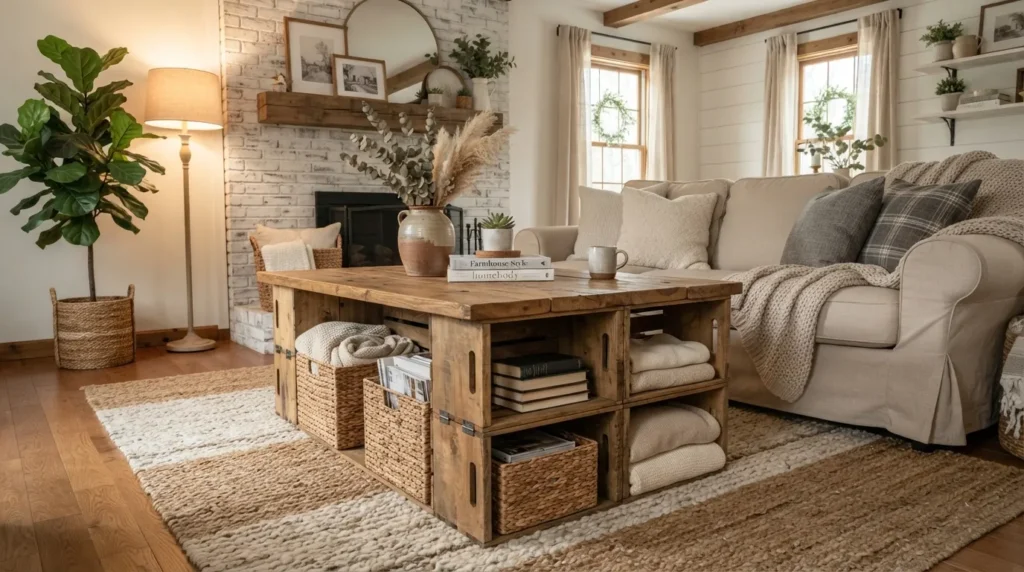
Quick Benefits
- Adds hidden or open storage
- Uses simple components
- Great for small living rooms
- Easy to personalize
- Provides rustic character
Why It Works
A coffee table can do more than hold drinks.
Wooden crates can be arranged beneath a tabletop to create compartments for blankets, books, games, magazines, or baskets.
This makes the design especially useful for smaller living rooms where every piece of furniture needs to perform more than one function.
The open compartments also create visual interest.
You can leave the crates natural, stain them, paint them, or combine finishes for a more eclectic appearance.
The project can be relatively straightforward, but stability is important.
How To Style It
Arrange the crates symmetrically or create an offset configuration depending on the look you want.
Secure components properly rather than simply stacking them.
Choose a sturdy tabletop with enough overhang to create a finished appearance.
Sand rough crate edges before use.
Use baskets inside the openings if you prefer concealed storage.
Keep the top simple with a decorative tray, candle, or small plant.
Make sure the finished table is stable and doesn’t rock before putting it into everyday use.
4. Round Pedestal Table
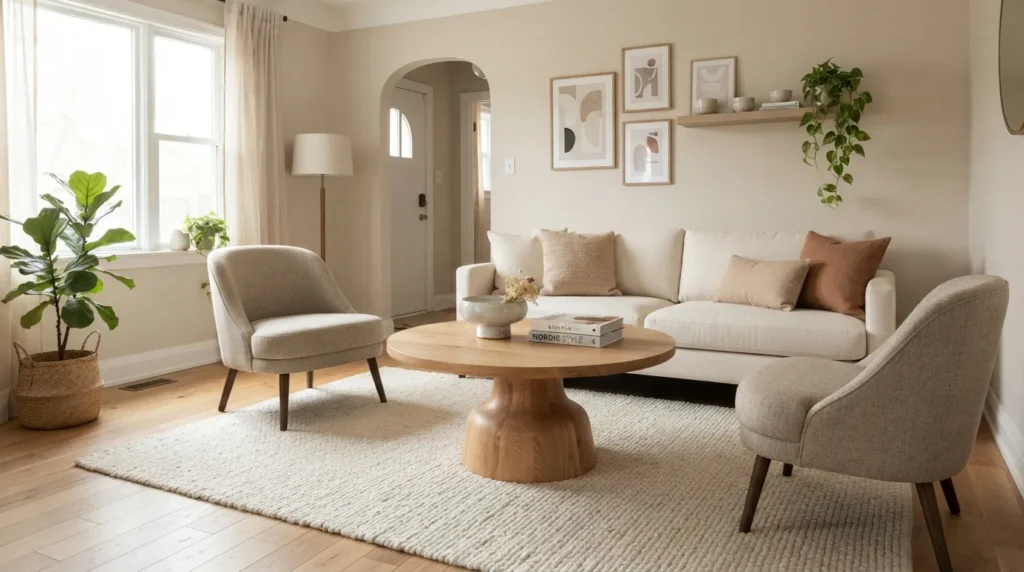
Quick Benefits
- Softens rectangular furniture
- Improves traffic flow
- Creates a sculptural silhouette
- Works in smaller rooms
- Looks custom-made
Why It Works
Round coffee tables can make a living room feel more fluid because they eliminate sharp tabletop corners.
They’re particularly useful in rooms where people regularly walk around the coffee table.
A circular top paired with a central pedestal creates a furniture silhouette that feels more substantial than a four-leg table while maintaining a relatively clean footprint.
The design can range from rustic to contemporary depending on the materials and finish.
A weekend version can use a prepared circular wood panel combined with a straightforward pedestal base.
How To Style It
Choose the diameter based on the size of the seating area.
Leave enough space between the table and sofa or chairs for comfortable movement.
Use a natural wood finish for warmth or paint the pedestal in a neutral shade for contrast.
Sand the circular top thoroughly.
Pay particular attention to the underside and edges.
A round tray can echo the tabletop shape, while rectangular books can provide subtle contrast.
5. Two-Tier Coffee Table
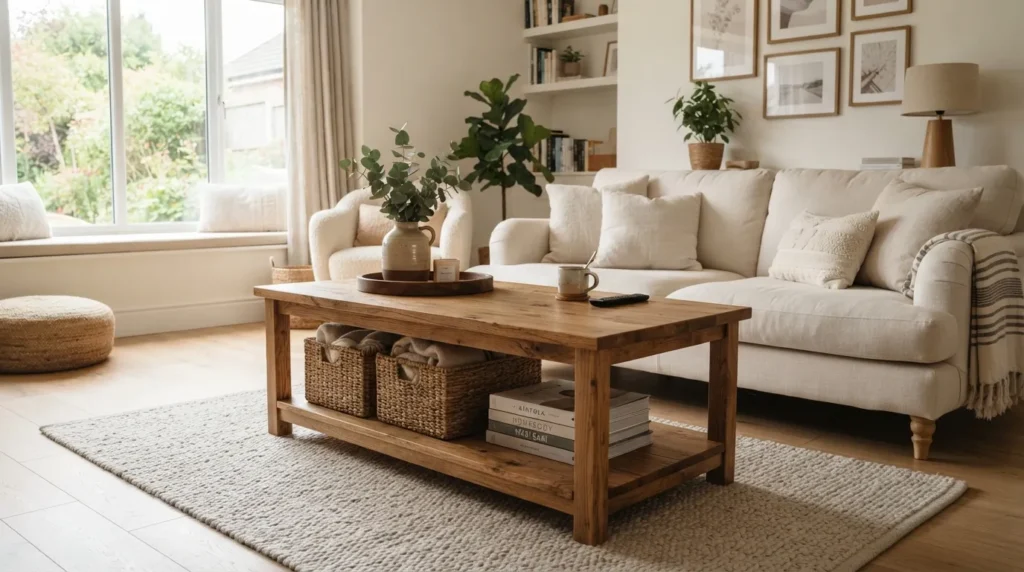
Quick Benefits
- Provides extra storage
- Creates visual depth
- Keeps the tabletop less cluttered
- Works in family rooms
- Offers flexible styling
Why It Works
A lower shelf gives a simple coffee table another useful surface without increasing its footprint.
You can store baskets, books, board games, remotes, or blankets underneath while keeping the main tabletop available for everyday use.
This is especially practical in busy households.
The lower shelf also gives the table more visual weight, which can be useful in larger rooms where a very lightweight table might look undersized.
The key is maintaining enough clearance between the tabletop and shelf for comfortable access.
How To Style It
Build the top and lower shelf from coordinating materials.
Natural wood works well for a warm, casual look.
Place attractive storage baskets on one side and a stack of books on the other.
Don’t fill the lower shelf completely.
Leaving some open space keeps the furniture from looking heavy.
Use a tray on the upper surface to group smaller objects.
If children use the room, consider rounded edges and sturdy construction.
6. Rustic Farmhouse Table
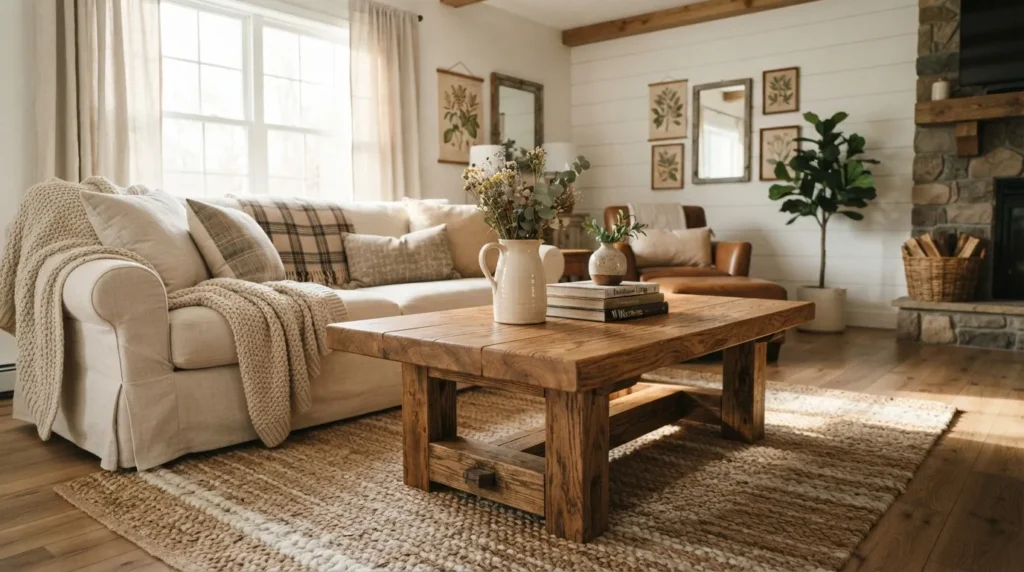
Quick Benefits
- Warm and approachable
- Easy to customize
- Works with existing farmhouse decor
- Highlights wood grain
- Can use simple construction
Why It Works
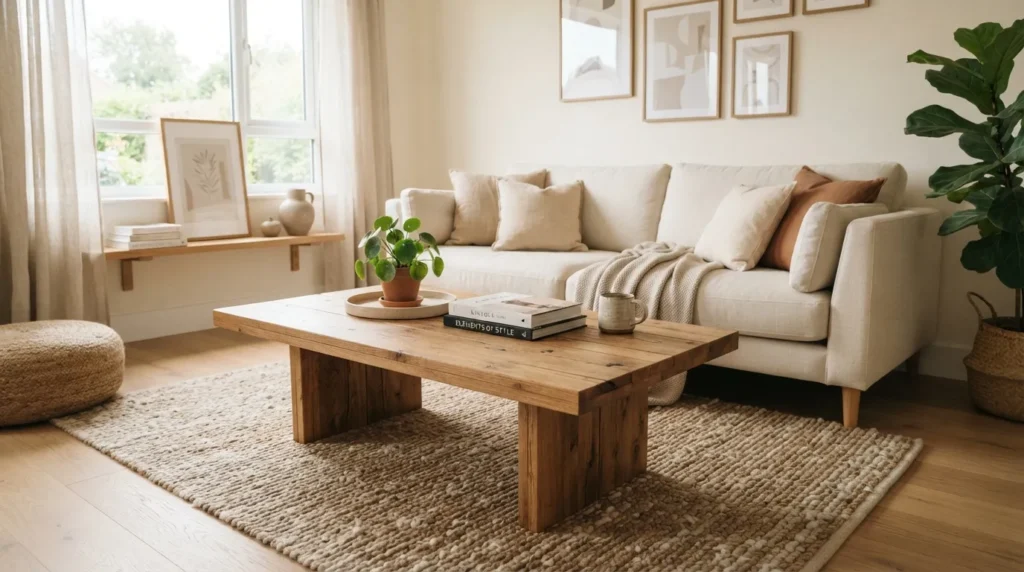
Farmhouse coffee tables often rely on proportion and material rather than complicated details.
A substantial wooden top and sturdy legs create a relaxed, grounded appearance.
This style works particularly well when your living room already contains linen upholstery, woven baskets, neutral textiles, or vintage-inspired accessories.
You don’t need artificially distressed wood to create the look.
Natural knots, subtle variation, and a lightly finished surface can provide plenty of character.
How To Style It
Choose boards with attractive grain and natural variation.
Sand the surface enough to remove rough areas while preserving some of the wood’s character.
A clear finish can maintain the natural appearance.
Alternatively, use a muted stain that coordinates with existing furniture.
Pair the table with a neutral area rug and upholstered seating.
A woven basket beneath the table can reinforce the relaxed farmhouse feeling.
Avoid overdecorating the tabletop.
The wood should remain visible.
7. Concrete Top Table
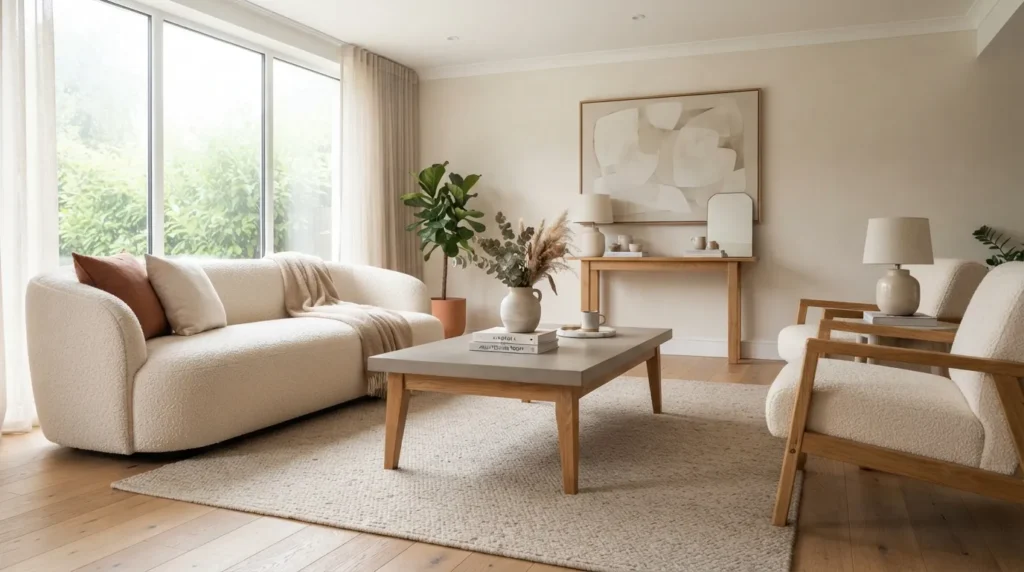
Quick Benefits
- Contemporary appearance
- Adds visual contrast
- Works with wood bases
- Creates a substantial focal point
- Complements minimalist rooms
Why It Works
Concrete-inspired furniture can add an architectural quality to a living room.
A smooth gray surface paired with warm wood creates a pleasing contrast between cool and warm materials.
For a weekend project, you can explore a suitable concrete or concrete-look tabletop method depending on your experience and workspace.
Actual concrete can be heavy, so the finished design needs an appropriately engineered and stable base.
A lightweight concrete-look material may be more practical for some homes.
How To Style It
Keep the rest of the room relatively warm.
Oak or another natural wood works well as the base.
Use cream upholstery, beige textiles, and natural woven materials to soften the gray surface.
Choose simple decorative objects.
A low ceramic bowl or wooden tray can provide contrast without competing with the tabletop.
Always account for the finished weight when selecting or constructing the base.
8. Slatted Wood Table
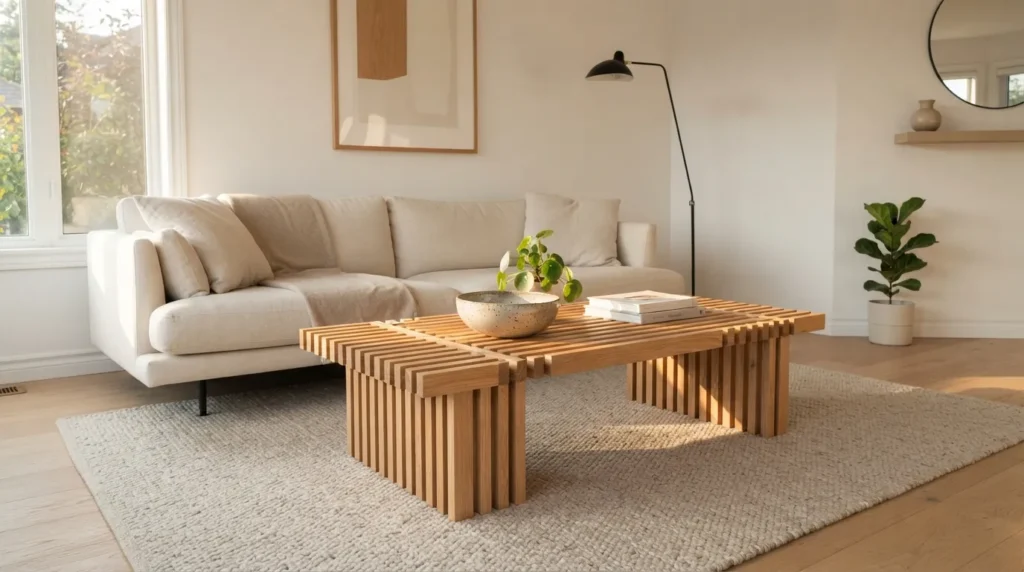
Quick Benefits
- Creates architectural detail
- Looks contemporary
- Adds texture
- Can be customized
- Works with natural finishes
Why It Works
Slatted wood adds visual rhythm to an otherwise simple coffee table.
Evenly spaced strips can create a linear pattern that feels modern without requiring complicated carving or decorative detailing.
The design works especially well in minimalist or contemporary rooms where texture is important but excessive decoration isn’t desirable.
Depending on the construction, slats can be used across the tabletop, on the sides, or as a lower shelf.
The repeating lines become the main decorative feature.
How To Style It
Keep the slats consistent in width and spacing.
Use a natural finish if you want the grain to remain prominent.
A clear protective finish can help preserve the surface while maintaining its appearance.
Pair the table with simple upholstery and a low-pile rug.
Repeat the linear shapes subtly with nearby shelving or window treatments if appropriate.
Don’t introduce too many patterns.
Let the wood pattern do the visual work.
9. Reclaimed Wood Table
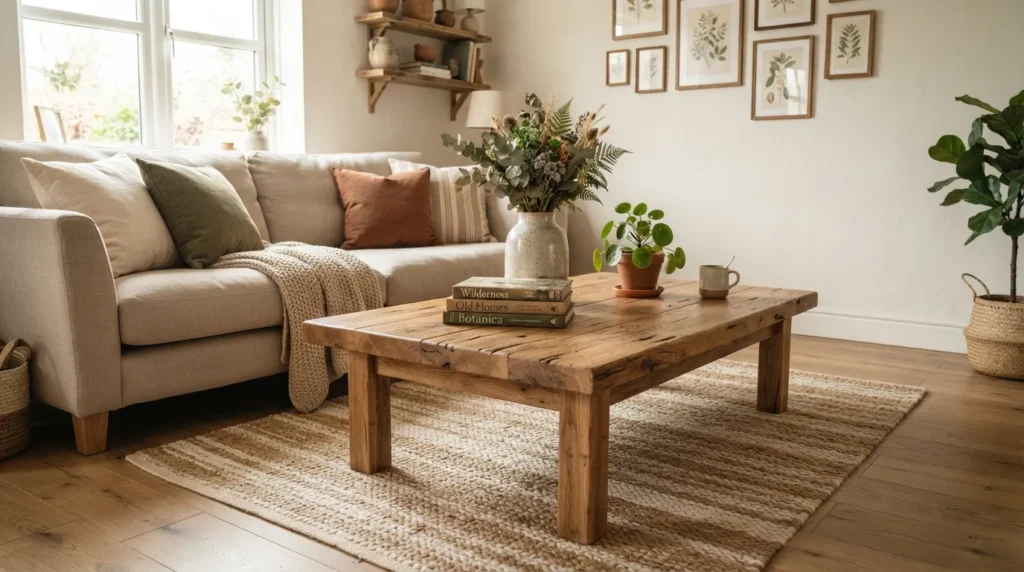
Quick Benefits
- Adds unique character
- Reuses existing material
- Creates a one-of-a-kind piece
- Works with rustic interiors
- Highlights natural imperfections
Why It Works
Reclaimed wood can give a coffee table a history that new lumber simply can’t replicate.
Each board may have different grain, knots, color variation, or small imperfections.
That makes the finished table feel individual.
However, reclaimed materials require more preparation than clean new boards.
You need to make sure the material is appropriate for indoor furniture and free from problematic contamination, pests, excessive damage, or unstable areas.
The goal is character, not compromised structural integrity.
How To Style It
Clean and inspect reclaimed boards carefully before construction.
Remove or safely deal with old fasteners and rough sections.
Sand appropriately while preserving attractive character.
Use a finish suitable for indoor furniture and follow the product instructions.
Keep surrounding furniture relatively simple so the wood remains the focal point.
A neutral sofa, textured rug, and simple ceramic accessories can complement the table beautifully.
10. Minimal Oak Table
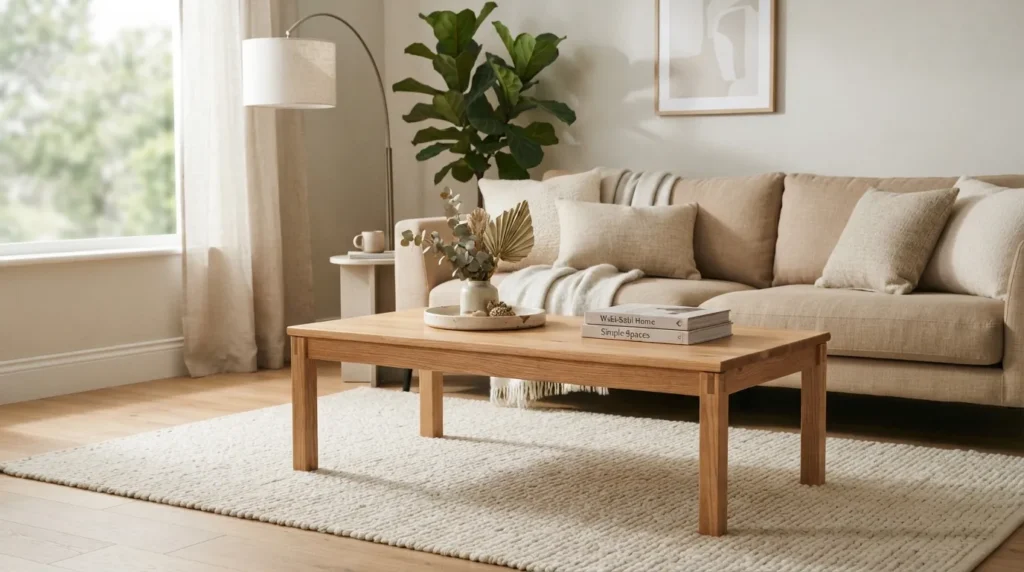
Quick Benefits
- Timeless appearance
- Works with modern interiors
- Simple construction
- Highlights natural grain
- Easy to style
Why It Works
When in doubt, a simple oak coffee table is difficult to beat.
Oak provides durability and attractive natural variation, while a straightforward silhouette keeps the piece visually clean.
This design can suit minimalist, Scandinavian, contemporary, transitional, and even traditional rooms depending on the shape and finish.
The beauty is in the restraint.
There are no complicated decorative details competing with the wood.
Instead, clean lines and carefully finished surfaces create the impression of a professionally designed piece.
How To Style It
Choose a simple rectangular or softly rounded top.
Use a natural finish that complements your existing wood furniture.
Keep the base proportional to the tabletop.
If the room is small, consider a slimmer profile.
Style the finished table with one tray, a few books, and a small organic element such as a plant or ceramic vase.
Leave plenty of the oak surface visible.
That negative space helps maintain the minimalist character.
How to Plan a Weekend Coffee Table Project
The easiest way to finish a furniture project on time is to plan before making the first cut.
Friday Evening: Prepare
Measure the space.
Choose your design.
Purchase the materials.
Gather your tools, hardware, sandpaper, and finishing supplies.
If possible, have the lumber cut to approximate dimensions before starting.
Saturday: Build
Complete the cutting, drilling, assembly, and initial sanding.
Work on a stable surface and follow the instructions for your tools and hardware.
Don’t rush measurements just because you’re trying to finish within a weekend.
Accurate layout usually saves time later.
Sunday: Finish
Complete final sanding.
Apply stain, paint, oil, or another suitable finish according to the manufacturer’s instructions.
Allow adequate drying and curing time.
A piece that looks dry on the surface isn’t necessarily ready for heavy everyday use.
If the selected finish requires more curing time, treat the weekend as the build period rather than forcing the furniture into service too early.
Tools You May Need
The exact tools depend on the design, but many simple coffee tables can be made with a relatively basic setup.
Common tools include:
- Tape measure
- Pencil
- Drill/driver
- Appropriate drill bits
- Screwdriver bits
- Clamps
- Sandpaper or random orbital sander
- Straightedge
- Level
- Saw appropriate for the material and cuts
- Safety glasses
- Hearing protection when appropriate
Always use tools according to their manufacturer’s instructions.
If you’re new to woodworking, practice basic cuts and drilling on scrap material before working on your final pieces.
How to Choose the Right Coffee Table Size
A beautiful coffee table can still feel wrong if its proportions don’t suit the room.
Measure the sofa first.
The table should generally relate comfortably to the seating rather than overwhelming it.
Leave enough walking clearance around the table for normal movement.
In smaller living rooms, a round or visually lightweight design can help maintain circulation.
In larger rooms, a substantial rectangular or two-tier table may provide better visual balance.
Don’t judge the dimensions only by looking at the table itself.
Use painter’s tape on the floor to mark the proposed footprint.
This simple trick lets you walk around the planned table before building it.
DIY Coffee Table Finishing Ideas
The finish can completely change the character of the same basic design.
Natural Clear Finish
Best for showing off attractive wood grain.
Warm Wood Stain
Adds depth while preserving the appearance of the wood.
Dark Stain
Creates stronger contrast and works well in dramatic interiors.
Painted Base
Keep the tabletop natural while using a painted base for contrast.
Two-Tone Finish
Combine two finishes carefully for a more customized look.
Always test your chosen finish on scrap material first.
Different species and even different boards can absorb stain differently.
Common DIY Coffee Table Mistakes
A few problems appear repeatedly in homemade furniture projects.
Skipping Measurements
A table that is too large can make a room difficult to navigate.
Using Inadequate Hardware
Choose fasteners appropriate for the materials and load.
Rushing Sanding
Rough edges become much more noticeable once the finish is applied.
Ignoring Stability
A coffee table should sit firmly and resist ordinary movement.
Applying Finish Too Quickly
Follow the manufacturer’s drying and curing recommendations.
Overdecorating
A handmade table is often most attractive when its construction and material remain visible.
Frequently Asked Questions
Can a beginner build a DIY coffee table in one weekend?
Yes, many simple coffee table designs can be completed over a weekend, especially when the materials are prepared in advance. Designs using a prepared tabletop and prefabricated legs tend to require less construction. More complicated joinery, multiple coats of finish, or long curing times may extend the project beyond one weekend.
What is the easiest DIY coffee table to make?
A simple wooden tabletop attached to four sturdy legs is one of the most approachable designs. A hairpin-leg table can be similarly straightforward because the metal legs are already manufactured. The exact difficulty depends on the materials, tools, dimensions, and your woodworking experience.
What wood is best for a DIY coffee table?
Oak, maple, pine, and other suitable furniture-grade woods can work depending on the desired appearance, budget, and construction method. Hardwoods can provide durability, while properly selected softwood can be an economical option. Choose material that is straight, structurally sound, and appropriate for indoor furniture.
How much does it cost to build a DIY coffee table?
The cost varies significantly depending on the wood, hardware, tools, finish, and design. A simple table using basic lumber and purchased legs can be relatively affordable, while hardwood, reclaimed materials, or specialized components can increase the price. If you already own the necessary tools, the project may cost considerably less.
How long should a DIY coffee table finish dry?
Drying and curing times depend entirely on the finish. Some products may be dry to the touch relatively quickly but require considerably longer before they can withstand normal use. Always follow the manufacturer’s instructions for drying, recoating, ventilation, and final curing.
How do I make a DIY coffee table look expensive?
Focus on proportions, clean construction, smooth edges, careful sanding, consistent joinery, and a quality finish. Simple furniture often looks more sophisticated when the details are executed neatly. Choose attractive wood, keep the design restrained, and avoid adding unnecessary decorative elements.
What can I use instead of building a coffee table from scratch?
You can modify an existing table, attach purchased legs to a suitable tabletop, repurpose crates, or use a reclaimed wood surface. These approaches can reduce construction time while still allowing you to create a customized piece. Always make sure the finished furniture is stable and appropriate for everyday use.
Conclusion
Building your own coffee table doesn’t have to become a complicated woodworking project.
The best weekend designs focus on simple shapes, reliable construction, attractive materials, and thoughtful proportions. A basic plank table can look beautiful with a carefully finished surface, while hairpin legs can turn a simple tabletop into a contemporary statement piece. Storage crates, lower shelves, reclaimed wood, oak, and slatted details offer even more ways to personalize the design.
Before you start, measure your living room and decide what the table needs to do.
Do you need storage?
Do you want a lightweight appearance?
Would a round shape improve traffic flow?
Do you want natural wood to become the focal point?
Those answers will help you choose the right project.
Most importantly, don’t rush the parts that determine quality. Accurate measurements, proper hardware, careful sanding, and adequate finishing time matter more than complicated design details.
Choose a project that matches your current skill level, prepare your materials before the weekend begins, and give yourself enough time for the finish to cure properly.
A handmade coffee table doesn’t need to be perfect to be special. It simply needs to be sturdy, functional, and thoughtfully designed for the room where you’ll use it.
Related Articles
- 10 DIY Side Table Ideas for Small Living Rooms
- 10 Modern Living Room Ideas with Warm Wood Accents
- 10 DIY Home Decor Projects Beginners Can Make
- How to Decorate a Small Living Room Without Making It Feel Crowded
- 10 Farmhouse Living Room Ideas with Cozy Details