
Permeable Paver Systems: Open-Graded Aggregates for Stormwater Runoff
Introduction
Permeable paver systems function by directing water through surface openings into an underlying stone reservoir for temporary storage and gradual infiltration. These engineered installations serve as a critical component in contemporary stormwater runoff management strategies by mitigating the impact of heavy rainfall on local drainage infrastructure.
This article examines the technical design principles required to implement these systems effectively in diverse landscapes. Readers will learn about the functional roles of various aggregate layers, the importance of subgrade preparation for infiltration, and the necessary maintenance practices for long-term performance. By understanding the structural requirements and hydraulic benefits, professionals and property owners can better evaluate how these assemblies contribute to sustainable site development and improved water quality outcomes.
Benefits of Permeable Pavers

The primary advantage of these installations is their ability to address stormwater runoff management by controlling water at the source. Rather than directing rainfall toward municipal drainage infrastructure, these systems facilitate a more natural water cycle within the site footprint. By minimizing the environmental impact of impervious surfaces, planners can reduce the volume of liquid moving across a landscape, which helps mitigate downstream erosion and local flooding risks.
Structural and Functional Components
Effective permeable paver systems rely on precise engineering to balance load-bearing requirements with hydraulic performance. The design typically integrates several specialized layers, each serving a distinct purpose in managing water and structural stability:
| Layer | Function |
|---|---|
| Surface Pavers | Provides a durable driving or walking surface with open joints for infiltration. |
| Bedding Course | A thin layer of open-graded stone that supports the pavers and allows water to enter the base. |
| Base/Sub-base | A crushed stone reservoir that provides structural support and stores water during peak events. |
| Subgrade | The native soil layer where final infiltration or drainage occurs. |
Key factors contributing to system effectiveness include following recognized open-graded aggregate specifications, often aligned with ASTM D448 standards. The use of specific aggregate gradations provides structural support while maintaining necessary space for water movement. Furthermore, the incorporation of geotextile fabric between the sub-base and the subgrade is a common practice to prevent soil migration, which preserves the integrity of the layers over time.
Operational Considerations and Maintenance
Maintaining the performance of these surfaces depends on keeping the voids within the joints clear of debris. Unlike traditional paving, permeable systems discourage the use of fine materials or sand in the joints, as these can restrict the intended flow of water. Proper permeable pavement maintenance, such as regular vacuum sweeping, is essential to prevent surface clogging and ensure the system continues to function as designed.
When properly integrated, these systems serve as both a functional surface and an essential component of a site’s drainage strategy. They are often evaluated for their role in earning LEED water efficiency credits and for their potential to support biological processes, such as hydrocarbon degradation within aerobic sub-layers. While the design life of these systems can be extensive with correct care, success depends on evaluating local soil infiltration rates and ensuring the sub-base depth is appropriately sized for both structural loads and anticipated stormwater storage needs. For properties considering these solutions, consulting ASCE permeable pavement design standards or resources from the Interlocking Concrete Pavement Institute provides a framework for successful implementation.
How Permeable Paver Systems Work
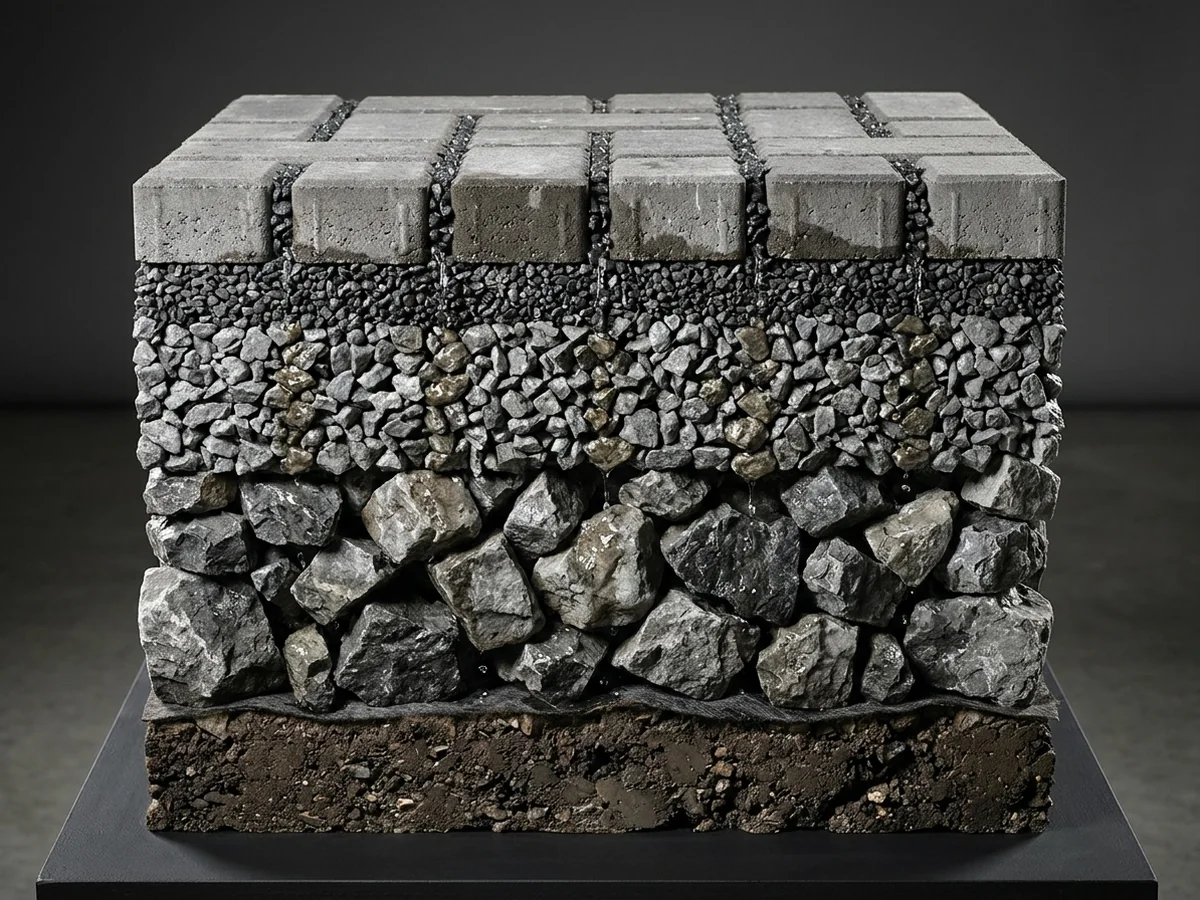
Permeable paver systems manage surface water by allowing liquid to pass through the joints between pavers into a specialized stone foundation. Unlike traditional impermeable surfaces that force water to run off toward storm drains, these systems use a layered design to capture and store water beneath the pavement surface.
The core of this structure is the crushed stone reservoir, a layer of open-graded stone located beneath the bedding course. This layer provides two critical functions: it offers structural support for the pavers above and creates internal space to hold captured water. By using aggregate that lacks fine particles, the reservoir maximizes the volume available for water storage, which assists in effective stormwater runoff management.
The function of these systems relies on a specific sequence of layers, each serving a distinct purpose in moving and holding water:
- Surface layer: Individual pavers with intentional gaps that allow water to enter the system.
- Bedding course: A thin layer of small, open-graded stone that facilitates initial drainage and levels the pavers.
- Base and sub-base layers: Larger, open-graded aggregates that provide structural stability and the primary storage volume.
- Geotextile fabric: An optional layer often placed between the base and the subgrade to prevent soil migration into the stone.
Mechanically, the system distinguishes between surface infiltration and sub-surface storage. Infiltration occurs at the top layer, where water moves through jointing material into the base. Once the water enters the reservoir, it is held in the voids between the stones. Depending on the soil conditions beneath the installation, this stored water then gradually infiltrates into the native ground, or it is released slowly if the system is designed with an underdrain.
This approach contrasts sharply with traditional asphalt or concrete. Traditional surfaces are designed to shed water immediately, which often overwhelms municipal infrastructure during intense rain events. By retaining the water on-site, the permeable approach reduces the volume and velocity of runoff. The performance of these layers depends on proper material selection, such as following ASTM D448 standards for aggregate sizing, to ensure the necessary void ratio is maintained for consistent drainage over the life of the installation.
Aggregate Specifications and Design
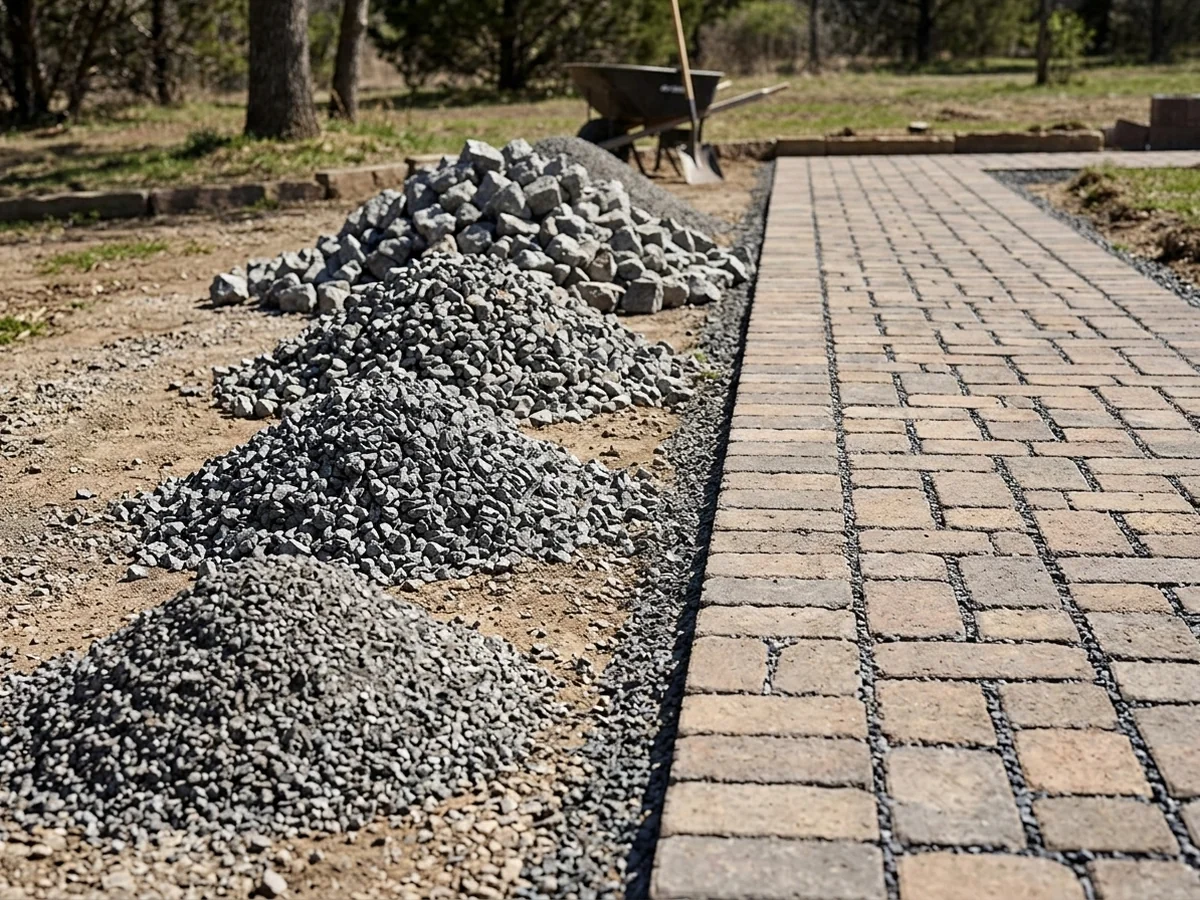
Effective handling of rain and surface water depends on selecting specific stone sizes that balance structural requirements with high permeability. Industry professionals often utilize ASTM D448 standards to maintain consistency in stone gradation, which directly influences the void ratio of base aggregates within the subsurface layers. Proper selection ensures the system functions as intended, supporting both heavy traffic loads and the storage of peak water volumes.
The Role of Open-Graded Aggregates
Open-graded aggregate specifications are central to the design of permeable paver systems. These materials are processed to remove the fine particles that typically fill the interstitial spaces between larger stones. By eliminating these fines, the foundation maintains a high volume of interconnected voids. This structure is essential for allowing water to move freely through the cross-section and into the subgrade. In contrast, dense-graded materials are generally unsuitable for the base or sub-base layers of these installations. Because dense-graded aggregates contain a high percentage of fine particles, they lock together to form a solid mass, which restricts infiltration and can lead to surface pooling.
Structural and Geotechnical Considerations
When engineering permeable paver installation layers, designers must account for both structural support and hydraulic capacity. The following table highlights common aggregate roles within the system:
| Layer | Aggregate Function | Design Requirement |
|---|---|---|
| Surface Layer | Permeable joints for initial drainage | Clean, angular crushed stone |
| Bedding Layer | Leveling and infiltration transition | ASTM No. 8 or No. 9 stone |
| Base/Sub-base | Structural support and reservoir | ASTM No. 57 or No. 2 stone |
Best Practices for Specification
Engineers and planners should adhere to established guidelines from organizations like the Interlocking Concrete Pavement Institute or ASCE permeable pavement design standards to ensure long-term performance. Key considerations include:
- Reference ASTM D448 gradation requirements to select the appropriate stone size for each layer.
- Ensure aggregate durability to withstand structural loads without degradation or crushing.
- Utilize geotextile fabric between the sub-base and subgrade where necessary to prevent the migration of fines, which can eventually lead to clogging.
- Avoid the use of sand in joints, as it contradicts the goal of open-graded design and promotes surface sealing.
- Verify that the chosen aggregate facilitates a consistent distribution of empty spaces within the foundation to support predictable water movement.
When the subsurface reservoir is constructed using clean, uniformly sized crushed stone, the entire installation remains resilient against seasonal weather fluctuations. Maintaining these technical standards ensures the system remains functional for its intended design life, providing a reliable approach to managing site water.
Components of Permeable Pavers
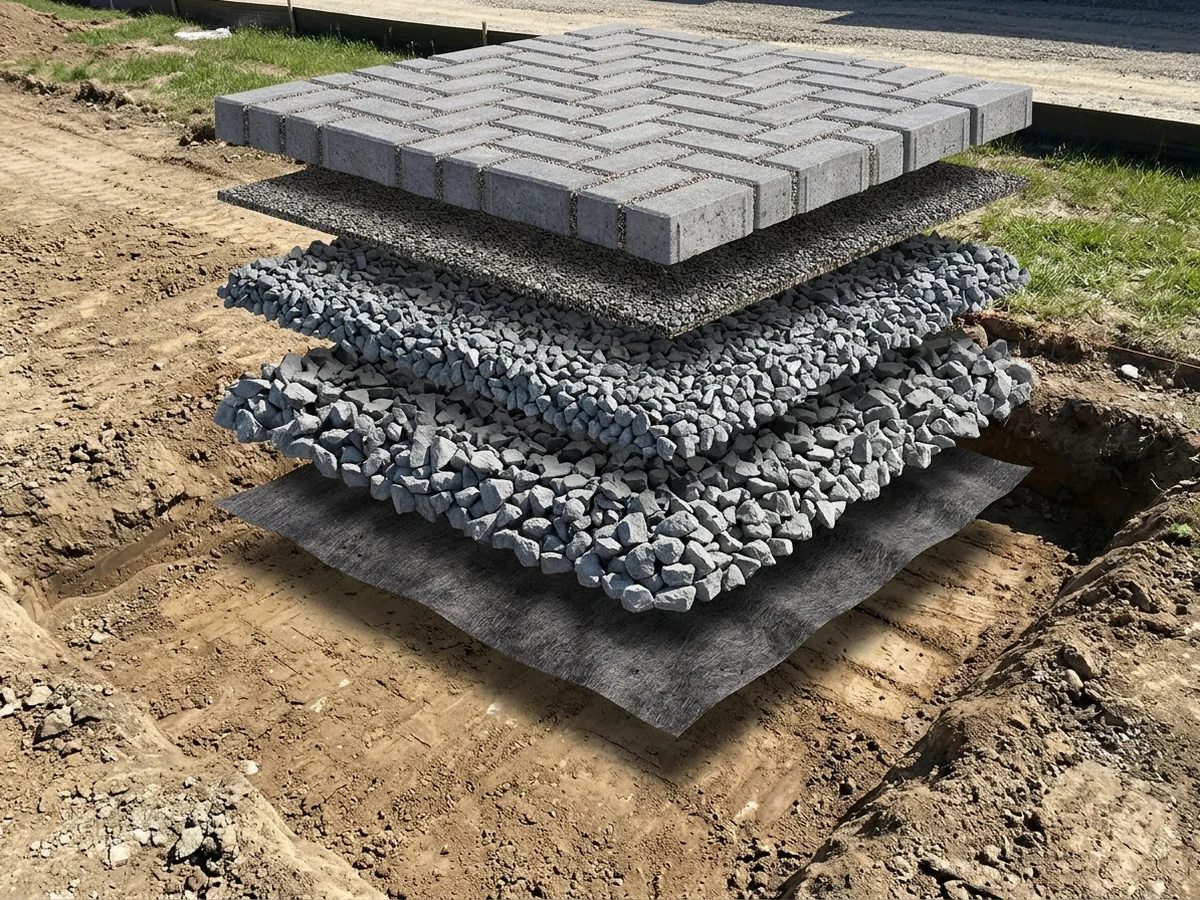
The structural integrity and long-term functionality of permeable paver systems rely on the deliberate selection and placement of distinct material layers. These components work together to manage water movement while maintaining the stability of the surface. Achieving a durable installation requires strict adherence to material specifications, often guided by ASTM D448 standards for aggregate sizing.
The Role of Geotextiles and Aggregate Reservoirs
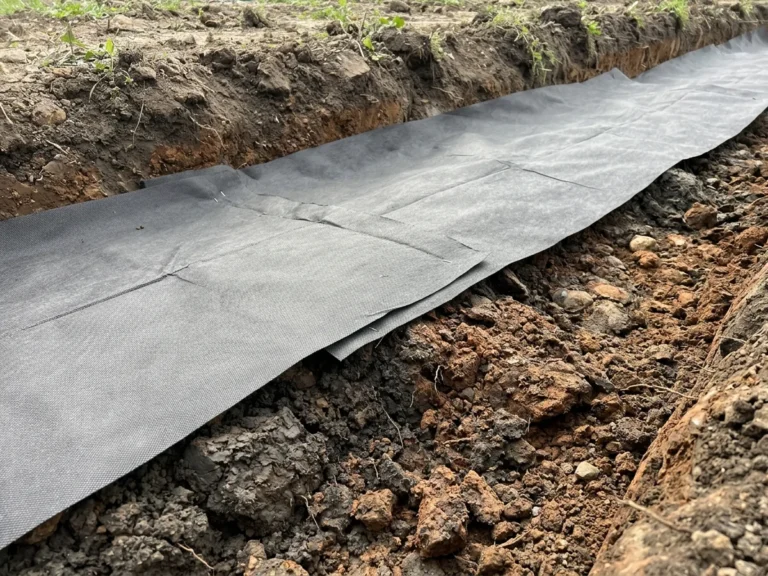
Geotextile fabric plays a critical role in maintaining subgrade separation. It is installed between the aggregate base and the underlying soil to prevent the migration of fine subgrade particles into the stone reservoir. This separation ensures that the void space within the aggregate remains clear, which is essential for consistent drainage performance. Without this barrier, subgrade soils can move upward over time, potentially compromising the structural support of the entire installation. Beneath this fabric, the base and sub-base layers of crushed stone provide both the structural support necessary for traffic loads and the storage volume for temporary water retention.
Surface and Joint Integrity
Correct edge restraint installation is necessary to prevent lateral movement of the pavers. These restraints provide a rigid boundary that locks the paver units into place, ensuring they do not shift or spread under load. The restraints must be securely anchored into the base layer or the subgrade, depending on specific design requirements. A robust edge detail is vital for maintaining the interlocking pattern and overall stability of the surface.
Joint filling materials must be carefully selected to support the permeability of the system. Standard sand is avoided because its fine particles can quickly fill the voids intended for water movement, leading to surface clogging. Instead, industry guidance typically recommends using small, washed, open-graded aggregate that allows water to pass through the joints into the base layers below. Using the appropriate size of stone in the joints ensures the system remains functional throughout its intended lifespan.
| Component | Primary Function |
|---|---|
| Surface Pavers | Load distribution and aesthetic finish. |
| Bedding Layer | Leveling the surface and facilitating drainage. |
| Base and Sub-base | Structural support and storage volume. |
| Geotextile Fabric | Subgrade separation to prevent particle migration. |
| Edge Restraints | Preventing lateral spreading of units. |
When planning permeable paver installation layers, professionals must account for site-specific soil infiltration rates. If the underlying soil does not drain effectively, the design may require additional sub-base depth or an underdrain system to ensure the reservoir remains capable of handling expected precipitation levels. Regular permeable pavement maintenance, such as vacuum sweeping, is necessary to keep the joint materials clear of debris and sediment that would otherwise impede system performance.
Maintenance for Long-Term Performance

Effective permeable pavement maintenance focuses on removing surface debris to keep joint openings clear and monitoring the underlying structure to ensure consistent water movement. Establishing a proactive cleaning schedule and performing periodic assessments are essential to preserving the utility of these systems over their intended lifecycle. While the Interlocking Concrete Pavement Institute and other professional bodies suggest that these systems offer robust methods for managing the flow of rain and meltwater, their longevity depends on preventing surface sealing.
The Mechanics of Routine Cleaning
Regular cleaning routines help prevent the accumulation of sediment and fine particles that can lead to surface clogging. While the required frequency depends on the surrounding land use and the volume of traffic, standard operations should prioritize mechanical removal to keep the surface voids functional.
- Establish a regular vacuum sweeping schedule at least once or twice a year to remove organic matter and surface debris.
- Increase the frequency of mechanical cleaning in areas where trees drop leaves or where winter sanding occurs to prevent buildup.
- Monitor the surface during and after significant rainfall events to identify any areas where ponding persists, which may indicate localized sediment accumulation.
- Verify infiltration rates through periodic testing to confirm that the system continues to manage water flow as originally designed.
- Address localized drainage issues promptly by using targeted suction or by replacing the aggregate in specific affected joints to restore permeability.
- Avoid the use of sealers or asphalt coatings on the surface, as these materials permanently destroy the intended porosity of the system.
Managing Aggregate and Structural Integrity
When localized drainage issues arise, they often stem from concentrated sediment deposits in specific zones. Technicians should inspect these areas first to determine if manual spot-cleaning can resolve the blockage before scheduling more extensive mechanical intervention. If water continues to pond after clearing the joints, the issue may suggest a deeper problem within the sub-base or an underlying compaction concern that requires professional assessment.
Maintaining the open-graded aggregate specifications is critical. If the joints become clogged with fine debris, the system cannot effectively channel water into the reservoir layer. Using the wrong size of aggregate in the joints or attempting to use sand will negate the infiltration benefits.
Documentation and Long-Term Management
Monitoring the system over its lifespan ensures that the facility continues to meet project objectives. Keeping detailed records of maintenance activities, including dates of sweeping and observations of infiltration performance, provides valuable data for long-term management. This documentation allows owners to track the health of the installation and adjust cleaning intervals based on actual site performance rather than generic estimates. By staying diligent with these routine checks, the structural integrity and functional lifespan of the installation are better protected against degradation. Proper care ensures that the permeable paver systems remain a reliable component of site infrastructure.
Environmental and Regulatory Factors

Incorporating permeable paver systems into site design often supports environmental certification goals and compliance with local drainage mandates. These installations assist in meeting LEED water efficiency credits by managing volume and improving quality through on-site infiltration rather than traditional discharge.
When seeking LEED recognition, project teams focus on reducing site impact and improving natural hydration of the soil. By controlling the volume and movement of water across the surface, these systems help developers achieve credits related to site development and the mitigation of heat island effects. Documentation typically requires proof of volume reduction and water quality improvement, which these systems provide by filtering particulates and slowing the movement of water.
Integration with municipal Sustainable Drainage Systems (SuDS) requires adherence to specific regional design protocols. Planners often favor these installations because they mimic natural hydrologic processes, which align with contemporary SuDS philosophy of managing water as close to the source as possible. This approach reduces the burden on public infrastructure by lowering the volume of water entering storm sewers during heavy precipitation events.
Regulatory considerations for local zoning and property development frequently hinge on the ability of a site to maintain pre-development hydrologic conditions. Most jurisdictions require a thorough analysis of soil infiltration rates and structural load-bearing capacity before approving these designs. Property developers must often demonstrate that the selected surface materials and base layers will function as intended over the long term without failing or causing localized flooding.
- Check local zoning ordinances for specific impervious surface ratio requirements that may be satisfied by using permeable materials.
- Ensure the design meets local civil engineering standards for stormwater quality and quantity control.
- Consult with municipal authorities early in the planning phase to confirm that the proposed system integrates correctly with existing area-wide drainage networks.
- Document all maintenance plans, as some municipalities mandate proof of long-term upkeep to ensure the ongoing functionality of the permeable surface.
Designers should also be aware that property development guidelines might mandate specific testing procedures for the subgrade. Verification of infiltration capacity is essential to ensure that the site remains compliant with regional environmental protection standards throughout the life of the project. Clear coordination between architects, landscape designers, and municipal engineers remains the most effective way to navigate these regulatory landscapes.
Common Design and Construction Mistakes
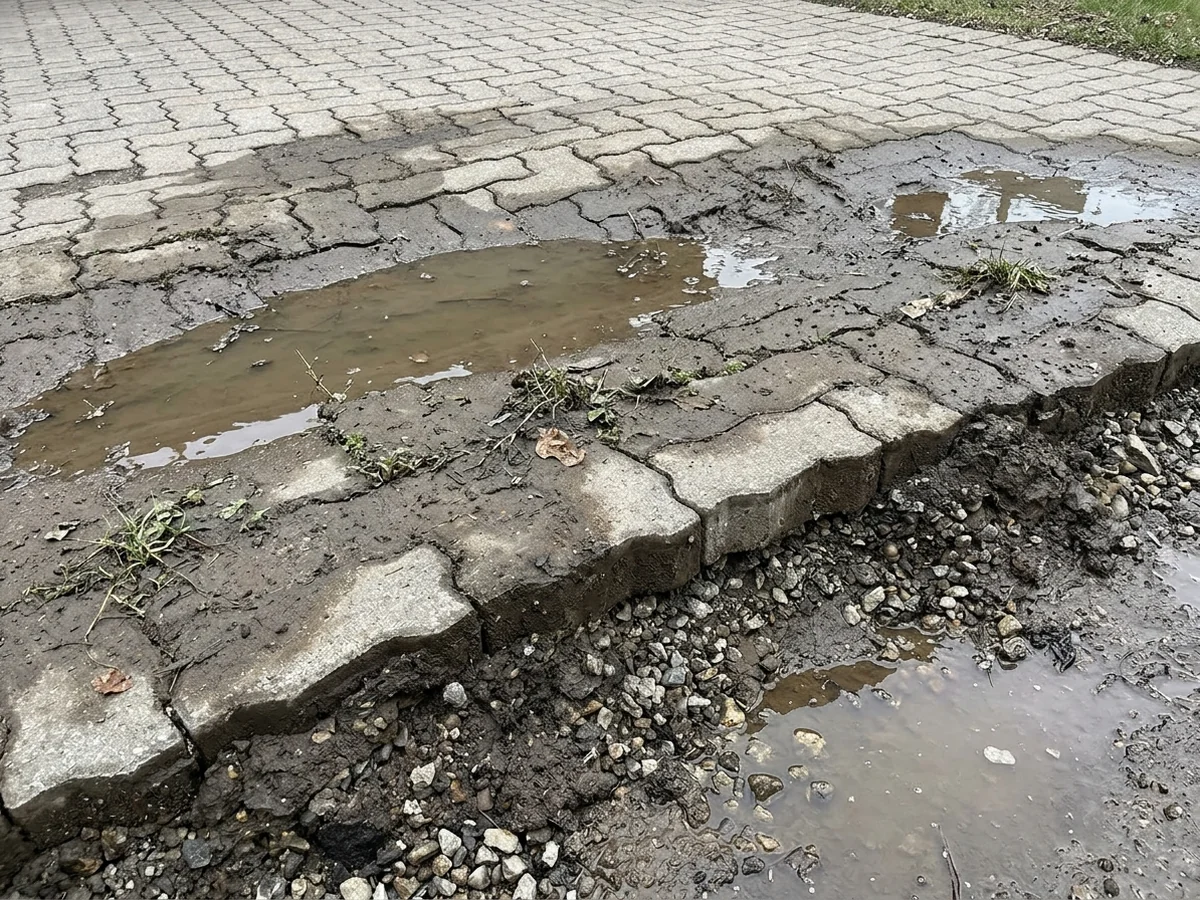
Design and construction failures in permeable paver systems often stem from a fundamental misunderstanding of subsurface hydrology and soil mechanics. When practitioners overlook technical requirements, the long term performance of the surface is frequently compromised, leading to structural instability or drainage failure.
Geotechnical Oversight and Soil Testing
The success of these installations depends on the native subgrade capacity. Failing to conduct thorough geotechnical testing to verify the actual infiltration rate of the soil is a frequent error. Without this data, designers may inadvertently place systems over soils that cannot handle the anticipated volume of water. This leads to oversaturated subgrades, which lose structural integrity and may cause significant pavement heaving or settlement over time. Professionals should consult ASCE permeable pavement design standards to ensure that soil conditions are matched with appropriate engineering specifications.
Aggregate and Material Selection
Improper material choice is another common pitfall. Selecting base materials that lack proper gradation often results in insufficient storage capacity for captured water. Furthermore, relying on standard dense graded materials instead of following crushed stone with large, uniform particle sizes undermines the primary function of the permeable design. The void ratio of base aggregates must be sufficient to store water during peak storm events. Engineers often refer to ASTM D448 gradation requirements to ensure the crushed stone reservoir is built with materials that balance structural load requirements with necessary water storage volume.
Integration and Drainage Logic
Effective handling of water movement requires a cohesive approach to grading and layer separation. When designing the surface grade, failing to account for clear drainage flow paths can cause water to pool in low areas, leading to sediment accumulation and premature surface clogging. Similarly, improper placement of geotextile fabric between the subgrade and the aggregate base can create an artificial barrier that prevents vertical drainage or allows fine particles to migrate into the structural layers, effectively sealing the system.
| Common Error | Consequence | Corrective Practice |
|---|---|---|
| Ignoring soil infiltration rates | Saturated subgrade and heaving | Perform on-site geotechnical testing |
| Using dense-graded aggregate | Reduced storage and drainage failure | Follow ASTM D448 uniform particle size specs |
| Poor slope management | Pooling and premature clogging | Design clear paths for overflow |
Slope management also plays a vital role in the longevity of these installations. Even though the surface is designed to be permeable, unintended water accumulation occurs when the finish grade does not direct overflow toward designated discharge points. Without a clear path for excess water to exit the system, the aggregate layers may remain perpetually wet, which compromises their load bearing strength. Following established industry guidance helps ensure that even during intense weather, water is managed effectively without threatening the structural foundation of the project.
FAQ
How does a permeable system handle heavy rainfall?
These systems manage intense precipitation by directing surface water into an underlying crushed stone reservoir. This storage capacity allows the ground to process runoff gradually rather than overwhelming local drainage infrastructure.
Do permeable paver systems require special cleaning equipment?
Effective care for these surfaces typically involves the use of specialized vacuum sweeping equipment to remove debris from the joints. This process prevents the accumulation of fine particles that can eventually impede surface infiltration rates.
Can permeable pavers be used in residential driveways?
Permeable pavers are frequently installed in residential settings to support goals for managing water that flows across the ground during rain. When designed according to appropriate structural standards, they provide a durable, load-bearing surface suitable for standard vehicle traffic.
What is the difference between permeable and pervious pavement?
While the terms are often used interchangeably, permeable pavement refers to a system where water passes through voids in the surface unit or joints. Pervious pavement specifically describes a monolithic material, such as porous asphalt or pervious concrete, which allows water to infiltrate through the material matrix itself.
How do permeable systems prevent flooding?
By retaining a significant volume of water within the sub-base layers, these systems reduce peak flow rates that contribute to localized flooding. This on-site retention strategy mimics natural hydrological processes in developed environments.
Conclusion
The primary decision point for project success lies in conducting a thorough geotechnical analysis of the existing soil to determine its infiltration capacity before breaking ground. Once the soil suitability is confirmed, the next logical step involves consulting with a professional engineer to finalize the structural cross-sections and aggregate specifications tailored to your site specific load requirements and regional climate data. Proper planning at this stage ensures that your permeable paver systems will function effectively as intended over their long term service life. By prioritizing rigorous design standards and accurate material selection, you can establish a sustainable and durable solution for managing site drainage.
You might also like: How Deep Should You Dig for a Paver Patio (The 4″ to 6″ Ba