Overlapping Fabric Seams: The 12-Inch Overlap Rule for Stable Patio Bases
Introduction
Proper geotextile fabric overlap is essential for maintaining ground stability and preventing soil migration in patio base construction. A consistent seam ensures that the underlying subgrade remains separated from your aggregate layers, protecting the structural integrity of your outdoor project.
This article examines the technical importance of overlapping materials to create a stable foundation for residential patios. You will learn how soil conditions influence the necessary width of your seams and discover professional techniques for securing landscape fabric. We also cover how material types, such as non-woven and woven geotextiles, impact your installation process. By understanding these fundamentals, you can avoid common errors that lead to shifting or uneven patio surfaces over time.
Understanding Geotextile Fabric Overlap

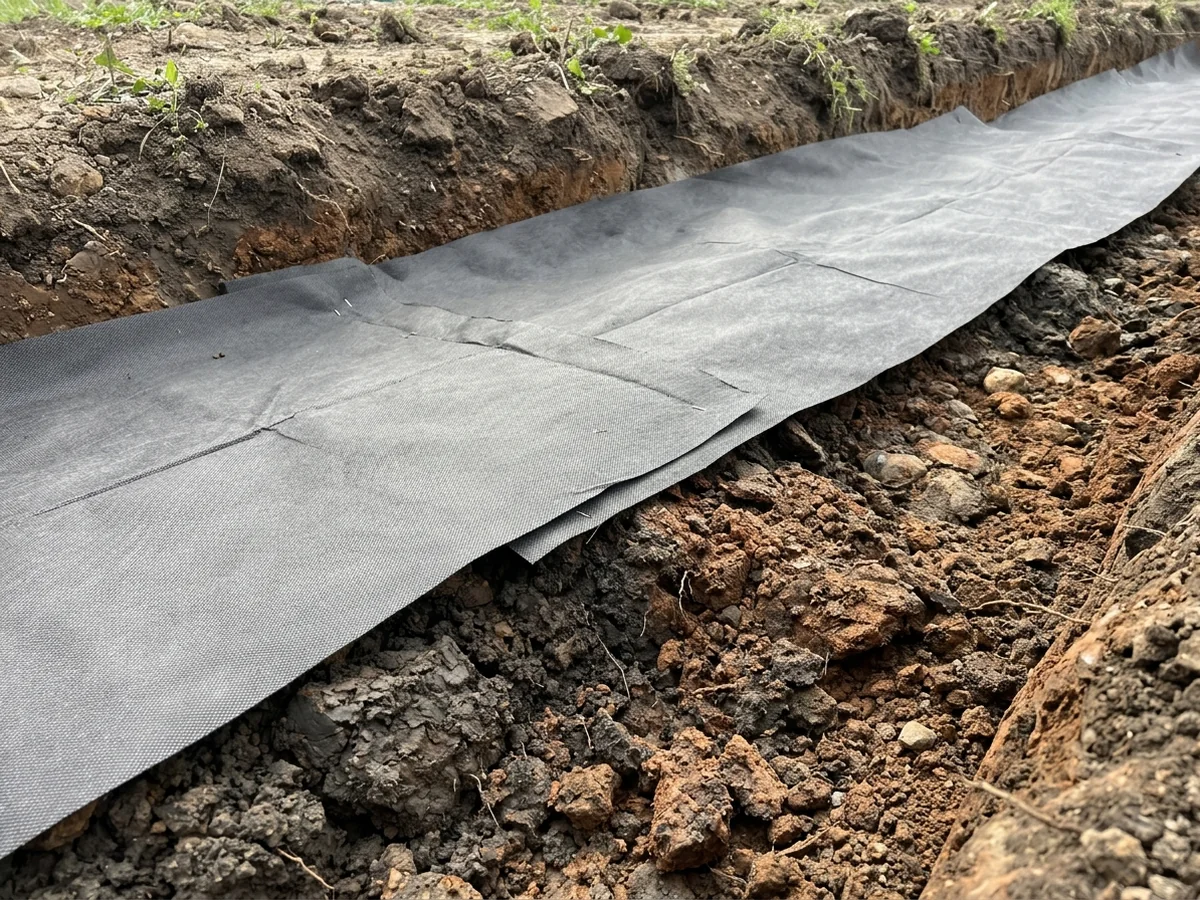
Creating a continuous barrier across a project area ensures that the subgrade remains stable and separate from the base aggregate. By placing adjacent pieces of material so they extend over one another, you form a cohesive sheet that prevents soil particles from migrating upward while maintaining the integrity of the foundation.
These layers serve as the primary defense against the mixing of native subsoil and your chosen patio base materials. Without a proper seam, the structural advantages of using a geotextile fabric for patio base projects are diminished. If the materials are not joined effectively, the foundation may settle unevenly, leading to dips or structural failures in the finished surface over time.
The necessity of these seams is rooted in the physics of soil stabilization and geosynthetic reinforcement. When you lay down the material, you are essentially creating a filter that allows water to pass through while trapping finer soil particles. If gaps exist between the panels, water can carry subgrade fines into the base layer. This process, often referred to as piping, undermines the load-bearing capacity of the entire patio structure.
Maintaining strong seams involves more than just laying one piece over the other. You must consider how the terrain and soil composition influence the stability of the installation:
- Soil consistency dictates the tension required across seams, as soft ground is more prone to shifting.
- Water flow direction across the site determines how you should layer the edges to prevent undermining.
- Material type, such as a non-woven geotextile versus a woven one, affects how the edges interact under pressure.
- Securing the joints with appropriate hardware helps hold the panels in place against the weight of heavy base materials like crushed stone or gravel.
Following established installation best practices ensures that the finished base remains uniform and resilient. When you properly join these sections, you distribute loads evenly across the subgrade. This approach minimizes the risk of localized sinking and helps the patio retain its shape, even after heavy rains or seasonal temperature changes. A well-constructed foundation is the most critical element in any outdoor project, providing a lasting surface that resists the natural movement of the earth beneath it.
Why Overlapping Is Essential
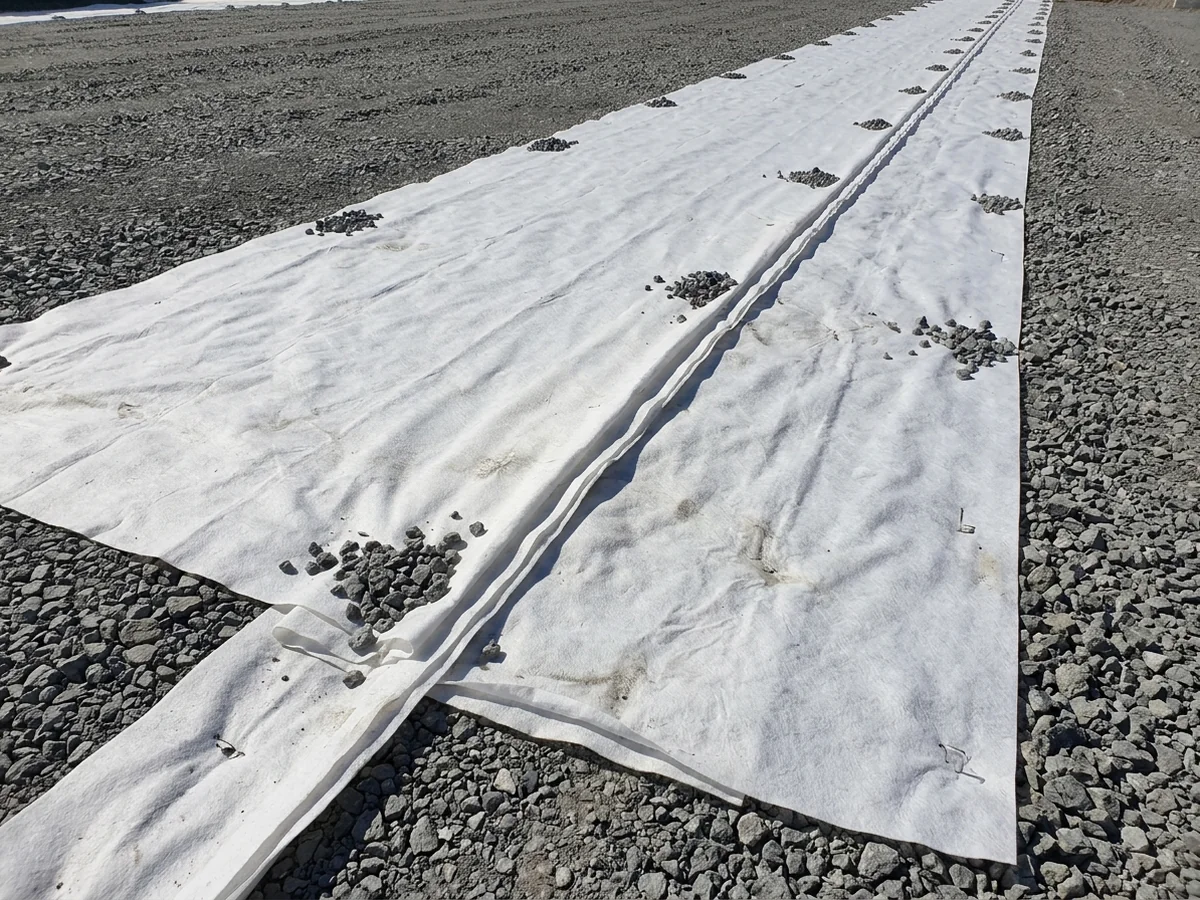
Properly maintaining a geotextile fabric overlap is the primary defense against subgrade failure and material mixing. When sheets are joined with sufficient coverage, they function as a continuous, unified barrier that prevents fine soil particles from migrating upward into your aggregate base, which is critical for maintaining long-term structural integrity.
This barrier effect relies on the principle of soil separation. Without a secure seam, finer soil grains can easily work their way through gaps in the fabric when subjected to pressure from foot traffic or the weight of paving stones. Once this migration starts, the base layer loses its stability and compaction, leading to uneven surfaces and settling in your patio.
Seams also act as a critical component of the overall drainage and filtration system. A continuous layer ensures that water can move through the fabric uniformly across the entire site without finding a path of least resistance through an unsealed gap. By preserving this continuity, you protect the subgrade from being washed away, as concentrated water flow through a compromised seam can quickly erode the soil beneath the base.
Neglecting to secure your seams properly introduces several risks to your project:
- Base subsidence: When soil migrates upward through gaps, the aggregate layer loses its support, resulting in dips and uneven pavers.
- Weed infiltration: Open seams provide a clear entry point for roots and seeds to access the nutrient-rich soil below, effectively bypassing the protection offered by the fabric.
- Loss of structural reinforcement: Gaps break the continuity of the geosynthetic layer, meaning the fabric can no longer distribute loads as intended across the subgrade.
Understanding how to join geotextile fabric correctly is just as important as choosing the right material. If the fabric is not pulled tight or secured with appropriate hardware, shifting during the installation of heavy stone can create gaps even if you started with the correct amount of material. Maintaining the overlap throughout the entire construction process is necessary to ensure the final patio remains stable and level for years to come.
Factors Influencing Overlap Width
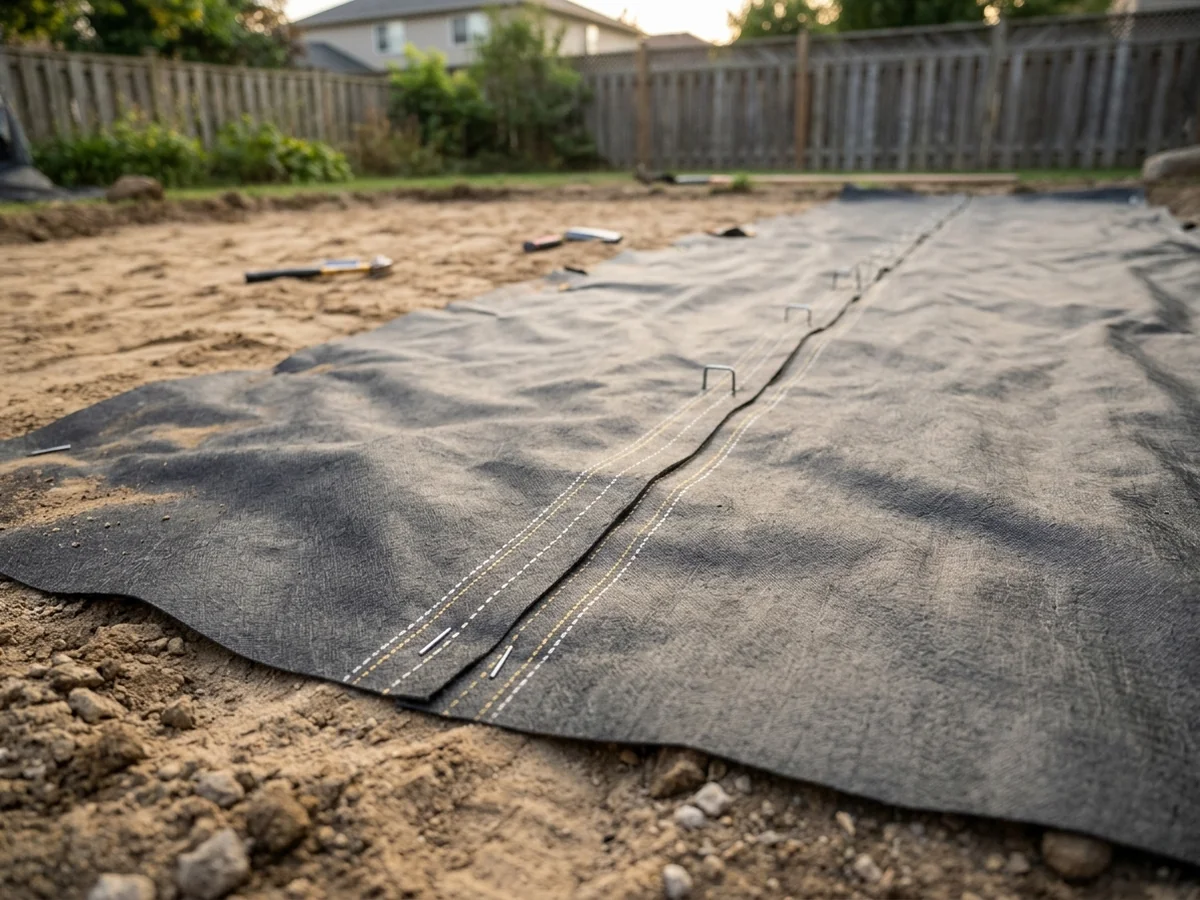
The necessary width for joining sections of ground stabilization material depends directly on site conditions, including the strength of the subgrade and the specific use of the finished surface. Adjusting these dimensions ensures the structural integrity of your base layer remains intact under pressure.
The California Bearing Ratio serves as a standard metric to evaluate subgrade strength. When the ground is soft, characterized by a lower ratio, the soil provides less natural support. In these instances, increasing the width of the connection between fabric panels helps distribute weight more effectively and prevents the underlying earth from pushing up through the seams. High-strength subgrades with a higher bearing ratio generally allow for more standard connection widths because the ground itself resists deformation more successfully.
Material composition also dictates how you should approach these connections. A non-woven geotextile often features different physical characteristics than a woven geotextile, influencing how they behave under load. Because non-woven options are frequently used for drainage and filtration, maintaining a secure, consistent seam is critical to prevent soil fines from migrating into the aggregate base. Woven varieties, often selected for their strength and ability to reinforce, require precise alignment to ensure the full tensile capacity of the product is maintained across the entire surface.
The intended purpose of the project fundamentally changes your geotextile overlap requirements. A pedestrian patio experiences significantly different mechanical stress than a residential driveway used for vehicular traffic. You should consider the following variables when determining your final plan:
- Project type: Vehicular areas require wider connections to accommodate the dynamic loads and vibration caused by cars.
- Soil stability: Sites with significant moisture or loose, organic-rich soil necessitate more conservative, wider layouts.
- Slope conditions: Working on an incline requires careful attention to seam direction to prevent water from undermining the fabric layers over time.
Professional guidance emphasizes that uniform tension is just as important as the width of the connection itself. Regardless of the material chosen, ensuring the fabric remains flat and pulled taut during installation helps avoid wrinkles that create weak points. When planning your installation, aim for a configuration that accounts for the specific loading conditions of your outdoor space to ensure long-term base stabilization.
Overlap Guidelines by Soil Type
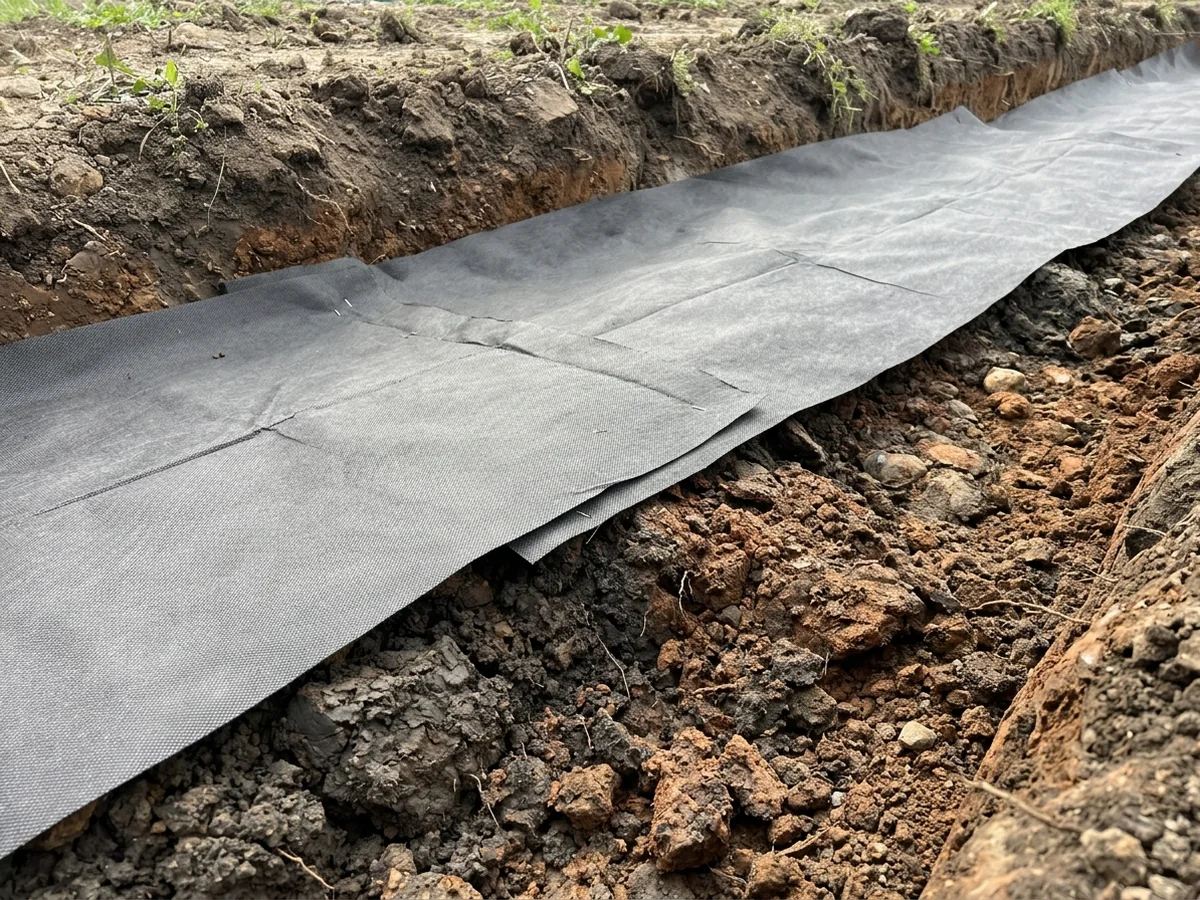
Establishing the correct geotextile fabric overlap is a critical step in subgrade stabilization. The primary goal of an overlap is to create a continuous barrier that prevents the mixing of aggregate base material with the underlying native soil. When seams are insufficient, the soil can migrate upward or the aggregate can sink into the subgrade, leading to surface depressions and structural failure. The extent of this overlap is determined by the load-bearing capacity of the ground, typically assessed using the California Bearing Ratio (CBR).
| Soil Condition | CBR Range | Recommended Overlap Strategy |
|---|---|---|
| Firm/Stable Soil | Greater than 3 | Minimum range for basic separation |
| Soft/Unstable Soil | 1 to 3 | Increased range to accommodate shifting |
| Very Soft/Saturated | Less than 1 | Maximum range to ensure integrity |
The engineering logic behind these guidelines relates to soil permeability and structural settlement. On firm, stable ground, the soil provides a predictable foundation that resists deformation under pressure. In these conditions, the fabric remains relatively stationary, allowing for standard, tighter seams. Conversely, soft or saturated terrain is prone to compression and localized settling. As the ground moves or shifts, narrow seams can easily pull apart, breaking the protective barrier. Increasing the overlap in these areas acts as a necessary buffer, ensuring that even with minor ground movement, the edges of the fabric remain engaged and effective.
When planning your project, consider both the soil type and the intended use. For instance, geotextile fabric for patio base applications on soft ground requires more generous overlaps than the same material used in highly compacted, rocky, or firm clay environments. A common mistake during installation is failing to account for the potential of the subgrade to compress under heavy weight, such as when installing a driveway or a high-traffic walkway. If the subgrade is soft, the downward pressure can widen the gap between fabric panels if the overlap is too thin.
To achieve professional results, consider these geotextile installation best practices:
- Account for Moisture: In areas with high water tables or poor drainage, the soil is inherently less stable. Prioritize wider overlaps here to prevent the fabric from shifting as the soil becomes saturated.
- Maintain Tension: Always pull the fabric taut during placement. Wrinkles or folds create weak points where the soil can migrate through the seam.
- Secure the Seams: Relying on the weight of the aggregate alone is rarely sufficient. Using landscape fabric pins or staples helps maintain the integrity of the overlap during the backfilling process, preventing the edges from curling or separating before the base material is set.
- Check for Consistency: Ensure that the overlap is uniform across the entire project area. Inconsistent seams often lead to uneven performance, where some sections of the finished surface remain stable while others settle over time.
By tailoring your overlap strategy to the specific CBR of your site, you ensure the long-term performance of your base layer. This methodical approach to how to join geotextile fabric helps prevent premature failure and provides a stable foundation for your outdoor living space.
Best Geotextile Overlap Techniques
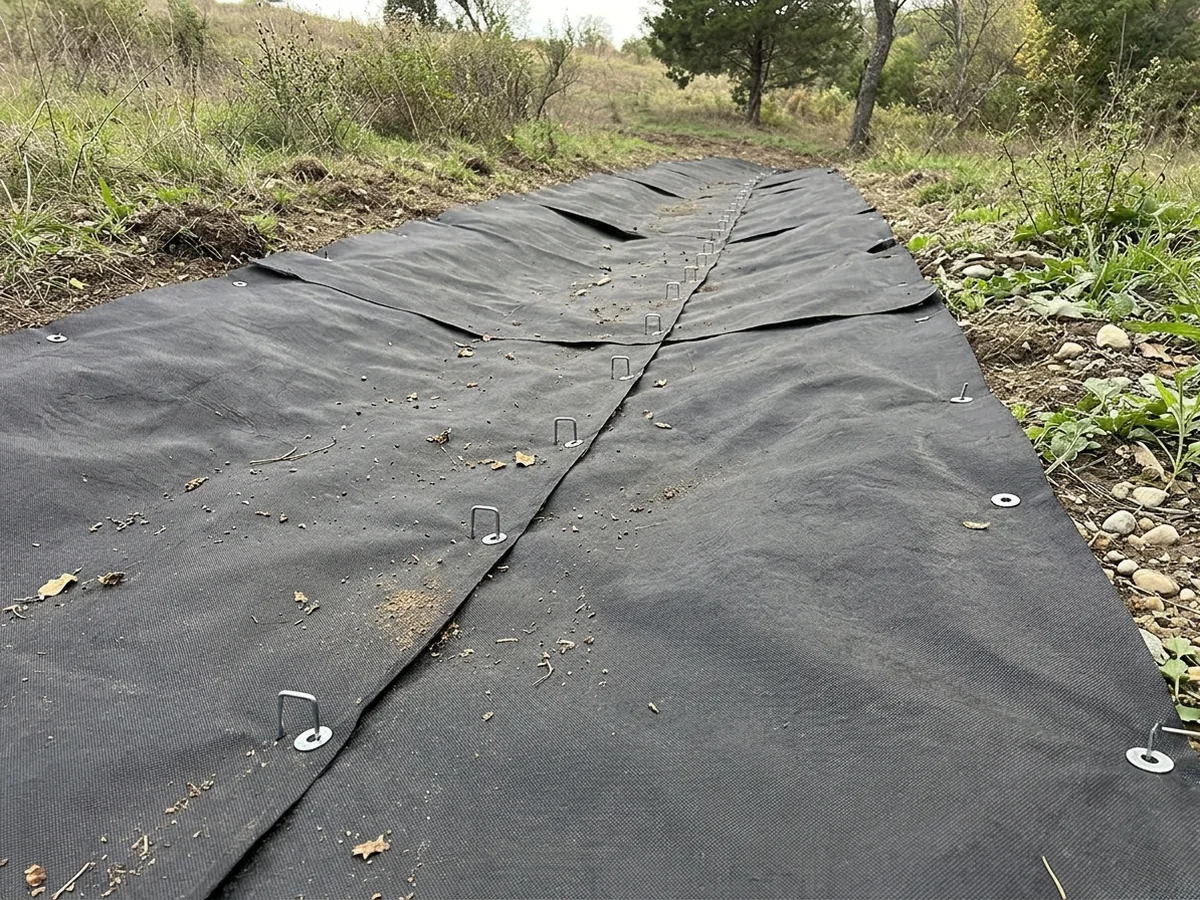
You ensure a stable, continuous barrier by placing your seam overlaps in the direction of natural water flow and maintaining consistent tension during installation. This approach prevents water from undermining the subgrade and keeps the material flat, which is critical for long-term site integrity. Following these geotextile installation best practices helps eliminate weak points where soil migration might otherwise occur under heavy loads.
To establish a uniform and secure foundation for your project, incorporate these steps into your workflow:
- Position your seams so the upper layer of material sits on top of the lower layer in the direction of downhill water movement to prevent erosion.
- Pull the material taut across the entire surface area before pinning to remove any folds that could create pockets of instability.
- Check that every seam remains flat against the subgrade, as excess slack can cause the material to shift under the pressure of aggregate layers.
- Install landscape fabric pins at consistent intervals along the length of the join to ensure the layers stay perfectly aligned during the base material placement.
- Verify that the total width of the material meets your specific site requirements to allow for proper soil separation across the entire footprint.
- Walk over the secured sections to confirm the material feels firm and stable before you begin spreading your base aggregates.
Proper tensioning remains the most effective way to avoid wrinkles that compromise the strength of your barrier. When you minimize movement within the seam, you maintain the structural separation needed for effective subgrade stabilization. Always inspect your joints carefully, as small gaps or misalignments can lead to significant issues when the site experiences heavy loading or seasonal moisture changes.
Securing Seams and Edges
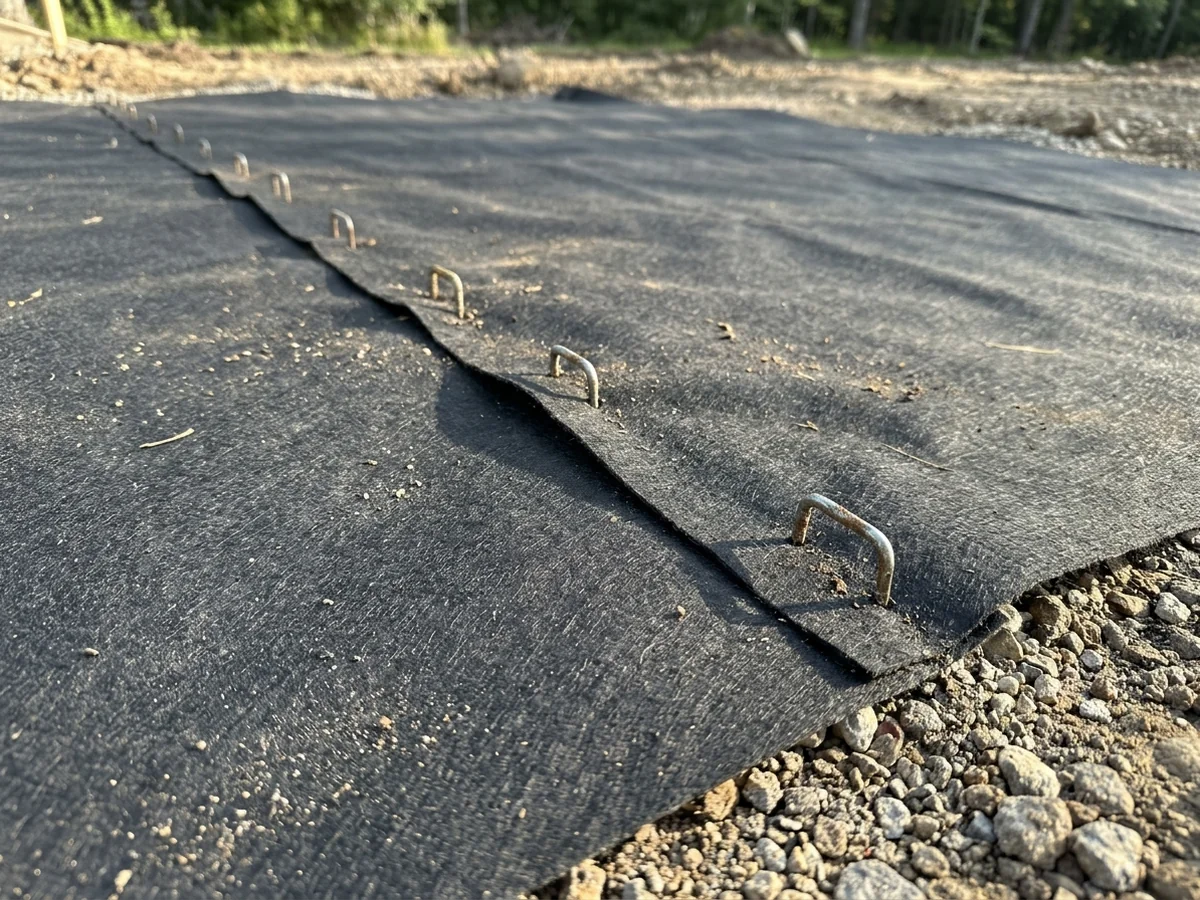
Properly pinning the fabric ensures that the segments remain joined during the application of base materials. Securing landscape fabric seams prevents the materials from shifting or separating, which is essential for maintaining the separation between the subgrade and the aggregate base.
When installing your geotextile fabric overlap, you should use U-shaped metal pins or heavy-duty staples designed for ground stabilization. These fasteners anchor the overlapping edges firmly into the earth, preventing them from curling or lifting when you add gravel or sand. Using the correct fastening density ensures that the seam remains stable throughout the life of your patio project.
- Place pins along the entire length of the seam to ensure a continuous hold that resists movement under heavy loads.
- Adjust the spacing of your fasteners based on the firmness of your subgrade, as softer soils often require more frequent pinning to keep the fabric in place.
- Push pins completely into the ground so that the top of the staple sits flush against the fabric surface to avoid creating high spots in your patio base.
- Use longer or reinforced pins in areas where the soil is loose or sandy to provide better resistance against pulling.
- Consider placing additional fasteners at the beginning and end of every seam to prevent the edges from catching on tools during material distribution.
In rocky terrain where driving metal pins is difficult, you can secure the overlap by placing heavy stones or bricks directly over the seam. This alternative method provides sufficient weight to hold the fabric segments together without requiring mechanical fasteners. Ensure that these weights are placed evenly along the overlap to maintain a flat, uniform surface. If the ground is too uneven for standard pinning, you might also use specialized landscape fabric anchors that are better suited for challenging, compacted, or stony surfaces.
Common Geotextile Overlap Mistakes
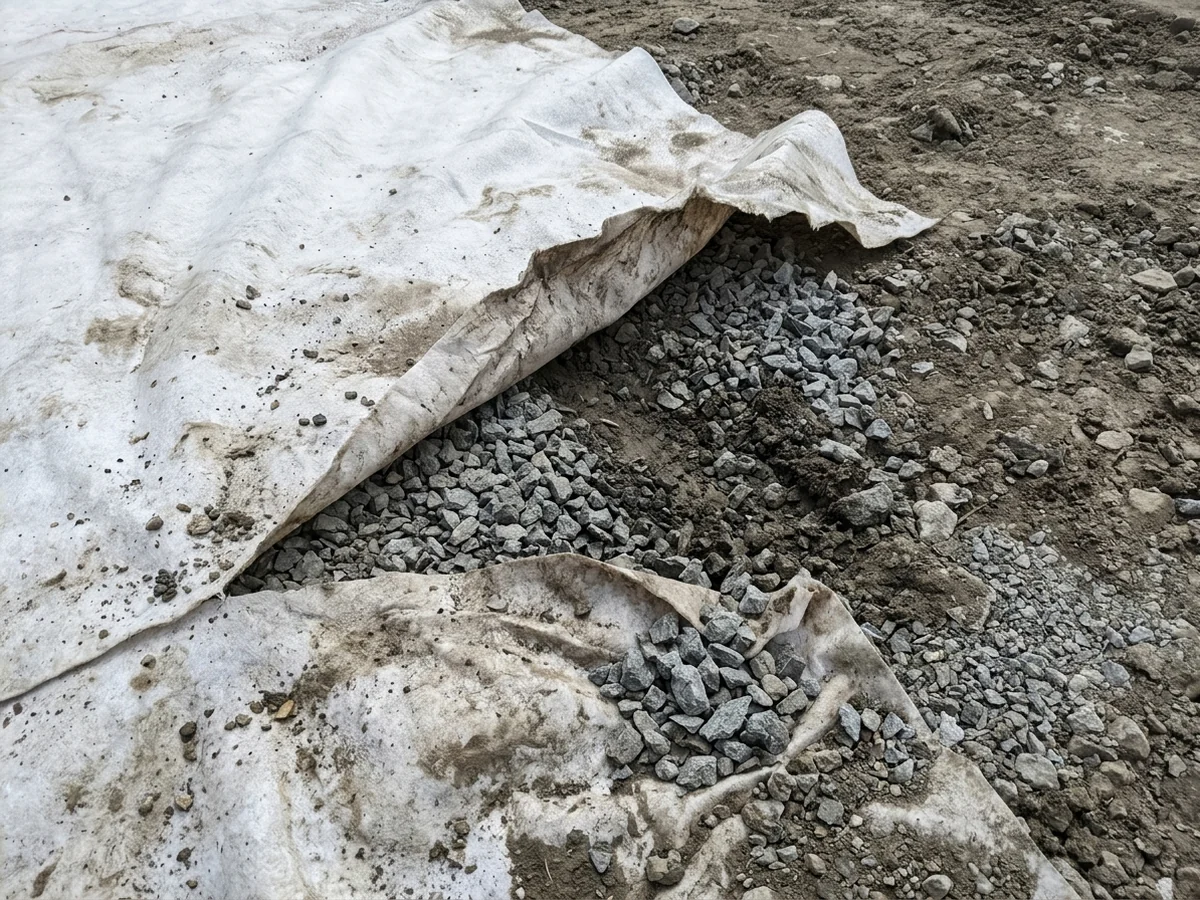
Insufficient connection between fabric panels often leads to early project failure by allowing base materials to mix with the subgrade. When the layers do not remain securely joined, soil particles migrate through the gaps, eventually causing the surface of your patio to settle or become uneven.
Failing to account for environmental factors like slope or freeze-thaw cycles frequently results in shifting seams. On sloped surfaces, gravity naturally pulls materials downward, which can separate poorly anchored edges over time. Similarly, the expansion and contraction of the ground during temperature fluctuations create internal stresses that force loose seams apart if they lack adequate width or proper fastening.
Properly securing the material is essential to prevent movement during the placement of heavy aggregate. If the panels are not pinned or stapled, the force of dumping stone or gravel can drag the fabric, creating large gaps that compromise the integrity of the entire base. Using landscape fabric pins at consistent intervals helps maintain the intended coverage throughout the construction process.
- Ensure enough slack is removed so the fabric lies flat without wrinkles, which can otherwise create weak spots at the join.
- Place seams in a way that respects the natural flow of water, especially on sloped sites, to prevent the underlying soil from being washed away.
- Adjust your approach based on the stability of your ground; softer subgrades often require more significant margins of error than firm, compact soil.
- Check the alignment of your geotextile fabric for patio base regularly during installation, as even small shifts during the initial stone spreading can lead to significant separation later.
When installing a geotextile for patio base stabilization, consistency is the best defense against long-term deterioration. Taking the time to correctly join and anchor your materials protects the investment by ensuring the structural separation between your finished patio and the native earth remains intact for years to come.
Professional Oversight for Complex Site Conditions
While many residential projects follow standard installation procedures, sites with high-load requirements or challenging soil conditions demand professional engineering design. Soil testing, which often involves determining the California Bearing Ratio to evaluate subgrade stability, provides the data necessary to calculate precise geotextile overlap requirements. Relying on generic advice for complex sites can lead to structural failure or premature settlement of your patio base.
DIY installations have inherent limitations, particularly when working on steep slopes or areas intended for heavy use. On a slope, gravity and water runoff can exert significant force on geotextile fabric seams, potentially causing material slippage if not anchored according to specific design criteria. High-load areas, such as zones supporting heavy machinery or vehicles, require careful consideration of tensile strength and seam continuity that goes beyond typical landscape fabric installation best practices.
For projects involving unique geotechnical challenges, consult the standards set by ASTM D4439. This reference provides terminology and definitions for geosynthetics, serving as a vital resource for understanding when a project exceeds the scope of a standard DIY installation. When in doubt, seeking professional advice ensures that your soil separation and stabilization strategy aligns with site-specific conditions, protecting your investment from long-term subgrade migration or drainage issues.
Geotextile Overlap FAQs
Why is overlapping necessary for geotextiles?
Overlapping ensures that the individual sheets of fabric function as a continuous barrier to maintain soil separation and stabilization. Without sufficient overlap, the base materials can sink into the subgrade, leading to uneven surfaces and structural instability.
How does soil type affect the required overlap?
Soft or unstable subgrades often require wider overlaps to maintain seam integrity under pressure compared to firm, compact ground. Assessing your soil composition helps determine whether standard installation widths are sufficient or if more extensive stabilization measures are needed.
Do I need to pin the seams?
Securing landscape fabric seams with pins or staples prevents the material from shifting during the placement of base aggregate. Proper anchoring is essential for maintaining the intended overlap width and ensuring the fabric remains taut across the entire project area.
What happens if I do not overlap the fabric correctly?
Insufficient overlap often results in soil migration, where the underlying dirt works its way up into the aggregate base layer. This interaction can undermine the structural support of your patio, causing the surface to depress or shift over time.
FAQ
Why is overlapping necessary for geotextiles?
Overlapping creates a continuous barrier that prevents soil particles from migrating into the base aggregate, which maintains structural stability. Without this overlap, gaps in the geotextile fabric could allow the subgrade to mix with the base layer, potentially leading to surface depressions or settlement.
How much should geotextile fabric overlap?
Common industry practice suggests that the geotextile fabric overlap should be adjusted based on the stability of the underlying ground. While standard residential installations often use a baseline width, softer soils typically require a wider margin to ensure the seam does not pull apart under heavy loads or pressure.
Do I need to pin the seams?
Securing landscape fabric seams with pins or staples is frequently recommended to keep the material in place during the installation of aggregate. These fasteners help maintain the integrity of the overlap, preventing the edges from shifting or curling while you work across the surface.
How does soil type affect the required overlap?
Soil bearing capacity, often measured by the California Bearing Ratio, significantly influences how much reinforcement is needed for subgrade stabilization. Soils with lower strength or higher moisture content generally necessitate a more generous overlap to prevent the geotextile from separating under the weight of the patio materials.
What happens if I do not overlap the fabric correctly?
Failing to follow proper geotextile installation best practices can result in localized failure of the base layer. When seams are not joined effectively, the separation function of the fabric is compromised, which may lead to drainage issues and an uneven finish as the base material pushes into the native soil.
Conclusion
Determining the correct seam width depends primarily on the stability of your subgrade and the anticipated load on the patio. Assessing your soil conditions before you begin helps ensure the integrity of the base, as softer ground generally requires wider seams to prevent separation over time. Before laying your aggregate, verify that you have accounted for the necessary geotextile fabric overlap based on your specific site conditions. Taking this extra step during the preparation phase provides a stable foundation that resists soil migration and supports long-term structural performance for your outdoor living space.
You might also like: How Deep Should You Dig for a Paver Patio (The 4″ to 6″ Ba