
What Happens If a Paver Patio Slopes Toward the Home Siding (Basement Leaks)?
Introduction
When a paver patio slopes toward house structures, rainwater and melting snow run directly against the foundation wall instead of draining safely away into the yard. This drainage failure often leads to basement leaks, wet crawl spaces, and serious structural damage over time.
This article covers the underlying causes of improper hardscape grading, the specific risks water pooling creates for foundations, and the most effective methods for fixing a patio slope toward the house. Readers will also learn about professional repair options and preventative steps to protect their basements from moisture.
Understanding Drainage Issues and Foundation Risks
When an outdoor hardscape surface like a paver patio slopes toward house structures, rainwater runs directly against exterior walls rather than flowing safely outward. This improper grading creates persistent moisture buildup around the foundation, which often leads to structural dampness, basement leaks, and unwanted water inside living spaces. Water pooling against a foundation wall puts immense hydrostatic pressure on masonry and concrete, threatening the overall stability of the property.
Property owners need to recognize how surface water interacts with the surrounding soil and masonry. The following comparison outlines the primary differences between correct surface runoff and a backward sloping installation.
| Drainage Condition | Water Movement | Primary Risk |
|---|---|---|
| Proper outward slope | Flows away from the structure | Minimal foundation stress and dry basements |
| Reverse patio gradient | Collects against exterior walls | Basement leaks, soil saturation, and freeze thaw damage |
Understanding the why behind these failures helps prevent severe structural damage. During cold weather, saturated soil beneath improperly graded surfaces experiences freeze thaw cycles. As trapped water freezes and expands, it shifts the base aggregate, causing pavers to heave and creating deeper pockets where more water can accumulate.
Practical steps to address a paver patio slope toward house involve comprehensive grading around foundation drainage zones. Fixing a paver patio slope toward house requires dismantling the affected section, resetting the base aggregate, and relaying the hardscape units to establish a reliable outward fall away from the building. Common mistakes during this process include failing to achieve adequate soil compaction or neglecting to incorporate proper geotextile fabric and masonry sand layers, which leads to future settling. For complex yards, integrating a French drain or consulting guidelines from the Interlocking Concrete Pavement Institute ensures the hardscape channels water safely away, protecting structural footings and keeping interior spaces dry during heavy storms.
Basement Leaks From Slope

When outdoor hardscapes are installed incorrectly, a paver patio slopes toward the house instead of away from it. This backward grading causes rainwater and snowmelt to flow directly toward exterior walls. Instead of draining safely into the yard, liquid gathers continuously near the structure, which compromises the building envelope and increases the risk of basement leaks.
Moisture intrusion happens as pooled liquid finds tiny cracks, joint gaps, or porous areas in foundation masonry. Once water enters the lower level, it creates severe indoor humidity, ruins stored items, and fosters mold growth. Over time, constant saturation of the surrounding earth creates intense hydrostatic pressure against concrete or block walls. This pressure can cause structural shifting, bowing, or major cracks.
Winter weather introduces additional hazards through freeze-thaw cycles. Moisture trapped inside masonry expands as it turns to ice, widening existing cracks and accelerating structural degradation during colder months. Managing exterior surface drainage is critical to preventing these long term structural failures.
Understanding why water pooling against my house occurs helps homeowners address the root cause rather than just treating indoor symptoms. Fixing paver patio slope toward house issues typically requires lifting the affected pavers, correcting the base aggregate layers, and ensuring proper grading before reinstalling the surface. Homeowners tackling patio drainage correction cost considerations should evaluate whether a complete rebuild or adding surface channels like a French drain is necessary.
A common mistake during repairs is failing to achieve proper soil compaction using a plate compactor, which leads to future settling and renewed backward slopes. Another frequent error is ignoring the underlying base aggregate or omitting geotextile fabric to separate native soil from sub-base materials. Ensuring correct installation standards, such as those outlined by the Interlocking Concrete Pavement Institute, protects the foundation and keeps lower levels dry.
Causes of Patio Slope

When a hardscape surface pitches in the wrong direction, several distinct structural issues are usually to blame. These triggers typically stem from mistakes during the initial build or physical shifts in the underlying earth as time passes. Understanding what causes the grade to shift helps homeowners address grading around foundation drainage effectively, especially when dealing with water pooling against a foundation wall.
Property owners often overlook how minor errors during the preparation phase lead to major headaches later. When freezing temperatures arrive, trapped water expands beneath the stones, forcing the patio surface to heave and shift out of alignment. Identifying the exact root cause requires careful inspection of the surrounding landscape, the condition of any adjacent retaining walls, and the behavior of surface runoff during heavy rainstorms.
Construction Mistakes and Foundation Instability
Many drainage failures trace directly back to the original installation process. If workers fail to verify the correct pitch before locking surface stones into place, the hardscape is set up for failure from day one. Inadequate compaction of the base aggregate during construction leaves hidden pockets of air that eventually collapse under heavy weight and normal foot traffic. Skipping the proper application of geotextile fabric or failing to stabilize the sub base layers can destabilize the entire foundation of the hardscape.
Natural Earth Movement and Erosion
Soil conditions change significantly over time, affecting hardscapes built upon them. Natural soil settlement beneath the hardscape occurs gradually as loose earth shifts, compresses, and pulls the surface downward over several seasons. Additionally, heavy rain frequently washes away crucial bedding material such as masonry sand from beneath the pavers. This creates localized depressions that trap moisture near the house and worsen water pooling against a foundation wall.
Retaining Wall and Surrounding Landscape Pressures
External structures near the hardscape also influence surface pitch. Retaining wall movement can alter surrounding drainage paths, causing earth to shift and push the patio toward the structure instead of away from it. When homeowners evaluate fixing a patio sloping toward the house, they must examine how adjacent landscape features interact with surface runoff. Consulting guidelines from the Interlocking Concrete Pavement Institute or resources provided by groups like the International Association of Certified Home Inspectors helps clarify proper hardscape standards.
Assessing Patio Pitch

Determining whether hardscape surfaces tilt incorrectly requires a careful combination of physical measurements and visual observations during weather events. When your paver patio slopes toward the house, moisture naturally follows gravity in the wrong direction, bringing water directly against your exterior walls. Identifying these issues early helps prevent moisture from reaching your basement and safeguards your structural integrity from costly water damage over time.
Checking Physical Gradient and Surface Level
Placing a digital level or standard spirit level directly on the surface provides an immediate measurement of the current gradient. You want to observe if the bubble or digital readout indicates a tilt pushing toward the structure instead of away from it. Move the tool systematically across different sections of the layout, checking various zones from the outer edge back to the threshold to confirm your initial findings across the entire installation. A common mistake during assessment is checking only one spot near the door threshold, whereas comprehensive evaluation requires mapping the gradient across the entire surface to understand how your base aggregate and underlying soil conditions are behaving.
Observing Water Flow During Weather Events
Observing the direction of water flow during light rain offers a practical visual confirmation of your layout drainage patterns. Watch closely where droplets travel once they hit the stones. If moisture steadily moves toward the foundation rather than draining safely away into the yard, you have a confirmed pitch problem that requires intervention. Keep an eye out for standing water pooling against foundation wall areas, as this indicates complete drainage failure and increases the risk of basement leaks during heavy storms.
Identifying Subsurface Shifts and Low Spots
Identifying low spots near the exterior wall reveals where liquid accumulates during heavy storms. Depressions often form over time due to shifting base aggregate, soil settling near the foundation, or inadequate initial compaction during construction using a plate compactor. Pinpointing these dips lets you target specific zones that require regrading or material adjustments before winter arrives. Water accumulation in these zones creates severe foundation damage risks from freeze thaw cycles as trapped moisture expands inside the joints and beneath the interlocking concrete pavement institute recommended layers. Homeowners experiencing these symptoms should evaluate whether grading around foundation drainage or installing a French drain is necessary to protect the property.
Fixing Slope Issues
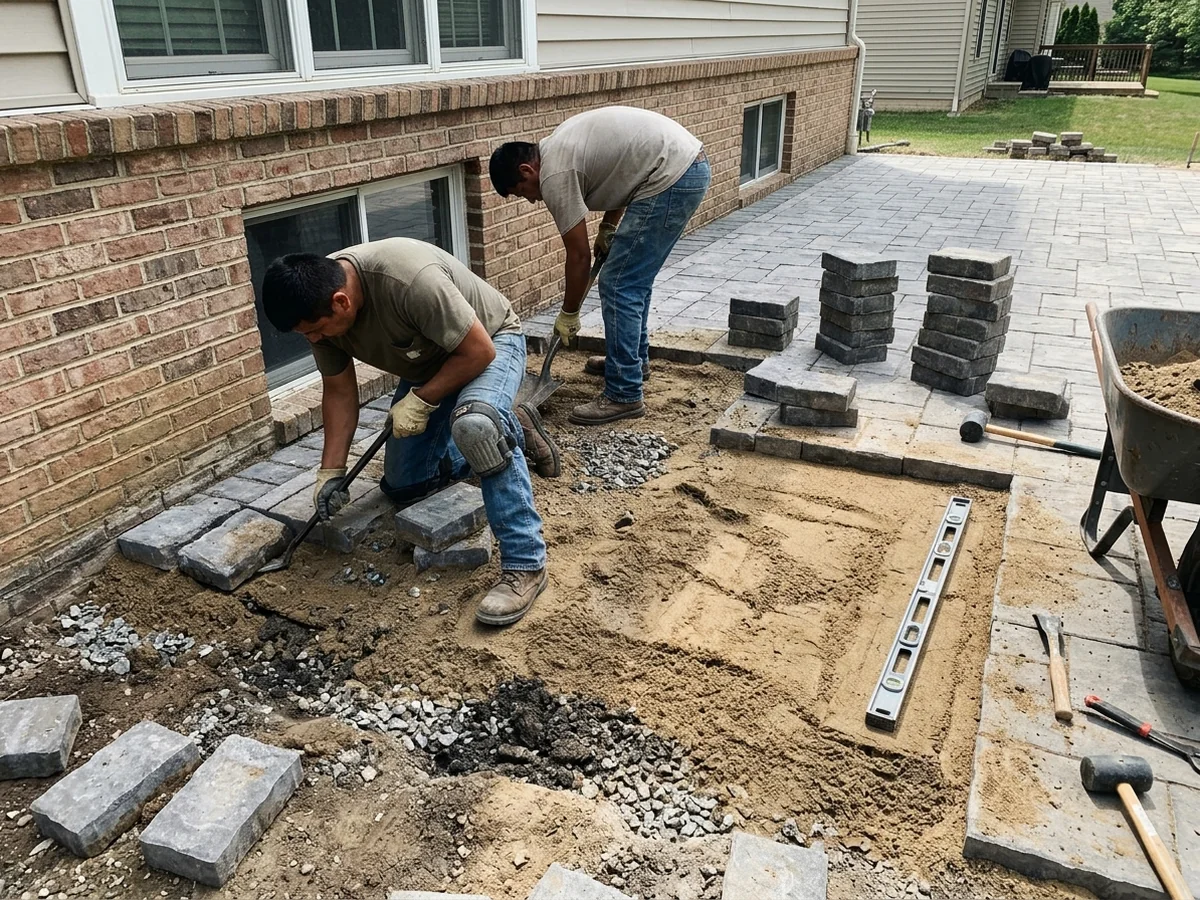
Fixing a paver patio slopes toward house problem requires taking apart the affected surface layers to rebuild the underlying support and establish proper drainage away from your foundation wall. When water pooling against foundation wall areas goes unaddressed, it creates serious risks including basement leaks and structural damage from winter freeze thaw cycles. You have to reset the grade carefully so water flows safely outward instead of pooling against your home.
Following industry guidance ensures the finished surface achieves the correct pitch for effective water runoff. Proper remediation involves several physical steps to correct the sub-grade and reset the paving units.
- Lifting pavers in affected sections to rebuild the foundation
- Adjusting base aggregate and masonry sand layers
- Installing geotextile fabric to separate native soil from the aggregate
- Using a plate compactor for soil compaction techniques for patio bases
- Re-laying pavers following proper guidelines for pitch
Step-by-Step Reconstruction
Homeowners experiencing water pooling near foundation structures must remove the pavers in the problematic zone to inspect the lower levels. The process begins by taking up the stones carefully and setting them aside. Next, clear out the existing bedding material to expose the sub-grade. Evaluating this lower soil layer reveals whether erosion or poor initial compaction caused the slope reversal. Adding base aggregate in controlled lifts allows you to rebuild the slope so that moisture drains safely away from the house.
Corrective Materials and Equipment
Achieving a lasting fix relies on using the right layers of materials. Placing a durable geotextile fabric directly over the native soil stops fine dirt particles from migrating upward into the stone base. Applying crushed base aggregate in thin layers, followed by thorough passes with a plate compactor, locks the foundation aggregate into a solid mass. Finally, a fresh bed of masonry sand provides a smooth, stable plane for the pavers before joint sand locks the surface together.
A common mistake during fixing paver patio slope toward house projects is failing to rebuild the sub-grade properly, which leads to recurring settlement. Thorough soil compaction is essential during reconstruction to prevent future settling in the modified zones. Adding fresh base aggregate and smoothing the masonry sand bed creates a stable plane that maintains the newly corrected angle over time. Homeowners tackling patio drainage correction cost concerns should budget for proper reshaping of the earth near foundation drainage elements, and sometimes a French drain installation, to protect the structure permanently.
Alternative Drainage Solutions
Fixing drainage issues when an outdoor hardscape directs runoff incorrectly requires specific engineering adjustments to divert moisture away from exterior walls. Several targeted methods can redirect water safely when lifting and relaying the entire surface is not immediately possible. Property owners dealing with water pooling against a foundation wall must act quickly to prevent structural deterioration and interior water intrusion.
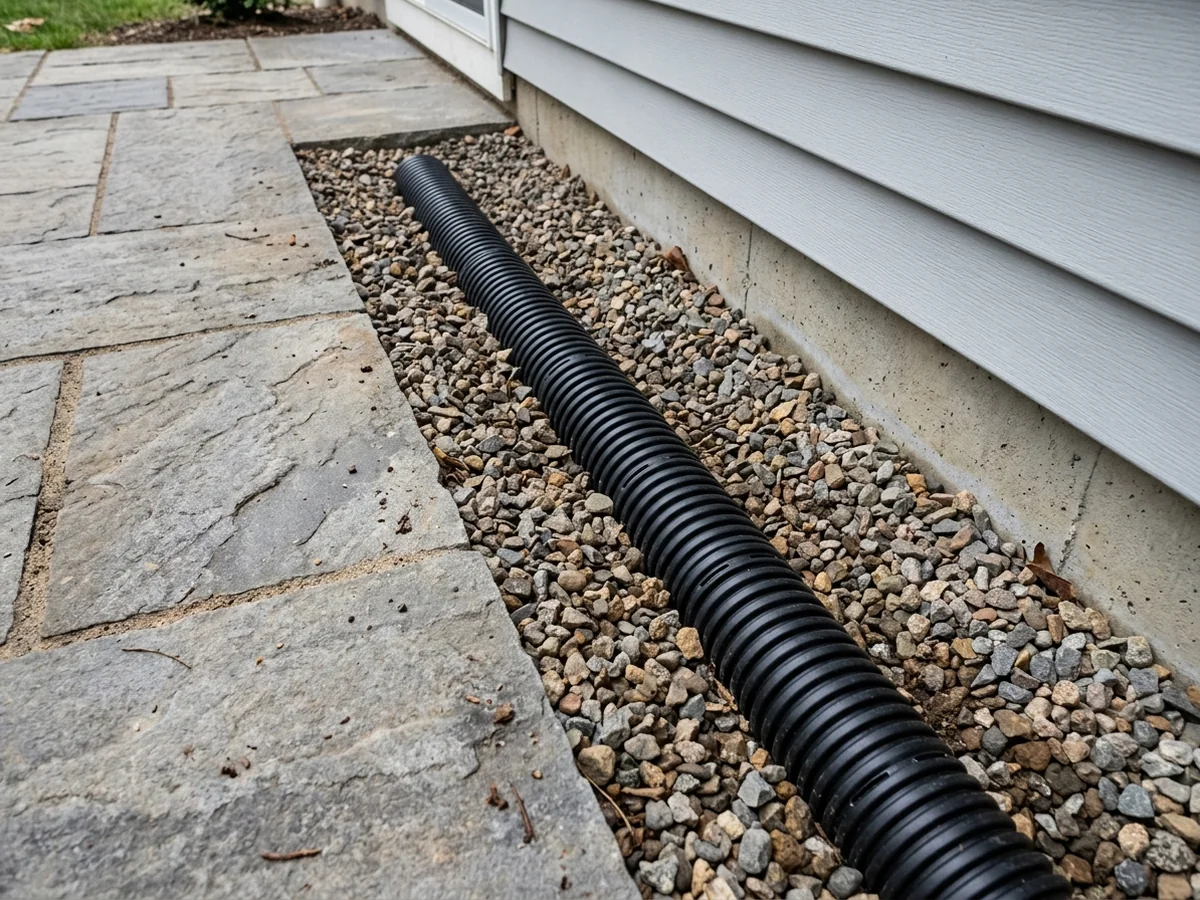
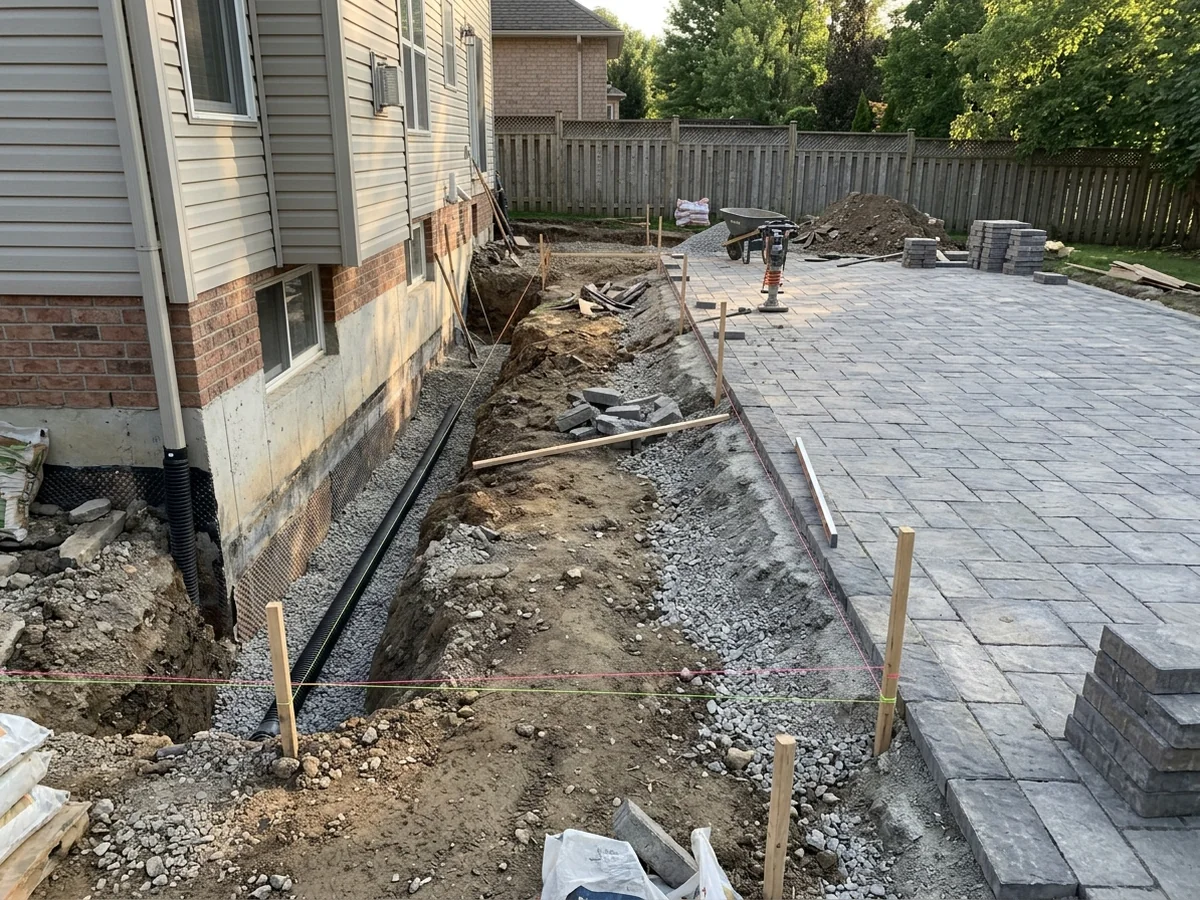
One of the most effective interventions involves installing a French drain. This process requires digging a trench along the edge of the hardscape, laying a perforated pipe wrapped in geotextile fabric, and backfilling with base aggregate. This system intercepts moisture moving through the ground, relieves hydrostatic pressure, and carries subsurface water away before it reaches exterior walls. Using geotextile fabric is essential because it prevents soil particles from clogging the aggregate and pipe over time.
Adjusting the earth levels near exterior walls ensures that surface water flows naturally downhill away from the structure instead of pooling near weep holes or masonry joints. Earth moving and careful soil compaction must establish a positive slope that directs runoff toward safe discharge points in the yard. When addressing slope correction, homeowners should ensure that soil is added in thin lifts and compressed thoroughly with a plate compactor to prevent future settling and low spots.
Adding channel drains near the threshold provides a physical barrier and collection trough right where the patio meets the building. These narrow grates catch cascading surface water during heavy rainstorms and pipe it securely past the foundation wall. When planning these fixes, homeowners often research patio drainage correction cost factors, which vary depending on whether they hire a professional contractor or complete the trenching and grading work as a DIY project.
A common mistake during drainage installation is failing to establish a continuous, unobstructed outlet for collected water. If a French drain or channel drain leads to a dead end, moisture simply accumulates underground and creates a new saturation zone near the house. Ensuring a continuous downhill path to a daylight discharge point or storm sewer connection protects the hardscape and the building foundation for the long term.
Patio Drainage Costs
Fixing an incorrect slope requires careful planning, and expenses vary widely depending on the scale of the hardscape and the extent of the labor involved. When water flows incorrectly, addressing the problem often demands professional masonry and grading services. Larger outdoor living areas or hardscapes requiring total reconstruction demand significantly more materials and time, which directly increases total project expenses.
Estimating expenses starts with calculating the total square footage of the affected surface. Contractors typically price these labor intensive projects by the square foot. The final estimate depends on whether the crew can lift and relay existing stones or if they must excavate the entire area to supply new base aggregate, geotextile fabric, and masonry sand. Additional installations, such as adding a French drain or adjusting retaining wall placement, will also change the total budget.
Property owners frequently weigh the financial savings of a do-it-yourself approach against hiring experienced professionals. Tackling the project independently eliminates direct labor charges, but it introduces hidden challenges. Operating a rented plate compactor, moving heavy stone, and ensuring proper soil grading require physical stamina and precision. Mistakes during a DIY repair often lead to recurrent settling or continued water pooling against foundation walls, which can eventually trigger costly structural damage.
Understanding the financial scope involves several practical steps and avoiding common missteps:
- Measure the exact square footage of the patio to provide accurate dimensions when requesting contractor quotes.
- Assess whether the existing pavers can be salvaged to save on material expenses, or if the sub base needs complete replacement.
- Budget for heavy equipment rentals, such as compactors and excavation tools, if taking the project on without professional help.
- Avoid simply adding surface material over low spots, because failing to correct the underlying sub base typically leads to recurring pooling in the exact same location.
When to Call Professionals
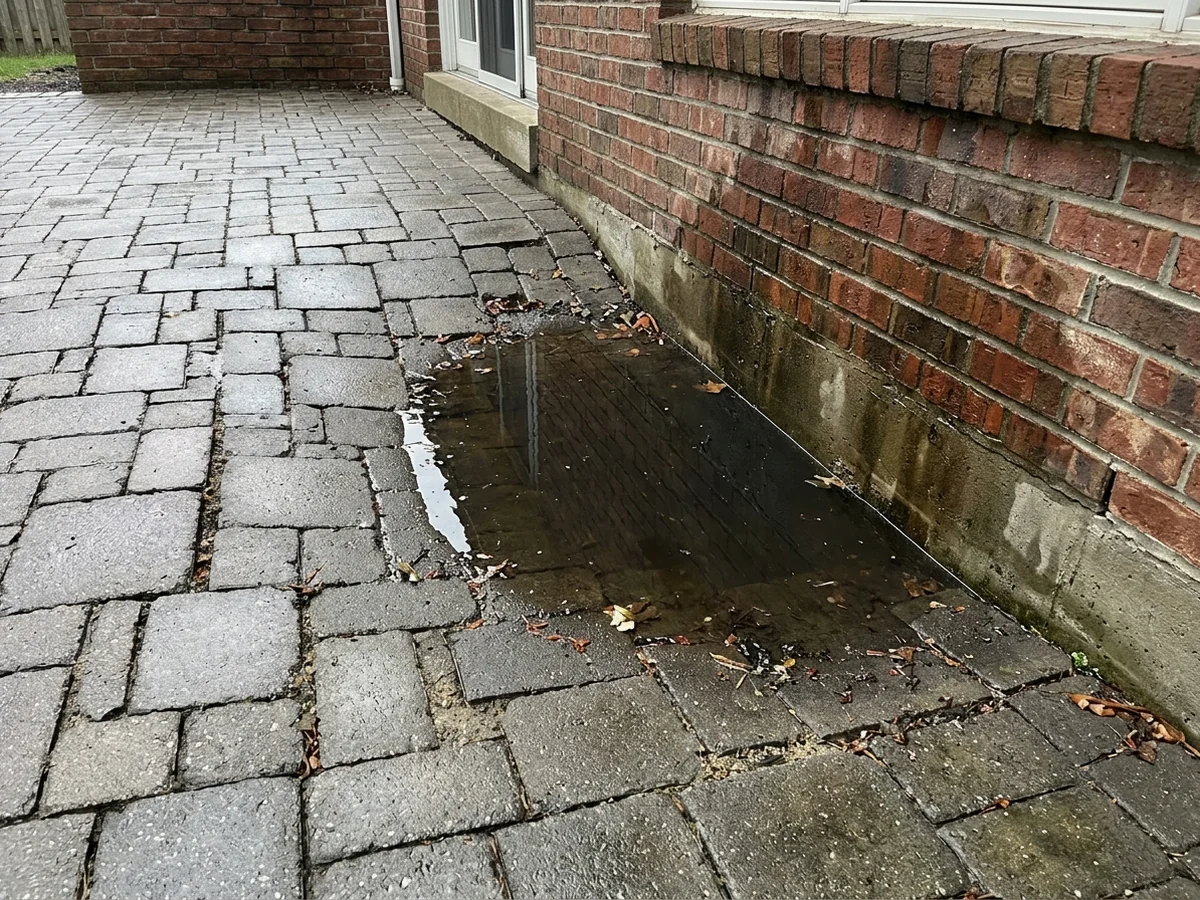
Homeowners facing severe drainage problems often reach a point where professional intervention becomes necessary. When an improperly graded hardscape leads to water pooling against the foundation wall, minor adjustments are rarely enough. Licensed contractors should be brought in immediately if poor site drainage causes severe structural shifting, extensive concrete undermining, or persistent basement leaks. Certified professionals bring specialized equipment and engineering knowledge to diagnose complex water movement issues that go beyond basic surface grading.
Understanding Foundation Risks and Freeze Thaw Cycles
When a paver patio slopes toward the house, trapped moisture creates silent hazards during cold weather. Water that accumulates near structural walls expands during freeze thaw cycles, putting immense pressure on masonry and concrete. This repetitive expansion leads to cracked foundations, shifting pavers, and expensive interior water damage. Ignoring these warning signs often results in basement dampness, mold growth, and compromised load bearing elements.
Complex Repairs and Soil Compaction Techniques
Tackling advanced drainage failures requires understanding the underlying mechanics of soil and water flow. Common mistakes during amateur repairs include simply adding dirt near the house, which can trap moisture closer to structural elements or alter the path of runoff in harmful ways. Proper repairs for these hardscape issues often include heavy earthwork, because fixing a patio sloping toward the house frequently demands lifting the entire surface to rebuild the base aggregate and masonry sand layers.
Certified tradespeople typically address severe site conditions through a structured process:
- Installing commercial grade French drain systems or perimeter channels to intercept heavy subsurface water flow before it reaches the structure
- Excavating and rebuilding compromised base aggregate layers with a mechanical plate compactor to stop future settling
- Integrating heavy duty retaining structures and specialized geotextile fabric guided by standards from the Interlocking Concrete Pavement Institute to stabilize sliding earth on sloped properties
Recognizing the limits of DIY repairs protects the property from long term foundation decay and structural failures. Bringing in qualified specialists ensures that proper site shaping is executed correctly, keeping exterior runoff safely away from living areas.
FAQ
Why is water pooling against my house?
Water pools against a house when the surrounding hardscape or landscape has an incorrect grade that directs surface runoff toward the foundation instead of away from it. Settling soil, poor initial construction, and shifting base aggregate can all cause a paver patio slopes toward house issue over time. Heavy rainfall then collects in these low spots, creating standing puddles right next to exterior walls.
Can a sloping patio cause basement leaks?
A patio directing water toward the structure frequently leads to basement leaks because moisture saturates the soil directly against the foundation wall. Hydrostatic pressure builds up as water accumulates underground, forcing liquid through small cracks or porous concrete. Over time, this constant dampness damages interior walls and ruins flooring.
How do I fix a patio sloping toward the house?
Fixing a patio sloping toward the house generally requires lifting the pavers, correcting the underlying grading, and reinstalling the hardscape with the correct runoff angle. Contractors often need to remove the surface layer, adjust the base aggregate, and ensure proper moisture redirection away from the structure before relaying the stones. Sometimes installing a channel drain or a French drain is necessary to capture surface water before it reaches the foundation.
What are the signs of foundation damage from poor patio drainage?
Foundation damage from incorrect drainage often shows up as stubborn basement leaks, interior drywall cracks, and sticking doors or windows. Freeze thaw cycles during winter make these problems worse because trapped moisture expands inside cracks and widens them. Homeowners should also watch for efflorescence, which is a white powdery mineral deposit on foundation walls caused by constant water exposure.
How much does it cost to fix negative drainage?
Expenses for fixing negative drainage vary widely depending on the size of the area, the severity of the slope, and whether you need professional masonry help or DIY repairs. Minor grading adjustments cost much less than completely tearing up and relaying an entire interlocking concrete pavement system. Adding localized drainage solutions like channel drains can also increase the total project price.
Conclusion
The primary decision point when addressing drainage issues is whether to lift the existing stones for a complete reset or install an exterior drainage system. Homeowners facing a situation where a paver patio slopes toward house structures must weigh the extent of the settling against repair costs. Consulting with a qualified hardscape professional helps determine if minor adjustments or a full base reconstruction is necessary to protect the foundation.
You might also like: How Deep Should You Dig for a Paver Patio (The 4″ to 6″ Ba