10 Bedroom Wall Decor Ideas with Modern Wood Panels
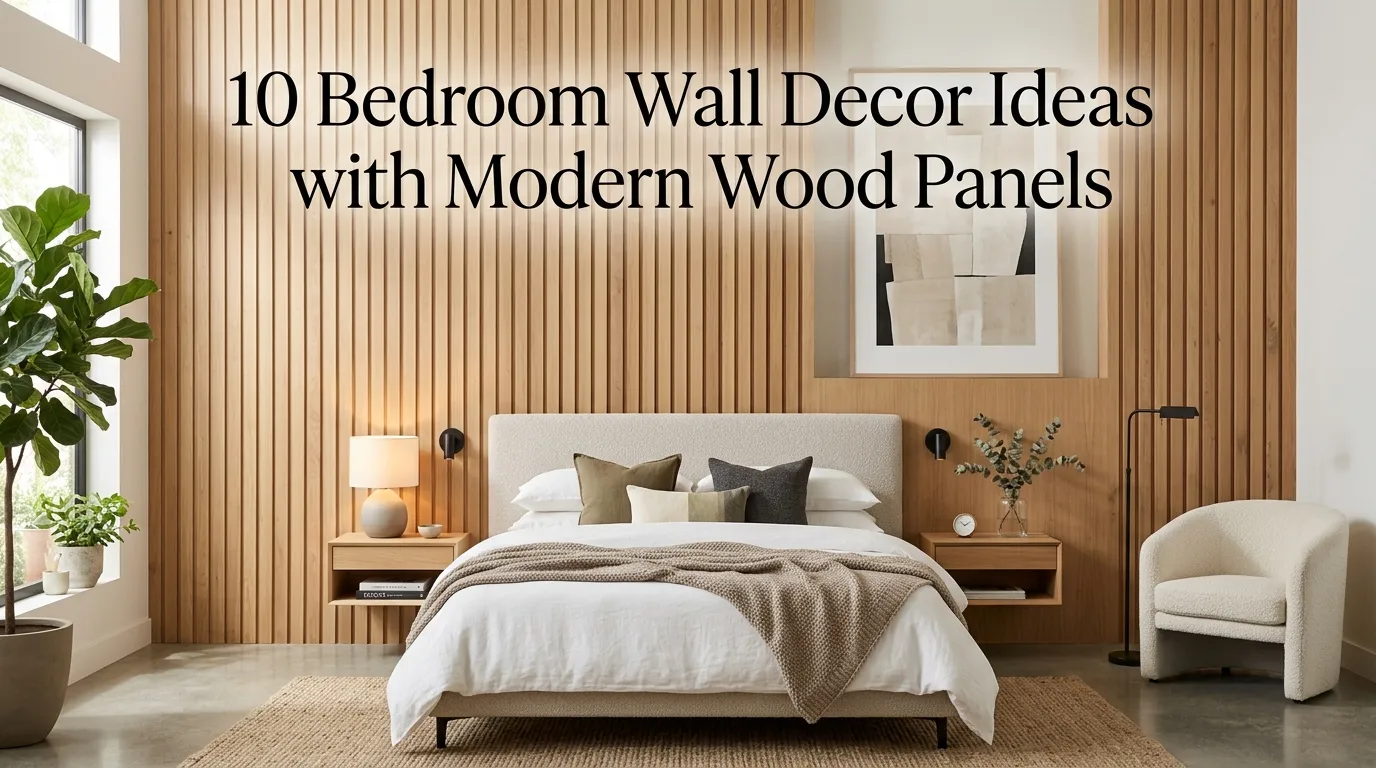
Modern wood panels can completely change the character of a bedroom without requiring a complicated decorating scheme. They add warmth, texture, and architectural interest while giving an otherwise plain wall a more finished appearance.
The beauty of wood paneling is its versatility. A bedroom can feel sleek and contemporary with narrow vertical slats, warm and inviting with natural oak panels, or more dramatic with darker wood behind the bed. Paneling can also visually emphasize ceiling height, define the sleeping area, and create a strong focal point without covering the entire room in decoration.
I’ve noticed that the most successful paneled bedrooms usually keep the rest of the decor relatively restrained. When the wall has strong texture and pattern, the furniture and bedding don’t need to compete with it. A simple upholstered bed, soft neutral bedding, and warm lighting can allow the wood to become the main feature.
You also don’t necessarily need to panel every wall. One accent wall behind the bed can be enough to transform the room. For renters or anyone avoiding permanent renovations, removable or freestanding approaches can sometimes create a similar visual effect, depending on the product and installation method.
Before installing anything, consider wall condition, moisture, ventilation, electrical outlets, switches, fire-safety requirements, and the manufacturer’s installation instructions. For permanent installations, appropriate tools, fasteners, and professional help can make a significant difference.
Whether your bedroom is spacious, compact, contemporary, or transitional, these ideas show how to use modern wood panels as both wall decor and an architectural feature.
Table of Contents
1. Vertical Oak Panels
Create a warm accent wall with vertical natural wood lines.
2. Slatted Headboard Wall
Combine wood slats with the bed to create a built-in appearance.
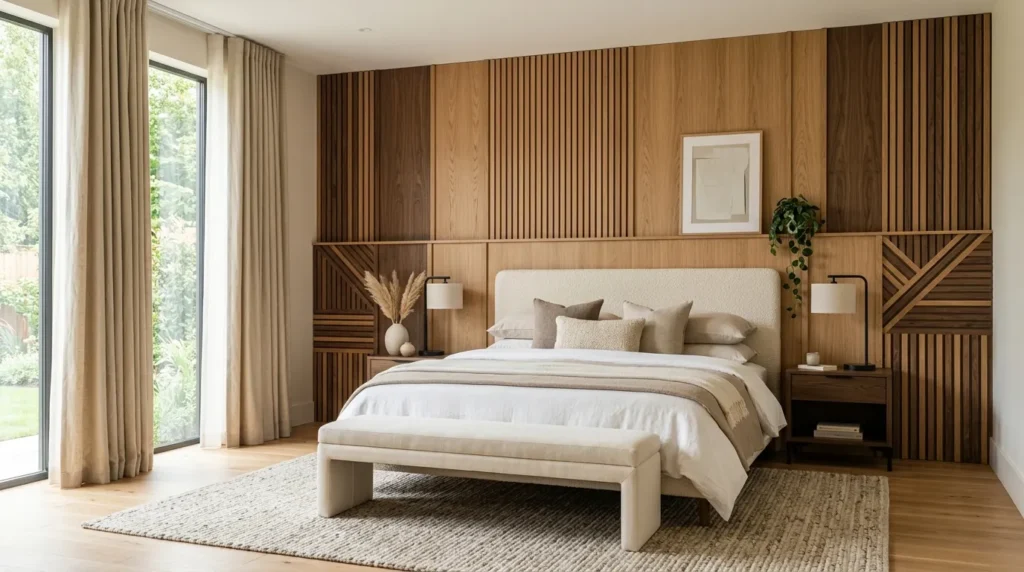
3. Dark Wood Accent
Use deeper wood tones to create a dramatic bedroom focal point.
4. Half Wall Paneling
Add architectural texture without covering the entire wall.
5. Floating Bed Backdrop
Use wood panels behind a streamlined bed for a contemporary look.
6. Curved Wood Panels
Soften modern interiors with rounded wood details.
7. Wood And Lighting
Combine paneling with integrated or strategically placed lighting.
8. Two Tone Panel Wall
Pair wood with a painted wall color for visual contrast.
9. Minimal Wood Feature
Use a smaller panel installation for understated impact.
10. Full Height Wood Wall
Create a dramatic architectural backdrop with floor-to-ceiling panels.
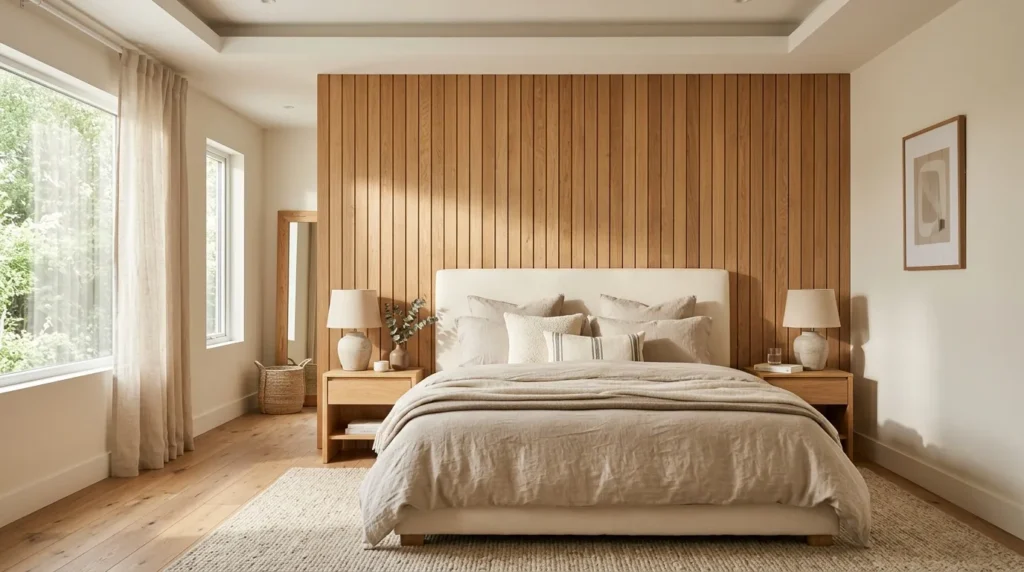
1. Vertical Oak Panels
Quick Benefits
- Makes ceilings appear taller
- Adds natural warmth
- Creates a strong focal point
- Works with neutral decor
- Brings texture to plain walls
Why It Works
Vertical wood panels are one of the easiest ways to introduce architectural interest into a modern bedroom.
The vertical lines naturally draw the eye upward, which can emphasize ceiling height and make the room feel more spacious.
Oak is particularly versatile because its warm undertones complement cream, beige, white, taupe, and earthy colors.
Unlike patterned wallpaper, wood has physical texture that changes as light moves across the surface.
This gives the wall dimension during the day and creates a completely different appearance under evening lighting.
The result feels modern while still being warm and inviting.
How To Style It
Install the panels behind the bed to create a natural focal wall.
Choose a finish that complements existing furniture.
Light oak works beautifully with cream upholstery and white bedding.
Medium oak can pair with beige and warm gray.
For a cleaner contemporary look, use narrow vertical slats with consistent spacing.
Keep the bedding relatively simple so the wall remains visually important.
Add warm bedside lighting to emphasize the texture after sunset.
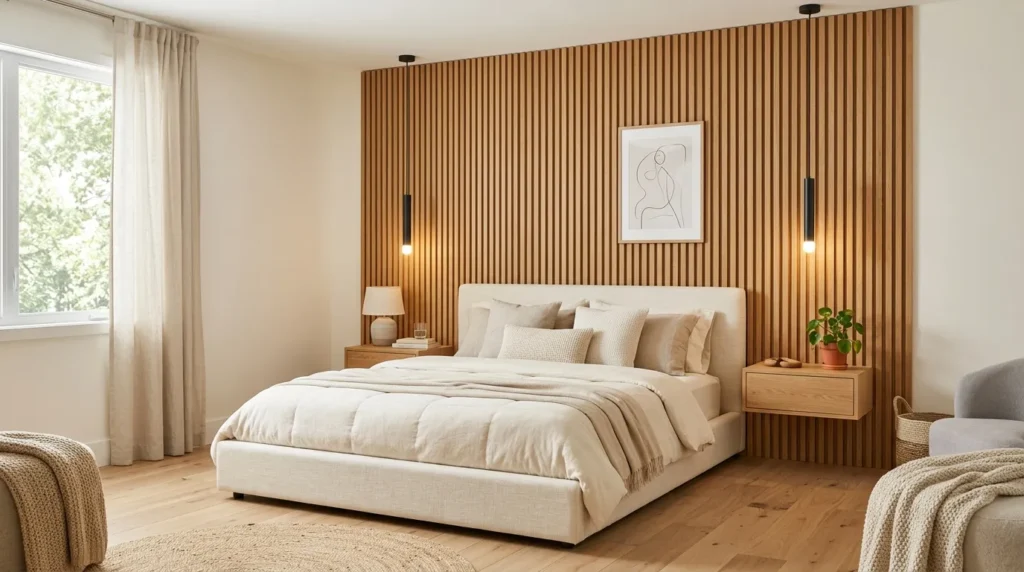
2. Slatted Headboard Wall
Quick Benefits
- Creates a built-in appearance
- Frames the bed beautifully
- Adds depth
- Combines decor with architecture
- Works well in modern bedrooms
Why It Works
A slatted wood wall can function as an oversized headboard.
This is especially useful when the bedroom doesn’t have a naturally distinctive architectural feature behind the bed.
The slats create rhythm and repetition while providing enough visual interest to make additional wall decoration unnecessary.
The effect can also make the bed feel more integrated into the room.
Instead of treating the headboard and wall as separate elements, the wood creates one continuous composition.
How To Style It
Extend the wood paneling wider than the bed so the sleeping area feels visually anchored.
You can also continue the panels toward the ceiling for a more dramatic effect.
Pair the wood with a simple upholstered or platform bed.
Wall-mounted sconces can sit directly against the paneling when the installation and electrical setup are designed for them.
Use neutral bedding to keep the overall appearance calm.
A few textured pillows and a soft throw are enough to complete the look.
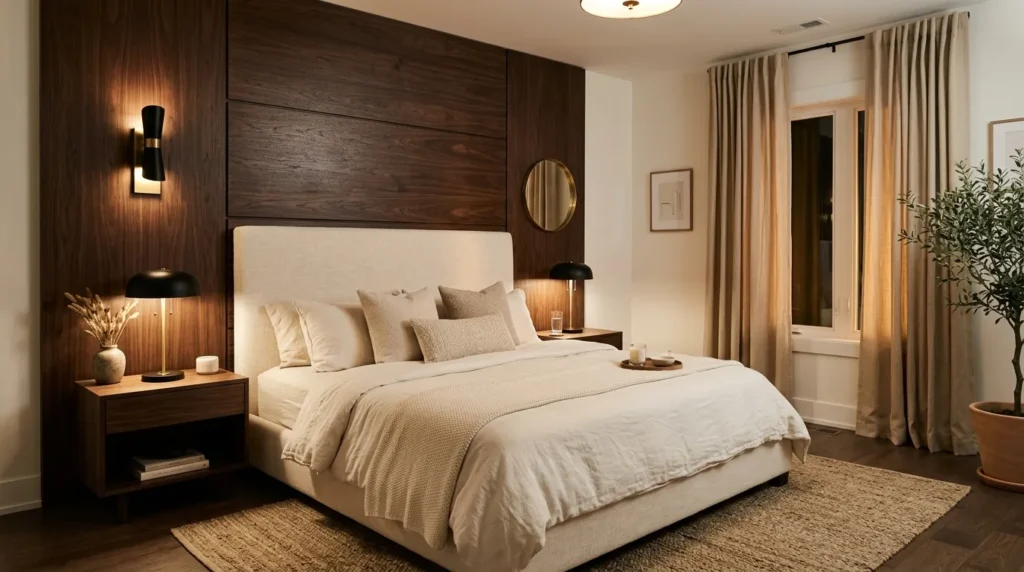
3. Dark Wood Accent
Quick Benefits
- Adds depth
- Creates dramatic contrast
- Makes light bedding stand out
- Gives the room a sophisticated mood
- Works well with warm lighting
Why It Works
Dark wood creates a completely different atmosphere from pale oak.
Deep walnut, espresso, and other rich wood tones can make a bedroom feel intimate and sophisticated.
The key is balance.
A dark paneled wall can become the room’s visual anchor while lighter bedding, curtains, and flooring keep the overall space from feeling heavy.
This approach works especially well in bedrooms with generous natural light.
If the room is already dark, consider using dark wood on a smaller section rather than covering the entire wall.
How To Style It
Use dark wood behind the bed.
Balance it with cream, ivory, or light beige bedding.
Introduce warm brass, bronze, or matte black accents sparingly.
Use warm lighting to bring out the richness of the wood.
Keep the surrounding walls relatively simple.
If you want a particularly sophisticated effect, pair dark walnut paneling with a low-profile upholstered bed and minimal nightstands.
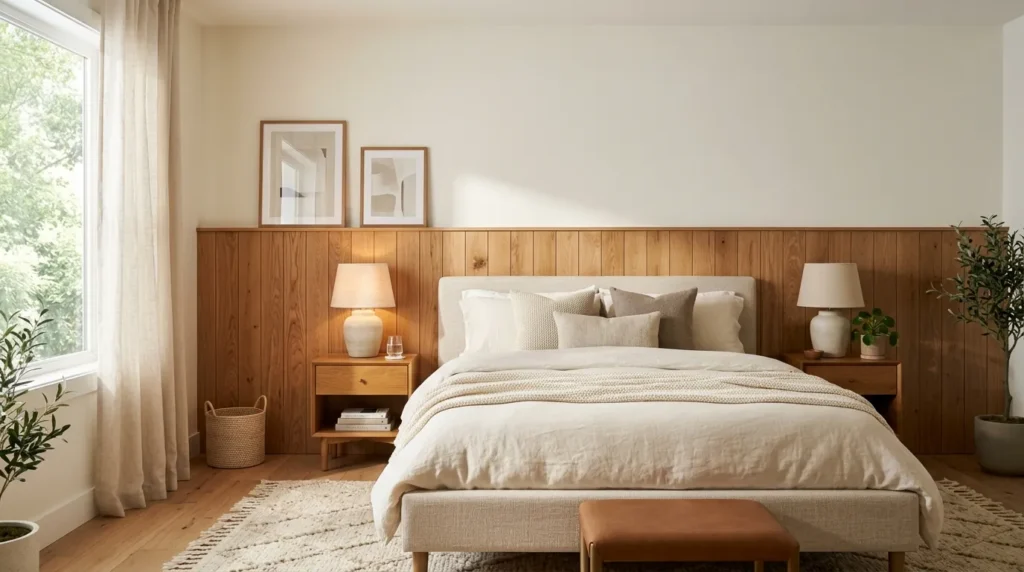
4. Half Wall Paneling
Quick Benefits
- Adds character without overwhelming the room
- Works in smaller bedrooms
- Creates architectural definition
- Can protect lower walls
- Pairs well with painted surfaces
Why It Works
Full-height wood paneling isn’t the only option.
Half-wall paneling provides texture while allowing the upper portion of the wall to remain open.
This creates a useful balance between architectural detail and visual breathing room.
It’s also a good approach for bedrooms where a full wood accent wall might feel too dominant.
You can use horizontal, vertical, or more traditional panel arrangements depending on the overall design.
How To Style It
Install the wood panels across the lower portion of the wall and paint the upper section in a complementary shade.
Warm white, cream, muted beige, and soft gray can all work well.
Use a slim transition trim where appropriate.
Place the bed against the paneled section if you want it to become part of the headboard composition.
For a more modern appearance, choose simple vertical slats rather than ornate molding.
Keep the upper wall relatively uncluttered.
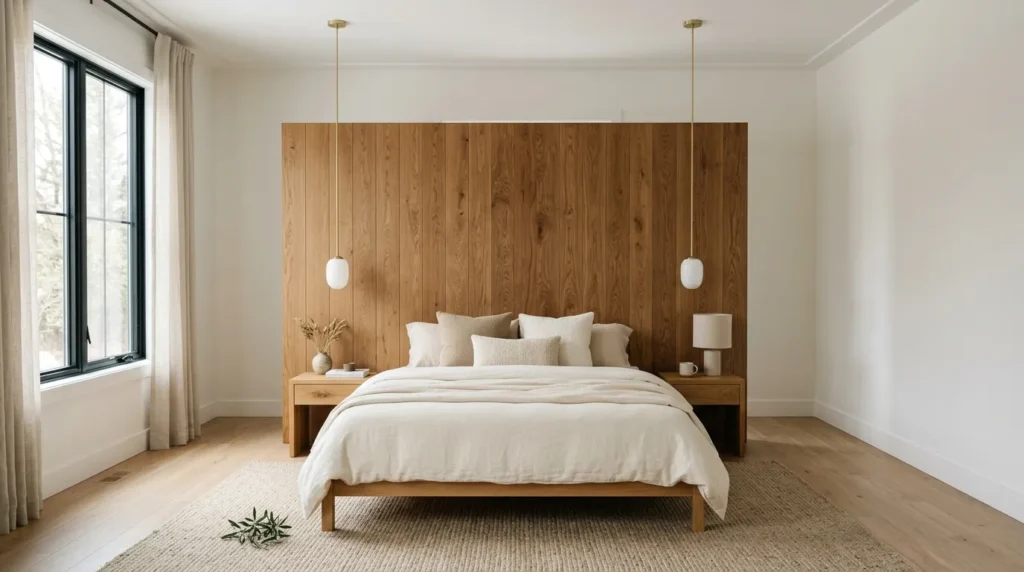
5. Floating Bed Backdrop
Quick Benefits
- Creates a contemporary focal point
- Adds depth behind the bed
- Works with minimalist furniture
- Creates visual separation
- Makes a plain wall more interesting
Why It Works
A floating or freestanding wood-panel backdrop can give the impression of a custom architectural feature without requiring the entire wall to be covered.
The panel can sit behind the bed while leaving visible wall space around it.
This creates a framed composition.
It’s particularly effective in modern bedrooms where the goal is clean geometry.
The wood adds warmth while the surrounding negative space keeps the design light.
How To Style It
Choose a panel width slightly wider than the bed.
For a more dramatic effect, extend it higher than the headboard.
Use a simple platform bed or upholstered frame in a neutral shade.
Keep nightstands compact.
Add pendant lights or sconces on either side when appropriate.
A large rug underneath the bed can connect the entire arrangement.
The result is architectural without being overly decorative.
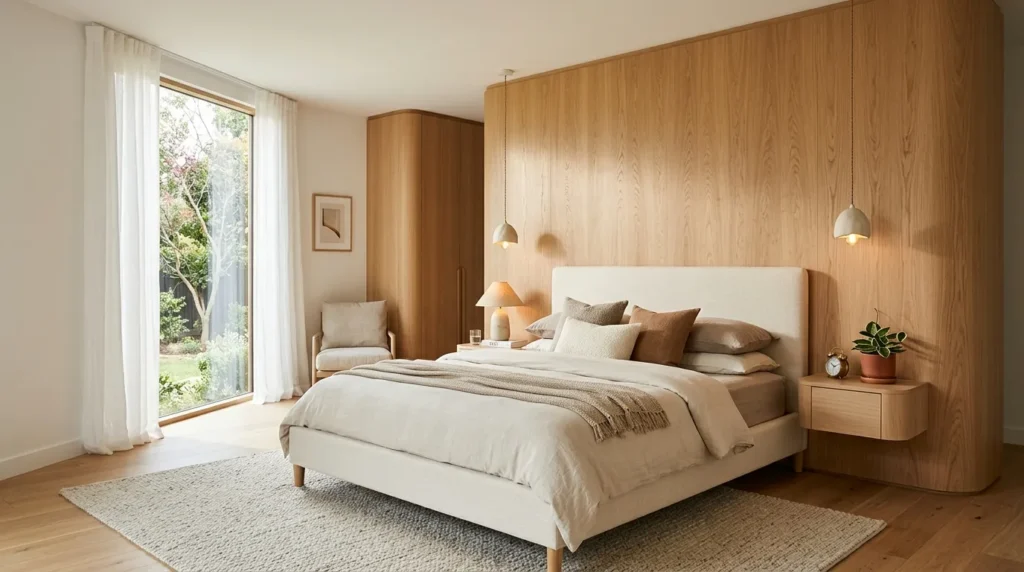
6. Curved Wood Panels
Quick Benefits
- Softens straight lines
- Adds architectural interest
- Creates a custom appearance
- Makes the bed wall distinctive
- Works with contemporary decor
Why It Works
Modern bedrooms often feature rectangular furniture, straight walls, and linear lighting.
Curved wood details introduce a softer visual rhythm.
A rounded wood-panel feature can frame the bed, create an arched backdrop, or define a niche.
The contrast between curved architecture and straight furniture makes the room feel more thoughtfully designed.
This approach is especially effective when the rest of the bedroom is simple.
How To Style It
Use a curved panel shape behind the bed.
Pair it with a simple upholstered headboard or even a low platform bed.
Keep the color of the wood relatively natural so the shape remains the primary feature.
Repeat curved forms through a rounded mirror, bedside table, pendant, or chair.
Avoid adding too many competing shapes.
One strong curved element can be enough.
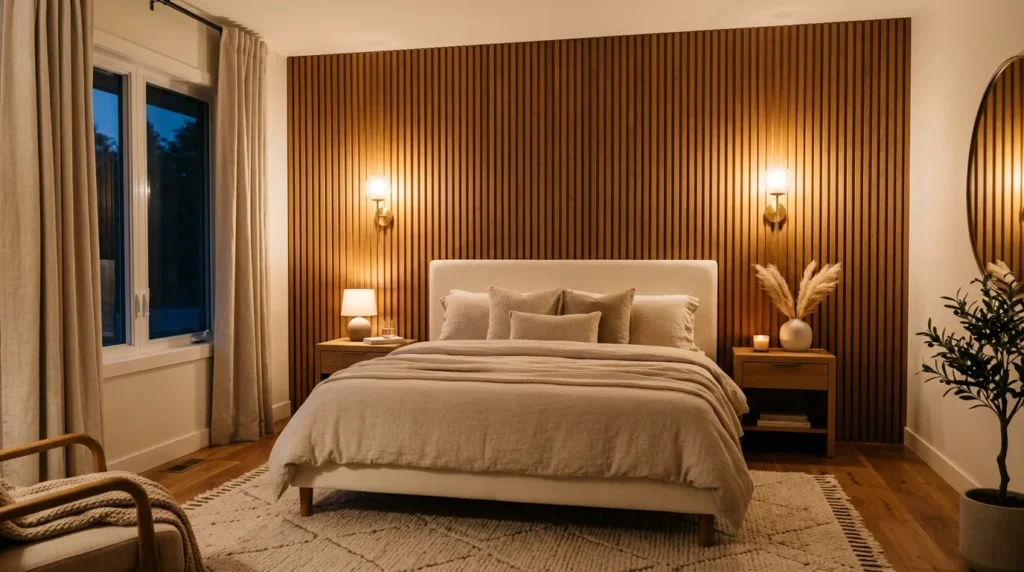
7. Wood And Lighting
Quick Benefits
- Highlights panel texture
- Creates a warm atmosphere
- Adds architectural depth
- Improves evening ambiance
- Makes the wall a focal feature
Why It Works
Wood paneling becomes especially beautiful when lighting is used intentionally.
The grooves, slats, and grain catch light differently depending on the fixture’s position.
Soft illumination can emphasize the texture without making the wall feel overly dramatic.
This also gives the bedroom a different personality after dark.
Instead of relying on one overhead fixture, several smaller light sources create layers.
How To Style It
Place wall sconces on either side of the bed.
Consider concealed or integrated lighting where appropriate and safe for the installation.
Warm accent lighting can emphasize the wood’s natural color.
If using pendant lights, hang them at a practical height for the bedside area.
Keep the light sources visually coordinated.
Avoid excessively bright lighting directly against the paneling.
The goal is to reveal the texture, not flatten it with glare.
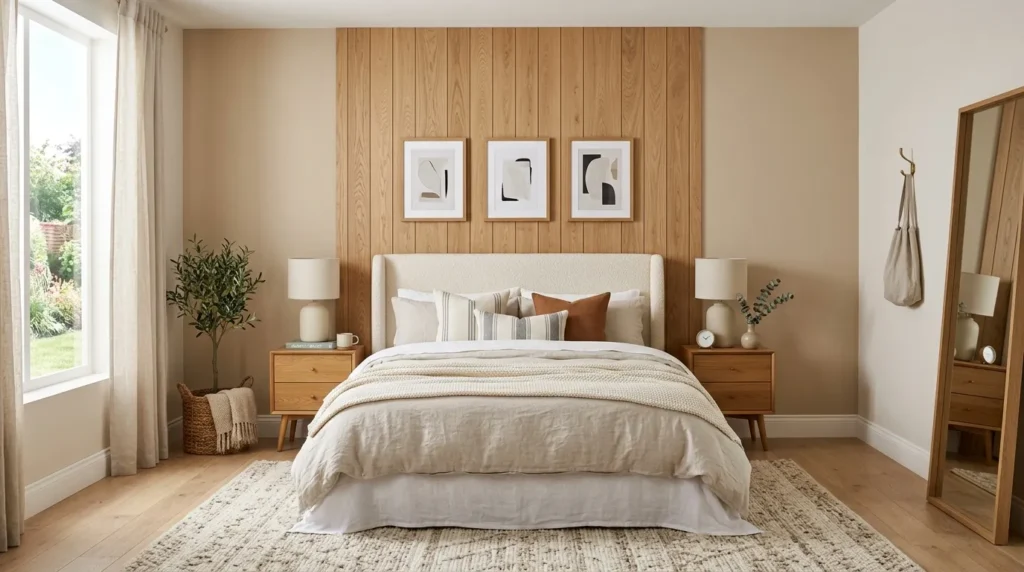
8. Two Tone Panel Wall
Quick Benefits
- Adds contrast
- Creates visual structure
- Combines color with texture
- Works with many decorating styles
- Keeps wood from dominating
Why It Works
Combining wood with paint creates a more layered wall treatment.
Instead of covering the entire surface in timber, use wood as one section and a complementary painted surface as another.
This is particularly useful when you want warmth without a heavy wood effect.
The contrast can also emphasize the architecture of the room.
For example, a vertical wood section behind the bed can sit between two painted areas.
How To Style It
Choose a paint color that relates to the wood’s undertone.
Warm white and beige work well with light oak.
Soft taupe and muted green can complement medium wood.
Deep charcoal can create a dramatic contrast with warm walnut.
Keep furniture relatively simple.
Repeat the paint color in small accessories or textiles.
This creates a connection between the wall treatment and the rest of the bedroom.
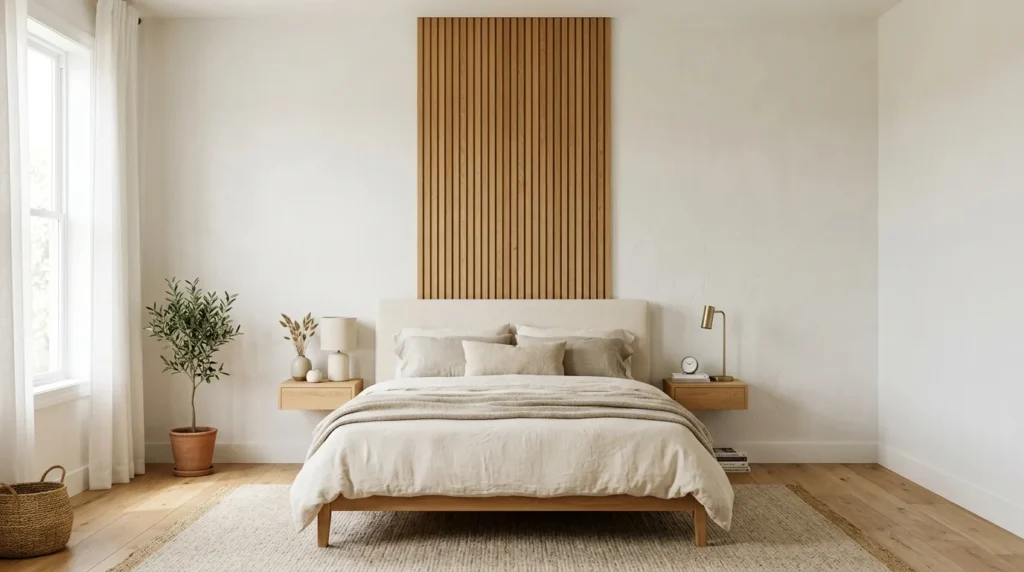
9. Minimal Wood Feature
Quick Benefits
- Uses less material
- Creates subtle visual interest
- Works in small bedrooms
- Doesn’t overpower existing decor
- Easy to coordinate
Why It Works
Not every bedroom needs an entire accent wall.
A smaller wood-panel feature can create the same sense of intentional design while keeping the room visually light.
A narrow vertical panel behind the bed, a rectangular wood insert, or a small architectural section can become a subtle focal point.
This approach is especially useful when the room already has interesting features such as large windows, exposed beams, or distinctive artwork.
How To Style It
Choose one wall section.
Keep the shape simple.
A vertical rectangle behind the center of the bed can emphasize symmetry.
Pair it with a neutral upholstered bed and simple bedding.
Use one or two matching wood accessories elsewhere in the room.
Don’t add excessive decor around the panel.
The smaller feature works because of the surrounding negative space.
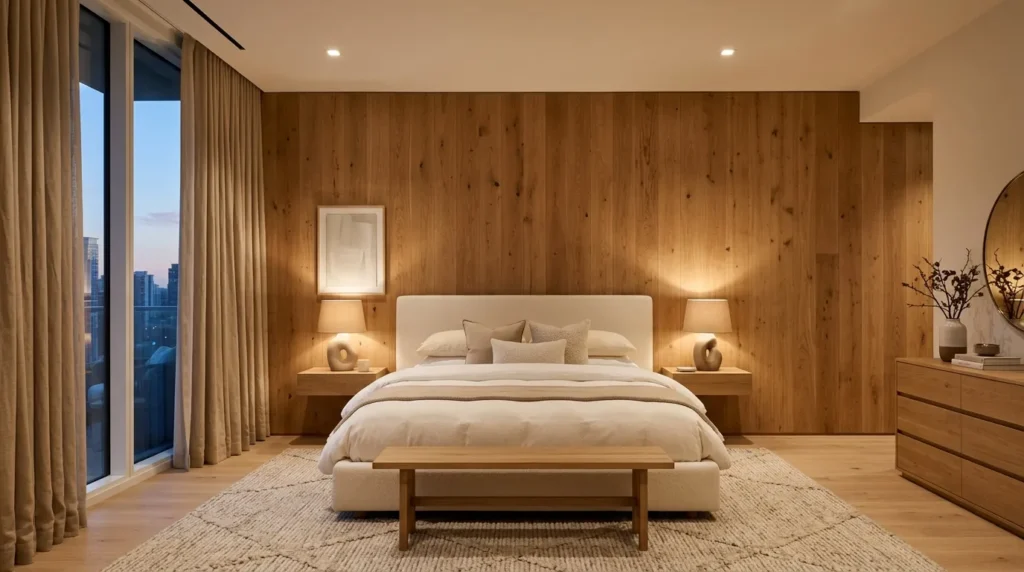
10. Full Height Wood Wall
Quick Benefits
- Creates dramatic impact
- Emphasizes ceiling height
- Adds warmth
- Defines the bedroom’s focal point
- Creates a custom architectural feeling
Why It Works
For a stronger statement, floor-to-ceiling wood panels can transform an entire bedroom wall.
The uninterrupted material creates a sense of continuity and can make the room feel like a thoughtfully designed suite.
This approach works particularly well when the rest of the room is restrained.
The wall itself becomes the decoration.
Full-height panels can also visually connect different elements around the bed.
The important consideration is proportion.
A very dark or heavily textured treatment can dominate a small room.
How To Style It
Use a warm, relatively consistent wood tone.
Choose simple furniture that doesn’t compete with the wall.
A low-profile bed can reinforce the contemporary appearance.
Use soft cream or beige bedding to create contrast.
Keep wall accessories to a minimum.
Add layered lighting to reveal the wood texture at night.
For smaller rooms, consider using lighter wood or narrower slats to maintain an airy appearance.
How To Choose the Right Wood Panel Style
The best panel style depends on the bedroom’s size, architecture, and existing furniture.
For Small Bedrooms
Choose lighter wood and vertical patterns.
Narrow slats can emphasize height without making the wall feel visually heavy.
For Large Bedrooms
Larger panels or full-height treatments can provide enough visual weight to anchor the space.
For Low Ceilings
Vertical lines can help draw attention upward.
For Dark Bedrooms
Light oak, ash, or other lighter finishes can help maintain brightness.
For Bright Bedrooms
Medium or darker woods can provide attractive contrast.
For Minimal Interiors
Use simple, evenly spaced panels and keep accessories restrained.
For Cozy Bedrooms
Warm wood, soft bedding, textured rugs, and warm lighting create a more intimate atmosphere.
Wood Panel Colors That Work in Bedrooms
Wood doesn’t have to mean one particular color.
Light Oak
Fresh, warm, and versatile.
Natural Walnut
Rich, sophisticated, and dramatic.
Medium Oak
Balanced and easy to coordinate.
Whitewashed Wood
Light and relaxed.
Warm Brown
Earthy and cozy.
Charcoal Wood
Modern and dramatic.
Choose based on your existing flooring, furniture, wall color, and natural light.
It helps to view actual samples in the bedroom because wood can look noticeably different under morning, afternoon, and artificial lighting.
How To Decorate Around Wood Panel Walls
Once the paneling is installed, resist the temptation to decorate every available surface.
Let the wall breathe.
Use simple bedding.
Choose furniture with clean lines.
Repeat the wood tone in one or two smaller details.
Add soft textiles to balance the harder surface.
Use artwork sparingly.
Choose lighting that highlights rather than competes with the paneling.
If the wood wall is already highly textured, a simple upholstered bed can create a beautiful contrast.
If the paneling is subtle, you can introduce stronger bedding or artwork.
Think of the wall as one major layer of the room rather than another accessory.
Common Wood Paneling Mistakes
Using Too Many Wood Tones
Several competing finishes can make the bedroom feel disconnected.
Ignoring Scale
Large panels can overwhelm a small room.
Forgetting Electrical Outlets
Plan outlets, switches, sconces, and other wall elements before installation.
Covering Every Wall
One focal wall often creates more impact than excessive paneling.
Choosing Style Without Considering Light
Dark wood can look very different in a room with limited natural light.
Overdecorating the Panel Wall
The texture itself is decorative.
Ignoring Moisture
Bedrooms generally have different environmental conditions than bathrooms, but moisture and ventilation still matter when selecting materials.
Installing Without Checking the Wall
Existing wiring, plumbing, studs, wall condition, and local requirements can affect installation.
FAQ
Are wood panels good for bedroom walls?
Yes. Wood panels can add warmth, texture, architectural interest, and a strong focal point to a bedroom. They’re particularly effective behind the bed. Choose materials and installation methods appropriate for interior use, and consider ventilation, electrical components, wall condition, and the manufacturer’s instructions before installation.
Do wood panels make a bedroom look smaller?
They can, depending on the color, pattern, and amount of coverage. Light wood and vertical lines can help a room feel taller and more open. Dark, heavily textured paneling across several walls can make a small bedroom feel more enclosed. Using one accent wall is often a balanced approach.
What color wood is best for a modern bedroom?
Light and medium natural woods such as oak work especially well with modern bedrooms because they add warmth while maintaining a clean appearance. Walnut can create a richer, more dramatic effect. The best choice depends on existing flooring, furniture, wall color, and natural light.
Can wood panels replace a headboard?
They can visually function as a headboard wall, although they don’t necessarily provide the same cushioning or support as an upholstered headboard. A wood-paneled wall behind a low-profile bed can create a strong focal point without requiring a traditional headboard.
How do I decorate a bedroom with a wood accent wall?
Keep the surrounding decor relatively simple. Neutral bedding, upholstered furniture, natural textiles, minimal artwork, and warm lighting can balance the texture of the wood. Repeat the wood tone in one or two smaller elements to create cohesion without matching every piece.
Are vertical wood panels still modern?
Yes. Vertical slatted and linear wood treatments remain versatile because they combine clean geometry with natural material. Their appearance can range from minimalist and contemporary to warm and organic depending on the wood finish, spacing, furniture, and lighting.
How can I make wood paneling look more luxurious?
Focus on proportion, material consistency, lighting, and restraint. A well-scaled panel wall, quality-looking wood finish, simple furniture, soft bedding, and carefully positioned lighting can create a sophisticated appearance. Avoid covering the room with too many competing textures or decorative elements.
Conclusion
Wood panels can turn a plain bedroom wall into one of the room’s most memorable features.
The key is choosing a treatment that supports the architecture and atmosphere you want.
Vertical oak panels can make a room feel warm and taller. Dark walnut can create a sophisticated focal point. Half-wall paneling adds character without dominating the space. A smaller wood feature can introduce texture when a full accent wall feels excessive.
Once the paneling is in place, let it do some of the decorating work.
Pair it with simple bedding, comfortable furniture, natural textiles, and thoughtful lighting. Keep artwork and accessories selective so the texture remains visible.
If you’re working with a small bedroom, lighter wood and vertical patterns can help preserve an airy feeling. If the room is spacious and receives plenty of natural light, a richer wood finish can create beautiful contrast.
And remember that you don’t have to transform the entire bedroom at once.
Start with the wall behind the bed.
Choose the wood tone carefully.
Plan lighting and electrical details before installation.
Then build the rest of the room around that focal point.
The result can be warm, modern, architectural, and inviting without becoming overly decorated.
Related Articles
- 10 Modern Bedroom Ideas with Elegant Simplicity
- 10 Modern Bedroom Ideas with Cozy Hotel Vibes
- 10 Bedroom Wall Decor Ideas That Make a Room Feel Larger
- 10 Soft Minimal Aesthetic Bedroom Ideas
- How to Decorate a Bedroom with Elegant Decor