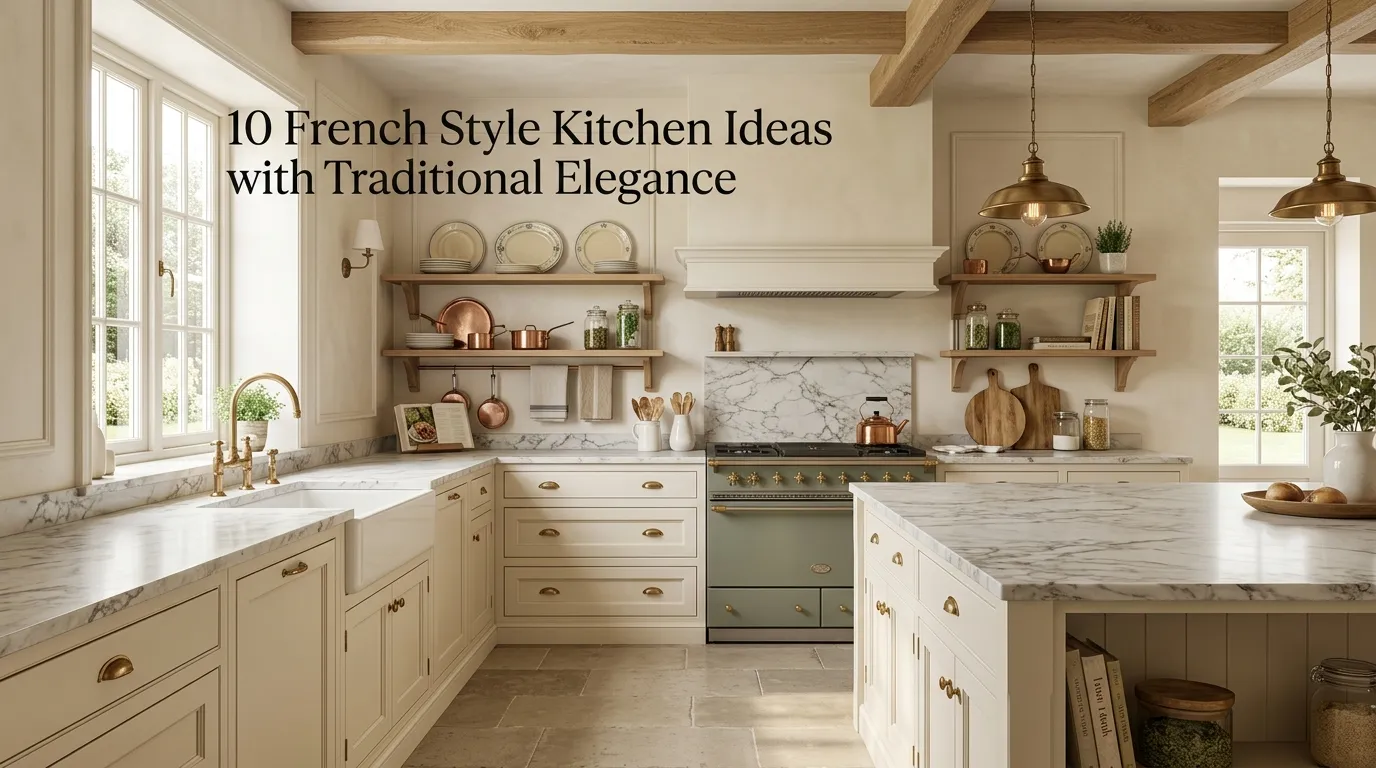
10 French Style Kitchen Ideas with Traditional Elegance
French-style kitchens have a way of feeling beautiful without looking overly decorated. Their appeal comes from a thoughtful combination of classic architecture, warm materials, graceful details, and practical spaces that still feel comfortable enough for everyday life.
A French-inspired kitchen doesn’t have to look like a formal country estate. The style can work beautifully in an American home, whether you’re renovating a spacious kitchen, updating a builder-grade space, or simply adding a few traditional details.
In my experience, the secret is balance. Too many ornate elements can make a kitchen feel themed rather than timeless. A simpler approach—cream cabinetry, natural wood, aged-looking hardware, stone surfaces, and traditional lighting—creates the relaxed elegance associated with French interiors without making the room feel precious.
Color also plays an important role. Warm whites, creamy beige, muted sage, dusty blue, soft gray, and natural wood tones provide a welcoming foundation. These colors allow architectural details and materials to become part of the visual story.
French kitchens are also highly practical. Large work surfaces, generous storage, open shelving, durable countertops, and comfortable seating can all contribute to the style while supporting everyday cooking and gathering.
You don’t need to replace everything to create the look. Swapping cabinet hardware, adding a vintage-inspired light fixture, introducing natural wood, or displaying beautiful everyday dishes can make a noticeable difference.
These ten ideas focus on the details that create traditional French character while keeping the kitchen functional, inviting, and appropriate for modern American homes.
Table of Contents
1. Cream Cabinetry
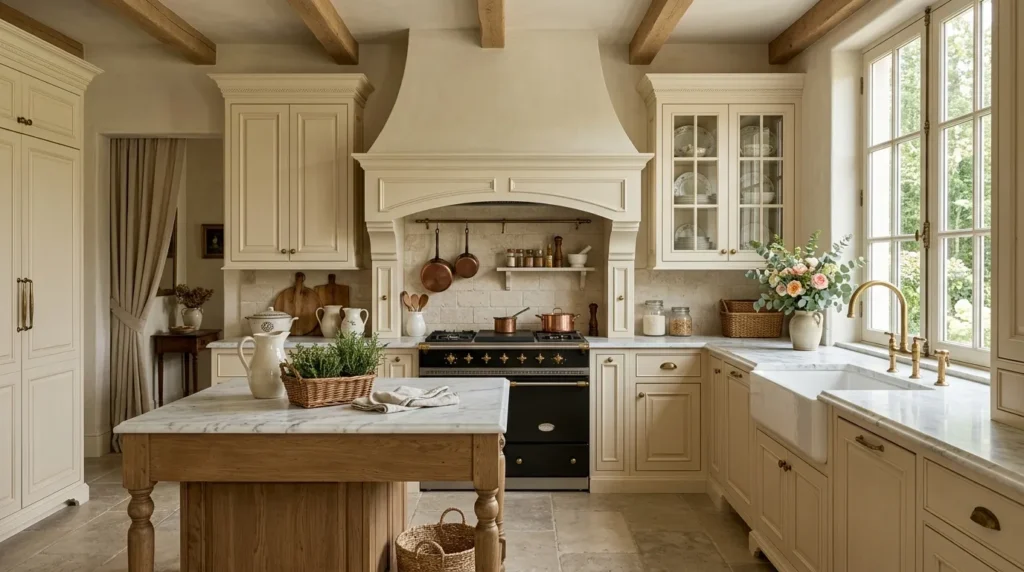
Create a warm foundation with soft painted cabinets and classic proportions.
2. Natural Wood Island
Add warmth with a substantial wood island or butcher-block detail.
3. Classic Range Hood
Make the cooking area a focal point with a traditional hood design.
4. Aged Brass Hardware
Introduce understated character through warm, vintage-inspired metal finishes.
5. Stone Countertops
Use natural-looking surfaces to create an authentic, timeless foundation.
6. Open Dish Shelves
Display everyday ceramics and glassware in a relaxed French-inspired way.
7. Vintage Lighting
Bring architectural charm into the kitchen with traditional fixtures.
8. Farmhouse Sink
Combine practical functionality with a classic European-inspired silhouette.
9. French Tile Details
Use timeless tile patterns to add texture without visual overload.
10. Elegant Kitchen Styling
Finish the room with simple objects, natural materials, and collected details.
1. Cream Cabinetry
Quick Benefits
- Creates a warm atmosphere
- Works with traditional architecture
- Makes the kitchen feel inviting
- Complements natural materials
- Provides a timeless foundation
Why It Works
Cream cabinetry is one of the easiest ways to create a softer alternative to bright white kitchen cabinets.
The slightly warmer undertone works beautifully with wood, stone, brass, and traditional architectural details.
French-inspired kitchens often benefit from cabinetry that feels substantial rather than ultra-sleek. Shaker doors, raised panels, inset-style details, and simple molding can all contribute to that character.
The goal isn’t to make every cabinet highly decorative.
A restrained profile paired with warm color can feel both classic and current.
Cream also allows natural materials to stand out without creating harsh contrast.
How To Style It
Choose a warm cream rather than a stark cool white.
Pair it with natural stone or stone-look countertops.
Add aged brass or antique-inspired hardware.
Use wood accents through cutting boards, stools, shelving, or an island.
For a traditional appearance, consider crown molding or furniture-style cabinetry where appropriate.
Keep the backsplash relatively quiet if the cabinetry includes substantial detailing.
A few natural accessories can complete the look without making the kitchen feel overly styled.
2. Natural Wood Island
Quick Benefits
- Adds warmth
- Creates contrast
- Introduces natural texture
- Makes the kitchen feel collected
- Works with painted cabinets
Why It Works
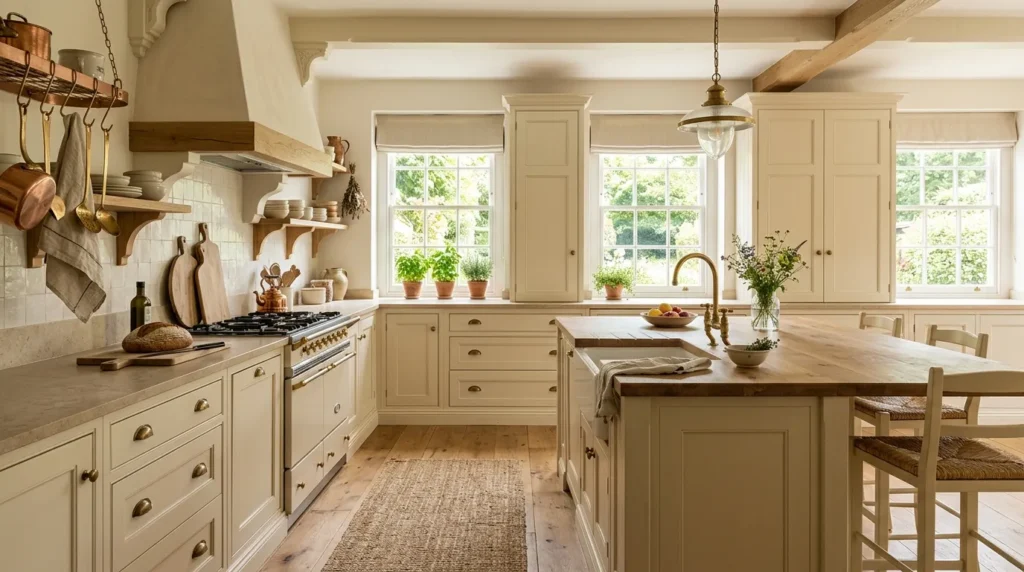
A natural wood island can prevent a traditional kitchen from feeling too uniform.
The contrast between painted cabinetry and wood gives the space visual depth.
Oak, walnut, reclaimed wood, and other suitable finishes can create different moods.
Lighter oak feels relaxed and airy.
Medium wood tones feel classic.
Dark walnut can make a large island more dramatic.
Wood also introduces an organic material that softens stone and painted surfaces.
How To Style It
Use a substantial island with proportions appropriate to the kitchen.
Pair cream or muted green cabinets with a natural wood island for a classic combination.
Choose simple stools with woven, wood, or upholstered seats.
If the island has a strong wood grain, keep surrounding finishes relatively restrained.
Add a simple ceramic bowl or wooden cutting board.
Avoid turning the island into a permanent storage area.
A mostly clear surface preserves the elegant appearance and keeps the workspace useful.
3. Classic Range Hood
Quick Benefits
- Creates a focal point
- Adds architectural character
- Frames the cooking area
- Works with traditional cabinetry
- Makes the kitchen feel custom
Why It Works
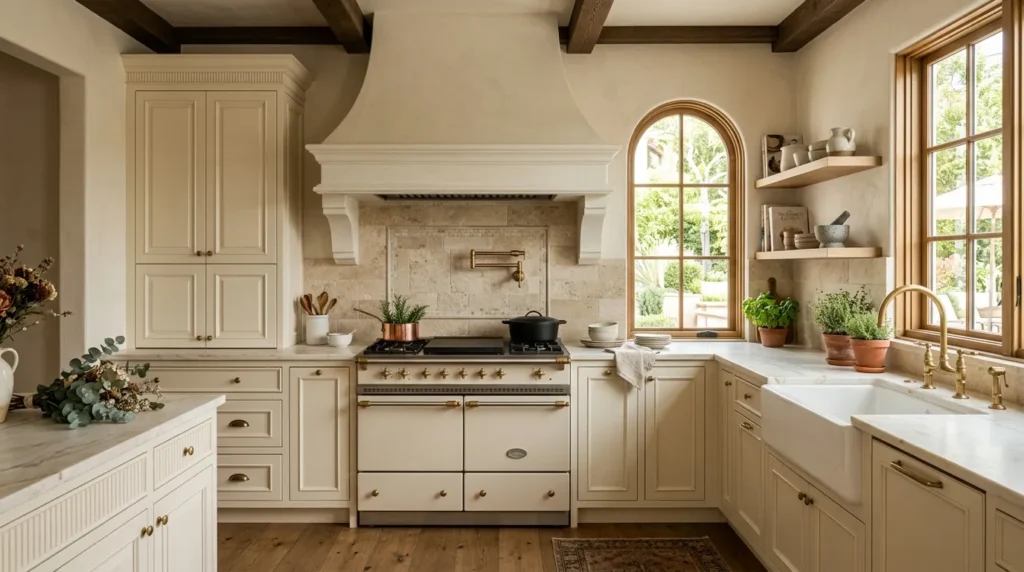
A range hood can be more than a functional appliance.
A plaster-look, wood-trimmed, or cabinetry-integrated hood can become one of the strongest architectural features in a French-inspired kitchen.
Its shape can also reinforce the overall design language.
A gently curved hood feels softer and more traditional.
A simple rectangular hood with molding can feel tailored and classic.
The key is proportion.
A hood that is too small can look disconnected.
One that is oversized can overwhelm the cooking area.
How To Style It
Treat the hood as part of the architecture.
Paint it in the cabinet color for a seamless appearance.
Alternatively, use a contrasting material such as plaster-look finish or natural wood.
Keep the area immediately around the hood relatively simple.
A traditional range, brass pot filler, or understated backsplash can reinforce the focal point.
Avoid adding too many decorative objects around the cooking zone because practical work areas benefit from clear surfaces.
4. Aged Brass Hardware
Quick Benefits
- Adds warmth
- Creates traditional character
- Works with cream cabinets
- Provides subtle contrast
- Updates simple cabinetry
Why It Works
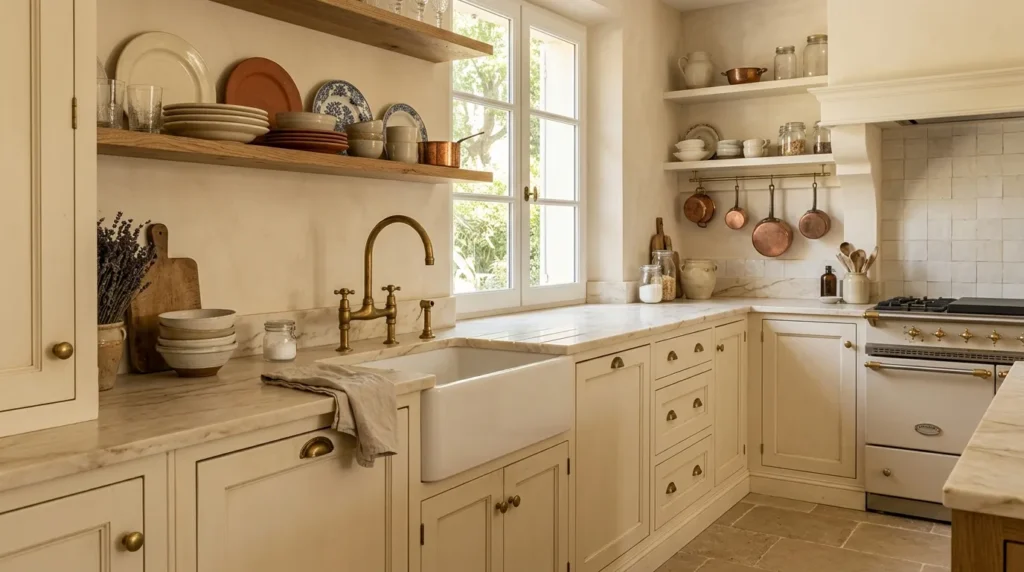
Hardware is one of the smallest kitchen details, but it can influence the entire appearance.
Aged brass, antique brass, and warm bronze finishes can create the softly patinated feeling associated with traditional European interiors.
Unlike highly polished gold, an aged finish generally looks more relaxed.
It also pairs naturally with cream, beige, sage, blue-gray, and wood tones.
How To Style It
Use cabinet knobs, pulls, and latches in a coordinated finish.
For drawers, choose pulls appropriate to their size.
For doors, knobs or smaller pulls can create a traditional appearance.
Consider matching or coordinating the faucet with the hardware.
Avoid mixing too many metallic finishes unless there is a clear reason for doing so.
Aged brass works particularly well when repeated in lighting or other small details.
The finish doesn’t need to dominate.
It simply adds warmth.
5. Stone Countertops
Quick Benefits
- Adds natural texture
- Creates timeless appeal
- Complements traditional cabinets
- Provides visual depth
- Works with warm color palettes
Why It Works
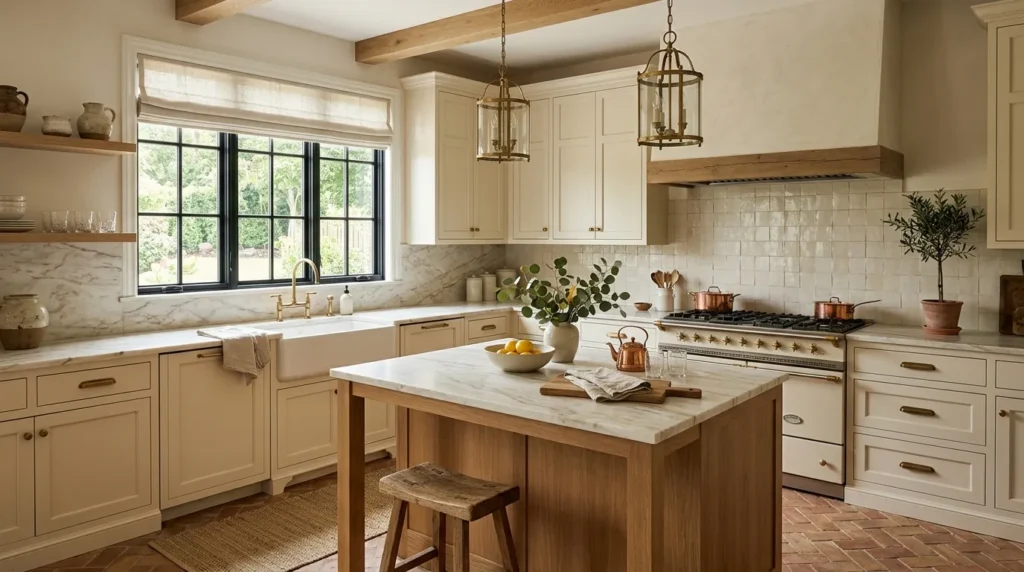
Natural stone or convincing stone-look surfaces can provide the grounding element in a French-inspired kitchen.
Subtle veining and natural variation are particularly effective because they prevent the countertop from looking overly uniform.
Marble, limestone-inspired surfaces, quartzite, and other appropriate materials can each create different effects.
The important consideration is how the countertop interacts with the cabinetry and backsplash.
A dramatic stone can become the focal point.
A quieter surface allows the cabinetry and architectural details to take center stage.
How To Style It
For a softer traditional kitchen, choose countertops with warm or muted undertones.
Pair them with cream cabinets and natural wood.
If the stone has prominent veining, keep the backsplash and surrounding finishes relatively simple.
For everyday kitchens, consider durability, maintenance, sealing requirements, and household use when selecting natural stone.
Beautiful materials also need to work with the way the kitchen is actually used.
6. Open Dish Shelves
Quick Benefits
- Adds character
- Makes dishes accessible
- Creates visual warmth
- Breaks up cabinetry
- Supports collected styling
Why It Works
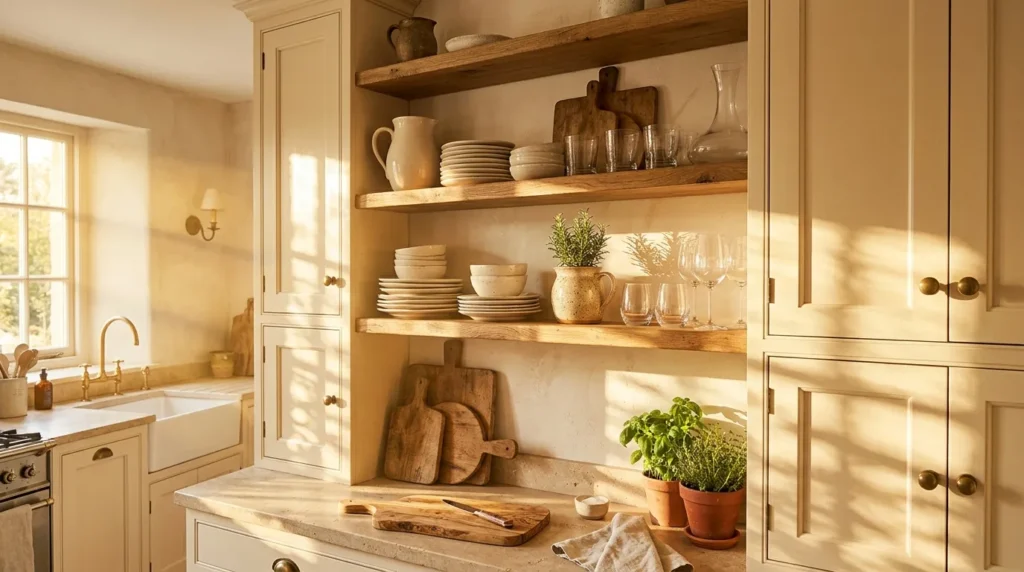
Open shelving can make a kitchen feel less formal and more lived-in.
Instead of hiding every dish behind cabinet doors, open shelves create an opportunity to display pieces that are both useful and beautiful.
Ceramic plates, glassware, wooden boards, pitchers, and small plants can contribute to the room’s personality.
The secret is restraint.
Too many objects can quickly create visual clutter.
How To Style It
Install shelves in a location that is practical for everyday use.
Use natural wood for warmth or painted shelving for a more integrated appearance.
Group dishes by color rather than displaying every different pattern.
Leave some open space.
Mix vertical and horizontal objects.
For example, lean a cutting board against the wall and stack a few plates beside it.
Add a small ceramic pitcher or vase.
Rotate decorative pieces seasonally rather than accumulating more items.
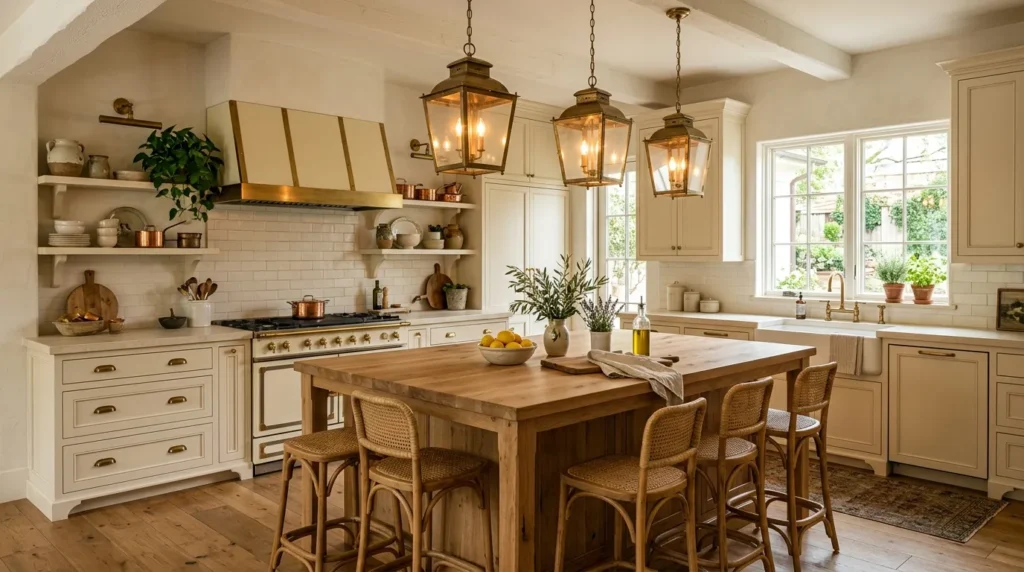
7. Vintage Lighting
Quick Benefits
- Adds atmosphere
- Creates a focal point
- Reinforces traditional character
- Provides practical illumination
- Complements aged finishes
Why It Works
Lighting can make a kitchen feel completely different.
French-inspired kitchens often benefit from fixtures with traditional silhouettes rather than ultra-minimal designs.
Pendant lights, lantern-style fixtures, shaded sconces, and aged-metal chandeliers can all work.
The fixture doesn’t need to look genuinely antique.
A well-designed vintage-inspired piece can create the same visual language while providing modern functionality.
How To Style It
Choose lighting based on the kitchen’s scale.
Use pendants over an island when appropriate.
Wall sconces can frame open shelving or a sink area.
A central fixture can anchor a larger kitchen.
Look for finishes that relate to the rest of the room.
Aged brass, bronze, blackened metal, and natural materials can all complement French-inspired cabinetry.
Layer the lighting so the kitchen remains useful for cooking while also feeling warm during meals and gatherings.
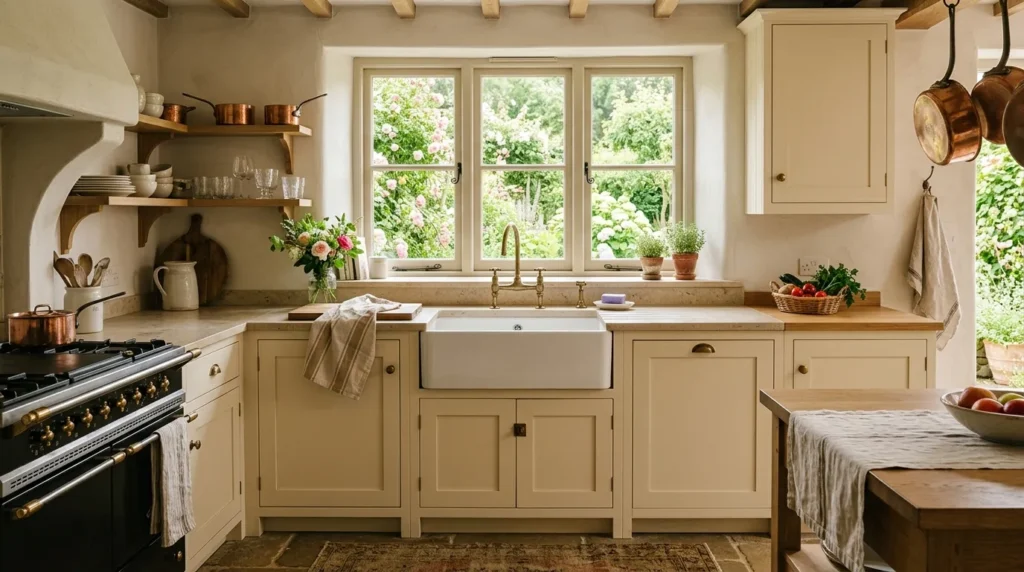
8. Farmhouse Sink
Quick Benefits
- Adds traditional character
- Provides a generous washing area
- Creates a strong focal point
- Works with classic cabinetry
- Blends practicality with style
Why It Works
A farmhouse-style sink has a distinctive front apron that immediately gives cabinetry a more traditional appearance.
It works particularly well with cream cabinets, natural stone, brass fixtures, and wood accents.
The shape is also practical for many households because it can provide a generous basin.
However, the right sink depends on the kitchen layout and cabinet configuration.
How To Style It
Pair the sink with a traditional bridge-style or simple curved faucet.
Coordinate the finish with cabinet hardware.
Place the sink beneath a window when the layout allows, creating a pleasant view while working.
Add simple linen towels nearby.
Avoid overcrowding the counter around the sink.
A clean, practical area helps the architectural details stand out.
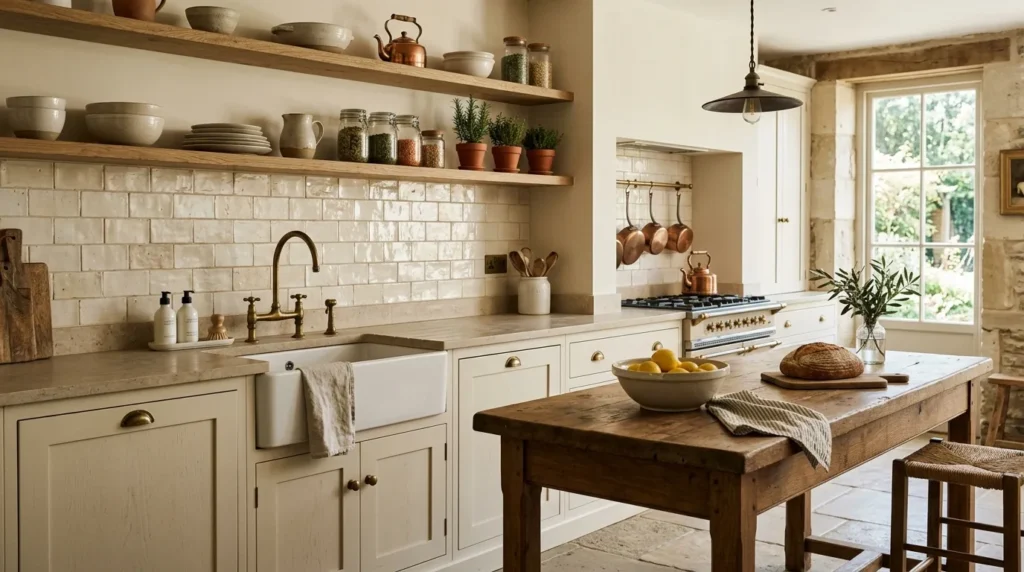
9. French Tile Details
Quick Benefits
- Adds texture
- Creates architectural character
- Supports traditional style
- Offers visual continuity
- Works with neutral cabinetry
Why It Works
Tile can introduce subtle pattern and craftsmanship without overwhelming the kitchen.
Handmade-look tiles, classic subway tiles, checkerboard floors, stone tiles, and softly irregular ceramic surfaces can all contribute to a French-inspired atmosphere.
The best choice depends on how much visual interest the rest of the room already has.
If the cabinetry is detailed and the countertops have strong veining, a quieter tile can provide balance.
How To Style It
Use warm white or cream tile for a timeless backsplash.
Consider subtle variation rather than perfectly identical pieces if you want a handmade appearance.
For flooring, natural stone or classic patterned tile can create a stronger architectural statement.
Keep grout colors coordinated with the overall palette.
Avoid combining several bold patterns in the same sightline.
One distinctive tile treatment is often enough.
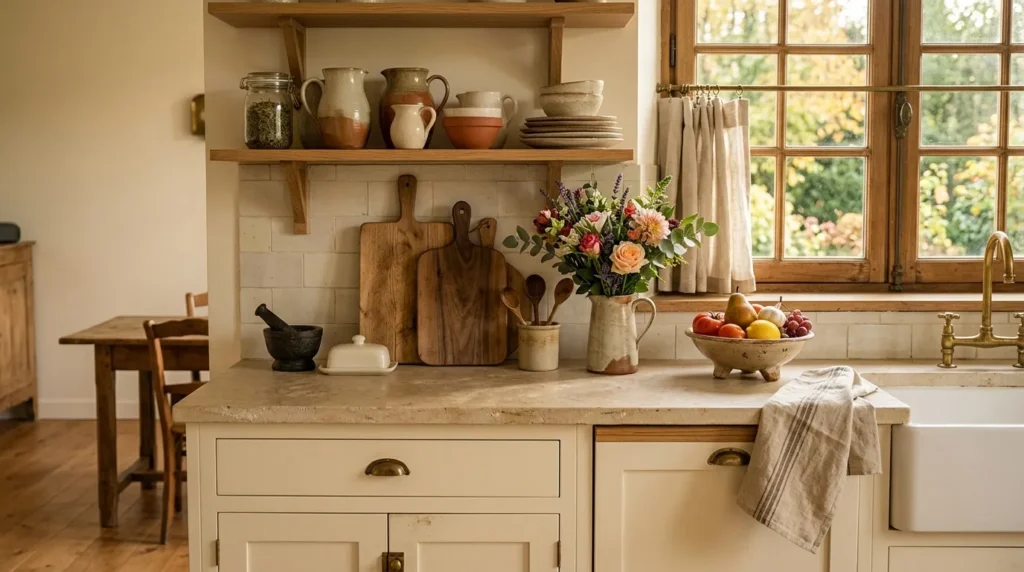
10. Elegant Kitchen Styling
Quick Benefits
- Adds personality
- Makes the kitchen feel lived-in
- Complements traditional architecture
- Creates visual warmth
- Keeps the design from feeling staged
Why It Works
The finishing details often determine whether a French-inspired kitchen feels authentic or overly themed.
The goal is to create a space that looks collected over time.
Everyday objects can become part of the decor.
A wooden cutting board, ceramic pitcher, linen towel, bowl of seasonal produce, or vase of garden flowers can bring life to the kitchen.
These details don’t need to be expensive.
What matters is how they relate to the materials and colors already in the room.
How To Style It
Choose a small collection of practical decorative pieces.
Display wooden boards against the backsplash.
Place a ceramic vessel on an open shelf.
Use linen towels in cream, beige, or muted colors.
Add seasonal flowers or branches when available.
Keep countertops mostly open.
Avoid filling every surface.
A few natural objects can make a traditional kitchen feel warm, relaxed, and genuinely lived in.
French Kitchen Color Palettes
Color is one of the easiest ways to establish the mood.
Cream + Natural Oak
Warm, light, and relaxed.
Cream + Aged Brass
Classic and refined.
Soft Sage + Natural Wood
Fresh and earthy.
Dusty Blue + Cream
Quietly traditional with a European feel.
Warm White + Walnut
Rich and sophisticated.
Beige + Muted Gray
Subtle and understated.
Use one dominant color and two or three supporting tones.
The result feels more cohesive than using many unrelated colors.
How To Make a Modern Kitchen Feel More French
You don’t need to renovate the entire kitchen.
Start with details that have a strong visual impact.
Change the Hardware
Warm aged brass can immediately soften contemporary cabinetry.
Add Wood
A wood island, shelf, stool, or cutting board can introduce warmth.
Upgrade Lighting
Replace overly basic fixtures with traditional silhouettes.
Display Ceramics
Open shelving provides an opportunity to introduce collected pieces.
Add Textiles
Linen towels and simple window treatments can soften hard surfaces.
Introduce Natural Elements
Fresh herbs, flowers, wood, stone, and seasonal produce bring life to the room.
Simplify the Countertops
Keep only useful or attractive objects visible.
French Kitchen Materials To Consider
A successful French-inspired kitchen usually depends as much on material selection as color.
Natural Wood: Adds warmth and variation.
Stone: Creates a grounded, timeless foundation.
Ceramic Tile: Introduces texture and craftsmanship.
Linen: Softens the harder kitchen surfaces.
Aged Metal: Adds patina and traditional character.
Ceramic: Provides handcrafted visual interest.
Woven Fibers: Add warmth through baskets and seating.
Combining a few of these materials is generally more effective than using all of them.
Small French Style Kitchen Ideas
A compact kitchen can still have traditional elegance.
Choose lighter cabinet colors to preserve an airy feeling.
Use open shelves selectively.
Choose a smaller wood island or movable worktable when space permits.
Use one distinctive light fixture instead of several competing features.
Keep countertops clear.
Choose furniture-style stools that can tuck neatly beneath an island or peninsula.
A small kitchen often benefits from fewer decorative elements because the architectural details become easier to appreciate.
Common French Kitchen Decorating Mistakes
Using Too Many Ornate Details
French-inspired does not mean every surface needs molding, carving, or decorative objects.
Choosing Cool White Everywhere
Very cool whites can make warm wood and brass feel disconnected.
Mixing Too Many Metals
Several competing finishes can reduce visual cohesion.
Overloading Open Shelves
Shelves need negative space.
Ignoring Practicality
A beautiful kitchen still needs efficient work zones and accessible storage.
Making Everything Match
Collected interiors usually have variation.
Overusing Vintage Decor
A few traditional references feel more sophisticated than turning the kitchen into a historical replica.
Ignoring Lighting
Even beautiful cabinetry can look flat under poor illumination.
FAQ
What makes a kitchen look French style?
French-inspired kitchens often combine warm cabinetry, natural wood, stone, traditional hardware, classic lighting, ceramic tile, and collected accessories. The style emphasizes comfortable elegance rather than perfect symmetry. Architectural details and natural materials create much of the character.
What colors are common in French kitchens?
Cream, warm white, beige, muted sage, dusty blue, soft gray, and natural wood tones are popular choices. These colors create a softer backdrop for stone, brass, ceramics, and traditional cabinetry.
How can I make my kitchen look French without remodeling?
Start with smaller changes. Replace cabinet hardware, introduce natural wood accessories, add traditional lighting, display ceramics, use linen textiles, and bring in fresh flowers or herbs. These details can shift the overall atmosphere without replacing the major elements of the kitchen.
Are white cabinets good for a French-style kitchen?
Yes, particularly when the white has a warm or creamy undertone. Creamy cabinetry pairs beautifully with natural wood, stone, aged brass, and traditional tile. Very cool white can create a sharper contemporary appearance.
What countertop works best with French-style cabinets?
Natural stone and stone-look surfaces can work beautifully. Marble, limestone-inspired finishes, quartzite, and other surfaces with subtle natural variation can complement traditional cabinetry. Consider durability and maintenance as well as appearance.
Should French kitchen cabinets have hardware?
Hardware adds useful visual detail and can reinforce the traditional character. Aged brass, antique brass, bronze, and similar warm finishes pair particularly well with cream, sage, beige, and natural wood.
How do I make a French kitchen feel modern?
Keep traditional references but simplify them. Use clean cabinet profiles, restrained hardware, uncluttered countertops, contemporary appliances, simple lighting, and natural materials. The combination creates a kitchen that feels classic without looking dated.
Conclusion
French-inspired kitchen design is less about copying a specific room and more about creating a feeling.
Warm cabinetry, natural wood, stone surfaces, traditional lighting, aged hardware, and thoughtful accessories can work together to create a kitchen that feels elegant while remaining comfortable enough for everyday cooking.
You don’t need every detail.
In fact, restraint often makes the style more convincing.
Start with one strong feature, such as cream cabinetry, a natural wood island, a classic range hood, or a farmhouse sink. Then layer in smaller details that support it.
Choose materials that develop character.
Leave room on the shelves.
Keep countertops useful and uncluttered.
Mix traditional shapes with practical modern features.
Most importantly, make the kitchen work for the people who use it.
A French-inspired kitchen can be beautiful enough for entertaining while still feeling relaxed enough for morning coffee, family dinners, baking projects, and everyday routines.
That balance between elegance and comfort is what makes the style so enduring.
Related Articles
- 10 French Style Kitchen Ideas with Charming Vintage Details
- 10 Blue Gray Kitchen Cabinets with Timeless Design
- 10 Modern Kitchen Ideas with Warm Natural Wood
- 10 Kitchen Decor Ideas with Elegant Open Shelving
- 10 Farmhouse Kitchen Ideas with Timeless Character