Metal Spikes vs Plastic Spikes: Anchoring Edge Restraint into Compacted Gravel
Introduction
Choosing between metal vs plastic spikes for edge restraint depends largely on the density of your sub-base and the expected climate conditions of your project site. While metal provides superior shear strength for heavy-duty applications, plastic alternatives offer distinct advantages in specific environments where conductivity or corrosion are primary concerns.
This article examines the mechanical differences between these materials to help you determine the best stakes for gravel base edging. We cover the performance characteristics of high-density polyethylene and galvanized steel, the specific tool requirements for proper installation, and how environmental factors like thermal expansion and soil compaction density influence long-term stability. By reviewing these technical considerations, you can select the appropriate hardware to ensure your landscaping projects remain secure and properly aligned over time.
Metal vs Plastic Spikes Overview
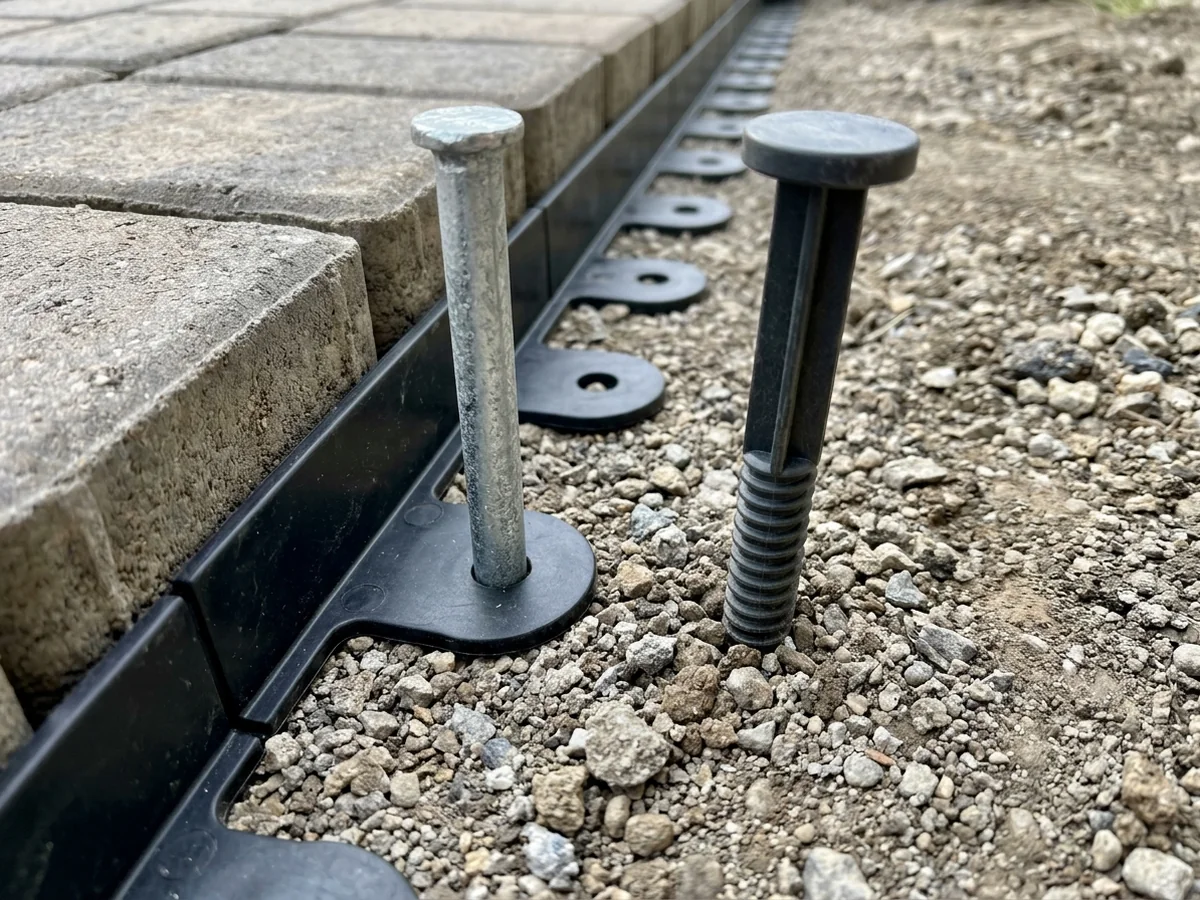
Metal and plastic spikes serve as the primary anchoring systems for edge restraint, with the choice between them depending on the specific requirements of your hardscaping project. Choosing the right material ensures the stability of your paver borders when installing paver edging in gravel.
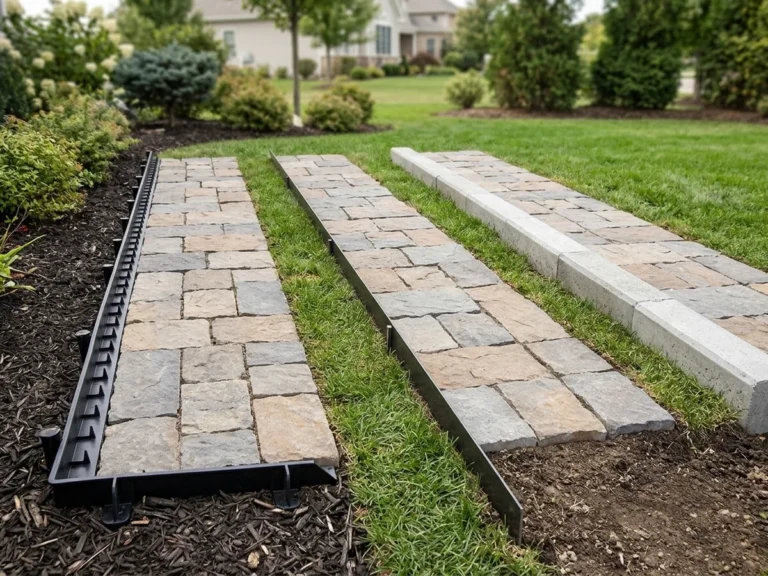
Edge restraint systems are essential in hardscaping to maintain the structural integrity of your design. By anchoring the perimeter of a project, these systems prevent pavers or stones from shifting outward under pressure. When working with a compacted gravel base, the anchoring hardware must penetrate deeply enough to resist lateral movement, commonly caused by foot traffic or environmental factors like frost heave.
Material selection for these systems generally involves a choice between galvanized steel and high-density polyethylene. Each option offers distinct mechanical properties that influence how the stake interacts with the surrounding substrate:
- Galvanized steel spikes typically provide high shear strength, which can be advantageous in heavy-traffic areas where horizontal forces are frequent.
- Plastic anchoring systems are often non-conductive and may be preferred in environments where underground utilities are a concern.
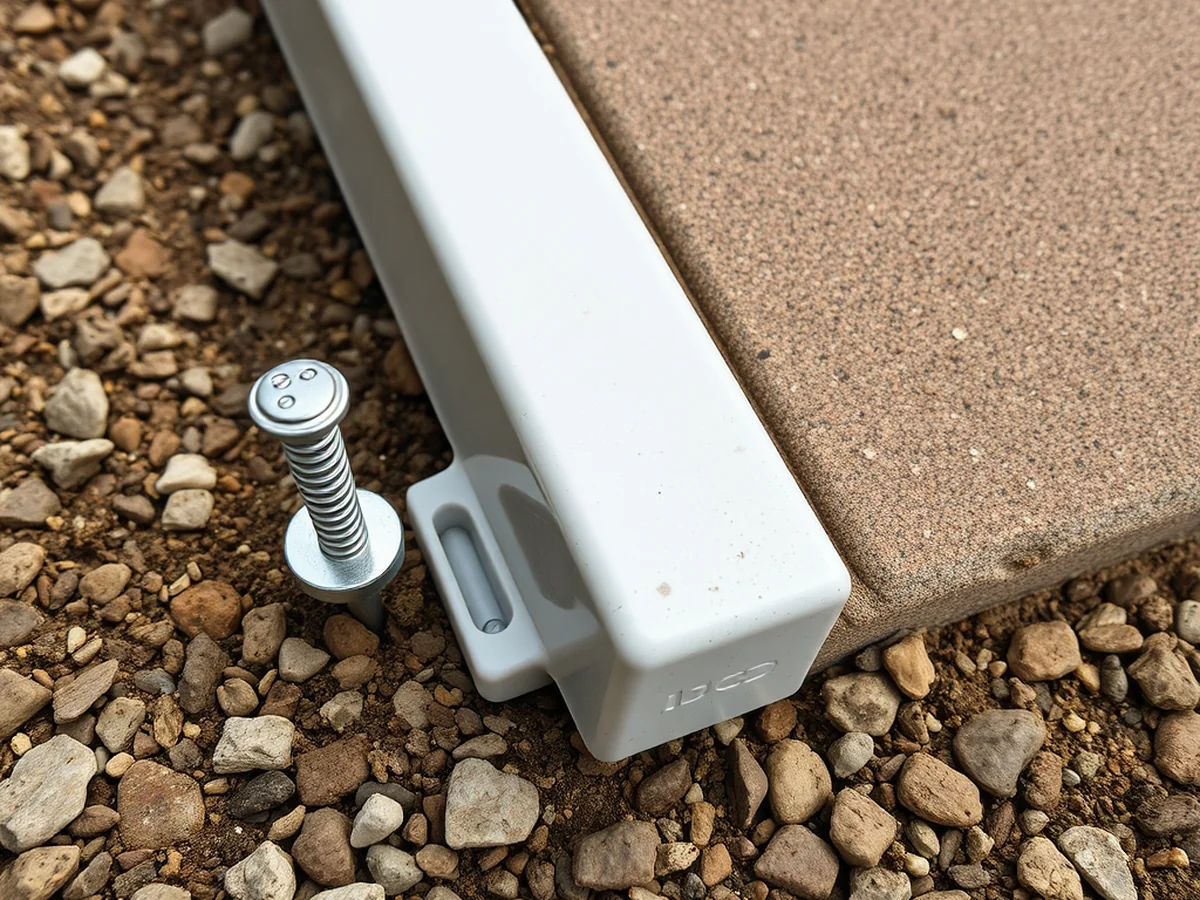
- The design of each spike, whether smooth metal or barbed plastic, affects how firmly the fastener grips the gravel base during and after installation.
When comparing these materials, consider the long-term environmental exposure of your project site. Steel vs plastic landscape spikes each react differently to temperature fluctuations. Because plastic materials often have a higher coefficient of thermal expansion, they can experience movement during significant temperature swings, potentially leading to loosening within the compacted base. Conversely, metal options are subject to environmental corrosion over time depending on soil acidity and moisture levels.
Ultimately, selecting the best stakes for gravel base edging requires balancing the mechanical needs of your site against the expected longevity of the materials. Proper penetration depth remains the most critical factor for ensuring that your edging remains fixed against the outward pressure of the paver system.
Material Performance and Durability

Galvanized steel and high density polyethylene represent the two primary options for securing edging, each offering distinct mechanical advantages depending on site conditions. Steel is generally selected for its high shear strength, which provides necessary resistance against the lateral pressure exerted by paver movement. Conversely, high density polyethylene is favored for its flexibility and non-conductive properties, though it may behave differently under extreme environmental stress.
Environmental factors significantly influence landscape edging stake durability over time. Galvanized steel provides a robust barrier against corrosion, though it may remain vulnerable in highly acidic soils. If you are working in an area with high soil acidity, the protective zinc coating may degrade faster, potentially leading to rust. High density polyethylene faces different challenges, as prolonged exposure to intense UV radiation can eventually impact the material structural integrity. These long term environmental effects should be considered during the initial planning phase of your hardscaping project.
The mechanical interaction between the spike and the gravel base depends heavily on the material shear strength and thermal characteristics. Because steel vs plastic landscape spikes react differently to temperature fluctuations, your choice may impact the long term stability of the installation. Plastic materials often possess a higher coefficient of thermal expansion, which can lead to loosening or shifting within a compacted gravel base during extreme temperature swings. Steel maintains its shape more consistently under these thermal cycles, which helps preserve the tight fit of the edge restraint against the base.
- Steel spikes typically offer higher rigidity, making them well suited for high traffic areas where pavers face significant lateral force.
- High density polyethylene spikes are often designed with barbs or fins to improve grip in loose substrates where friction is the primary method of retention.
- The installation of steel often requires a rubber mallet to ensure the head remains intact, whereas plastic variants generally require more care to avoid bending or snapping the head during impact.
Installation Requirements and Tools
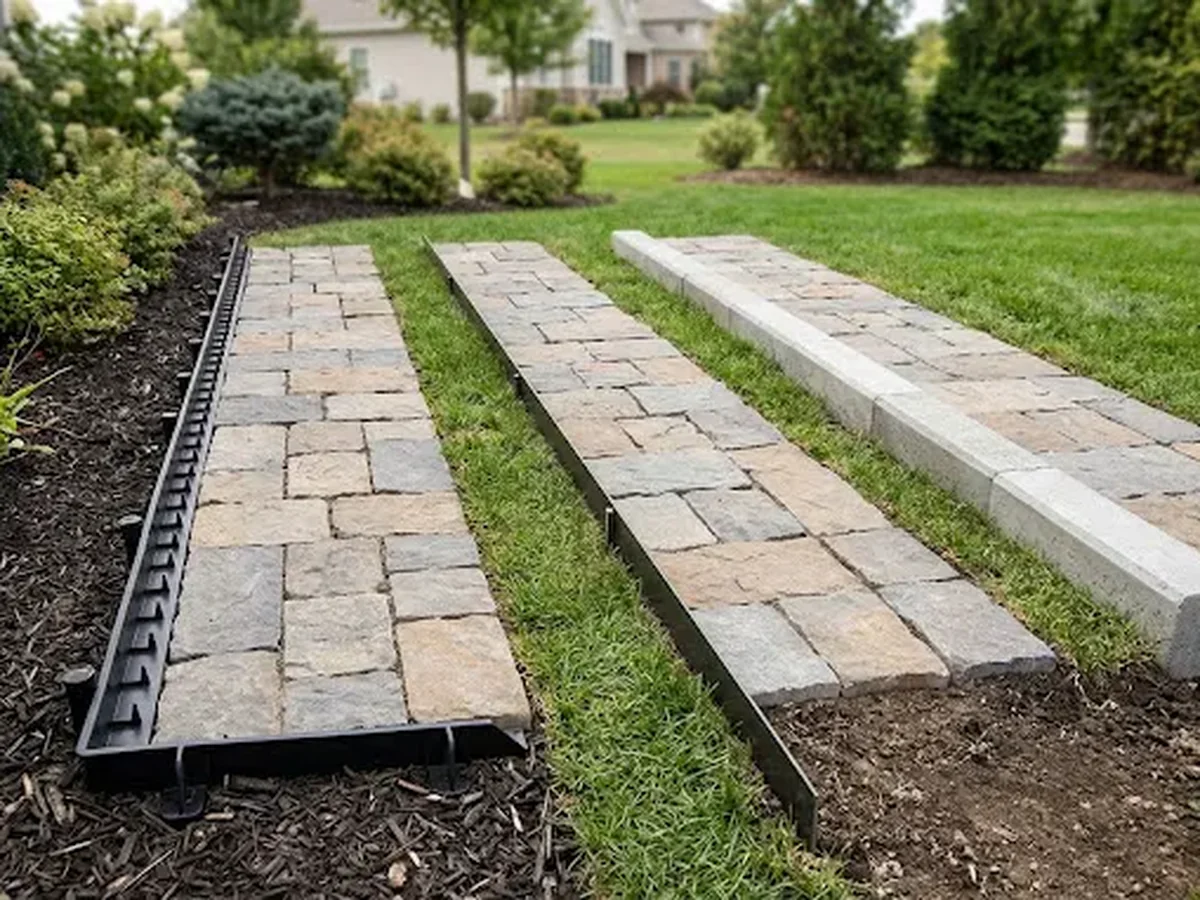
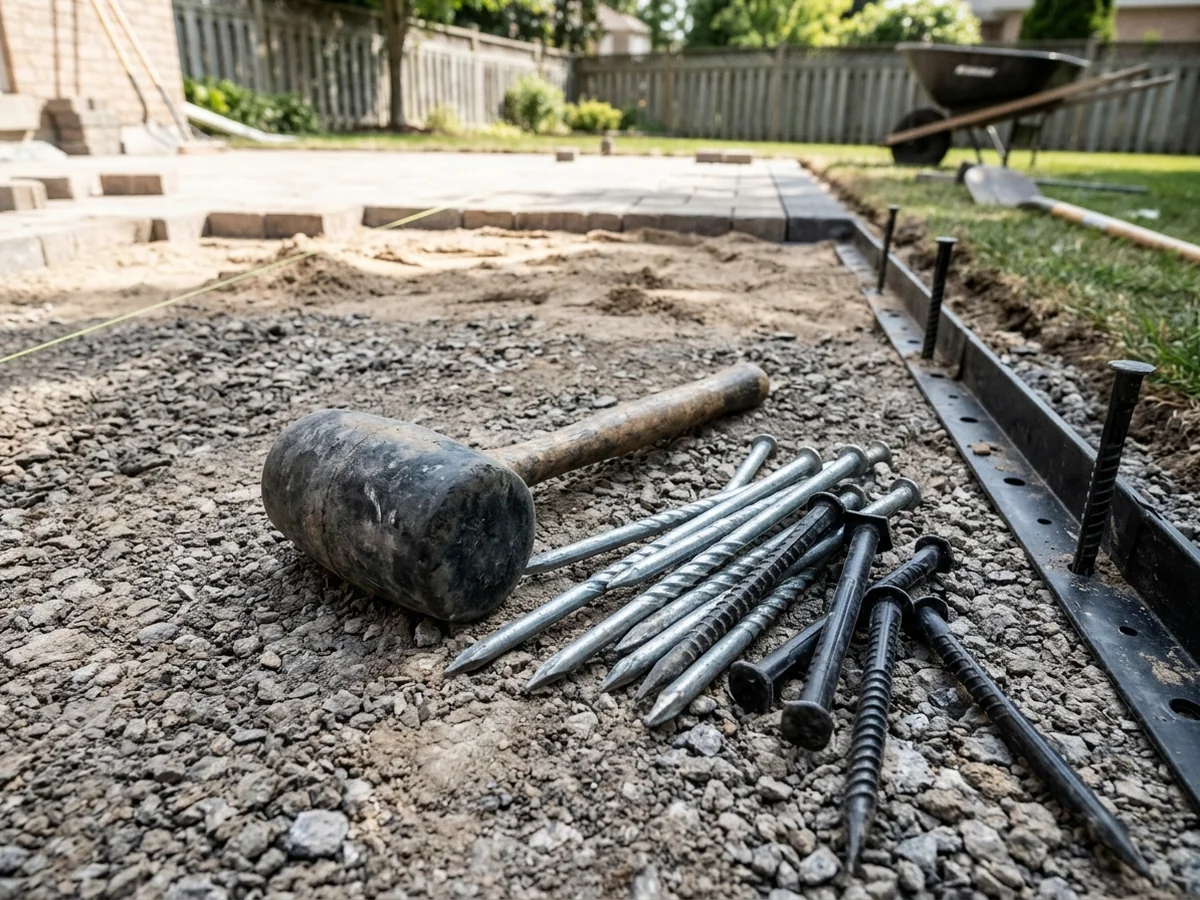
Installing landscape edging spikes requires specific tools tailored to the material composition of the hardware and the resistance of the substrate. While both galvanized steel and high-density polyethylene options serve to secure edging, their mechanical properties dictate different handling methods during a landscape edging installation guide process. Using the incorrect tool can damage the stake head or compromise the integrity of the soil bond.
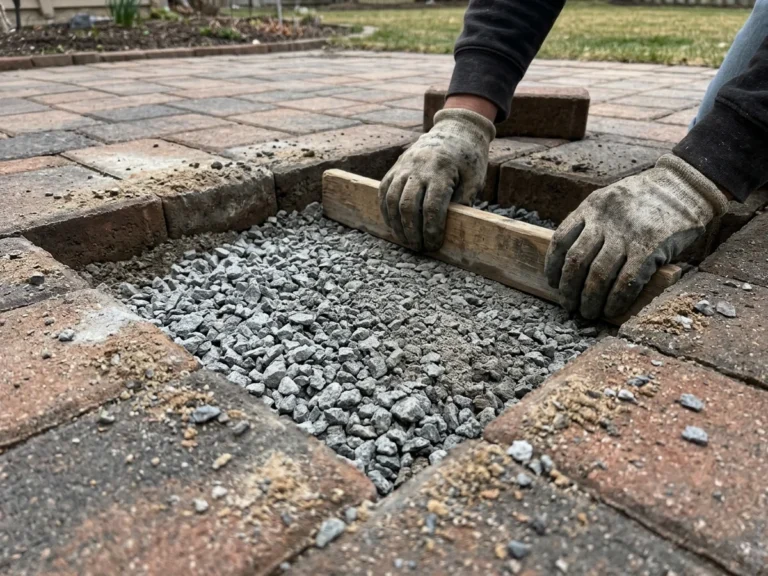
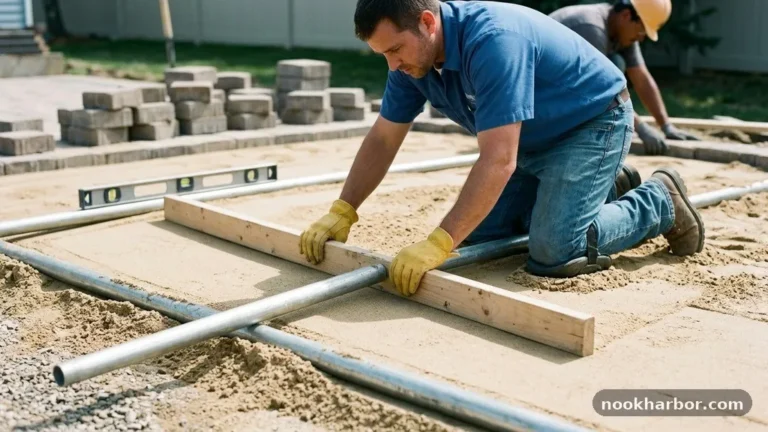
Proper substrate preparation is essential before attempting to drive any stake into the ground. Compacted gravel requires a uniform, dense surface to ensure that the chosen fasteners maintain their position and resist movement over time. If the base material is too loose, the spikes may lack the necessary friction to hold the edging firmly in place, leading to shifting or tilting after installation.
The following list outlines the primary equipment and considerations for successfully placing these fasteners into your paver base:
- A rubber mallet is generally preferred for steel options to prevent the metal head from deforming or mushrooming during impact.
- Heavier-duty steel stakes often require more force to penetrate through dense, compacted gravel compared to plastic alternatives.
- Plastic stakes may be driven with a standard hammer, though care is necessary to avoid cracking the material at the neck.
- Ensuring the substrate has been properly tamped before spiking reduces the physical effort required to drive the fastener to the full depth.
- Finned or barbed designs on plastic fasteners are intended to improve grip within the gravel, which may increase the resistance felt during insertion.
- Checking for underground utility lines remains a critical safety step regardless of which material you select for your project.
When comparing installation effort, steel stakes typically offer superior rigidity, allowing them to penetrate difficult soil densities with less risk of bending. Conversely, plastic options are lighter and easier to transport, but they may be more difficult to drive into highly compacted gravel without risking structural failure. Achieving a stable result depends on matching the mechanical strength of the stake to the density of your specific landscape environment.
Comparing Spike Performance
Metal fasteners typically offer higher shear strength and resistance to movement in dense substrates, whereas plastic options provide benefits in specific non-conductive or moisture-prone environments. Selecting between steel and synthetic materials depends heavily on the expected mechanical load and environmental stressors of your specific landscape project.
| Attribute | Metal Spikes | Plastic Spikes |
|---|---|---|
| Shear Strength | High | Moderate |
| Thermal Stability | High | Lower |
| Corrosion Risk | Yes | No |
| Electrical Conductivity | Yes | No |
For high traffic areas where heavy pavers or frequent footfalls create lateral pressure, the shear strength of galvanized steel makes it a more reliable choice. These fasteners resist bending better than their synthetic counterparts when driven into compacted gravel. While steel provides superior structural support, it remains susceptible to oxidation over time if the protective coating is compromised. In residential garden borders with lighter loads, high-density polyethylene stakes are often sufficient.
Thermal expansion and contraction represent a critical factor in long-term stability. Because synthetic materials expand and contract more noticeably than metal, they may experience minor loosening in regions with extreme temperature swings. This movement can eventually reduce the friction holding the edging in place. Conversely, steel maintains a more consistent size, which helps preserve the integrity of the installation in volatile climates. When working near underground utilities, the non-conductive nature of plastic provides a safer installation profile, though users should weigh this against the potential for decreased hold in highly compacted bases.
Soil Conditions and Anchoring

Selecting the right hardware for installing paver edging in gravel depends on how the material interacts with the density and movement of your base. Your choice must account for the mechanical grip required to hold the edge against shifting ground while resisting environmental stressors.
Gravel grain size significantly dictates how well a stake holds. Coarser, angular gravel creates natural friction, which benefits smooth metal shafts by locking them in place through sheer pressure. In contrast, finer or rounded aggregates often require the additional surface area provided by textured or barbed plastic designs to prevent the spike from slipping upward over time.
Frost heave remains a primary concern for long-term stability. When water trapped in the substrate freezes and expands, it exerts upward pressure on the anchoring system. Materials with higher thermal expansion rates, such as high-density polyethylene, may experience structural fatigue or loosening as the ground cycles through temperature extremes. Galvanized steel generally maintains its shape better under these seasonal stresses, though it must be monitored for potential corrosion in moisture-retaining soils.
Proper penetration depth is essential to bypass the loose top layer of bedding material and reach the stable, compacted base below. To ensure the restraint does not drift, your anchors must reach deep enough to anchor into the denser, lower strata. Relying on shallow penetration often leads to edging failure, as the weight of pavers will push the restraint outward if the spikes are not firmly seated in the compacted zone.
- Ensure your chosen length clears the depth of your paver base and the bedding sand layer completely.
- Check that the diameter of the spike allows for penetration without excessive disruption to the compaction density of the base.
- Verify that the anchor head design is compatible with your specific edging profile to prevent pull-through.
Using the correct installation tool is just as important as the material selection itself. While steel options often require a rubber mallet to avoid damaging the head during impact, plastic alternatives are typically more forgiving but may require specialized driving caps. Matching the tool to the material ensures the spike reaches its full intended depth without bending or losing its structural integrity during the process.
Avoiding Common Spike Installation Errors

Preventing failure in landscape edging projects requires strict attention to material compatibility, precise placement, and proper force application during installation. Errors such as selecting incompatible metals, miscalculating spacing, or damaging the anchor during impact significantly reduce the longevity of your gravel base restraint.
Improper installation techniques often manifest as loose edging or premature degradation of the hardware. To ensure a stable and long-lasting border, follow these essential guidelines:
- Select anchors made of materials that match your edging profile to avoid galvanic corrosion, which occurs when dissimilar metals interact in moist or acidic soil conditions.
- Maintain consistent spacing between each anchor point to ensure even load distribution, as gaps that are too wide can cause the edging to buckle under the weight of the paver base.
- Drive every anchor at a straight vertical angle to reach the required depth, as tilted or shallow placement fails to provide the necessary friction against the compacted gravel.
- Avoid using excessive force or metal-on-metal impact, which can bend the shank or mushroom the head of the anchor and compromise its structural integrity.
- Check the manufacturer recommendations for the specific depth required for your soil type, because failing to reach the appropriate depth prevents the anchor from effectively resisting frost heave.
- Inspect the anchor head after installation to confirm it sits flush against the edging flange, as overdriving the stake can crack or weaken the plastic or metal housing.
Galvanic corrosion represents a specific risk when using metal stakes near metal edging components. When two different metals are in contact within an electrolyte like damp soil, the more reactive metal may corrode rapidly. This process weakens the connection and can lead to staining or total failure of the anchoring system. Always verify that your chosen stakes are compatible with your specific edging material.
Finally, the physical condition of the stake matters as much as its placement. Bending a stake during installation creates a weak point that can snap under the pressure of shifting ground. Similarly, overdriving a stake can cause the material to splinter or deform, preventing it from creating a tight seal against the edging. Using the correct tools, such as a rubber mallet, helps apply force evenly without damaging the fastener.
Environmental Impact of Spike Materials
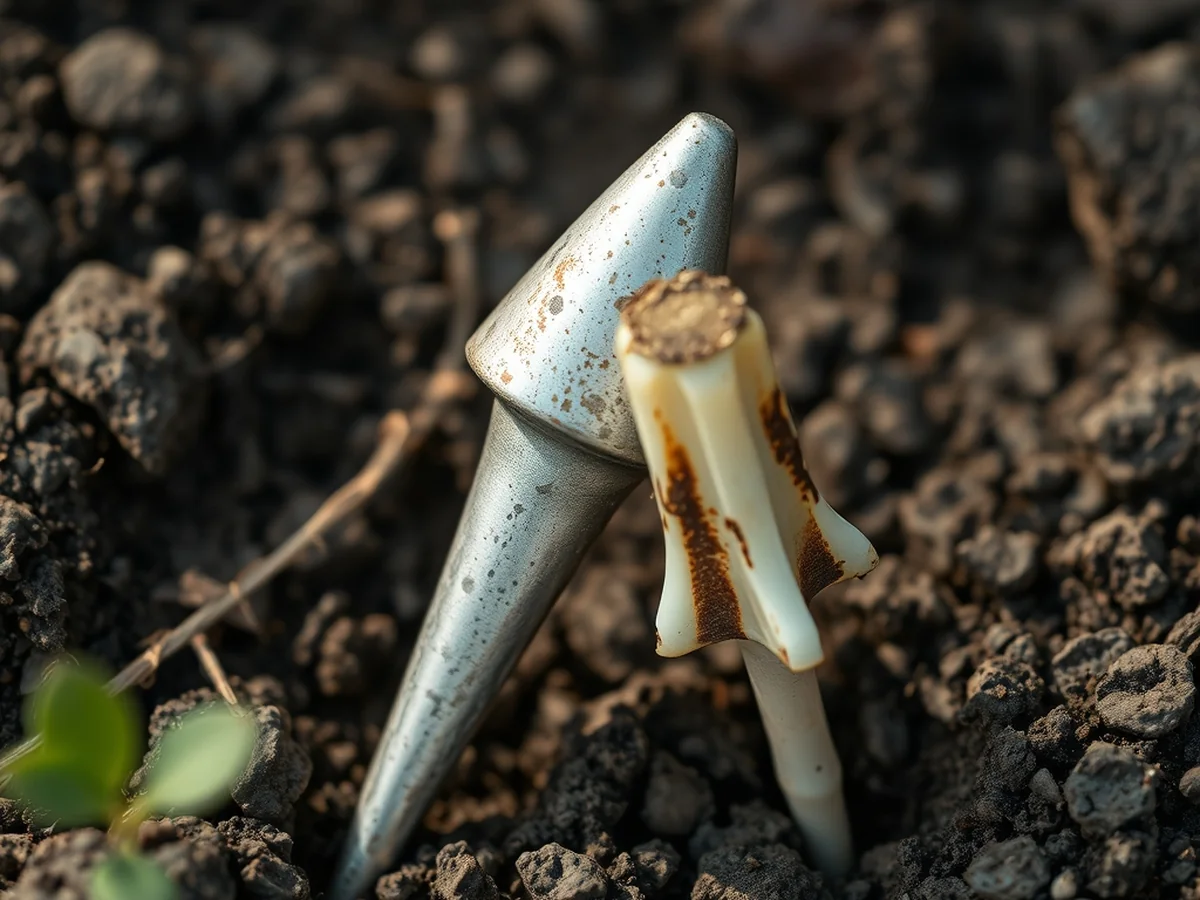
Choosing between galvanized steel and petroleum-based plastics involves weighing the distinct ecological footprint each material leaves in your landscape. Steel is a metal that can be repurposed indefinitely through recycling, whereas plastic components are derived from fossil fuels and often present greater challenges for sustainable disposal.
Plastic spikes, typically composed of high-density polyethylene, may experience gradual degradation when exposed to long-term environmental stressors like heat and UV radiation. As these materials weather over many years, they can potentially release microplastic particles into the surrounding soil. While the volume of material in a single installation is relatively small, these synthetic fragments do not biodegrade and may persist in the local ecosystem indefinitely.
Galvanized steel offers a different set of environmental considerations. While the production of steel is energy-intensive, the material is highly recyclable at the end of its useful life. Metal stakes are generally more durable in harsh conditions, which can lead to longer service intervals and reduced frequency of replacement. When choosing your hardware, consider the following factors regarding sustainability:
- The potential for microplastic accumulation in garden soil from synthetic materials.
- The recyclability profile of metal versus plastic components.
- The longevity of the material, which influences how often you need to replace anchoring systems.
Ultimately, the environmental impact of your project depends on balancing immediate material costs with long-term durability. Steel generally provides a more circular lifecycle due to its high recycling potential, while plastic choices require an assessment of how the material behaves in your specific climate. By selecting products designed for maximum longevity, you minimize the frequency of replacements and reduce the overall amount of waste generated by your landscaping projects.
Professional Advice for Edge Restraint
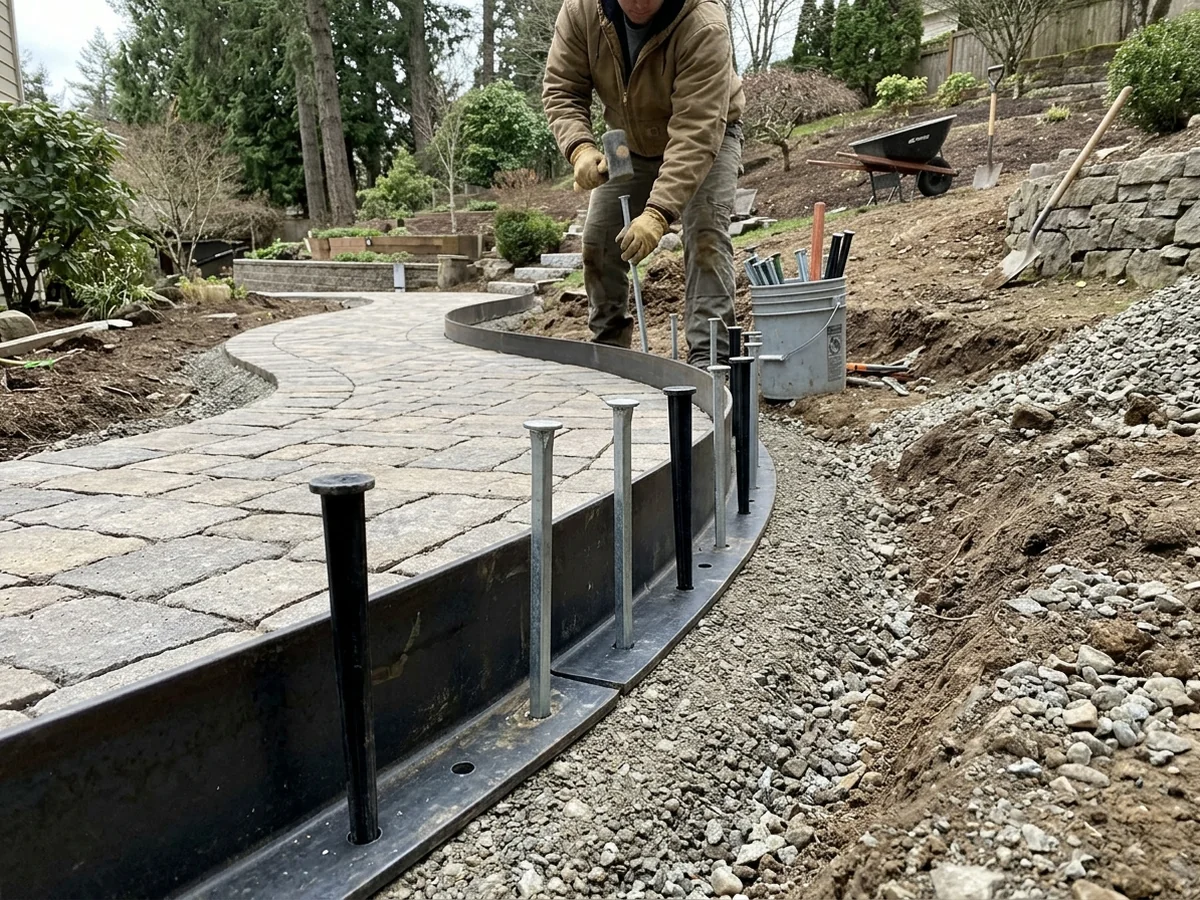
Consult a professional landscaper or geotechnical engineer when your project involves complex soil conditions, steep slopes, or areas with high water tables. While many edge restraint installations are suitable for homeowners, specific site challenges often exceed standard DIY capabilities. Experts can evaluate soil density and drainage requirements to ensure your edging remains stable over time.
Safety is a critical concern that requires careful planning before you begin any excavation. Always identify the location of underground utilities, such as gas lines, water pipes, or electrical conduits, before driving any stakes into the ground. Striking a utility line can cause significant damage and create immediate safety hazards. Contact your local utility locating service to have all underground lines clearly marked on your property before breaking ground.
Complex soil engineering is necessary when dealing with expansive clay, loose fill, or extreme freeze-thaw cycles. In these environments, simple hardware choices may not provide the long-term holding power required to prevent lateral movement. Professionals use specific compaction metrics and soil analysis to determine the appropriate length and material for anchoring systems. Relying on an expert ensures that your hardscaping maintains its structural integrity regardless of environmental shifts.
Consider reaching out for a professional site assessment if you notice the following conditions:
- The ground shows evidence of significant settling or excessive moisture retention.
- The project involves large-scale retaining walls or high-traffic structural boundaries.
- You are uncertain about the depth or proximity of utility lines beneath your chosen path.
- The landscape design requires advanced drainage solutions to manage surface runoff.
Prioritizing professional guidance for difficult terrain protects your investment and ensures the landscape remains safe and functional. If a site presents unknown variables regarding soil stability or utility proximity, it is safer to pause the project until you have secured an expert opinion. Proper planning prevents costly repairs and safety incidents, allowing your hardscaping project to succeed on stable, well-engineered ground.
FAQ
Which spike material lasts longer in compacted soil?
Galvanized steel typically offers superior long-term structural integrity in dense, compacted gravel compared to plastic alternatives. While both materials perform well initially, steel is generally more resistant to the mechanical stress of shifting earth and frost heave over time.
Do I need a hammer or mallet to install these?
You should use a rubber mallet for installing steel spikes to avoid damaging the head or causing it to mushroom during impact. Plastic spikes are often driven in with a standard hammer, though care is still required to prevent cracking the material against dense substrate layers.
Which spike is easier to remove if I make a mistake?
Plastic spikes are generally easier to extract from gravel bases because they have less surface friction and are less likely to deform under the pulling force. Steel spikes, particularly those with textured shanks designed for high pull-out resistance, often require a specialized extraction tool or significant leverage to remove without disturbing the surrounding paver base.
Are plastic spikes strong enough for heavy pavers?
Plastic spikes can provide sufficient restraint for lighter garden borders, but steel is frequently recommended for high-traffic areas or heavy paver installations where lateral shear forces are greater. You should assess the specific load requirements of your project before choosing between steel vs plastic landscape spikes for edge restraint.
Do temperature swings affect the choice of material?
Plastic materials often have a higher coefficient of thermal expansion, which can lead to loosening or movement in the edging during extreme temperature cycles. Steel remains more dimensionally stable in varying climates, making it a reliable choice for maintaining consistent pressure against your hardscaping borders.
Conclusion
The final choice between metal and plastic depends primarily on the expected load of your hardscape and the specific environmental conditions of your site. Evaluate your project needs by considering climate-related movement and the intensity of foot traffic near the edging. When researching metal vs plastic spikes for edge restraint, prioritize materials that offer sufficient shear strength for your base density while remaining compatible with your local frost cycles. Once you have assessed these factors, select the spike material that balances long-term structural integrity with the ease of installation required for your specific landscape design.
You might also like: How Deep Should You Dig for a Paver Patio (The 4″ to 6″ Ba