Why You Must Place Non-Woven Geotextile Fabric Directly on Native Clay Soil
Introduction
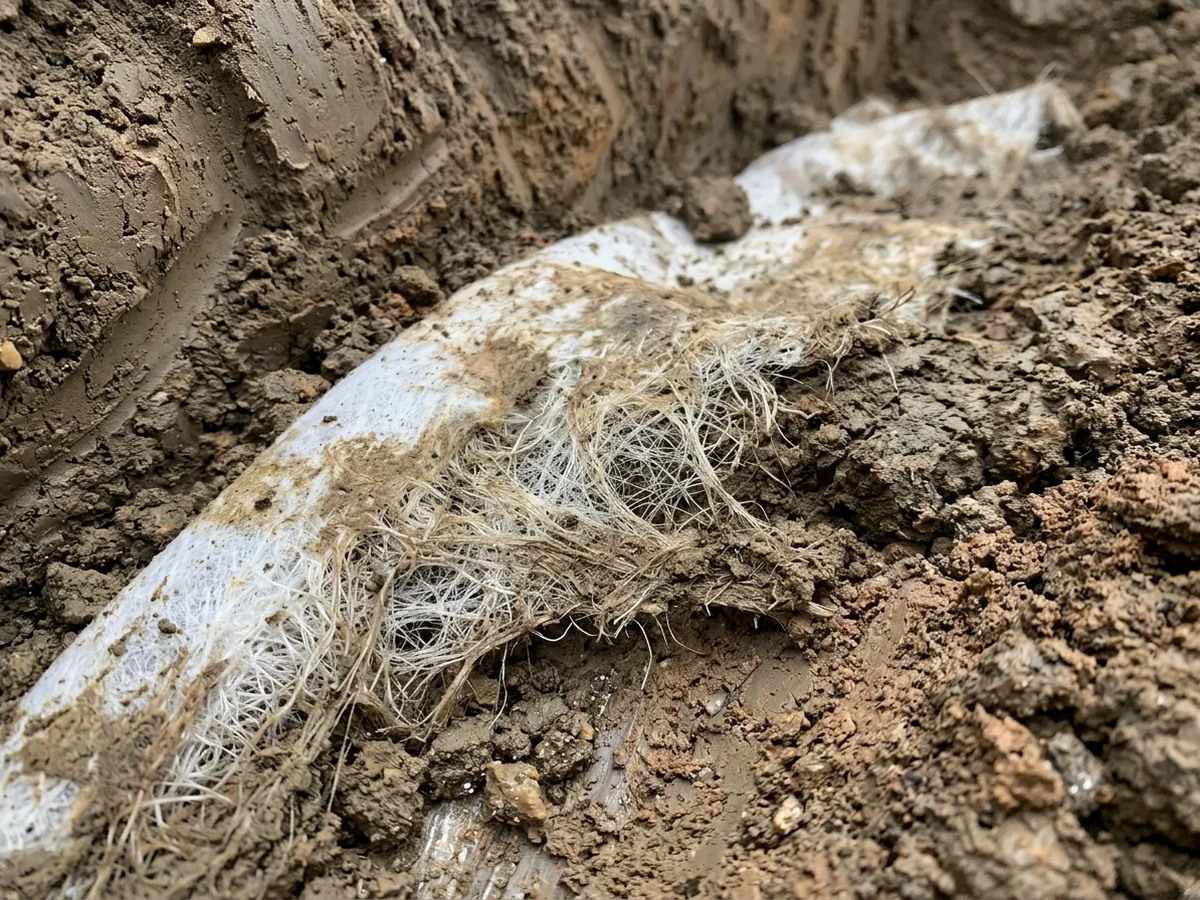
Placing a non-woven geotextile on clay soil provides the critical separation needed to maintain the structural integrity of overlying aggregate layers. Installing a non-woven geotextile on clay soil effectively manages the distinct mechanical properties of fine-grained subgrades to prevent long-term pavement or driveway failure.
This article examines the engineering justification for using this material, focusing on its role in filtration, drainage, and load distribution. You will learn how to evaluate specific soil conditions to determine the appropriate fabric weight and performance characteristics required for your project. The following sections cover technical considerations such as preventing aggregate contamination in clay, maintaining soil permeability, and ensuring the long-term stability of your subgrade through proper material selection.
Separation Benefits in Clay
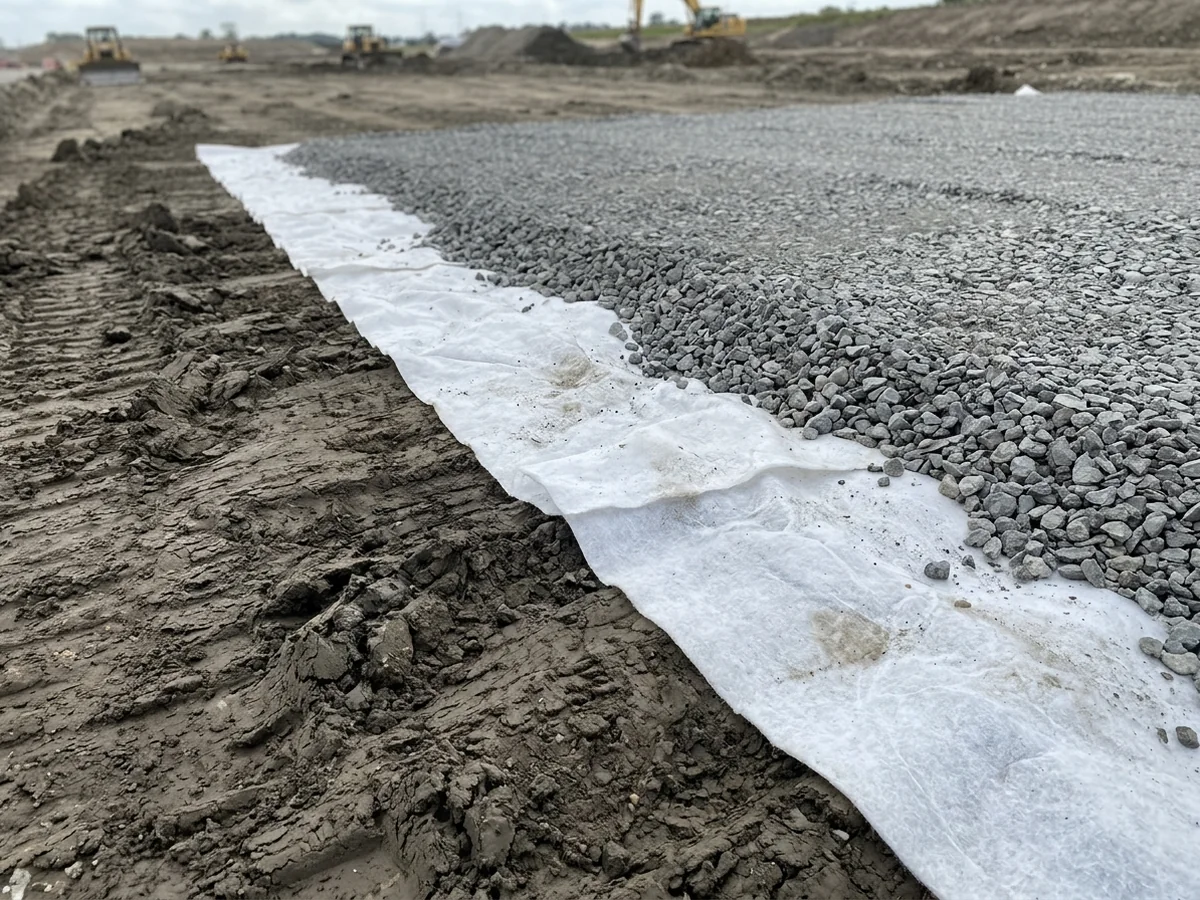
Placing a non-woven geotextile over native clay soil provides a critical barrier that maintains the structural integrity of overlying aggregate layers. By functioning as a permanent separation layer, this fabric prevents the intermixing of heavy, fine-grained clay particles with coarser base materials, which is essential for effective subgrade stabilization.
Clay presents unique engineering challenges compared to granular substrates because of its high sensitivity to moisture. When moisture levels fluctuate, clay particles can migrate upward into the base layer, potentially compromising the load-bearing capacity of the entire surface. Without a synthetic barrier, this contamination reduces the structural thickness of the aggregate, leading to surface rutting and premature failure of driveways or pavements.
The engineering role of this material involves balancing two distinct functions:
- Maintaining physical separation to prevent aggregate contamination in clay.
- Providing sufficient cross-plane flow to manage moisture movement within the soil profile.
Using a needle-punched polypropylene fabric is common in these applications, as its fibrous structure offers a high degree of filtration capacity while remaining robust enough to withstand installation stresses. Unlike granular soil, which is relatively free-draining and stable, clay retains water and undergoes volume changes. These characteristics necessitate a geotextile separation layer for clay that can accommodate hydrostatic pressure without becoming clogged by fine particles.
Proper subgrade stabilization relies on the geotextile’s ability to remain permeable over time. If the fabric lacks adequate permittivity for fine-grained soil, water can build up beneath the aggregate, further softening the clay and weakening the foundation. By selecting a fabric designed for these conditions, engineers and contractors can ensure long-term performance, as the geotextile acts as a consistent interface that isolates the problematic native soil from the stable base material above.
Mechanical Function in Clay Soils
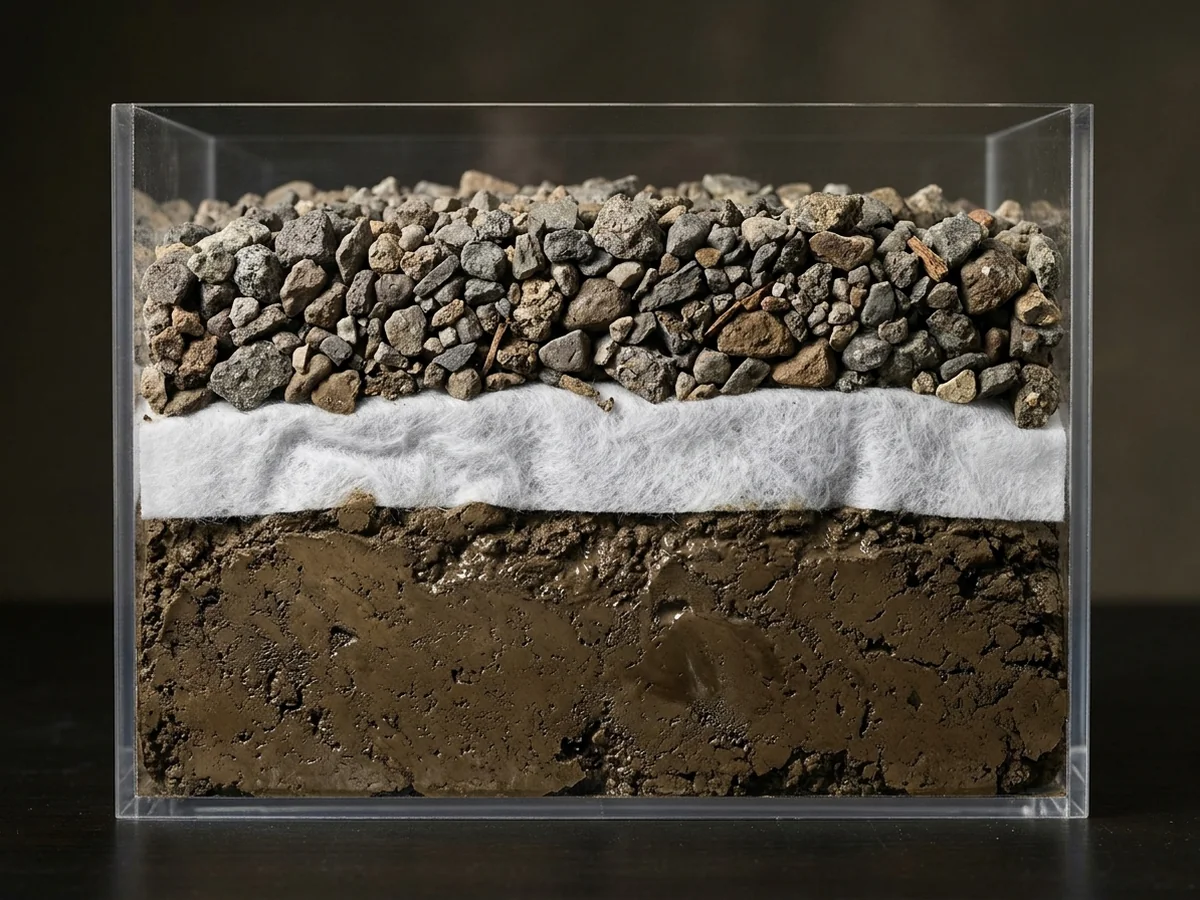
Non-woven fabric functions as a critical interface that maintains the structural independence of layered materials when placed over native soil. By acting as a geotextile separation layer for clay, the fabric creates a physical barrier that keeps heavy base materials from sinking into the subgrade. This process is essential for preventing aggregate contamination in clay, which occurs when fine particles migrate upward and weaken the load-bearing capacity of the pavement or driveway structure.
The filtration capability of the material ensures that soil integrity remains intact while managing internal moisture. Because clay has a tendency to retain water, the fabric must allow liquid to pass through its structure while simultaneously blocking the movement of fine-grained particles. This balanced permeability prevents the buildup of hydrostatic pressure beneath the surface, which is a common cause of structural failure in poorly drained subgrades.
Geosynthetic subgrade stabilization relies on the high puncture resistance and tensile strength inherent in needle-punched polypropylene fabrics. When a heavy load is applied to the surface, the stresses are distributed across the fabric, which prevents localized deformation of the clay. This stabilization effect provides several key performance benefits during and after construction:
- Reduces the risk of subgrade rutting under concentrated traffic loads.
- Maintains the design thickness of the aggregate base by stopping intermixing.
- Promotes uniform load distribution, which helps prevent premature cracking or surface failure.
- Provides a stable working platform for machinery during the initial installation phases.
Proper selection of the material, often guided by standards like AASHTO M288, ensures that the geotextile permittivity for fine grained soil is sufficient for the specific moisture conditions of the site. By choosing a fabric that balances these mechanical and hydraulic functions, the long-term performance of the structural foundation is significantly improved. The fabric acts not just as a static divider, but as a dynamic component that adapts to the shifting conditions of the subgrade over time.
Selecting the Right Geotextile
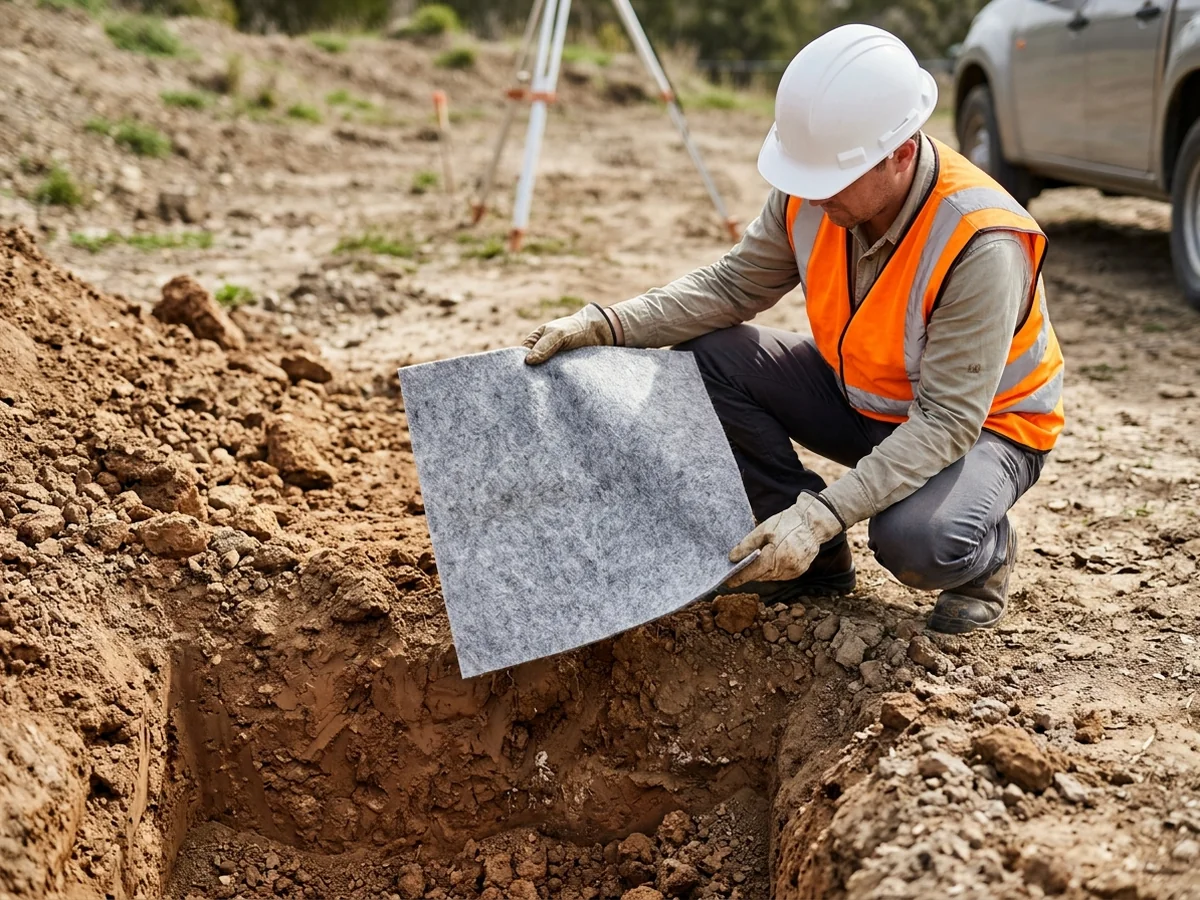
Choosing the correct fabric for clay subgrades requires balancing filtration, drainage, and structural integrity. Project success depends on aligning specific material properties with the physical characteristics of the native soil.
Adherence to AASHTO M288 non-woven geotextile specifications is the standard approach for classifying site requirements. These guidelines help engineers determine the necessary survivability class, ensuring the material can withstand construction stresses without tearing or losing its functional properties. By following these rigorous benchmarks, you ensure the fabric provides a stable foundation for the intended load.
The Apparent Opening Size (AOS) must be carefully matched to the soil particle distribution to maintain balance between retention and flow. If the openings are too large, fine particles migrate through the fabric, potentially causing structural instability or clogging. Conversely, if the openings are too small, the fabric may trap water and increase pore pressure. A proper match ensures that soil particles stay in place while allowing for long-term project performance.
Optimizing geotextile permittivity for fine grained soil is essential to manage pore water pressure effectively. Because clay does not drain easily, the fabric must allow water to move away from the subgrade to prevent the buildup of hydrostatic pressure that could otherwise compromise the system. The following factors are critical when evaluating material performance:
- Permittivity rates that accommodate the low hydraulic conductivity of clay.
- Puncture resistance high enough to resist damage during the placement of heavy aggregate.
- Chemical compatibility with local soil mineralogy to prevent long-term degradation.
Selecting a high-quality needle-punched polypropylene fabric typically provides the necessary balance of these physical characteristics. This material type offers robust performance in geosynthetic subgrade stabilization by serving as a durable barrier. By prioritizing these technical parameters, you create a system capable of managing the unique challenges posed by soft, fine-grained earth.
Installation Best Practices

Achieving direct contact between the fabric and the ground is the most critical step for success when applying non-woven geotextile on clay soil. Proper preparation prevents the formation of voids that can lead to structural shifting or premature failure of the aggregate base.
To ensure a stable foundation, follow these established field procedures to minimize movement and maximize the performance of your geosynthetic subgrade stabilization layer:
- Clear the site of all large rocks, organic debris, and sharp protrusions that might puncture the material before rolling it out.
- Grade the native ground to a smooth, uniform surface to eliminate dips or high spots that prevent full fabric-to-soil contact.
- Overlap adjacent rolls by at least 18 to 24 inches to maintain continuity, ensuring the upslope edge always sits on top of the downslope edge to shed water properly.
- Use heavy-duty landscape staples or pins to secure the edges of the fabric into the ground, especially in windy conditions or on sloped surfaces.
- Place aggregate starting from one end and working toward the other, using a front-end loader to dump material directly onto the already placed gravel rather than driving equipment on the exposed fabric.
- Maintain a minimum initial lift thickness of 6 to 8 inches of aggregate before allowing any construction traffic on the surface to prevent tearing or bunching.
Avoid pulling the material too tightly across the surface, as a small amount of slack helps the fabric accommodate minor ground movements without tearing. If you must maneuver heavy machinery, use low-ground-pressure equipment to reduce the risk of shearing the fabric beneath the aggregate. Always verify that your chosen fabric meets the necessary AASHTO M288 non-woven geotextile specifications for your site conditions to guarantee the material can withstand the stresses of installation. By ensuring the fabric remains flat and wrinkle-free, you provide an effective barrier that supports the load-bearing capacity of your finished project.
Polymer Durability in Clay

Polymer selection determines the long-term chemical resistance and structural integrity of a non-woven geotextile on clay soil, particularly when site conditions involve extreme pH levels. Needle-punched polypropylene is generally considered chemically inert and highly resistant to biological degradation, making it a reliable choice for most native clay environments. Conversely, while polyester offers excellent tensile strength, it may be susceptible to hydrolysis in high pH environments, which can occur in certain treated or chemically active clay soils.
Selecting the correct material depends on the specific chemical mineralogy of the site. Polypropylene typically maintains its structural properties across a wide pH range, ensuring that the fabric does not lose integrity due to soil acidity or alkalinity. Polyester, however, requires careful evaluation of the site chemistry to prevent long-term degradation. Engineering standards, such as those provided by the Geosynthetic Institute, highlight the importance of matching polymer characteristics to the expected service life and chemical exposure of the subgrade.
| Property | Puncture Resistance | Tensile Strength |
|---|---|---|
| Function | Prevents aggregate penetration | Resists lateral movement |
| Clay Requirement | High for soft subgrades | Moderate for stabilization |
| Failure Risk | Tearing during construction | Excessive fabric stretching |
Engineers must balance these mechanical requirements against the specific load-bearing needs of the project. High puncture resistance is critical during the initial placement of aggregate to prevent the fabric from failing under point loads. Once the base is installed, tensile strength becomes the primary factor in maintaining the separation layer and ensuring the stability of the entire pavement structure. Consult project-specific specifications to determine the necessary thresholds for your site conditions.
Managing Long-Term Performance

You can manage potential fabric clogging by selecting materials with appropriate flow rates and observing site behavior after installation. Over time, fine particles may accumulate within the geotextile structure, which potentially reduces its ability to move water. Assessing drainage rates involves monitoring how quickly water dissipates from the surface or observing if soft spots develop under the aggregate layer after rainfall.
Hydrostatic pressure within saturated clay significantly impacts site stability by reducing the effective stress of the subgrade. When water becomes trapped beneath the aggregate, it cannot easily migrate through the dense clay, leading to a loss of structural support for the base material. A high-quality fabric layer helps maintain stability by allowing pore water to move away from the interface, which prevents the buildup of pressure that often leads to rutting or pavement surface deformation.
Watch for specific warning signs that indicate the system is failing or requires an evaluation by a professional:
- Surface ponding that persists long after a storm event has ended.
- Visible pumping of fine-grained soil up through the aggregate base.
- Localized depressions or sinking in the finished surface.
- Increasing rutting under standard traffic loads that was not present previously.
These indicators often suggest that the filter layer has either reached its capacity for particle retention or has been compromised by excessive loading. In such cases, professional assessment is necessary to determine if the drainage path remains functional or if the subgrade has shifted significantly. Maintaining proper site drainage around the edges of the project area is also essential to ensure that the fabric continues to perform as intended without becoming overwhelmed by standing water. If you notice persistent saturation, consulting with a geotechnical specialist can help identify if additional drainage improvements are required to protect the integrity of the soil and the overlying structure.
Common Engineering Mistakes
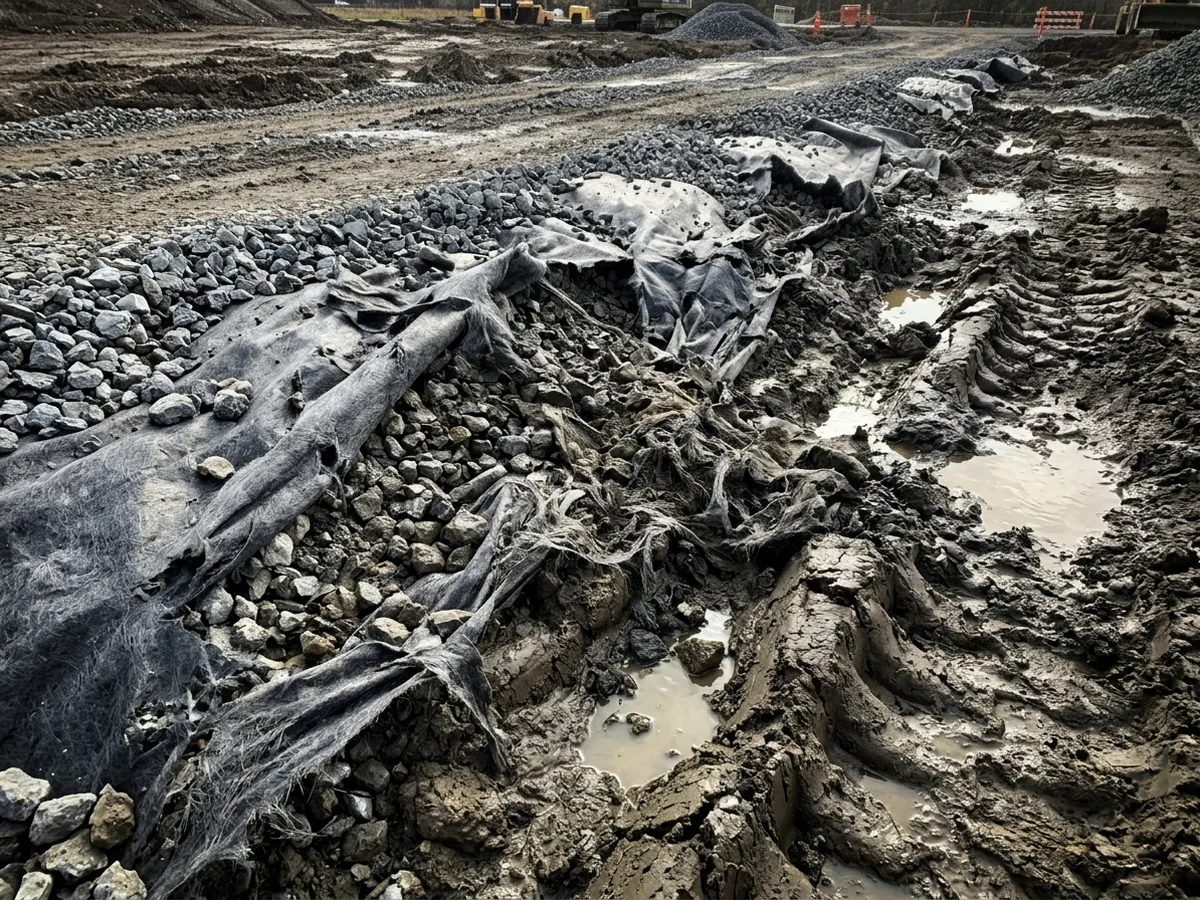
Engineering failures often stem from selecting the wrong fabric weight or neglecting the physical state of the underlying soil before placement. When installers overlook these technical requirements, the long-term performance of the structural section is compromised, regardless of the quality of the materials used.
Avoid these frequent oversights to ensure the integrity of your subgrade stabilization project:
- Selecting a fabric with insufficient puncture resistance for heavy-load applications often leads to immediate mechanical failure during aggregate spreading.
- Ignoring the moisture content of the subgrade can result in unstable foundations, as placing a geosynthetic over saturated or overly dry clay interferes with proper soil compaction.
- Failing to apply adequate tension during the initial layout leaves slack in the material, which promotes wrinkling and uneven load distribution under traffic.
- Using a product class that does not align with the specific loading demands of the site increases the risk of premature tearing or excessive deformation.
- Neglecting to clear sharp debris from the subgrade before rolling out the fabric can cause localized stress points that eventually rupture the geosynthetic barrier.
Choosing an inappropriate fabric weight is a common error in heavy-load scenarios. Many installers prioritize cost over the specific survivability requirements needed for challenging subgrades. When the fabric lacks the necessary durability, it cannot withstand the force of heavy equipment or the abrasive nature of crushed stone during the construction phase. This mismatch forces the project to rely on a material that will likely tear under stress, defeating its purpose as a separator.
Proper tensioning is equally vital during the initial layout. If the material is not pulled taut, it will shift and bunch up as the aggregate base is placed and compacted. This creates voids between the subgrade and the fabric, which can lead to localized settling and inconsistent support for the finished surface. A smooth, well-tensioned installation ensures that the geosynthetic remains in constant contact with the soil, maintaining the intended structural benefits.
Finally, ignoring the moisture levels in the ground before starting is a critical mistake. Clay is highly sensitive to water, and placing a barrier over an already saturated or unstable surface locks in that moisture, creating a soft pocket that eventually leads to pavement failure. Addressing the site preparation and moisture control is just as important as the selection of the fabric itself.
When to Consult Professionals
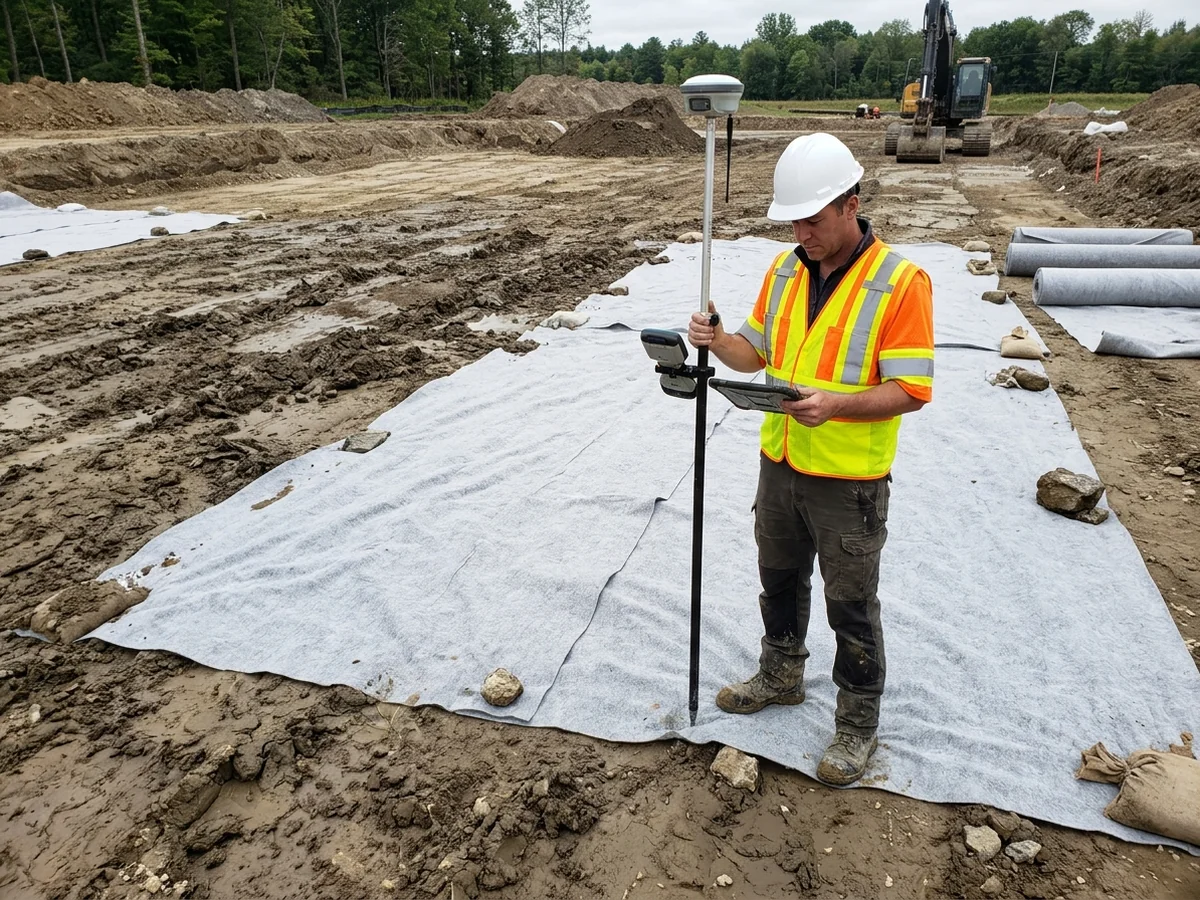
You must engage a geotechnical engineer when your project involves high-plasticity clay or sites with complex hydrological conditions that extend beyond standard installation parameters. While general guidelines exist for using a layer to improve the stability of your subgrade, site-specific variables often require professional oversight to ensure long-term structural integrity.
High-plasticity clays are particularly prone to significant volume changes as moisture levels fluctuate. These soils frequently exhibit low shear strength and poor drainage characteristics, which can compromise the performance of a standard fabric. An engineer can evaluate whether your site conditions necessitate custom specifications for geotextile permittivity for fine grained soil to prevent pore water pressure buildup.
Complex sites often require an analysis that goes beyond typical load-bearing expectations. Professionals evaluate factors such as:
- The specific mineralogy of the clay, which can influence chemical compatibility with synthetic materials.
- Anticipated hydrostatic pressure that could lead to subgrade failure if the drainage capacity is insufficient.
- The risk of excessive subgrade pumping that might exceed the filtration capacity of standard materials.
The Geosynthetic Institute (GSI) serves as a critical resource for establishing advanced performance benchmarks and testing protocols. By standardizing how these materials are evaluated, the GSI provides the industry with the data necessary to predict how a product will perform under challenging conditions. Consulting their technical guidance helps ensure that the chosen fabric meets the rigorous demands of your specific environment.
Relying on professional expertise is essential when the consequences of failure are high, such as in permanent pavement structures or load-bearing foundations. An expert will confirm whether your project requires adherence to specific AASHTO M288 non-woven geotextile specifications or if your unique soil profile warrants a more specialized engineering solution. When in doubt, prioritize a formal assessment over rule-of-thumb applications to mitigate the risk of premature settlement or structural degradation.
FAQ
Why choose a non-woven geotextile over a woven one for clay soil?
Non-woven fabric is generally preferred for clay because its three-dimensional pore structure provides superior filtration and drainage capabilities compared to the flatter, tighter weave of woven products. This structure allows water to move through the material while effectively capturing fine-grained particles that might otherwise compromise the overlying aggregate base.
Does a geotextile prevent clay from pumping into gravel?
Placing a non-woven geotextile on clay soil acts as a physical barrier that helps maintain the structural integrity of the aggregate layer. By preventing the migration of fine clay particles upward into the voids of the stone, the fabric helps avoid the contamination that typically leads to loss of base support and surface rutting.
How does a geotextile improve soil bearing capacity?
A geotextile functions as a component of a larger system that facilitates load distribution across the subgrade. By maintaining separation between the soft clay and the stable aggregate, the fabric allows for more uniform settlement and helps the base material retain its intended strength under traffic loads.
What weight or class of geotextile is needed for clay?
Selection of the appropriate fabric class depends on the specific project requirements and the expected intensity of the loading conditions. Engineers often reference AASHTO M288 standards to identify the minimum survivability and permittivity criteria required for subgrade stabilization in challenging soil environments.
Can the fabric clog when used on fine clay?
Clogging can occur if the pore structure of the fabric is not properly matched to the grain size distribution of the native soil. Proper selection involves ensuring the Apparent Opening Size is sufficient to allow for consistent water movement while retaining the clay particles to prevent internal erosion.
Conclusion
The final decision to proceed with your project rests on assessing the specific moisture content and drainage requirements of your site. Before placing your base material, ensure you have selected a fabric that meets the necessary survival and filtration standards for your local soil conditions. Properly installing non-woven geotextile on clay soil provides the structural separation needed to maintain the integrity of your aggregate base over time. Moving forward, verify that your chosen material aligns with established engineering guidelines to ensure long-term stability and effective water management for your subgrade.
You might also like: How Deep Should You Dig for a Paver Patio (The 4″ to 6″ Ba