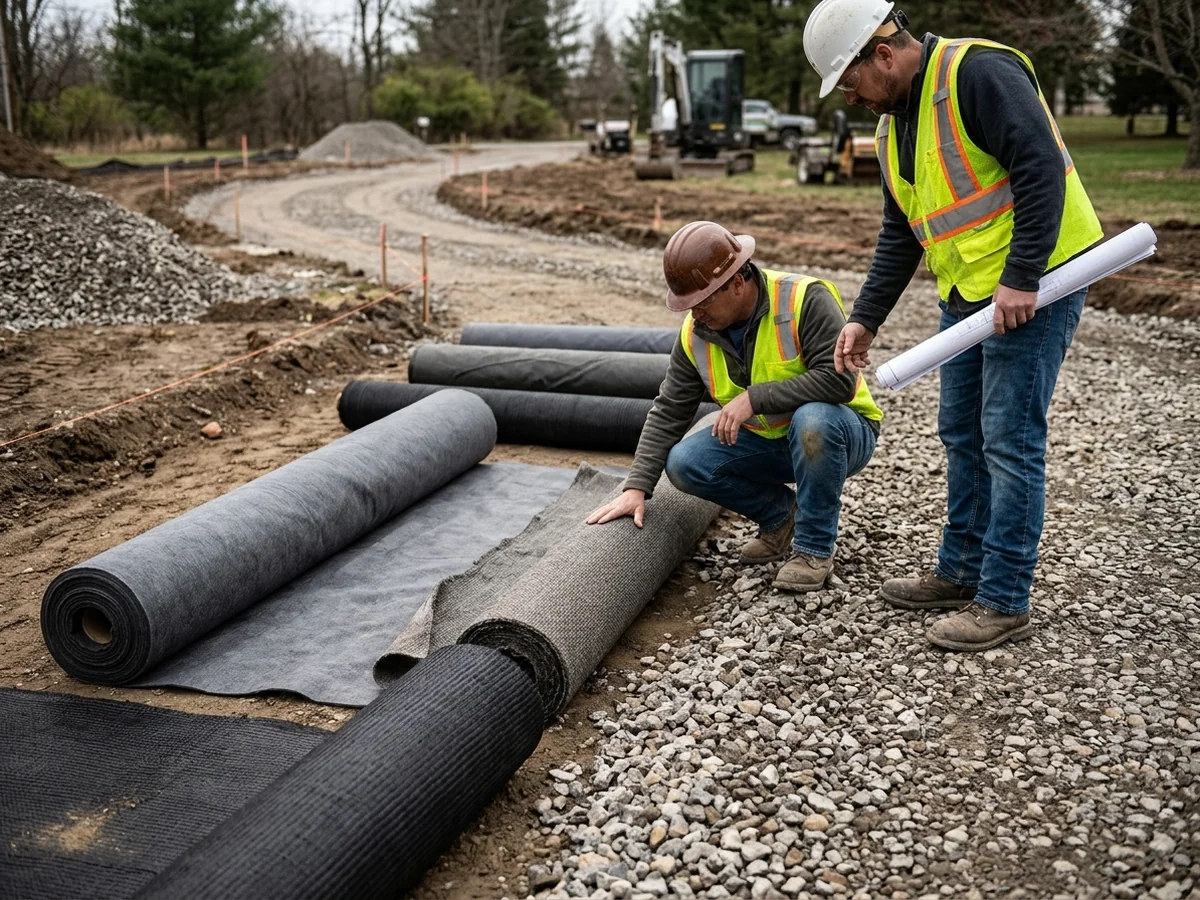
Does Geotextile Fabric Stop Sub-Base Gravel from Sinking into Wet Dirt?
Introduction
When used correctly, geotextile fabric stops gravel sinking by creating a stable interface between the aggregate layer and the soft subgrade. This synthetic barrier helps maintain the integrity of your driveway or pathway by preventing the upward migration of fine soil particles into the stone base.
This article examines the mechanics behind soil stabilization fabric for gravel and explains how to select the right material for your specific ground conditions. You will learn the technical differences between woven and non-woven options, how to evaluate fabric weight for your project, and the essential steps for proper installation. By understanding how these materials function as a separator, you can better manage long-term drainage and prevent the common issue of gravel loss in wet, unstable soil.
Benefits of Geotextile Fabric

Geotextile fabric helps maintain the integrity of a gravel surface by creating a stable interface that keeps heavy aggregate from migrating into soft, saturated subgrade soils. This material acts as a foundational layer, ensuring that the structural gravel remains in place rather than being lost to the underlying earth.
When subgrade soil becomes saturated, it loses its load-bearing capacity and turns into a soft, unstable medium. Without a protective barrier, the weight of vehicles or foot traffic forces the sharp edges of the gravel to press directly into this mud. Over time, the gravel is swallowed by the ground, requiring frequent replenishment and constant regrading to maintain a level surface.
A geotextile underlayment for driveway projects addresses this issue by providing a continuous, high-strength sheet that distributes weight across a wider area. By placing this layer between the dirt and the stone, you essentially bridge the weak soil, preventing the downward movement of individual rocks. This process maintains the distinct boundaries between the aggregate base course and the subgrade soil.
Beyond simple separation, these fabrics are designed to allow water to pass through while keeping soil particles on one side. This is crucial for managing moisture in the subgrade, as it prevents the buildup of hydrostatic pressure that would otherwise lead to soft spots. Proper selection of this material ensures that your base remains firm even during heavy rain or spring thaws.
The use of this stabilization material during construction typically offers the following advantages:
- Reduced gravel consumption over the long term.
- Increased load-bearing capacity for the entire driveway structure.
- Prevention of subgrade fines from migrating upward into the clean stone.
- Enhanced drainage performance by maintaining the separation of soil and aggregate.
Incorporating this material during the initial site preparation phase is a fundamental step in project longevity. It is important to note that while the fabric provides stability, it should be installed over a properly prepared and compacted subgrade to achieve the best results. Relying on the fabric to correct major subgrade deficiencies is generally ineffective, as the structural integrity ultimately depends on a stable foundation beneath the entire system.
Why Gravel Sinks Into Soil

Gravel sinks into soil primarily because downward pressure from traffic or heavy loads forces aggregate into the underlying soft subgrade. When the ground underneath lacks sufficient structural integrity, individual stones displace soil particles, pushing them aside and replacing them with gravel. This process is most common in soils with high silt or clay content, which are prone to softening when they hold excessive moisture. Preventing gravel sinking in mud requires addressing this intermixing process at the interface between the base material and the natural ground.
Mechanical Causes of Displacement
Moisture plays a critical role in this phenomenon by weakening the soil structure. When dirt becomes saturated with water, pore pressure increases, reducing the internal friction between particles. This causes the ground to lose its bearing capacity, making it behave more like a fluid under weight. As the subgrade loses strength, the aggregate base course is no longer supported, allowing the gravel to sink. Over time, this cycle leads to ruts, depressions, and a progressive loss of volume that requires constant replenishment.
Selecting a Separation Layer
To mitigate this movement, property owners often consider a geotextile underlayment for driveway projects. These materials function as a technical interface, helping maintain the distinction between the base aggregate and the subgrade. When evaluating options, it is helpful to understand the differences in fabric construction.
| Fabric Type | Key Characteristics |
|---|---|
| Woven | Generally offers higher tensile strength and is often used for reinforcement. |
| Non-woven | Often used for filtration and drainage; may be needle-punched or heat-bonded. |
Choosing between a woven vs non-woven geotextile for drainage depends on site-specific needs. Needle-punched fabrics, a common type of non-woven material, are often selected for their ability to balance water flow with soil retention. When specifying these products, professionals often refer to standards such as ASTM D4751, which covers the apparent opening size, and ASTM D4632, which addresses grab tensile strength. These metrics help ensure that the soil stabilization fabric for gravel is durable enough to withstand installation stresses and long-term loads.
Installation Best Practices
The successful application of a geosynthetic separation fabric installation relies on proper site preparation. Regardless of the material used, the subgrade must be cleared of debris and compacted to create a stable foundation. A common mistake is failing to overlap panels sufficiently, which can create gaps where fines might migrate. By adhering to engineering principles, such as those discussed in the Federal Highway Administration design manuals, property owners can significantly improve the longevity of their gravel installations.
How Geotextiles Work

Geotextile fabric acts as a mechanical interface between the subgrade and the aggregate base course. By creating a physical boundary, this material assists in preventing gravel from sinking into wet or soft ground. When heavy loads or traffic are applied to a surface, the weight naturally forces stones downward. Without a separation layer, fine soil particles move upward, and coarse aggregate migrates into the subgrade, causing the surface to become uneven and lose its structural integrity over time.
The Mechanics of Separation and Filtration
The core function of a geosynthetic separation fabric installation relies on two distinct mechanical processes: filtration and separation. Filtration allows for the passage of water from the subgrade into the drainage layer while simultaneously retaining fine soil particles. This prevents the subgrade from washing away or becoming saturated, which is a common cause of instability. Proper selection involves evaluating technical metrics such as Apparent Opening Size (AOS), which describes the largest opening available for soil particle retention, and permittivity, which quantifies the rate at which water flows through the fabric.
When selecting a soil stabilization fabric for gravel, engineers and contractors often look at industry standards such as AASHTO M288. These guidelines define the requirements for tensile strength, puncture resistance, and permeability based on the severity of the application. For instance, CBR puncture resistance is a critical metric for fabrics used under heavy aggregate loads, ensuring the material does not tear during installation or under the weight of vehicles.
Woven versus Non-Woven Fabrics
Choosing the right material type depends on the primary goal of the project, whether it is reinforcement or drainage. The following table summarizes the common characteristics of these two main categories.
| Feature | Woven Geotextiles | Non-Woven (Needle-Punched) |
|---|---|---|
| Primary Use | Stabilization and reinforcement | Filtration and drainage |
| Construction | Interlocked, tape-like yarns | Randomly oriented, bonded fibers |
| Water Flow | Lower permeability | Higher permeability |
Practical Considerations for Installation
A common mistake during installation is failing to account for proper subgrade preparation. Geotextiles do not eliminate the need for an adequately compacted base; they are designed to complement, not replace, site engineering. When placing the fabric, ensure there is sufficient overlap between panels to maintain a continuous barrier. Without this overlap, gravel can migrate through gaps, defeating the purpose of the layer. Always verify that the chosen fabric meets the specific ASTM D4751 or ASTM D4632 standards required for your particular soil type and expected traffic volume.
Choosing Fabric for Stability
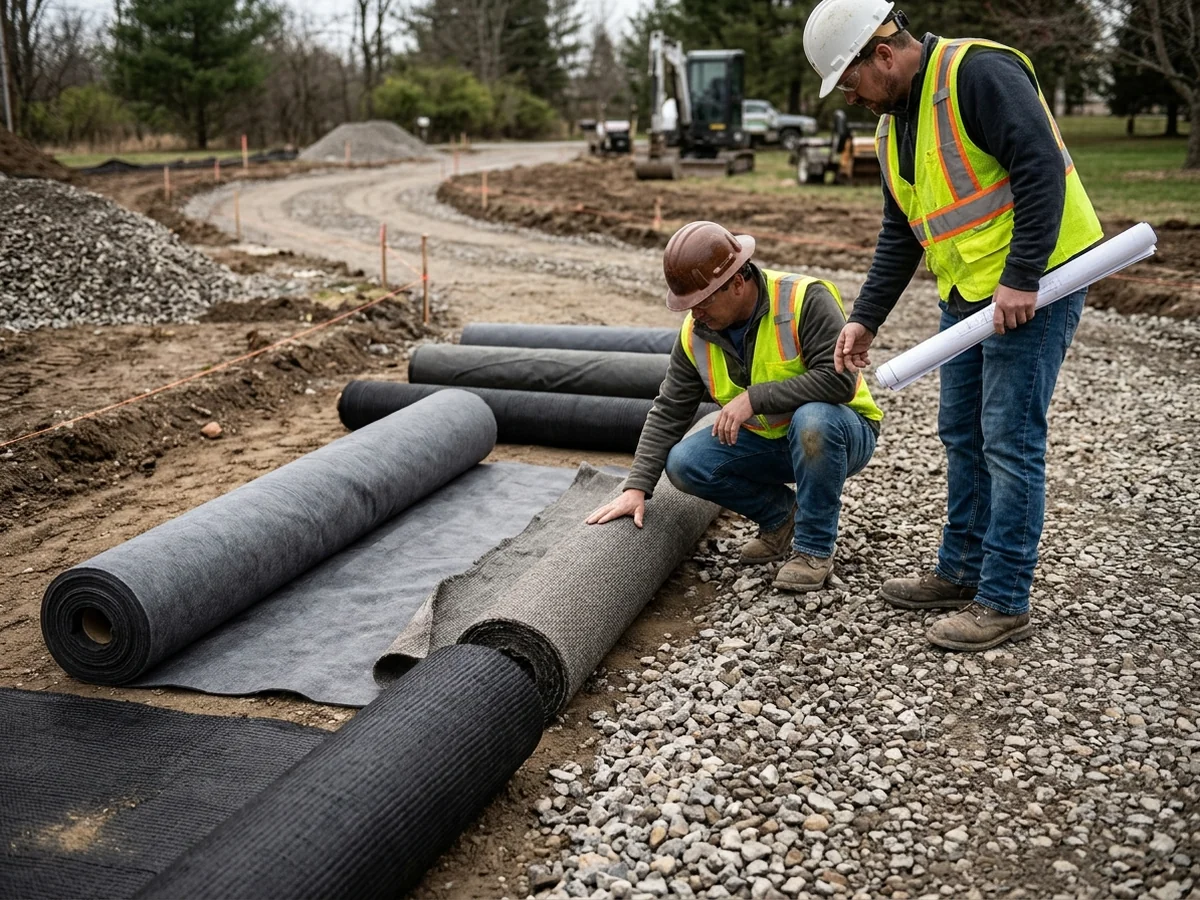
Selecting the appropriate material is a fundamental step in ensuring the long-term performance of your project. When evaluating how a geotextile fabric stops gravel sinking, you must consider the relationship between the aggregate base course and the subgrade soil. The primary goal is to maintain the integrity of your driveway or path by preventing the intermixing of heavy stone and soft, saturated earth. Without this barrier, pressure from vehicle traffic forces aggregate deep into the soil, creating ruts and requiring frequent top-ups of expensive stone.
Choosing the right fabric requires understanding the distinction between woven and non-woven structures. Woven materials are created by interlacing fibers, resulting in a product that typically offers higher tensile strength and is well-suited for applications requiring reinforcement under heavy loads. In contrast, needle-punched non-woven fabrics are formed by mechanically interlocking fibers, which creates a highly permeable structure. This design allows water to pass through freely while acting as a filter for fine soil particles.
| Feature | Woven Geotextile | Non-Woven Geotextile |
|---|---|---|
| Primary Function | Reinforcement and Separation | Filtration and Drainage |
| Tensile Strength | Generally High | Generally Lower |
| Water Permeability | Low to Moderate | High |
| Typical Structure | Interlaced Tapes | Needle-Punched Fibers |
When selecting a geosynthetic separation fabric installation for your site, analyze your specific drainage requirements. If the area remains constantly damp or experiences significant water runoff, the high permittivity of a needle-punched fabric helps manage the moisture profile of the soil. Conversely, if your project involves heavy traffic over a weak base, prioritizing tensile strength with a woven product may be necessary to distribute the load effectively. Engineers often reference standards such as ASTM D4751 to assess the apparent opening size (AOS), which determines if the fabric will retain soil particles while allowing water passage. ASTM D4632 is also used to measure grab tensile strength, providing a standardized metric for durability during installation.
A common mistake in landscape construction is assuming that fabric eliminates the need for proper subgrade preparation. Regardless of the material chosen, the underlying soil must be compacted to provide a stable foundation. Additionally, failure to overlap fabric panels correctly can lead to gaps where fines may migrate into the aggregate, compromising the entire structure. Always review local design guidelines, such as those provided by the Federal Highway Administration, to ensure your selection aligns with the mechanical demands of your project site.
Selecting Fabric for Soil Stabilization

Choosing the correct material for a project involves matching specific mechanical properties to the demands of your site conditions and expected traffic. Heavier materials, typically measured in ounces per square yard, provide increased durability and puncture resistance, making them better suited for high-traffic areas or heavy vehicle loads. Lighter options may suffice for pedestrian pathways where the load is minimal. Selecting an appropriate textile base for driveway projects ensures that the aggregate base course remains stable and functional over time.
Understanding Material Specifications
Engineers and contractors rely on standardized testing to ensure the material performs as expected under stress. According to ASTM D4751, the apparent opening size of the fabric helps determine if it will effectively retain soil particles while still allowing water to pass through. Additionally, ASTM D4632 measures the grab tensile strength, providing a benchmark for the fabric’s ability to withstand the rigors of installation and the pressures of daily use. For heavy aggregate loads, CBR puncture resistance is also a critical specification to evaluate during the selection process.
Soil Composition and Drainage
The interaction between the subgrade and the fabric is largely dictated by the soil composition. Sandy soils typically require a different opening size than fine-grained, cohesive clays to prevent clogging and maintain drainage efficiency. Permittivity is a key metric used to measure the water flow rate through a geotextile fabric, which is essential for preventing gravel sinking in mud. When considering woven vs non-woven geotextile for drainage, remember that while these fabrics aid in stabilization, they do not eliminate the need for proper subgrade compaction prior to installation.
To ensure long-term performance, evaluate your specific project requirements against the following criteria:
- Select a fabric weight that aligns with the anticipated load to avoid premature material fatigue or failure.
- Consult ASTM D4751 guidelines to match the opening size with your specific soil type for optimal drainage performance.
- Use ASTM D4632 as a primary reference for confirming that your chosen material has sufficient tensile strength for your installation.
- Verify that the chosen fabric provides enough puncture resistance to handle the sharp edges of your aggregate base course.
- Adjust your material specifications if your site consists primarily of clay, as these soils require finer filtration capabilities to prevent the migration of particles.
- Ensure proper overlap of geotextile panels during the installation of separation fabric to maintain a continuous barrier.
By carefully analyzing these technical factors, you can make an informed decision that supports the longevity of your outdoor structures.
Installing Fabric Under Gravel
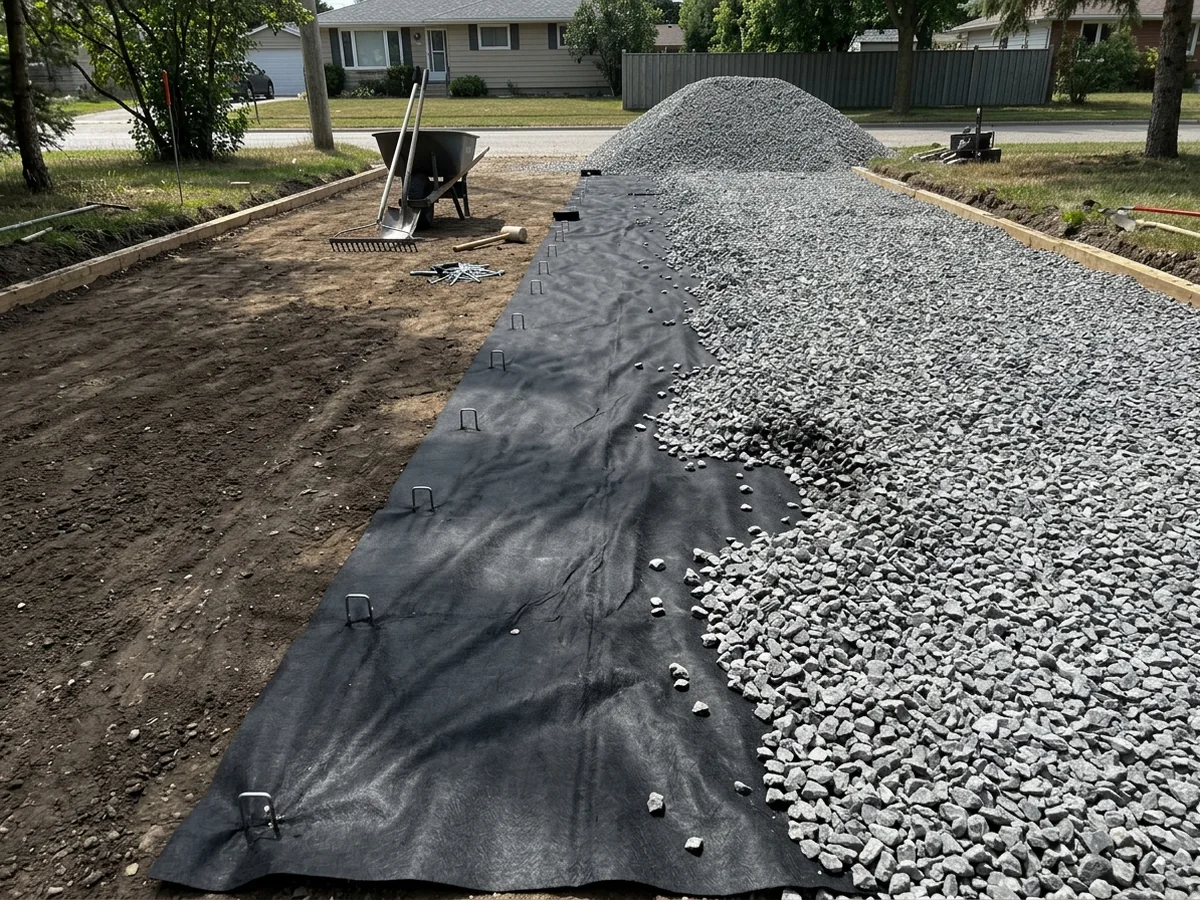
Installing a geotextile layer for driveways serves as a foundational step in managing long-term surface integrity. When gravel is placed directly onto native soil, the pressure from vehicles often forces the aggregate into the subgrade, particularly in wet conditions where the soil loses its load-bearing capacity. By creating a separator, you minimize this migration, ensuring the rock stays on the surface where it belongs.
Subgrade Preparation
Before any fabric is laid, the ground must be properly prepared. Geotextiles are not a substitute for poor foundational work. Start by clearing all organic debris, vegetation, and large stones that could puncture the material. Once the site is cleared, the soil must be graded and compacted. Using a plate compactor or roller is necessary to achieve a stable density. If the native soil remains loose or soft, the aggregate will continue to shift regardless of the fabric, leading to ruts and surface unevenness.
Selecting and Installing the Material
The choice between woven and non-woven geotextiles depends on your specific drainage needs. Non-woven, needle-punched fabrics are frequently used for their ability to allow water to pass through while retaining soil particles. When installing the material, follow these steps to ensure a consistent barrier:
- Unroll the fabric directly over the compacted subgrade, ensuring it covers the entire width of the project area.
- Overlap edges by 12 to 24 inches. This overlap is critical to prevent the subgrade from pushing through the seams under heavy loads.
- Secure the edges using landscape staples or pins every few feet to keep the material from shifting during the aggregate placement.
- Keep the fabric pulled taut and free of wrinkles to maintain a uniform surface.
Common Installation Mistakes
A frequent error during the process of laying down separation fabric is the improper delivery of the aggregate base course. Dumping gravel directly from a truck bed onto the fabric often results in tearing or excessive stretching, which compromises the barrier. Instead, work in sections by spreading the gravel from the edge of the fabric, ensuring that heavy machinery never drives directly on the unprotected material. Aim to maintain a minimum depth of aggregate over the fabric at all times during construction to protect the geosynthetic layer from crushing under tires or equipment tracks.
For projects requiring high durability, look for materials tested for CBR puncture resistance and grab tensile strength, as defined by standards like ASTM D4632. These metrics help determine if the fabric can withstand the stresses of your specific driveway project. When selecting products, consider the apparent opening size (AOS) as outlined in ASTM D4751, which influences how effectively the fabric retains soil while maintaining permeability for drainage.
Long-term Gravel Path Stability

Geosynthetic layers maintain path stability by managing water flow and preventing the intermingling of stone and soil over time. While these materials support the aggregate base course, their effectiveness relies on proper installation and ongoing care to avoid drainage blockages.
Clogging remains the primary concern for long-term performance. If fine soil particles or silt migrate through the material and accumulate, they can restrict water movement. This phenomenon often occurs when the chosen fabric has an opening size ill-suited to the site-specific soil type. Selecting a product consistent with ASTM D4751 standards helps ensure that water continues to pass through while retaining the base material.
You can identify potential drainage failures by monitoring for persistent soft spots or surface water ponding after rainfall. If you notice the aggregate layer becoming depressed or saturated, it may indicate that the fabric has become clogged or was compromised during the initial base construction. Assessing these issues often requires inspecting the subgrade preparation for signs of deep rutting or instability that the fabric alone cannot resolve.
Maintaining the integrity of the aggregate layer above the fabric is equally essential for longevity. Consider these best practices to ensure your path remains functional:
- Inspect the surface annually for thinning areas that expose the underlying fabric to direct traffic wear.
- Avoid heavy equipment use that could puncture the material or create deep ruts in the subgrade.
- Ensure the surface grade remains sloped away from the path to prevent excess water from pooling and forcing fines into the fabric pores.
- Replenish the aggregate base as needed to keep the layer thickness sufficient for distributing weight evenly across the soil.
Ultimately, a stable path requires a combination of correct material selection and thoughtful site management. If the subgrade is particularly poor, such as heavy clay, simply laying fabric may not be enough to prevent long-term movement. Ensuring that the site is properly graded and compacted before placing the fabric remains a fundamental step in preventing future issues. By monitoring water runoff and maintaining the depth of the aggregate, you can protect the drainage capacity of the installation for years to come.
FAQ
Why does gravel sink into wet dirt?
Gravel sinks into wet dirt because the weight of the aggregate creates pressure that forces individual stones into the soft, saturated subgrade. Without a stabilizing layer, the heavy stones displace the soil particles, causing the gravel surface to lose its structure and eventually disappear into the mud.
Does geotextile fabric stops gravel sinking permanently?
Geotextile fabric stops gravel sinking by providing a structural interface that distributes load and keeps aggregate separate from the underlying soil. While it is highly effective at maintaining the integrity of a path or driveway, long-term success depends on proper subgrade preparation and ensuring the fabric is not compromised during installation.
What is the main difference between woven and non-woven fabric?
Woven fabrics are typically constructed from interlocking fibers to provide high strength for stabilization, while non-woven fabrics are often needle-punched to offer better drainage and filtration. Choosing between them depends on whether your project requires primary reinforcement for heavy traffic or increased water flow to prevent saturation.
How do I determine the right fabric weight for my driveway?
The required weight, often measured in ounces per square yard, should be chosen based on the expected traffic load and the soil conditions of your site. Consulting engineering guidelines or the manufacturer’s specifications helps ensure the material has sufficient durability to handle the specific aggregate base course being used.
Is a drainage layer required underneath the geotextile?
A separate drainage layer is not always necessary if your subgrade has adequate natural permeability, but it is often recommended in areas prone to high water tables. Using a geosynthetic separation fabric helps maintain the performance of whatever drainage system you choose by preventing fine soil particles from clogging the voids in your base material.
Conclusion
When assessing whether your project requires a layer of geosynthetic material, prioritize an analysis of your native soil composition and expected traffic loads. If you are contending with saturated or fine-grained soils, incorporating geotextile fabric stops gravel sinking by maintaining a distinct boundary between your aggregate base and the subgrade. Before purchasing materials, evaluate the specific drainage and reinforcement requirements of your site to ensure you choose the appropriate fabric type for your long-term needs.
You might also like: How Deep Should You Dig for a Paver Patio (The 4″ to 6″ Ba