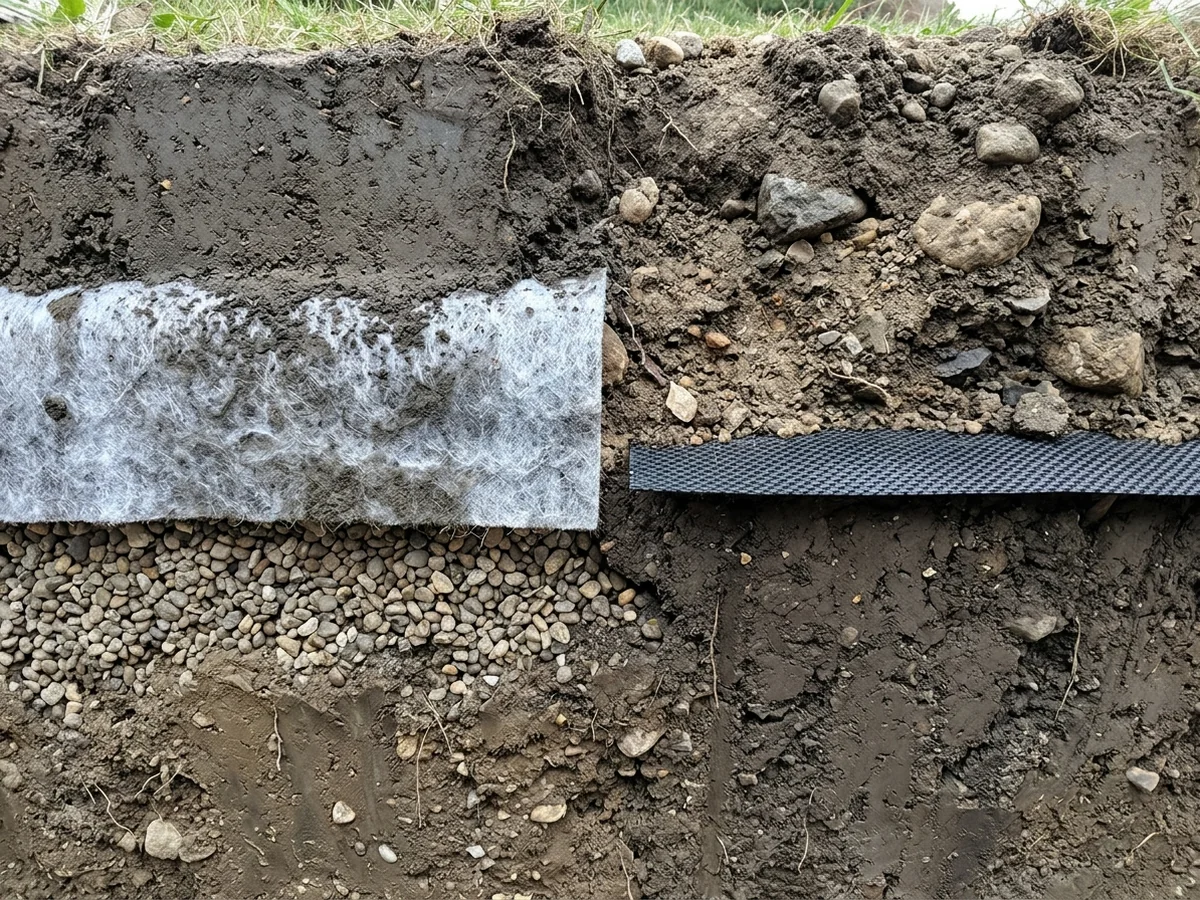
Woven vs Non-Woven Geotextile Underlayment: Water Permeability Differences
Introduction
The primary distinction between woven vs non-woven geotextile products lies in their internal structure, which dictates how each material manages water flow and soil retention. While woven fabrics typically provide higher tensile strength for stabilization, non-woven options excel in drainage applications due to their higher permeability.
This article provides a technical breakdown of these material differences to assist with project planning. You will learn how the manufacturing methods influence hydraulic conductivity and soil filtration performance. We also examine how specific metrics, such as permittivity and elongation, guide the selection process for civil engineering and landscaping site preparation. By comparing these fabric types against standard industry testing, this guide helps you identify which material best suits your soil conditions and drainage requirements.
Woven vs Non-Woven Overview
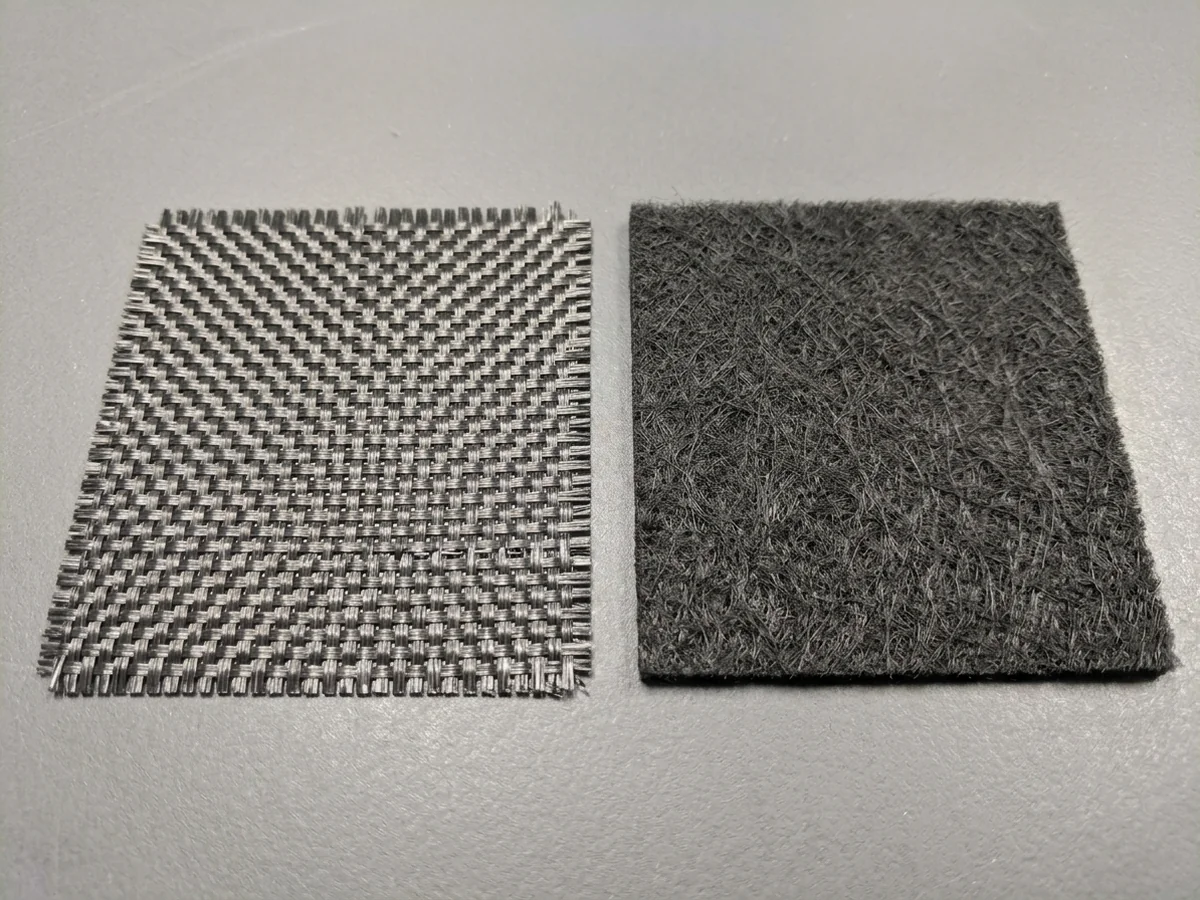
The fundamental difference between these materials lies in their manufacturing structure, which dictates how they interact with soil and water. Woven products feature fibers interlaced in a consistent, grid-like pattern, while non-woven options consist of fibers bonded together in a random, felt-like arrangement.
This structural variance is the primary driver of performance in hydraulic and stabilization projects. Because their morphology differs significantly, these fabrics respond to environmental pressures, such as soil loading and water movement, in distinct ways.
Structural Influence on Performance
Woven materials rely on their organized, interlaced structure to provide high resistance to physical tension. This configuration often results in lower geotextile elongation properties, which is frequently beneficial for stabilizing road bases and ground surfaces where minimal movement is desired.
In contrast, non-woven fabrics utilize a three-dimensional, porous matrix. This random fiber distribution creates a complex pathway for water, which is often essential for projects requiring effective filtration and drainage.
Hydraulic and Mechanical Considerations
Engineers assess these fabrics by looking at how their specific morphology influences long-term site stability. When evaluating geotextile filtration vs stabilization, the distinction often comes down to the intended function. Projects requiring high load-bearing capacity often benefit from the rigid nature of woven designs, which prioritize tensile strength over high water flow.
Conversely, sites where managing hydraulic conductivity and preventing soil piping are the primary concerns often rely on non-woven alternatives. To quantify these behaviors, practitioners often reference ASTM International standards. For instance, testing to determine water flow rates helps compare performance between fabric types. Furthermore, the Apparent Opening Size (AOS) is a critical metric for ensuring that the chosen fabric retains soil particles while allowing liquid passage.
Common Selection Factors
When reviewing a geotextile selection guide for drainage, it is important to distinguish between needle-punched non-wovens and heat-bonded versions. Needle-punched fabrics generally offer a thicker profile with higher puncture resistance, while heat-bonded alternatives are often thinner and may exhibit different permeability characteristics.
A common mistake in site preparation is failing to match these inherent material behaviors to the specific mechanical demands of the terrain. Selecting the wrong fabric can lead to premature hydraulic failure or insufficient ground support under heavy loads.
Structural Differences and Manufacturing
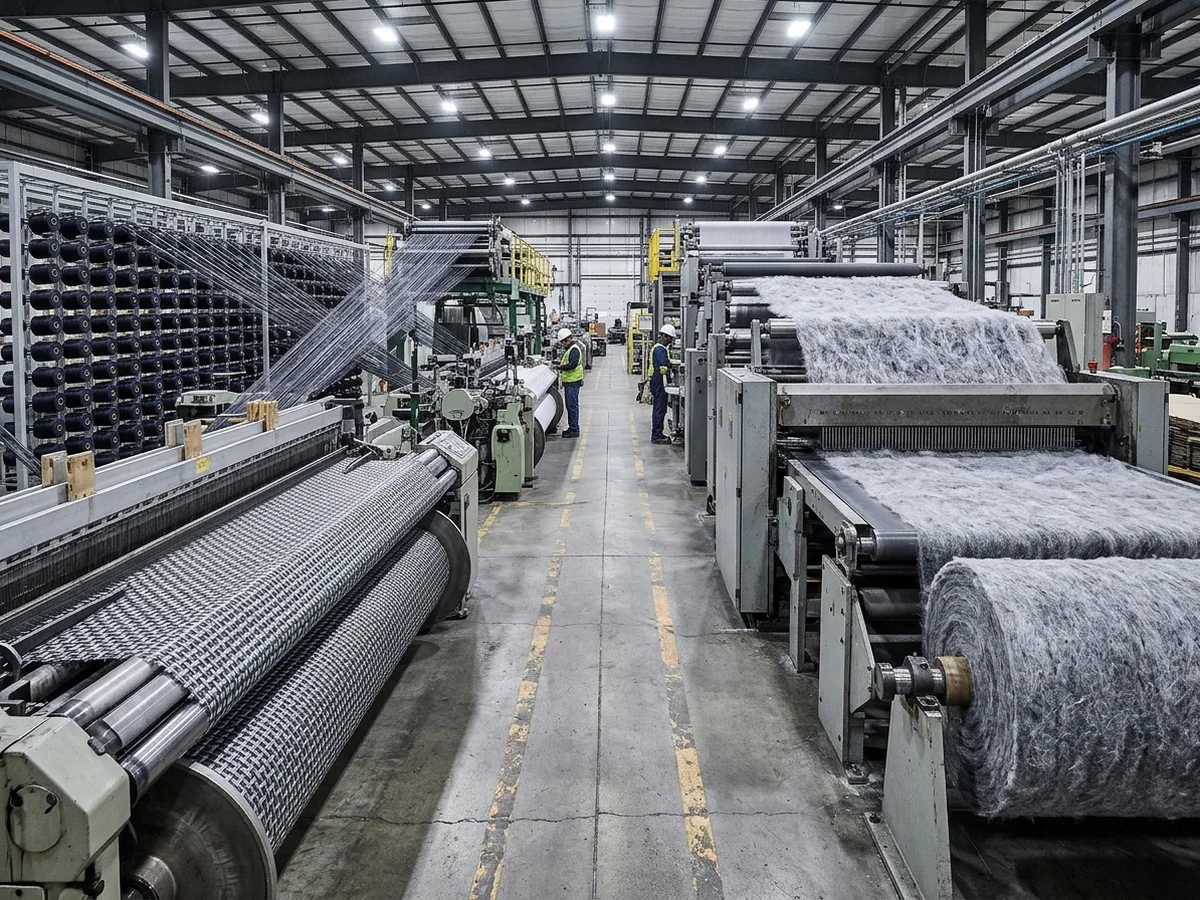
Woven and non-woven geotextiles represent two distinct approaches to soil reinforcement and site drainage, defined primarily by their internal architecture. While both types often utilize polypropylene for its durability and resistance to environmental degradation, the method used to assemble these fibers fundamentally alters how they behave once installed.
The Woven Construction Process
Woven geotextiles are created through a mechanical loom process where two sets of parallel filaments or tapes are interlaced at right angles. This produces a highly ordered, grid-like structure with uniform openings. Because the fibers are constrained in a tight, repetitive pattern, these fabrics typically exhibit lower geotextile elongation properties, often staying under 20 percent. This limited stretch makes them well-suited for applications where high tensile strength and load distribution are the primary goals, such as stabilizing soft subgrades in road construction.
Non-Woven Fabric Development
Non-woven varieties are formed by taking loose fibers and bonding them into a stable mat. This process results in a random, three-dimensional matrix that creates a complex pore structure. The bonding method significantly influences the final physical characteristics of the material:
- Needle-punched non-woven: This mechanical process uses barbed needles to physically interlock fibers, resulting in a thicker, felt-like material that often provides better cushion and puncture resistance.
- Heat-bonded non-woven: This thermal process applies heat and pressure to fuse fibers at their contact points. These materials generally have a thinner profile and lower permeability compared to their needle-punched counterparts.
Material Performance and Hydraulic Considerations
The choice between these two types often comes down to the specific hydraulic and mechanical requirements of the site. When evaluating materials, engineers look at the Apparent Opening Size (AOS), which is tested per ASTM D4751 to understand the largest particle size that can pass through the fabric. For projects focused on filtration, the goal is to prevent fine soil particles from migrating while allowing water to pass. ASTM D4491 serves as a standard test method for permittivity, which helps quantify water flow rates through these fabrics.
A common mistake during material selection is confusing the needs of filtration versus stabilization. Woven fabrics, with their structured openings, may be prone to clogging in fine-grained soils where drainage is the priority. Conversely, the three-dimensional structure of needle-punched non-wovens generally provides superior drainage rates, making them the preferred choice for subsurface drainage systems or projects where high hydraulic conductivity is necessary to prevent pore water pressure buildup.
Hydraulic Properties and Permeability
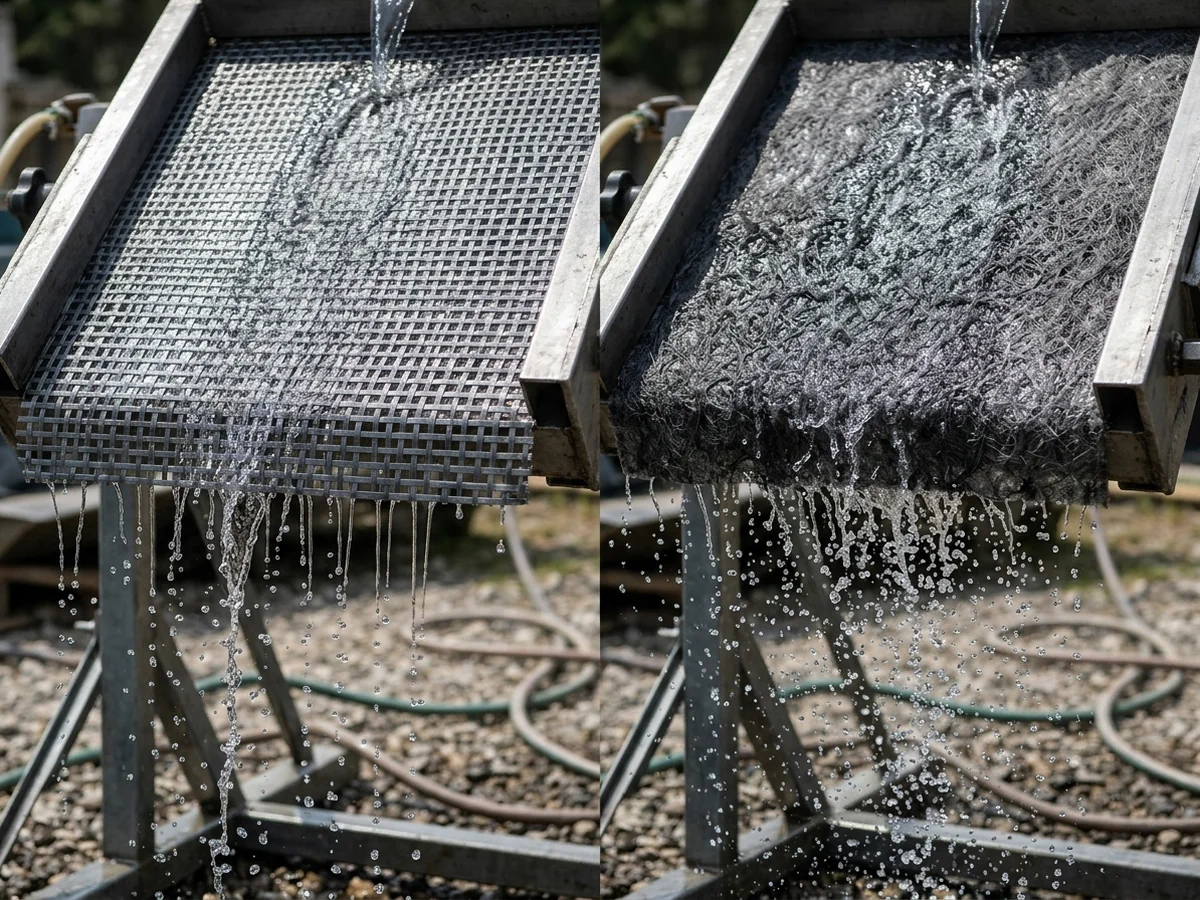
The primary hydraulic difference between these materials lies in how their internal structures manage water movement. When comparing woven vs non-woven geotextile performance, engineers look at how effectively each type facilitates or restricts flow based on the specific needs of the project.
Geotextile permittivity testing serves as a critical quality control step for site design. It measures the ability of a fabric to allow water to pass through its structure under a specific head of pressure. By quantifying this flow, professionals can ensure that a chosen material will not become a bottleneck for drainage systems or cause hydrostatic pressure to build up behind retaining walls.
Engineers rely on ASTM D4491 water flow rates to determine if a fabric remains functional when placed against different soil types. Sandy soils often require higher flow rates to prevent the accumulation of water, while finer, silty soils may require a tighter fabric structure to prevent clogging while maintaining steady filtration. These standardized tests provide the data needed to match a material’s capacity with the expected water volume of a site.
The internal architecture of the fabric dictates its hydraulic conductivity. Non-woven materials typically feature a three-dimensional random fiber matrix that provides a consistent path for water, which often results in higher permeability. This structure is frequently favored in drainage applications where the goal is to move water away from a surface quickly without losing soil fines.
In contrast, woven fabrics are constructed through an interlaced pattern that creates distinct, measurable openings. This geometry generally leads to lower overall permeability compared to non-woven alternatives. While this can be a disadvantage for heavy drainage, the tighter, more controlled openings are often useful for separation and stabilization tasks where the primary goal is maintaining the structural integrity of a subgrade rather than maximizing water throughput.
Strength and Elongation Comparison

Selecting the appropriate material requires an understanding of how tensile strength and geotextile elongation properties influence structural performance. Tensile strength represents the maximum stress a fabric can withstand before reaching its breaking point. This metric is fundamental when determining a material’s ability to maintain structural integrity under applied soil loads. Elongation, conversely, measures the fabric’s capacity to deform under tension before failure occurs. Comparing these mechanical properties is essential for effective site preparation and soil stabilization.
| Attribute | Woven Geotextile | Non-Woven Geotextile |
|---|---|---|
| Primary Structural Role | Reinforcement/Stabilization | Filtration/Drainage |
| Relative Tensile Strength | Typically higher | Typically lower |
| Relative Elongation | Typically lower | Typically higher |
Woven fabrics are often selected for projects where high tensile strength is required to support heavy loads with minimal movement. These materials generally exhibit lower elongation, often recorded at less than 20 percent. This stiffness makes them effective for reinforcement, as they can distribute load across a wider area without significant deformation. However, this lack of elasticity means they provide less energy absorption when faced with sudden load changes or uneven ground conditions.
Non-woven geotextiles offer a different mechanical profile, characterized by higher elongation, which often exceeds 50 percent. This flexibility is a significant advantage in soft or irregular soil environments, as the material can stretch and conform to the subgrade without rupturing. By deforming under pressure, these fabrics effectively bridge localized soft spots and maintain the continuity of the reinforcement layer. This adaptability is critical in applications where puncture resistance and the ability to accommodate soil movement are prioritized over rigid reinforcement.
A common mistake in material selection is prioritizing tensile strength for projects where drainage or filtration is the primary goal. While woven fabrics possess high strength, their lower elongation and tighter structure can lead to hydraulic failure if used in applications that require high water flow rates. Conversely, attempting to use non-woven materials for structural reinforcement in high-load scenarios may lead to excessive settlement due to their higher elongation profiles. When reviewing manufacturer data, it is important to correlate these mechanical properties with the specific ASTM test standards, such as ASTM D4632 for grab breaking load and elongation, to ensure the chosen fabric aligns with project requirements.
Filtration and Soil Separation

Non-woven fabrics are typically preferred for filtration applications, while woven materials are more commonly utilized for soil stabilization and reinforcement. Choosing between these options depends on whether the primary goal is to manage water movement through the soil or to provide a high-strength base for heavy loads.
Filtration involves allowing water to pass through the fabric while retaining fine soil particles. This process prevents the loss of soil, which maintains the structural integrity of the surrounding area. Stabilization, by contrast, focuses on separating distinct layers of soil to prevent mixing, which helps distribute heavy loads across a wider surface area.
Apparent Opening Size (AOS) is a critical measure used to ensure the fabric retains soil effectively. This metric defines the largest particle size that can pass through the fabric openings. By matching the AOS to the specific grain size distribution of the soil on site, engineers can prevent fine particles from migrating through the barrier, which would otherwise lead to settlement or structural failure.
When considering which structure is better suited for preventing clogging, the three-dimensional porous nature of non-woven materials often provides an advantage. These fabrics offer a complex internal pathway that traps particles throughout the thickness of the material rather than only at the surface. This design helps maintain hydraulic conductivity over time even when fine silts are present.
- Non-woven fabrics often provide a higher capacity for water flow, making them suitable for subsurface drainage systems.
- Woven structures offer significant tensile strength, which is essential for projects requiring ground reinforcement or road construction.
- The selection process requires evaluating the soil type to ensure the fabric remains permeable enough to prevent hydrostatic pressure buildup.
Proper filtration depends on balancing the flow rate with the retention of particles. If the openings are too large, soil will wash through the fabric. If the openings are too small, the fabric can trap particles at the surface, creating a “filter cake” that eventually blocks water flow entirely. Selecting the correct geotextile requires matching these physical characteristics to the specific requirements of the soil composition and the expected hydraulic load.
Choosing Between Woven and Non-Woven

Select the appropriate material by first defining your primary project goal, such as separating soil layers, reinforcing a structure, or managing water runoff. Projects requiring high load-bearing capacity often favor tighter fabric structures, while those focused on water movement benefit from materials designed with high porosity.
Follow these steps to ensure you choose the correct material for your specific requirements:
- Assess whether your site requires primary reinforcement to support heavy loads or if the priority is managing water flow through the material.
- Review the manufacturer data sheets to compare permittivity values, which indicate how much water can pass through the fabric under specific conditions.
- Check the Apparent Opening Size to confirm that the fabric pores are small enough to retain soil particles while still allowing water to drain.
- Evaluate the expected elongation properties if the project involves uneven soil pressure or potential ground movement, as some fabrics stretch significantly more than others.
- Verify that the chosen product meets the specific environmental requirements, such as UV resistance, if the material remains exposed for long periods during construction.
- Consult a professional geotextile selection guide for drainage to align your site soil composition with the recommended filtration characteristics.
Manufacturer data sheets serve as the most reliable resource for project planning. These documents translate laboratory testing into actionable specifications, allowing you to match the fabric performance to your site needs. Always look for values derived from recognized testing standards, such as those established by ASTM International, to ensure the data is consistent and comparable across different suppliers.
Focus on the distinction between separation and filtration when reviewing these specs. If your goal is to keep two different soil types from mixing, look for fabrics that balance structural integrity with enough permeability to prevent pressure buildup. When filtration is the main goal, prioritize materials that allow water to pass while preventing the migration of fine soil particles, which could otherwise lead to clogging or system failure. Aligning these technical details with your specific site conditions ensures long-term project stability.
Installation Performance Comparison
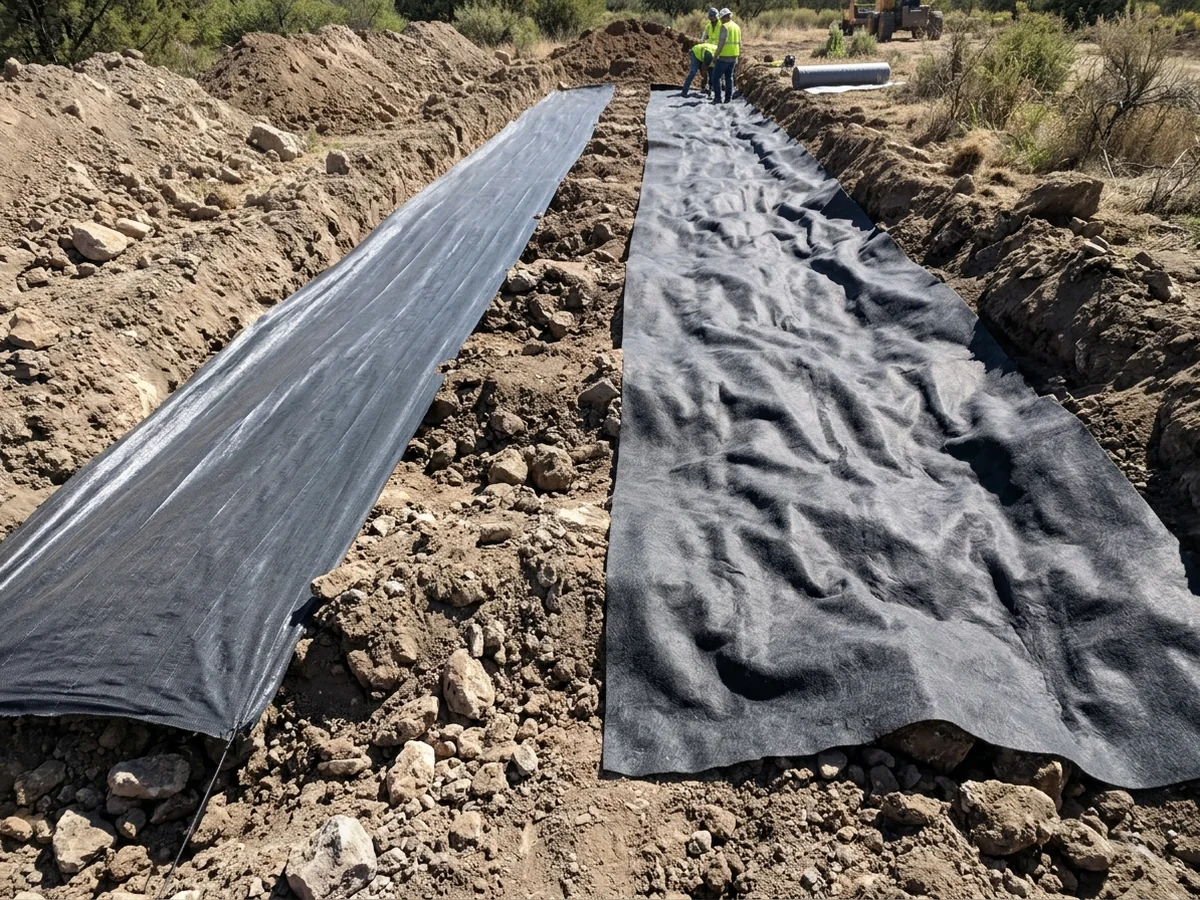
Choosing the incorrect fabric for a specific soil type often leads to long-term structural instability or drainage failure. When evaluating woven vs non-woven geotextile options, site managers must align the material physical properties with the expected hydraulic demands of the soil environment.
Selecting the wrong fabric for your soil conditions carries significant risks to the integrity of the entire project. If a material with insufficient permeability is installed in a high-flow drainage application, water pressure can build up behind the fabric, leading to piping or catastrophic hydraulic failure. Conversely, if the opening size is too large for the native soil, fine particles will wash through the fabric, causing the surrounding ground to settle or sink.
Proper site preparation and installation techniques are just as critical as the initial material selection. Failing to provide adequate overlap between rolls creates gaps where soil can migrate between layers, compromising the separation function. Additionally, neglecting to clear sharp debris from the subgrade can cause premature tears or punctures, particularly in thinner fabric varieties. Following these guidelines helps maintain the intended performance of the installation:
- Ensure the fabric is installed with enough slack to allow for soil deformation without tearing, which is especially important for materials with lower elongation properties.
- Verify that all overlaps meet the specific requirements of the project design to prevent gaps that could lead to structural undermining.
- Clear the surface of sharp rocks, branches, or other debris before placing the geotextile to avoid puncture or surface damage during construction.
- Confirm that the chosen fabric matches the filtration requirements of the native soil to prevent both clogging and the loss of fine particles.
- Avoid using materials with low permeability in high-flow environments where rapid water movement is necessary to prevent hydrostatic pressure buildup.
- Standardize the installation process by following the manufacturer guidelines for anchoring and seam integrity to ensure long-term stability.
Durability: Woven vs Non-Woven
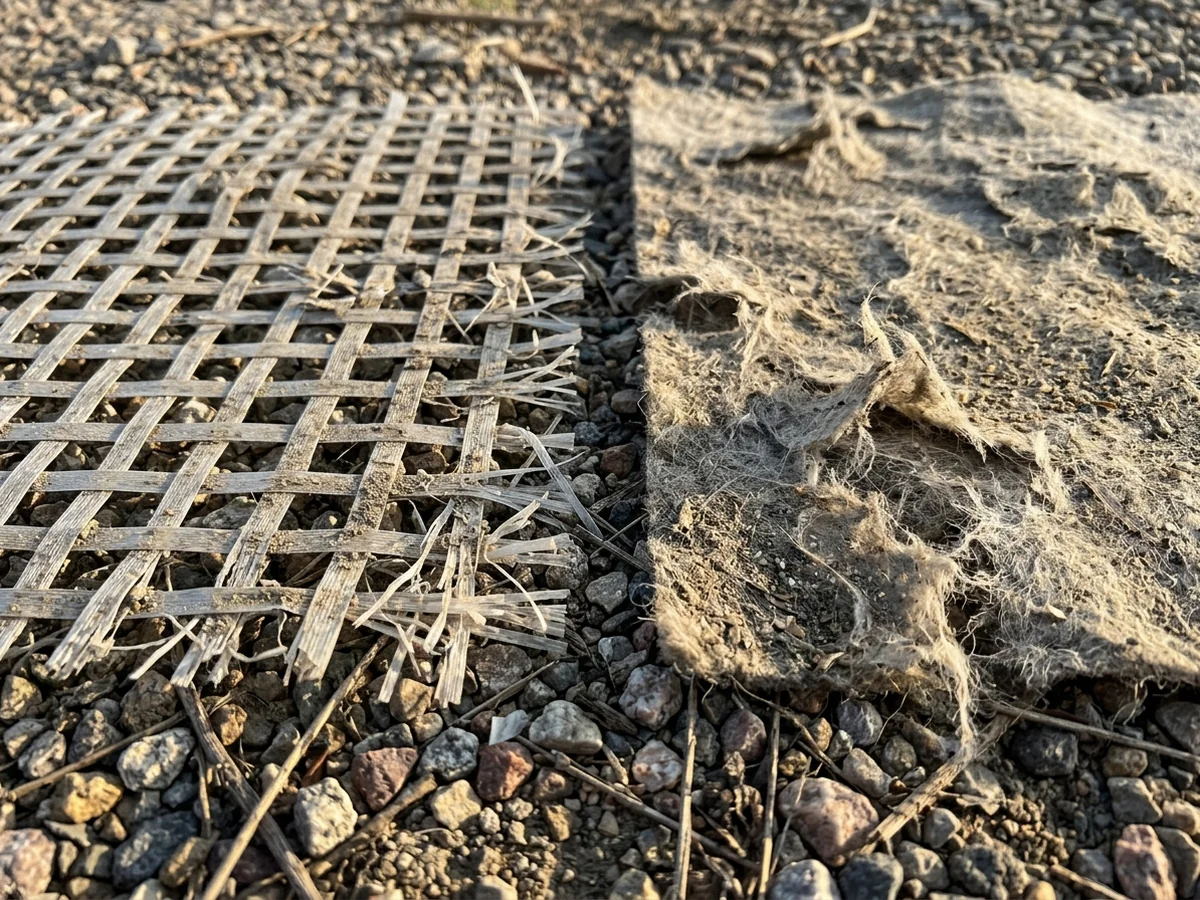
The long-term performance of geotextile materials depends on how they interact with their surrounding environment. While both woven and non-woven fabrics rely on synthetic polymers to maintain structural integrity, their physical construction significantly influences how they handle environmental stress.
Understanding these differences is essential for projects involving soil stabilization or drainage. In these applications, the material must maintain its mechanical and hydraulic properties for the design life of the structure.
Factors Influencing Mechanical Longevity
Mechanical damage during installation often presents the greatest risk to long-term performance. Woven geotextiles often feature lower elongation properties, making them suitable for reinforcement applications where maintaining a specific geometry under load is critical.
In contrast, non-woven geotextiles typically exhibit higher elongation. This allows them to deform without immediate structural failure when subjected to irregular subgrade conditions or puncture forces. Designers must weigh these characteristics against site-specific requirements, such as the potential for sharp aggregates to compromise the material during the placement phase.
UV Exposure and Storage Management
Direct sunlight poses a significant threat to synthetic polymers, as ultraviolet radiation causes rapid degradation of the material structure. Manufacturers often address this by incorporating stabilizing agents, such as carbon black, into the raw material during production. However, this protection is intended primarily for the logistics phase.
Because UV resistance varies by product, industry standards recommend limiting the time material remains exposed before burial. Project managers should follow these protocols to prevent premature aging:
- Keep rolls in their original, opaque protective wrapping until the moment of installation.
- Minimize the time window between uncovering the material and covering it with fill or aggregate.
- Store unused inventory in a climate-controlled warehouse or beneath heavy, light-blocking tarps away from direct sun.
Anaerobic Stability and Soil Interaction
In deep-trench or submerged applications, fabrics are often subjected to low-oxygen environments. Because these products are engineered from chemically inert synthetic polymers, they are generally resistant to the microbial activity and rot that would compromise organic materials. This anaerobic stability ensures that the fabric maintains its filtration and separation functions even when buried in saturated soil profiles for extended periods.
The effectiveness of this performance relies on proper installation, as improper handling during placement can lead to localized failures that reduce the overall hydraulic conductivity of the system. Ensuring that the geotextile remains in continuous contact with the soil interface is critical to preventing piping or particle migration, which are common failure modes in drainage-sensitive designs.
FAQ
Which geotextile is best for drainage?
Non-woven geotextiles are generally favored for drainage applications because their structure allows for high water flow rates. This permeability helps manage groundwater effectively while preventing soil migration into the drainage system.
Can woven geotextiles be used for filtration?
Woven geotextiles are typically designed for stabilization and reinforcement rather than active filtration. While they allow some water passage, their construction often limits the flow rates necessary for effective drainage compared to non-woven alternatives.
How does fabric thickness affect water flow?
Increased thickness often indicates a more complex internal structure, which can influence how much water moves through the material. In non-woven fabrics, this three-dimensional depth is essential for maintaining hydraulic conductivity even under the pressure of heavy soil loads.
Why does geotextile elongation matter in soil stabilization?
Elongation properties describe how much the material can stretch before reaching its breaking point under stress. High elongation allows a geotextile to conform to uneven ground surfaces without tearing, which is critical for maintaining structural integrity in road construction and soil stabilization projects.
What is the difference between needle-punched and heat-bonded non-woven fabrics?
Needle-punched fabrics possess a thicker, three-dimensional structure that promotes better water flow, whereas heat-bonded options typically have a thinner profile. These construction differences directly impact how each material manages water permeability and interacts with surrounding soil particles.
Conclusion
The primary decision point relies on whether your project requires high-load structural support or efficient hydraulic drainage. Evaluate your specific site needs against the physical properties of each fabric type before committing to a purchase. By carefully reviewing the technical specifications and filtration requirements, you can resolve the woven vs non-woven geotextile debate for your unique application. Consult project engineering data to confirm the correct material choice for long-term site stability.
You might also like: How Deep Should You Dig for a Paver Patio (The 4″ to 6″ Ba