How to Decorate a Bedroom with Soft Layered Textures
A bedroom can have beautiful furniture and a carefully chosen color palette, yet still feel a little flat. Often, the missing element isn’t more decoration. It’s texture.
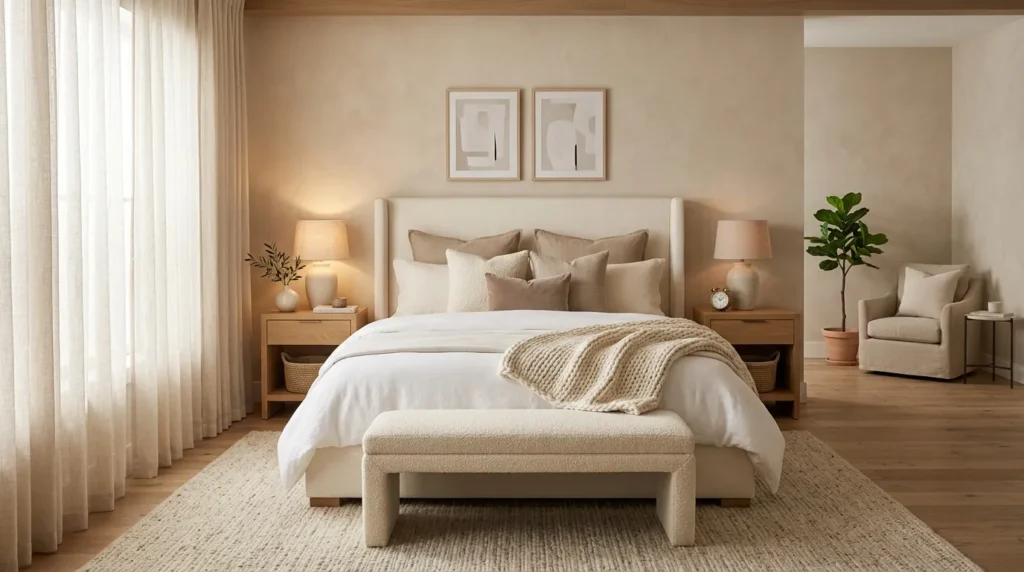
Soft layered textures bring depth, warmth, and comfort to a bedroom without requiring bold colors or a complete makeover. Linen bedding, chunky throws, woven baskets, plush rugs, boucle accents, cotton curtains, and natural wood can work together to create a room that feels relaxed and inviting.
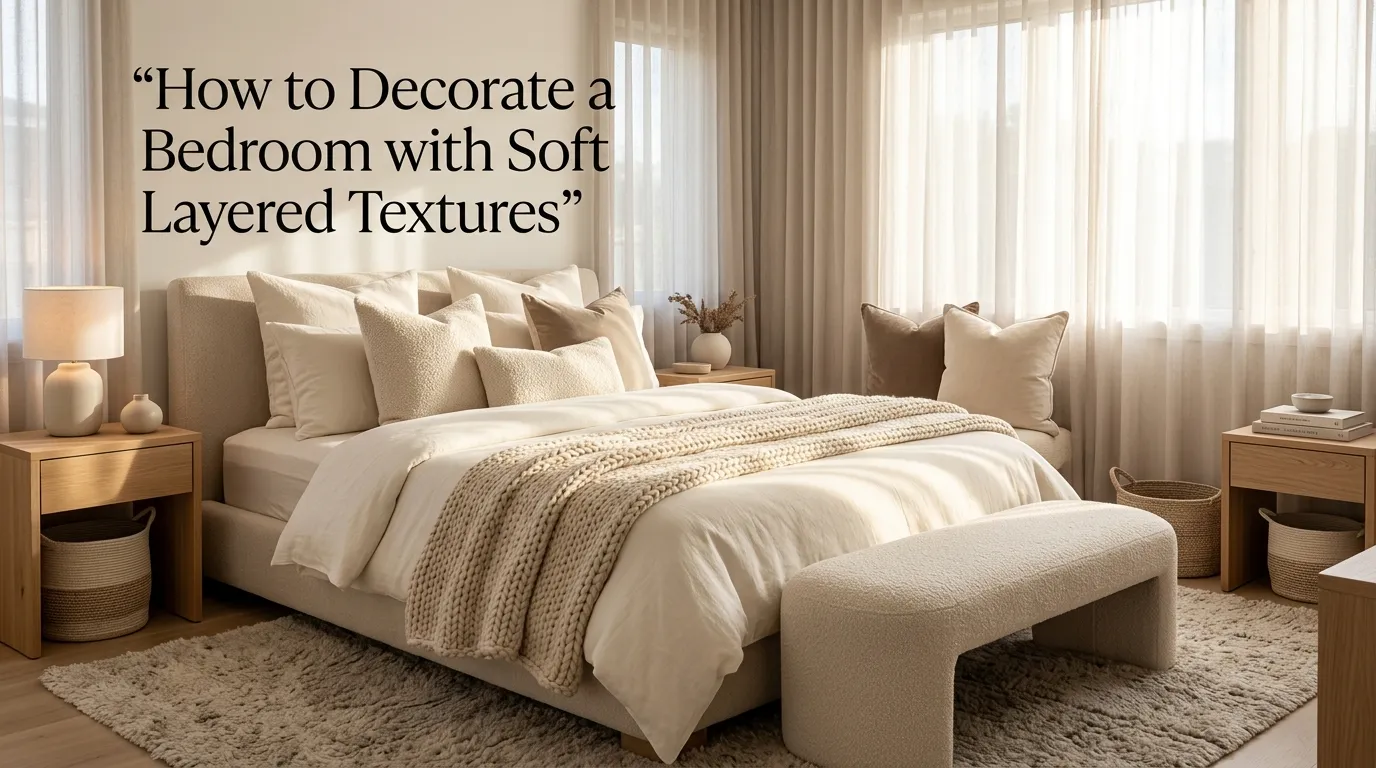
The best part is that texture doesn’t have to mean clutter. In fact, some of the most beautiful bedrooms use a fairly simple palette and let materials do the visual work. A cream duvet can feel completely different when paired with linen sheets, a knitted throw, a wool-style rug, and a woven bench.
In my experience, the secret is variation. If every surface is smooth, the room can feel one-dimensional. If every surface is heavily textured, it can become visually overwhelming. The sweet spot comes from mixing a few contrasting materials while keeping the colors connected.
This approach works in master bedrooms, guest rooms, apartments, and small bedrooms alike. You can also adapt it to nearly any decorating style, from modern and Scandinavian to farmhouse, transitional, coastal, or relaxed contemporary.
Below, you’ll find practical ways to layer textures throughout the bedroom, including bedding, rugs, curtains, furniture, walls, lighting, and smaller accessories. You don’t need to buy everything at once. Start with the largest surfaces, then gradually add a few tactile details until the room feels balanced, comfortable, and complete.
Table of Contents
1. Layered Bedding
Build the bed with contrasting fabrics and subtle neutral shades for instant depth.
2. Textured Area Rugs
Add softness beneath the bed while introducing another tactile layer.
3. Linen Window Treatments
Use relaxed natural-looking curtains to soften windows and filter daylight.
4. Chunky Throw Blankets
Introduce cozy dimension with knitted, woven, or tasseled blankets.
5. Boucle Accent Pieces
Use small boucle furniture pieces to bring softness and visual interest.
6. Woven Storage
Combine practical organization with baskets and natural woven materials.
7. Natural Wood
Balance soft textiles with the warmth and structure of natural wood.
8. Upholstered Furniture
Add fabric-covered furniture to create another comfortable tactile layer.
9. Textured Wall Decor
Use artwork and wall treatments to bring subtle dimension above the bed.
10. Soft Ambient Lighting
Finish the room with warm lighting and shades that enhance its textures.
1. Layered Bedding
Quick Benefits
- Creates immediate visual depth
- Makes the bed feel more inviting
- Adds comfort without clutter
- Works with neutral color palettes
- Allows easy seasonal changes
Why It Works
The bed is usually the largest visual element in a bedroom, making it the natural place to begin layering texture.
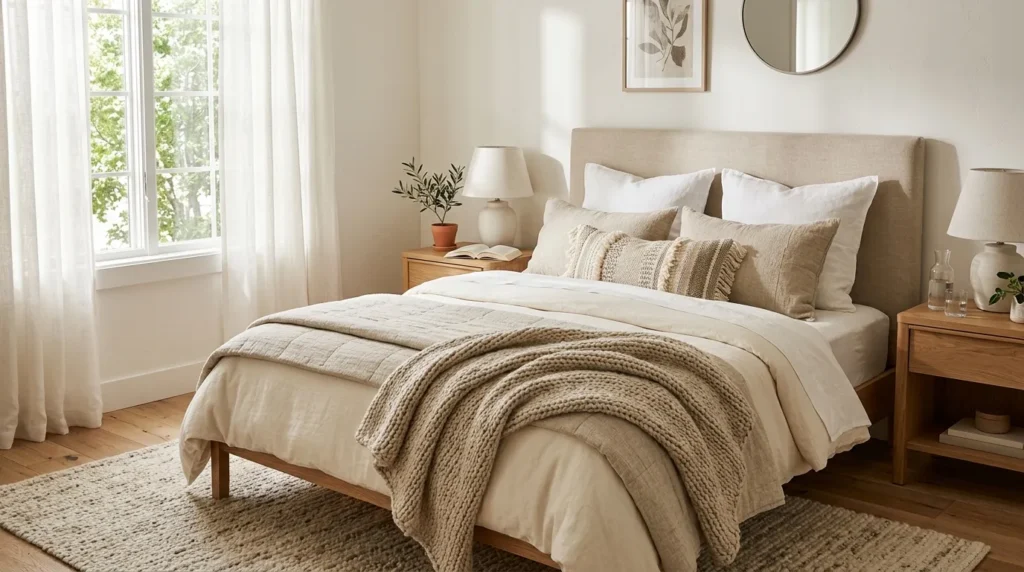
Instead of relying on several decorative patterns, use different fabrics to create interest. Smooth cotton sheets, relaxed linen bedding, a quilted coverlet, and a knitted throw can all work together while remaining visually calm.
Color matters, but it doesn’t have to be dramatic.
Several shades within the same family can create dimension without making the room feel busy. Cream, ivory, oatmeal, beige, and taupe are particularly versatile.
The contrast between materials is what makes the arrangement feel rich.
How To Style It
Begin with breathable cotton or linen sheets.
Add a duvet or quilt in a slightly different texture and shade.
Fold a lightweight blanket across the lower third of the bed rather than covering everything.
Add two or three sleeping pillows and a small number of decorative pillows in complementary fabrics.
For example, pair smooth cotton with linen, then add a knitted or woven throw.
Avoid using too many competing patterns.
Let the fabric itself provide most of the visual interest.
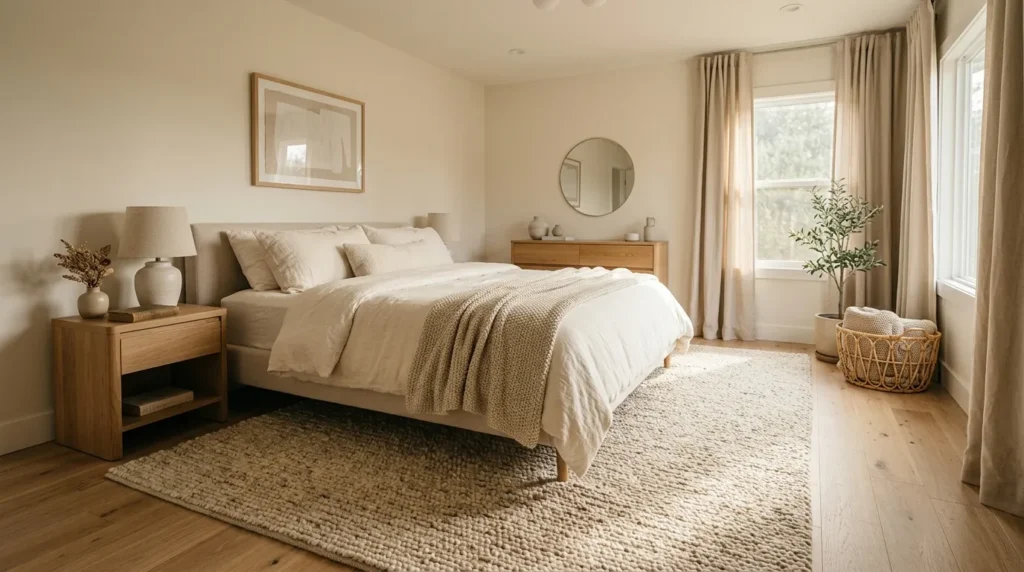
2. Textured Area Rugs
Quick Benefits
- Softens the floor
- Adds warmth
- Defines the sleeping area
- Creates visual depth
- Makes getting out of bed more comfortable
Why It Works
A bedroom can have beautifully layered bedding but still feel unfinished if the floor is visually hard or empty.
An area rug introduces another tactile surface and helps connect the furniture together.
A plush wool-style rug creates a different mood from a flatwoven rug. Both can work, depending on the rest of the room.
The rug also provides a visual transition between the bed and surrounding furniture.
This is particularly helpful in bedrooms with hardwood, laminate, or tile flooring.
How To Style It
Whenever possible, choose a rug large enough to extend beyond the sides of the bed.
A common approach is to position the rug under the lower portion of the bed so that it extends outward on both sides and toward the foot.
For smaller bedrooms, runners or smaller bedside rugs can provide softness without overwhelming the floor.
Choose a texture that complements rather than duplicates the bedding.
For example, a plush rug can balance crisp linen bedding, while a flatwoven rug can work well with chunky knitted layers.
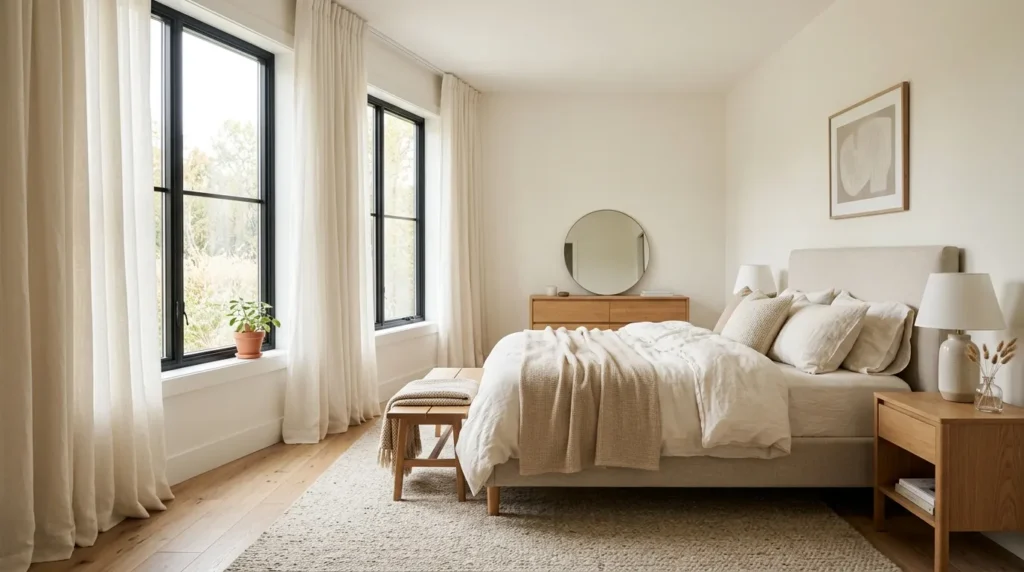
3. Linen Window Treatments
Quick Benefits
- Softens hard window lines
- Adds natural texture
- Filters daylight
- Creates a relaxed atmosphere
- Adds visual height
Why It Works
Windows can be surprisingly important to the overall texture of a bedroom.
Bare windows surrounded by smooth walls can make the room feel unfinished. Soft curtains introduce movement and fabric without taking up floor space.
Linen and linen-look materials are particularly effective because they have a slightly relaxed surface that works beautifully with layered bedding.
They also allow natural light to remain part of the room rather than blocking it completely.
How To Style It
Choose curtains in a shade that complements the bedding rather than creating unnecessary contrast.
Warm white, ivory, oatmeal, beige, and soft gray are easy starting points.
Hang the curtain rod appropriately high and wide for the window configuration to create a more generous visual frame.
Allow the fabric to fall toward the floor for a softer appearance.
If you need substantial light control or privacy, layer decorative curtains with suitable shades or blinds.
Keep the overall treatment simple so the natural texture remains noticeable.
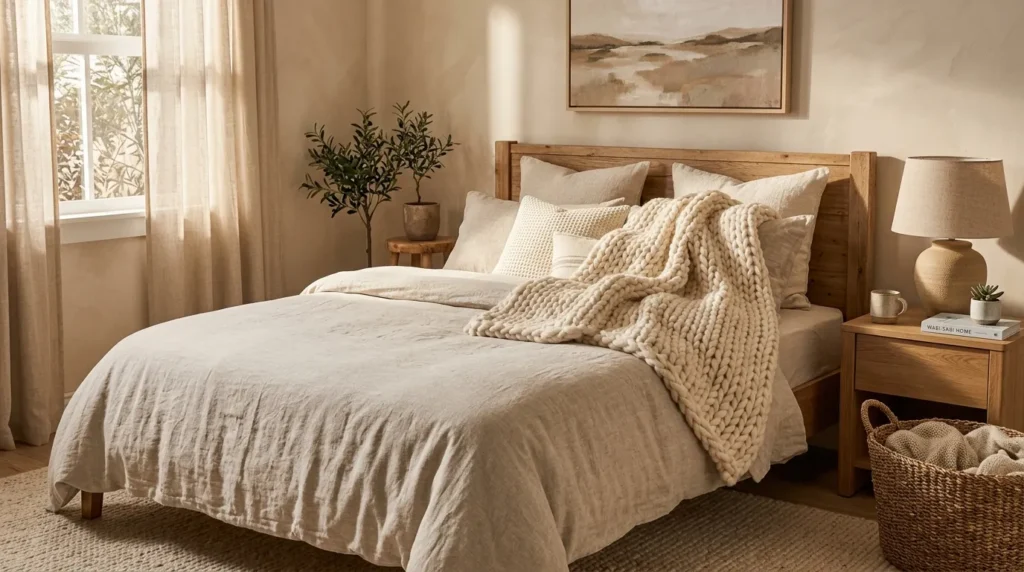
4. Chunky Throw Blankets
Quick Benefits
- Adds instant coziness
- Creates visual dimension
- Provides practical warmth
- Makes the bed look relaxed
- Easy to change seasonally
Why It Works
A throw blanket is one of the simplest ways to introduce texture without changing major furniture.
Chunky knits, woven blankets, brushed cotton, quilted throws, and tasseled textiles each create a different visual effect.
The key is how you place the blanket.
A perfectly folded throw can create a tailored look, while a loosely draped blanket gives the bedroom a more relaxed, lived-in feeling.
Either approach can work.
How To Style It
For a casual bedroom, drape the throw loosely over one corner of the bed.
For a more structured look, fold it neatly across the foot.
Choose a fabric that contrasts with the duvet.
If the duvet is smooth, a chunky knitted throw adds obvious texture.
If the bedding already has a heavy texture, choose a lighter woven blanket to maintain balance.
Keep the color within the room’s existing palette.
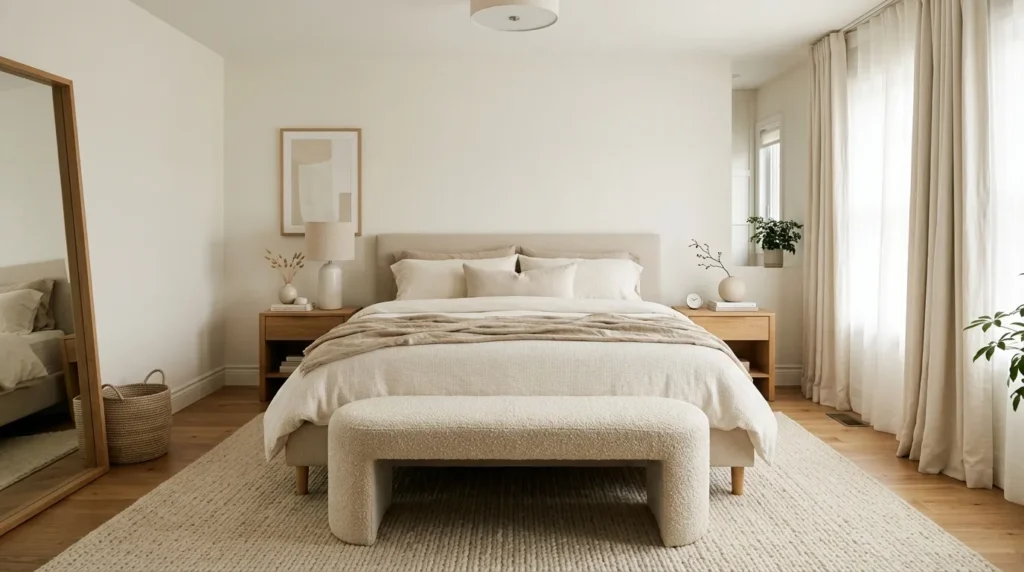
5. Boucle Accent Pieces
Quick Benefits
- Adds tactile softness
- Creates a cozy focal point
- Works with neutral decor
- Softens modern furniture
- Provides subtle visual contrast
Why It Works
Boucle has a distinctive looped surface that catches light differently from smooth fabrics.
That makes it especially useful in bedrooms where the palette is restrained.
A boucle bench, accent chair, ottoman, or small headboard can introduce softness without adding another strong color.
Because the material has such a recognizable texture, a little can go a long way.
How To Style It
A boucle bench at the foot of the bed can create both seating and visual interest.
In a larger bedroom, a small boucle chair can form a comfortable reading corner.
Pair it with smoother surfaces such as wood, metal, or cotton.
Avoid placing boucle on every upholstered piece.
The contrast between soft boucle and structured furniture is what makes the material stand out.
For homes with pets or heavy everyday use, consider durability and cleaning requirements before choosing boucle upholstery.
6. Woven Storage
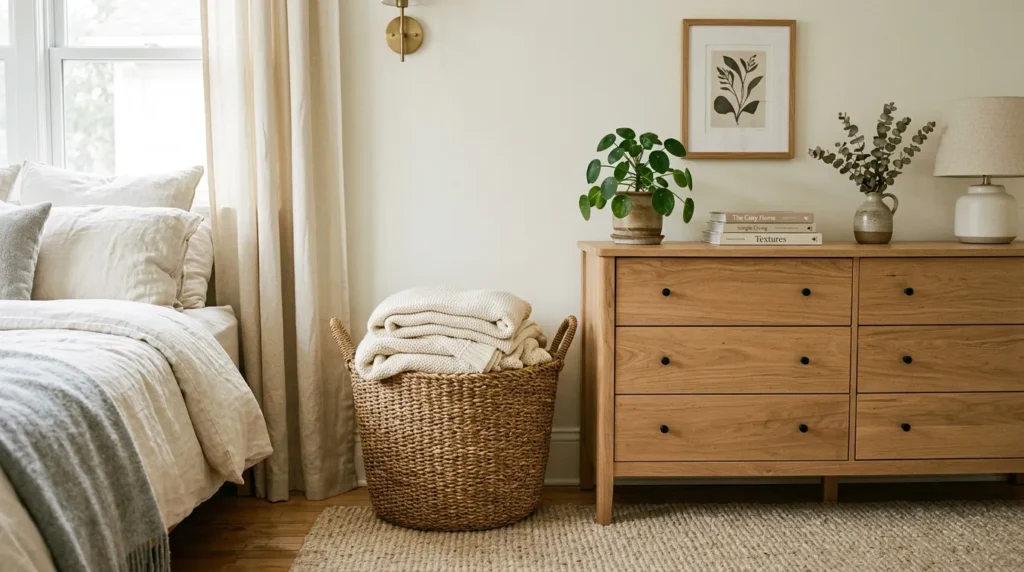
Quick Benefits
- Adds natural texture
- Provides practical organization
- Reduces visual clutter
- Works in many styles
- Makes storage decorative
Why It Works
Storage doesn’t have to look purely functional.
Woven baskets introduce texture while keeping blankets, accessories, laundry, or other bedroom items organized.
Their irregular patterns and natural materials create a pleasant contrast against smooth walls and furniture.
They can also make open storage feel more intentional.
Instead of several mismatched plastic containers, a few coordinated baskets can create a more cohesive appearance.
How To Style It
Place a large woven basket beside the dresser or in an unused corner for blankets.
Use smaller baskets on open shelves.
Choose baskets in similar natural tones if you want a calm appearance.
For darker bedrooms, lighter woven materials can brighten the composition.
Don’t fill every open space with baskets.
One or two useful pieces are often enough.
The goal is to combine storage with texture rather than create another source of visual clutter.
7. Natural Wood
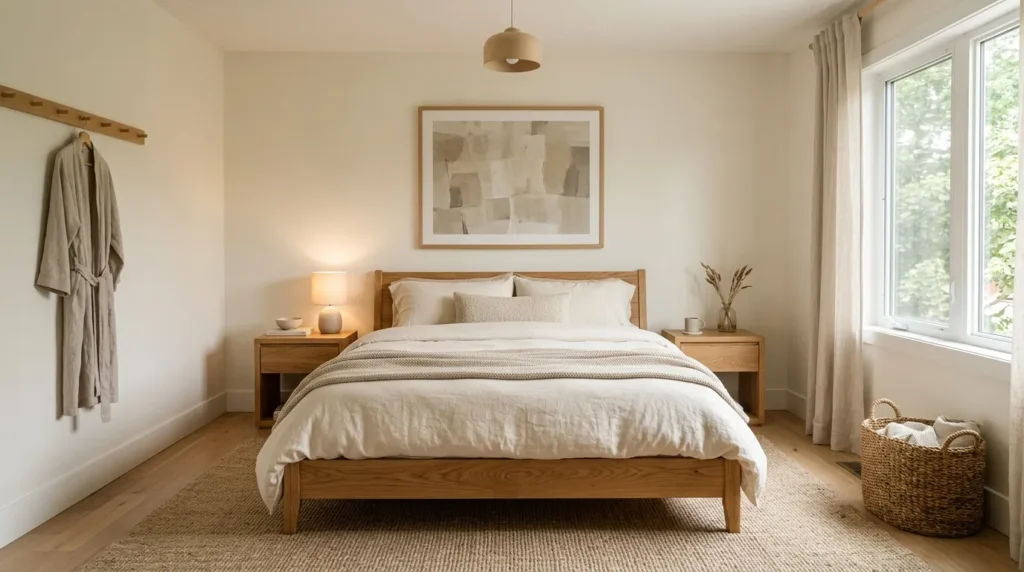
Quick Benefits
- Adds warmth
- Balances soft fabrics
- Introduces organic texture
- Creates visual structure
- Works across decorating styles
Why It Works
If a bedroom contains too many soft materials, it can begin to feel visually indistinct.
Natural wood provides the necessary structure.
A wooden bed frame, nightstand, dresser, bench, or picture frame introduces grain and variation while grounding the softer elements around it.
Wood also works particularly well with neutral textiles.
Cream linen, oatmeal cotton, wool, and beige upholstery all pair naturally with oak, walnut, ash, or other wood finishes.
How To Style It
Choose one dominant wood tone and repeat it where practical.
For example, an oak nightstand can coordinate with an oak frame and small wooden bench.
If your room already has dark furniture, balance it with lighter bedding and soft window treatments.
Avoid introducing too many unrelated wood colors.
Let the grain remain visible.
The natural variation in the material provides texture without needing decorative objects.
8. Upholstered Furniture
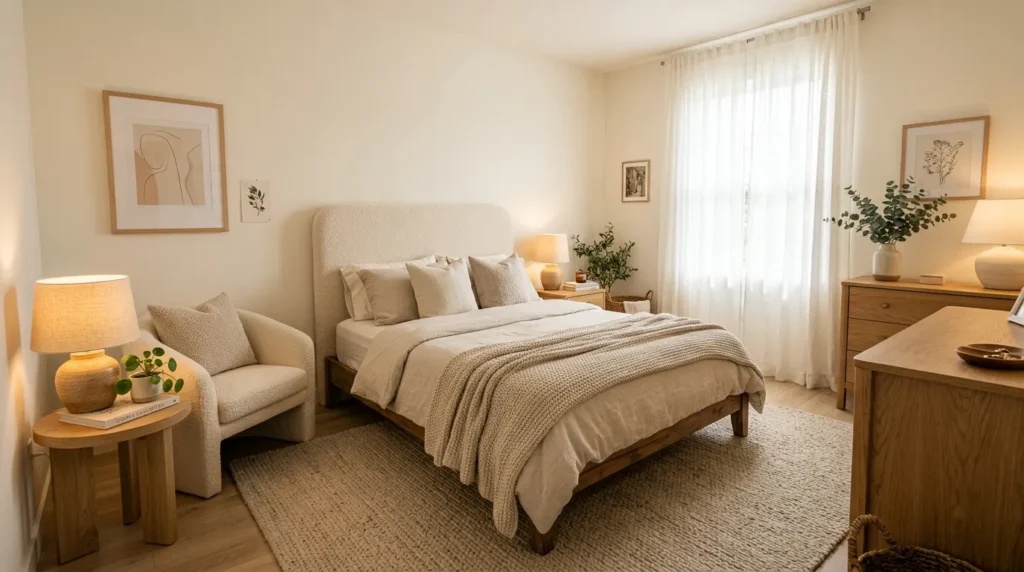
Quick Benefits
- Adds softness
- Creates visual comfort
- Breaks up hard surfaces
- Works well in larger bedrooms
- Provides additional seating
Why It Works
Upholstered furniture introduces fabric at eye level and around the edges of the room, not just on the bed.
An upholstered headboard can create a soft focal point.
A fabric bench or reading chair can make a larger bedroom feel more comfortable and useful.
This is particularly effective when the rest of the furniture has clean, hard surfaces.
The combination creates contrast.
How To Style It
Choose upholstery that works with your bedding rather than matching it exactly.
A cream upholstered headboard can pair with beige linen bedding and a textured throw.
A muted gray chair can balance warm wood furniture.
If the bedroom is small, select one upholstered piece instead of adding several.
Prioritize furniture that serves a genuine purpose.
A bench can provide seating and a place to temporarily set folded clothing, while an accent chair can create a dedicated reading area.
9. Textured Wall Decor
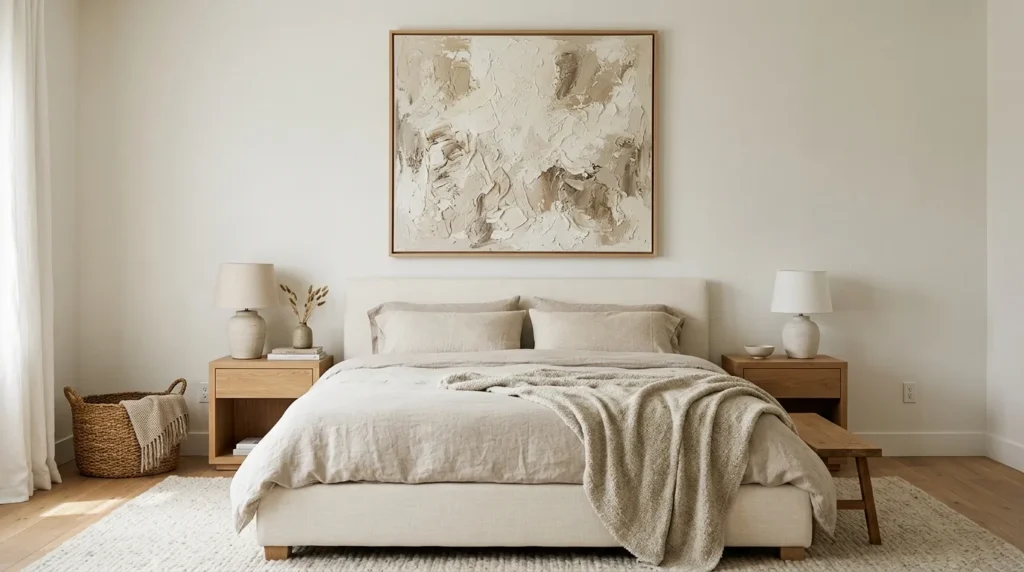
Quick Benefits
- Adds dimension above the bed
- Creates a visual focal point
- Prevents walls from feeling flat
- Works without strong colors
- Personalizes the bedroom
Why It Works
Texture shouldn’t stop at the floor and furniture.
Walls can also contribute to the overall tactile appearance of a bedroom.
Canvas artwork, woven wall hangings, plaster-style art, natural wood frames, and subtle dimensional pieces can add interest without relying on bold colors.
One larger textured artwork can often make a stronger statement than a collection of unrelated small decorations.
How To Style It
Choose artwork that shares colors with the bedding and furniture.
For a neutral bedroom, look for cream, beige, taupe, soft brown, muted green, or warm gray.
A large textured canvas above the bed can act as the room’s focal point.
A woven wall hanging can create a softer, more casual appearance.
Use natural wood frames when you want to reinforce the organic materials elsewhere in the room.
Keep the surrounding wall relatively quiet so the texture remains visible.
10. Soft Ambient Lighting
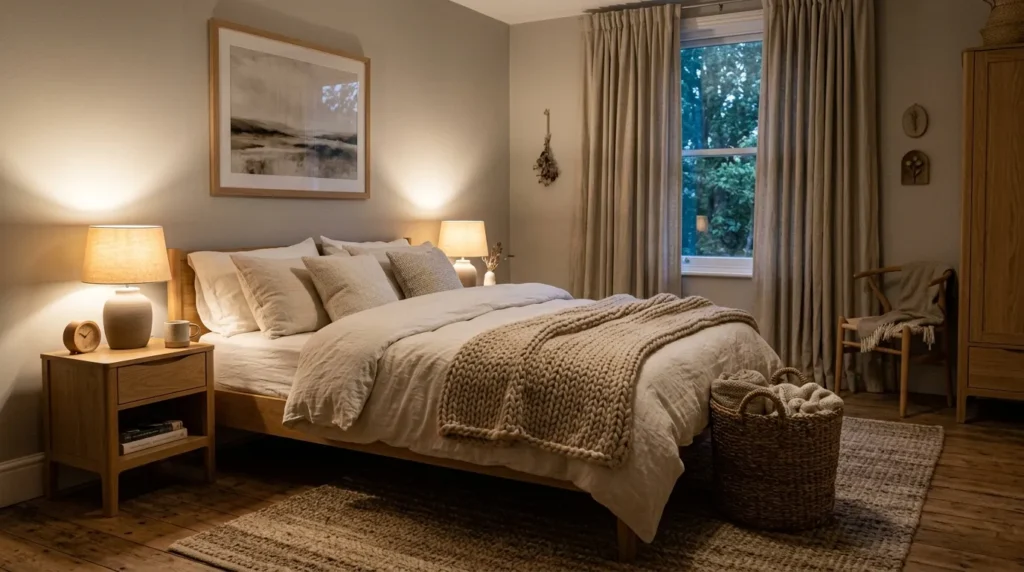
Quick Benefits
- Enhances fabric textures
- Creates a relaxing atmosphere
- Softens the room at night
- Adds warmth
- Completes the layered design
Why It Works
Lighting determines how textures actually appear.
A linen curtain looks different under strong overhead lighting than it does under warm, indirect illumination.
Soft ambient lighting creates shadows and highlights that help bedding, upholstery, wood grain, and woven materials become more noticeable.
Instead of depending on a single ceiling fixture, use several smaller light sources.
This gives the bedroom more depth and makes the space feel comfortable at different times of day.
How To Style It
Use bedside lamps with shades that diffuse light gently.
Add a floor lamp near a reading chair if you have one.
Wall sconces can work especially well when nightstand space is limited.
Choose bulbs appropriate for the fixtures and your desired atmosphere.
Avoid relying entirely on very bright overhead lighting at night.
The combination of natural daylight during the day and warm layered lighting after sunset allows the room’s textures to remain visible without making the atmosphere harsh.
How to Layer Bedroom Textures Without Making the Room Look Cluttered
Texture works best when there is a visual hierarchy.
You don’t need ten different fabrics.
Instead, choose a few major layers and allow each one to play a specific role.
Start With the Bed
Choose one dominant bedding material, such as linen or cotton.
Add One Heavy Texture
Use a knitted throw, quilt, or heavier blanket.
Introduce Natural Material
Add wood, rattan, bamboo, or another organic element.
Soften the Floor
Use a rug or bedside textile.
Finish With Small Details
A woven basket, ceramic vase, or upholstered bench can provide the final layer.
The important part is contrast.
Smooth against rough.
Soft against structured.
Matte against subtle sheen.
Light against slightly darker neutrals.
This approach creates depth without requiring lots of objects.
Best Bedroom Texture Combinations
If you’re unsure where to begin, these combinations are easy to adapt.
Linen + Wood + Wool
Relaxed, natural, and timeless.
Cotton + Boucle + Oak
Soft and contemporary.
Velvet + Linen + Brass
A little more elegant and sophisticated.
Woven Fabric + Rattan + Cotton
Relaxed and casual with an organic feel.
Wool + Leather + Wood
Warm and slightly more masculine.
Quilted Cotton + Linen + Natural Wood
Classic, comfortable, and easy to maintain.
Choose two or three primary materials and repeat them throughout the room.
How to Layer Textures in a Small Bedroom
A small bedroom doesn’t require fewer textures. It simply requires more restraint.
Focus on large surfaces rather than adding lots of accessories.
A textured duvet can provide significant visual interest.
A small rug can soften the floor.
A woven basket can add both storage and texture.
Wall-mounted lighting can introduce another material without taking up floor space.
Choose furniture with simple silhouettes so the room doesn’t become visually crowded.
Keep the color palette narrow.
When the colors are connected, you can use several different textures without the bedroom feeling chaotic.
One useful approach is to make the bed the primary textured focal point and keep the rest of the room relatively quiet.
Seasonal Bedroom Texture Ideas
Layering can also change with the seasons.
Spring
Use lightweight cotton, linen, washed fabrics, and lighter woven pieces.
Summer
Choose breathable bedding and reduce heavy blankets.
Fall
Introduce quilted covers, warmer throws, wool-style rugs, and richer natural wood tones.
Winter
Add chunky knits, heavier blankets, plush rugs, and upholstered accents.
You don’t need to redecorate the entire bedroom.
Swapping a few textiles can change the atmosphere while keeping your furniture and larger pieces consistent.
Common Texture Layering Mistakes
Using Too Many Similar Fabrics
If everything is fluffy or heavily woven, the room can lose contrast.
Ignoring Color
Texture works best when the colors still relate to one another.
Overloading the Bed
Too many pillows and blankets can make the bed difficult to use.
Mixing Too Many Patterns
If several fabrics have strong patterns, the room may feel busy.
Forgetting Hard Materials
Wood, ceramic, metal, and glass provide useful contrast against soft textiles.
Adding Texture Without Purpose
Every item should either serve a function or contribute meaningfully to the design.
Choosing Style Over Practicality
Bedrooms are used every day. Select materials that fit your cleaning routine, lifestyle, and household needs.
Frequently Asked Questions
What textures work best in a bedroom?
Linen, cotton, wool, boucle, woven fibers, velvet, wood, rattan, and soft rugs can all work well. The best combination depends on your decorating style. For a calm bedroom, choose several textures in related colors rather than using many different patterns.
How many textures should you use in a bedroom?
There is no strict number, but three to five clearly different materials can create plenty of depth. For example, combine linen bedding, a knitted throw, a wool-style rug, natural wood, and a woven basket. You don’t need every texture to appear equally throughout the room.
How can I make a bedroom look cozy without adding clutter?
Focus on textiles and larger surfaces rather than small decorative objects. Layer the bedding, add a soft rug, use curtains with natural texture, and introduce one or two warm materials such as wood or woven fibers. This creates comfort without filling every surface.
Can I layer textures in a neutral bedroom?
Yes. Neutral bedrooms are particularly well suited to texture because materials can provide visual interest without introducing many colors. Combine ivory, cream, beige, taupe, and warm brown with linen, cotton, wool, wood, and woven materials.
How do I layer textures on a bed?
Start with sheets, then add a duvet or quilt, followed by a throw blanket and a limited number of pillows. Use fabrics with different surfaces and keep the colors complementary. A smooth duvet paired with linen pillows and a chunky knitted throw creates noticeable depth without requiring bold patterns.
How can I make a small bedroom feel cozy?
Use appropriately scaled furniture, layered bedding, a soft rug, warm lighting, and a few natural materials. Keep the palette cohesive and avoid unnecessary furniture. Texture can make a small bedroom feel comfortable without taking up additional floor space.
Is boucle good for bedroom furniture?
Boucle can work well on bedroom chairs, benches, ottomans, and headboards. Its looped texture creates softness and visual interest. However, consider cleaning requirements, durability, and household use before selecting it, especially in homes with pets or young children.
Conclusion
Decorating with soft layered textures is one of the easiest ways to make a bedroom feel warmer and more complete without relying on bold colors or excessive accessories.
Start with the largest surfaces.
Layer the bed with complementary fabrics. Add a rug beneath your feet. Soften the windows with relaxed curtains. Then introduce natural wood, woven storage, upholstered furniture, or a textured piece of artwork.
The goal isn’t to make every surface interesting.
It’s to create enough contrast that the room feels dimensional while still remaining peaceful.
If your bedroom currently feels flat, begin with one change. A knitted throw across the bed or a textured rug can immediately introduce a new layer. From there, look for opportunities to combine smooth and rough surfaces, soft and structured materials, and warm and cool textures.
Keep your color palette connected, leave some negative space, and choose pieces that are practical enough for everyday life.
A beautifully layered bedroom should feel inviting rather than overly decorated.
When the textures work together naturally, the room becomes a place that feels comfortable, relaxed, and easy to enjoy every day.
Related Articles
- 10 Soft Minimal Aesthetic Bedroom Ideas
- 10 Modern Bedroom Ideas with Cozy Hotel-Inspired Style
- How to Make a Small Bedroom Feel Bright with Natural Light
- 10 Bedroom Wall Decor Ideas That Add Warmth
- How to Decorate a Bedroom with Designer Furniture Placement