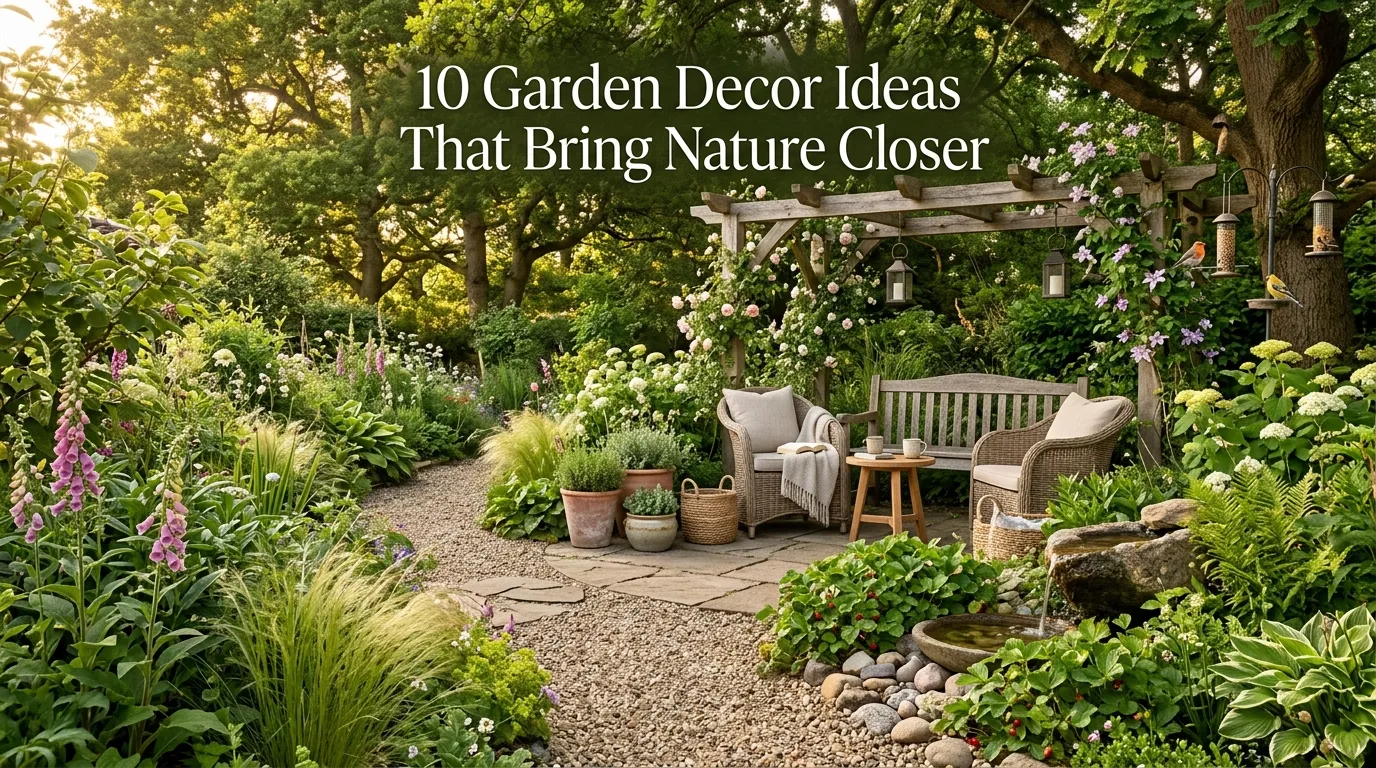
10 Garden Decor Ideas That Bring Nature Closer
A garden can be much more than a collection of plants around the edges of a yard. With thoughtful decor, it can become a place where nature feels closer, everyday routines slow down, and outdoor spaces feel connected to the landscape.
The best garden decor doesn’t compete with nature. It works alongside it.
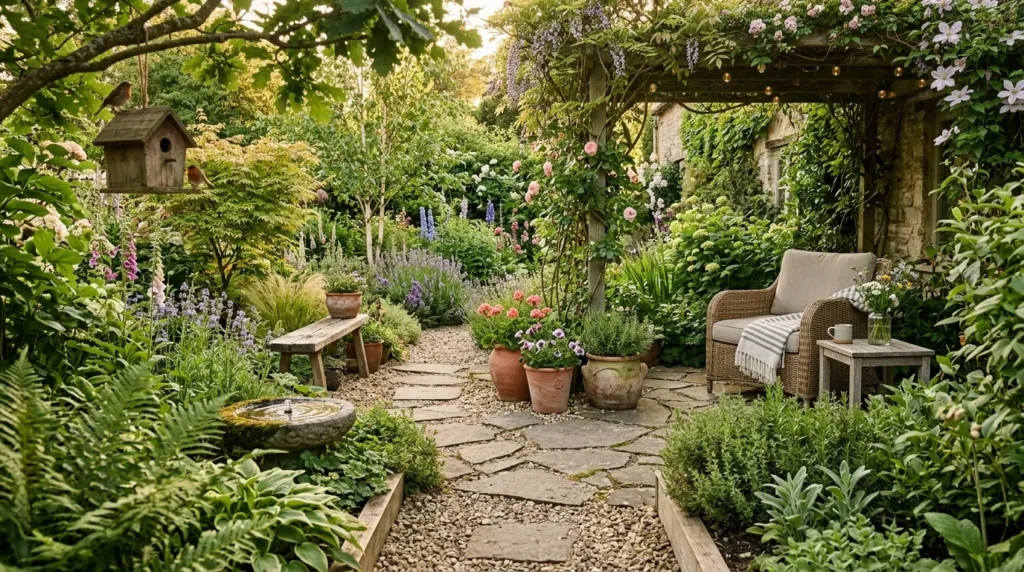
A weathered wooden bench beneath a tree, a stone pathway surrounded by groundcover, or a small birdbath tucked among flowers can make a garden feel more inviting without making it look overly decorated. I’ve found that the most beautiful outdoor spaces often have a relaxed quality. They look intentional, but not overly arranged.
This approach is especially useful for homeowners working with different garden sizes. A large backyard can accommodate a dedicated seating area, while a small courtyard might only need a container garden and one comfortable chair. Even a narrow side yard can become more enjoyable with vertical planting, natural materials, and soft lighting.
When choosing outdoor decor, think about materials as much as appearance. Wood, stone, terracotta, woven fibers, and aged metal generally complement greenery because they echo textures already found outdoors.
It also helps to consider how the garden will be used. Do you want somewhere to enjoy morning coffee? A quiet corner for reading? A space that attracts birds and pollinators? Or simply a prettier view from the kitchen window?
These ten ideas focus on creating outdoor spaces that feel connected to the natural world while remaining practical, comfortable, and easy to personalize.
Table of Contents
1. Natural Stone Pathways
Create an organic garden route using stone surrounded by greenery.
2. Rustic Garden Seating
Add a comfortable place to sit among plants and flowers.
3. Bird Friendly Features
Invite more wildlife into the garden with simple habitat-friendly additions.
4. Terracotta Containers
Use natural clay pots to introduce warmth and earthy texture.
5. Living Green Walls
Bring planting upward when ground space is limited.
6. Water Garden Details
Introduce the calming presence of water with a small garden feature.
7. Wooden Garden Structures
Add trellises, arbors, or screens that support plants naturally.
8. Natural Garden Lighting
Use gentle illumination to extend the garden’s appeal into the evening.
9. Wildflower Corners
Create relaxed planting areas that feel less formal and more natural.
10. Nature Inspired Accents
Finish the garden with subtle decor that complements its surroundings.
1. Natural Stone Pathways
Quick Benefits
- Adds structure without looking artificial
- Connects different garden areas
- Complements plants
- Creates visual movement
- Works with many landscape styles
Why It Works
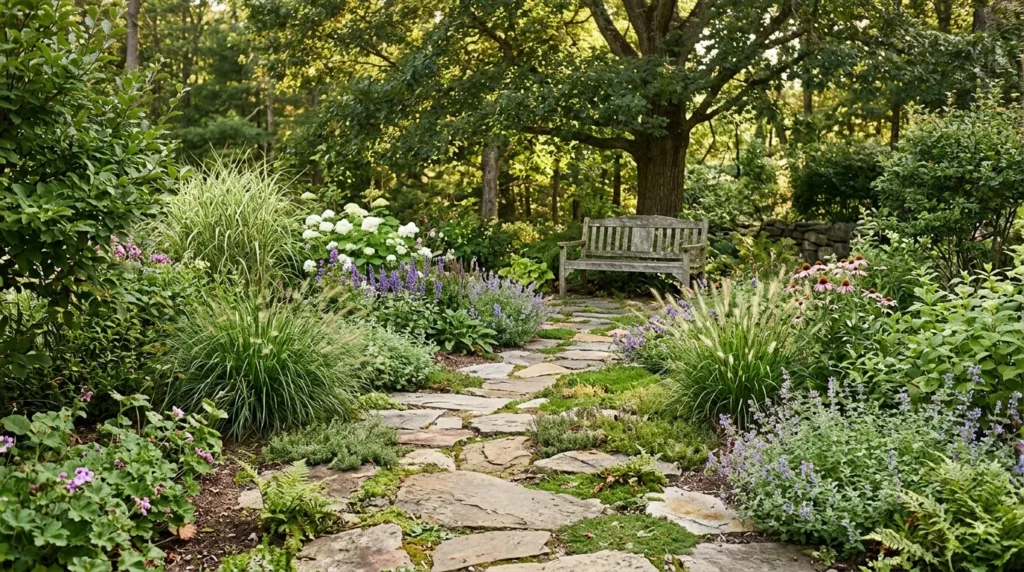
A stone pathway can make a garden feel like a place worth exploring.
Rather than seeing the yard as one open area, a path creates a gentle progression through planting beds, seating areas, trees, and garden features.
Natural stone works particularly well because its irregular shapes and earthy colors blend naturally with surrounding greenery.
Over time, weathering can make the pathway look even more integrated with the landscape.
The key is avoiding a path that looks too perfectly manufactured.
A slightly informal arrangement often feels more connected to nature.
How To Style It
Choose stone that complements the existing landscape.
Flagstone, irregular stepping stones, gravel, and natural pavers can all create different effects.
Place stones through groundcover or low-growing plants when appropriate.
Leave enough space for comfortable walking.
For a relaxed garden, avoid making every edge perfectly straight.
Add moss-friendly or shade-tolerant plants around suitable areas, while keeping walking surfaces clear and stable.
A simple stone path leading toward a bench, fountain, tree, or garden gate can create a beautiful destination.
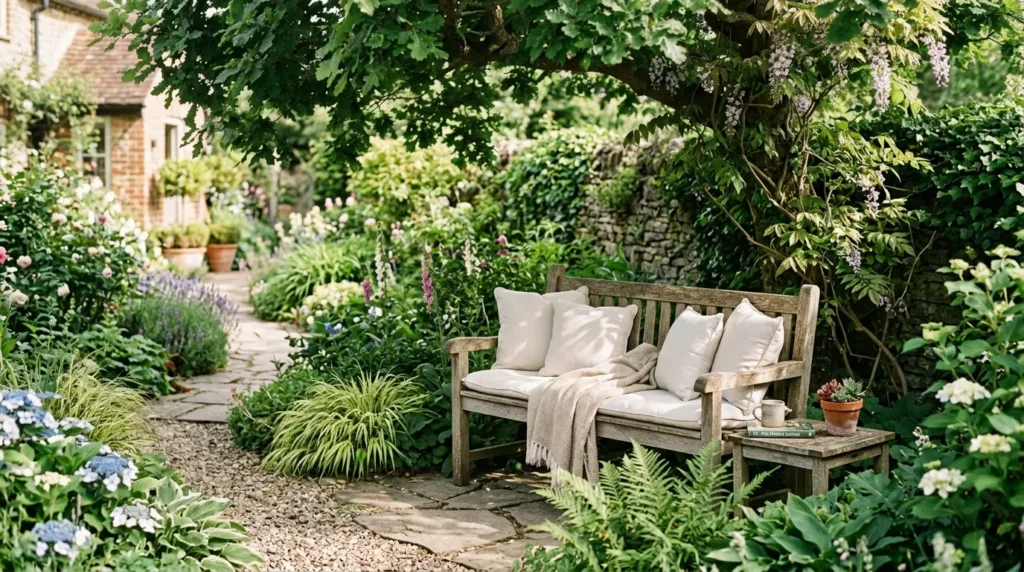
2. Rustic Garden Seating
Quick Benefits
- Creates a place to enjoy the garden
- Makes unused corners functional
- Adds natural texture
- Encourages outdoor relaxation
- Works in small and large gardens
Why It Works
A garden becomes more meaningful when you can actually spend time in it.
A simple bench beneath a mature tree can create more atmosphere than a yard filled with decorative objects.
Wooden benches, Adirondack-style chairs, woven seating, and simple metal furniture can all work depending on the garden’s character.
The important thing is placement.
Seating feels more connected to nature when it’s positioned among plants rather than isolated on a large empty patio.
How To Style It
Look for a spot with a pleasant view.
Place a bench near flowering plants, ornamental grasses, a tree, or a garden border.
For sunny areas, consider shade from a tree, pergola, umbrella, or other appropriate structure.
Add outdoor cushions in earthy tones such as cream, olive, tan, or muted brown.
A small side table can hold a drink or book.
Keep the surrounding decor simple.
Let the plants provide most of the visual interest.
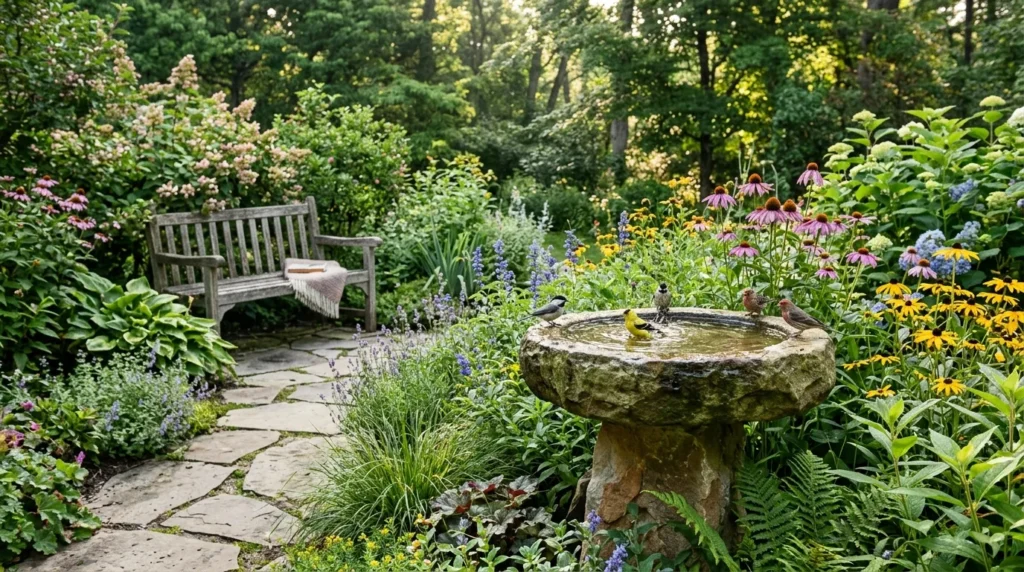
3. Bird Friendly Features
Quick Benefits
- Encourages wildlife
- Adds movement and sound
- Makes the garden feel alive
- Creates educational opportunities
- Supports a more nature-focused space
Why It Works
One of the simplest ways to bring nature closer is to make the garden more welcoming to birds and other beneficial wildlife.
Bird activity adds movement that decorative objects can’t replicate.
A birdbath, native plants, sheltering shrubs, and appropriate food sources can turn an ordinary garden into a more active outdoor environment.
Different species have different habitat requirements, so local conditions matter.
Rather than treating wildlife features as decoration alone, consider how each element contributes to habitat.
How To Style It
Place a birdbath where you can enjoy viewing it while keeping it appropriately positioned for safety.
Surround it with plants rather than placing it in an entirely bare area.
Native plants can provide food and shelter suited to local wildlife.
Avoid creating unnecessary hazards near windows or using materials that may be harmful to animals.
Keep water features clean and maintained.
A small wildlife-friendly corner can become one of the most enjoyable parts of the garden.
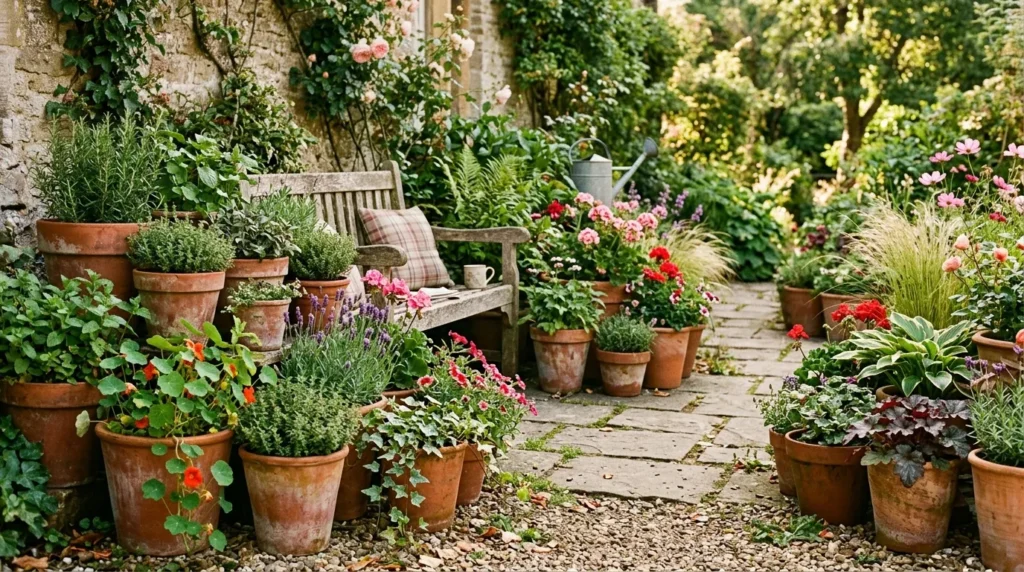
4. Terracotta Containers
Quick Benefits
- Adds earthy color
- Works with many plants
- Provides flexible placement
- Creates visual warmth
- Suits patios and small gardens
Why It Works
Terracotta has a natural, imperfect appearance that pairs beautifully with greenery.
Its warm orange-brown color adds contrast without competing with flowers or foliage.
The material also develops a weathered appearance over time, which can make containers feel increasingly integrated into the garden.
For renters or gardeners with limited planting space, containers offer an easy way to introduce more greenery without changing the entire landscape.
How To Style It
Group containers in different sizes rather than lining up identical pots.
Use terracotta with herbs, ornamental grasses, flowering plants, or small shrubs suited to the growing conditions.
Place larger pots near entrances or seating areas.
Use smaller containers on steps, shelves, or plant stands.
Choose plants based on sunlight, climate, drainage, and watering requirements.
Allow some visual variation.
A slightly imperfect grouping often looks more natural than a perfectly symmetrical arrangement.
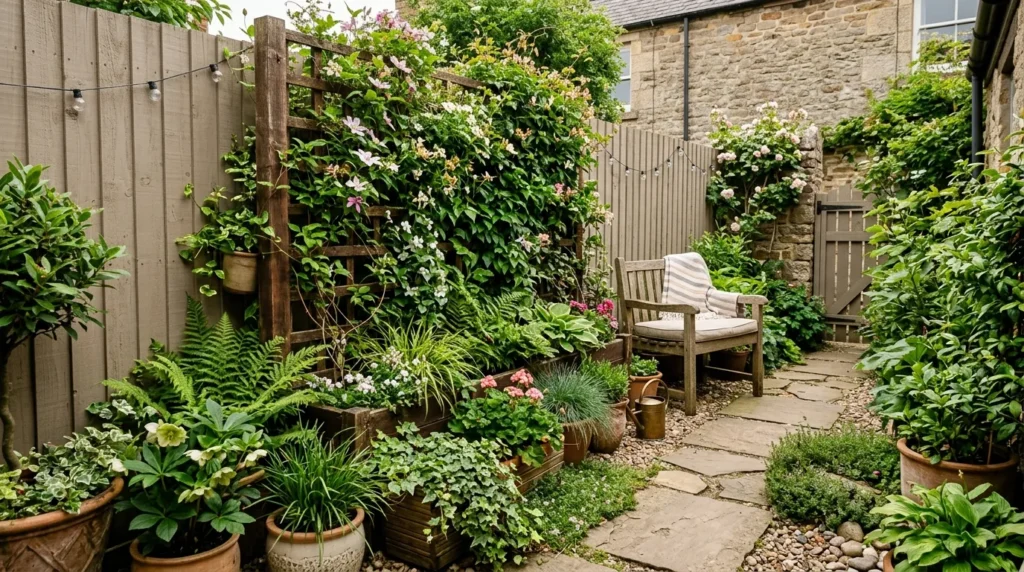
5. Living Green Walls
Quick Benefits
- Uses vertical space
- Adds greenery to small areas
- Creates privacy
- Softens hard surfaces
- Makes walls more visually interesting
Why It Works
Vertical planting brings greenery closer to eye level.
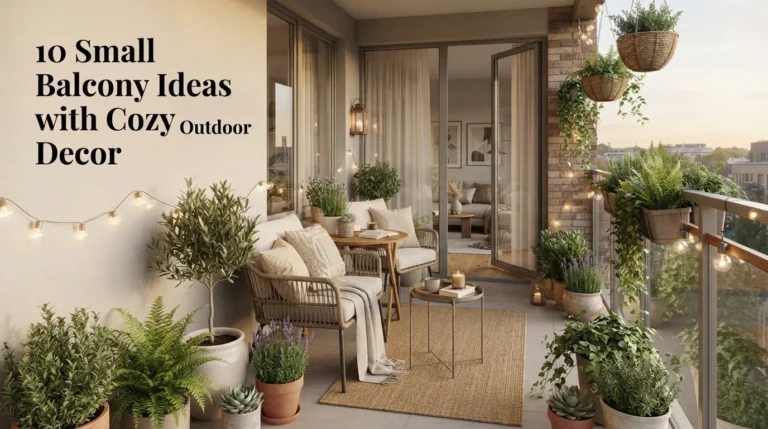
This is especially valuable in small yards, balconies, patios, and narrow side gardens where horizontal planting space is limited.
A trellis covered with climbing plants can soften a plain fence.
Wall-mounted planters can create a layered planting display.
Even a simple row of containers can introduce more foliage without taking up much floor space.
How To Style It
Start with the wall or fence you want to soften.
Choose plants appropriate for the available sunlight and local growing conditions.
Climbing plants can create a natural screen over time.
For container-based arrangements, combine plants with different heights and textures.
Use a consistent planter material if you want a more modern appearance.
For a relaxed garden, mix several complementary container shapes.
Make sure irrigation, drainage, structural support, and access for maintenance are considered.
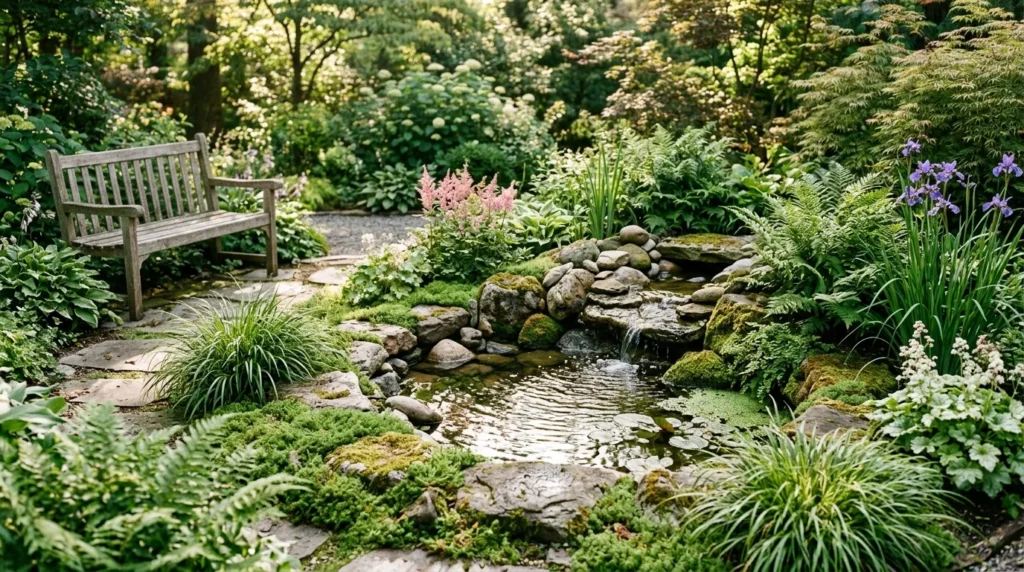
6. Water Garden Details
Quick Benefits
- Adds sound and movement
- Creates a focal point
- Attracts wildlife
- Introduces reflective surfaces
- Adds a calming element
Why It Works
Water has a special relationship with garden design.
Even a small water feature can change the atmosphere through movement, reflection, and sound.
A compact fountain, birdbath, pond, or container water garden can become a natural focal point.
Water features also interact beautifully with surrounding plants.
Leaves reflect across the surface, while nearby greenery softens the edges.
How To Style It
Choose a water feature appropriate for the size of your garden.
A small bubbling fountain can work in a compact courtyard.
A larger pond may suit a spacious landscape.
Surround the feature with plants that tolerate the local conditions.
Avoid overcrowding it.
Leave enough open water for the feature to remain visible.
If attracting wildlife is the priority, research appropriate water depth, access, cleaning, and local wildlife needs.
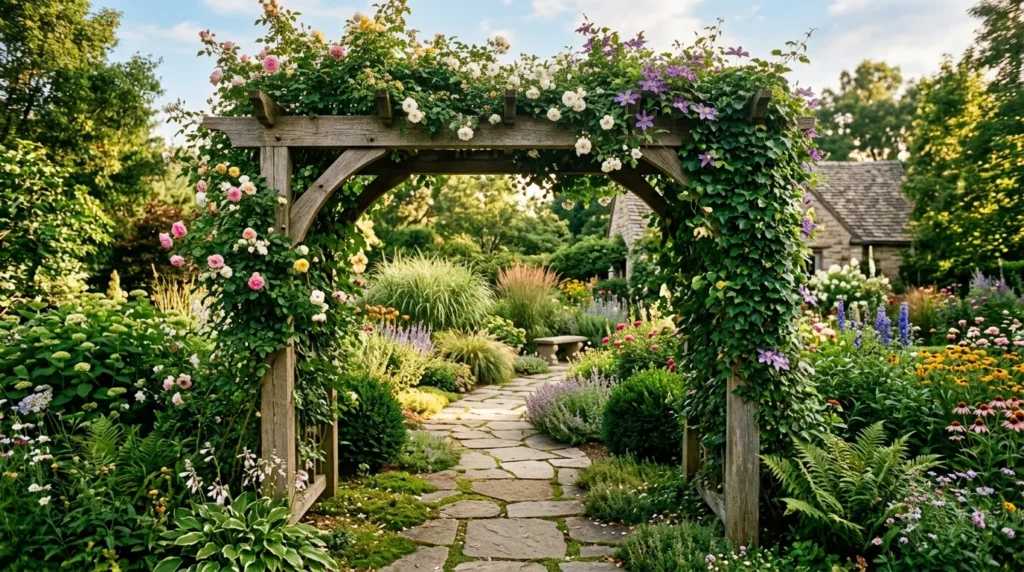
7. Wooden Garden Structures
Quick Benefits
- Adds vertical interest
- Supports climbing plants
- Defines outdoor areas
- Creates shade or privacy
- Complements greenery
Why It Works
Wooden structures can make a garden feel more layered.
A trellis gives climbing plants somewhere to grow.
An arbor can frame an entrance.
A pergola can define an outdoor sitting area.
A simple wooden screen can create privacy while providing a surface for greenery.
These structures are useful because they serve both decorative and practical purposes.
Instead of adding an object simply for appearance, you’re creating an architectural framework for the garden.
How To Style It
Choose a structure appropriate to the scale of the yard.
A small trellis can work beside a patio.
A larger arbor can frame a pathway.
Allow climbing plants to become part of the structure over time.
Use natural or stained wood when you want the material to blend with the landscape.
Keep structural lines relatively simple.
The plants can provide softness and complexity.
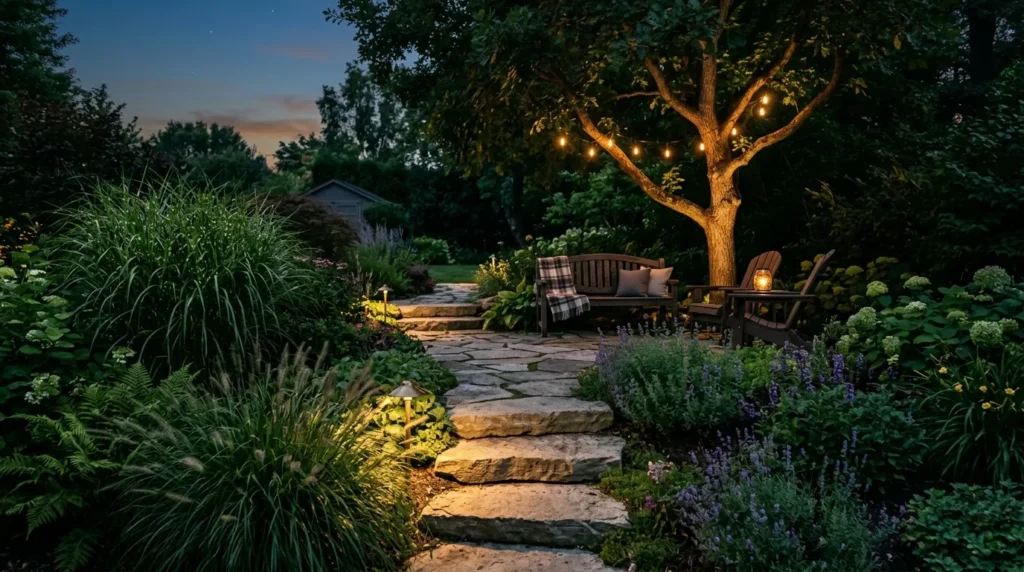
8. Natural Garden Lighting
Quick Benefits
- Extends outdoor enjoyment
- Highlights plants
- Improves pathway visibility
- Creates evening ambiance
- Adds depth after dark
Why It Works
A garden can feel completely different after sunset.
Thoughtful lighting reveals tree shapes, pathways, planting beds, and architectural features that may disappear in darkness.
The best outdoor lighting often feels subtle.
Instead of illuminating everything equally, focus on selected areas.
This creates contrast and prevents the garden from looking overly bright.
How To Style It
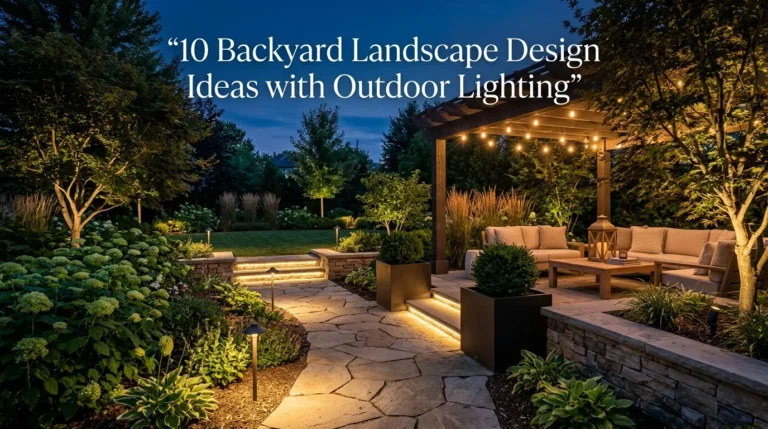
Use low-level pathway lighting where needed.
Highlight a mature tree or interesting plant with appropriately positioned landscape lighting.
Use lantern-style fixtures around seating areas.
Solar lights can be useful in suitable locations, while wired systems offer other installation possibilities.
Avoid excessive brightness.
Position fixtures carefully to reduce glare and avoid shining unnecessary light into neighboring properties or windows.
The goal is to reveal the garden rather than overpower it.
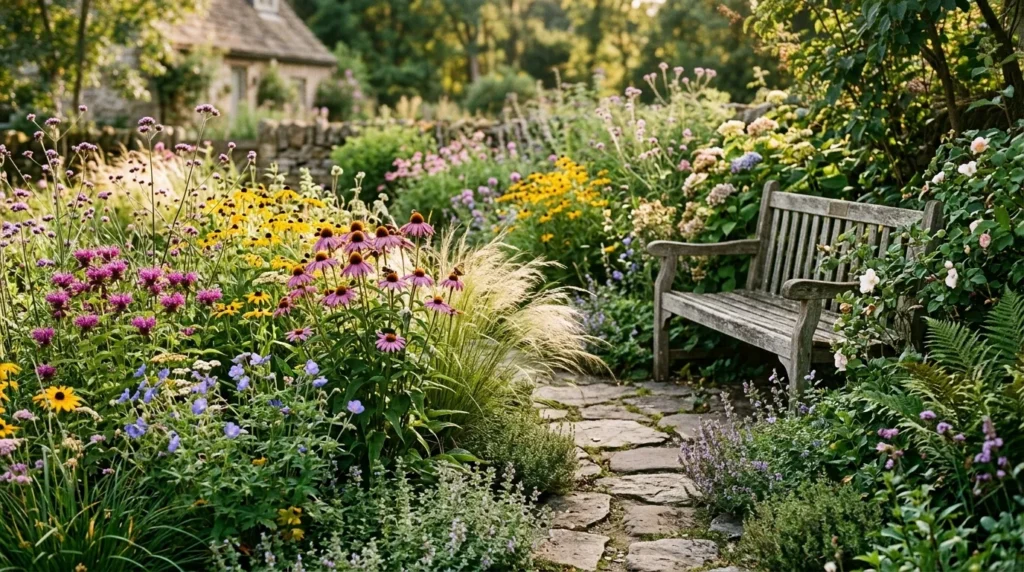
9. Wildflower Corners
Quick Benefits
- Creates a relaxed appearance
- Supports pollinators
- Adds seasonal color
- Requires less formal structure
- Encourages biodiversity
Why It Works
A wildflower-inspired corner can make a carefully landscaped garden feel more natural.
Instead of arranging every plant in strict rows, allow compatible flowers and grasses to create a looser composition.
This style works particularly well at the edge of a lawn, along a fence, beside a pathway, or around a mature tree.
It also creates opportunities to support pollinators through suitable plant choices.
How To Style It
Research native or regionally appropriate plants for your location.
Combine different heights, bloom times, foliage shapes, and textures.
Avoid invasive species.
Use taller plants toward the back and shorter varieties near paths.
Let the arrangement feel informal without becoming neglected.
A defined border can help a natural planting area look intentional.
A few carefully placed stones or a simple wooden edging can provide structure.
10. Nature Inspired Accents
Quick Benefits
- Completes the garden
- Adds personality
- Works with existing landscaping
- Creates visual details
- Keeps decoration connected to nature
Why It Works
Small details can make a garden feel personal, but too many decorative objects can quickly distract from the plants.
Nature-inspired accents work best when they complement what is already growing.
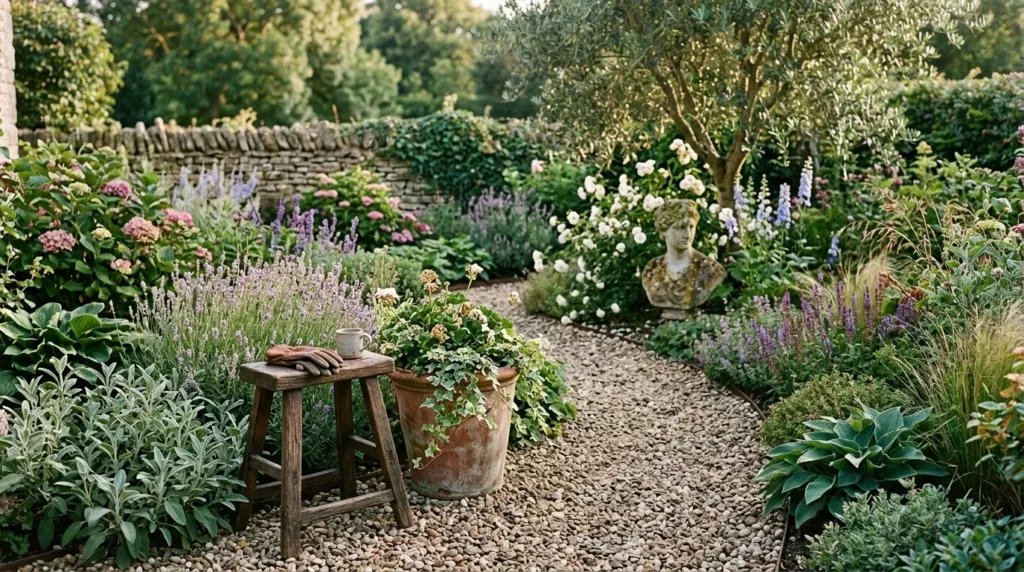
Think of stone sculptures, weathered wood, handmade ceramics, woven baskets, simple garden mirrors placed appropriately, or subtle metal pieces.
The goal isn’t to fill every empty space.
It’s to create a few moments that reward closer attention.
How To Style It
Choose accents that repeat materials already found in the landscape.
A stone feature can connect to a pathway.
A wooden stool can echo a fence or pergola.
A terracotta planter can repeat the warm colors of nearby flowers.
Place decorative pieces where they can be noticed naturally.
Avoid overcrowding planting beds.
One well-positioned object can have more impact than a collection of unrelated decorations.
How To Make a Garden Feel More Connected to Nature
Garden decor works best when it supports the landscape instead of competing with it.
Use Natural Materials
Wood, stone, terracotta, woven fibers, and natural-looking finishes generally blend easily with plants.
Layer Different Heights
Combine groundcover, medium plants, shrubs, trees, containers, and vertical structures.
Leave Some Open Space
Not every area needs decoration or planting.
Attract Wildlife
Native plants, water, shelter, and appropriate habitat features can encourage local wildlife.
Create Garden Destinations
A bench, small table, or reading chair gives you a reason to spend time among the plants.
Embrace Imperfection
Weathered wood, irregular stones, and naturally changing plants can make an outdoor space feel more authentic.
Garden Decor Materials That Blend With Nature
Choosing the right materials can make decorative elements feel like part of the landscape.
Wood: Warm, organic, and versatile.
Stone: Durable and naturally connected to outdoor environments.
Terracotta: Earthy and especially effective with greenery.
Woven Materials: Useful for seating, baskets, and softer decorative details.
Ceramic: Adds color and handcrafted texture.
Metal: Works well when used selectively, especially weathered or understated finishes.
Try to repeat materials throughout the garden.
For example, a stone pathway, stone planter, and small stone bench can create visual continuity.
Small Garden Ideas for a Natural Feeling
You don’t need a large yard to create a nature-inspired outdoor space.
Use vertical gardening to take advantage of walls and fences.
Choose containers in different heights.
Add one comfortable chair rather than trying to fit a complete furniture set.
Use a narrow pathway to create movement.
Hang appropriate planters where they can receive suitable light.
Choose plants with different leaf shapes and heights.
Create a small wildlife-friendly feature.
Use warm, subtle lighting around seating or pathways.
A compact garden often feels more inviting when every element has a clear purpose.
Common Garden Decor Mistakes
Adding Too Much Decor
Plants already provide visual interest. Too many ornaments can make the garden feel crowded.
Ignoring Scale
Oversized furniture can overwhelm a small garden.
Choosing Materials That Clash
Highly polished or overly synthetic-looking pieces may feel disconnected from an organic landscape.
Forgetting Maintenance
Every feature adds another element to clean, repair, water, prune, or maintain.
Blocking Pathways
Decor should never interfere with comfortable movement through the garden.
Ignoring Wildlife Safety
Water features, lighting, plants, and structures can affect wildlife. Research local recommendations before adding habitat features.
Using Only One Plant Texture
A garden with identical foliage throughout can feel flat. Mix compatible leaf shapes, heights, and textures.
FAQ
How can I make my garden feel more natural?
Use organic materials such as wood, stone, terracotta, and woven fibers. Combine different plant heights and textures, create informal pathways, and leave some areas less structured. Wildlife-friendly features and natural-looking seating can also make the garden feel more connected to its surroundings.
What garden decor looks natural?
Wooden benches, natural stone, terracotta pots, woven baskets, simple ceramic pieces, and understated metal accents tend to blend well with plants. Choose materials and colors that echo the landscape rather than competing with flowers and foliage.
How do I make a small garden feel connected to nature?
Use vertical planting, containers, natural materials, and a few carefully chosen focal points. A small bench, narrow pathway, climbing plant, or bird-friendly feature can make a compact garden feel much more immersive without requiring a large amount of space.
What can I add to my garden to attract birds?
Bird-friendly gardens can include suitable native plants, clean water sources, sheltering vegetation, and appropriate food resources. Research the species common in your area because habitat needs vary. Keep water features maintained and consider placement carefully for wildlife safety.
How do I decorate a garden without making it look cluttered?
Start with the plants and landscape structure, then add only a few decorative pieces. Repeat materials such as wood or stone to create cohesion. Keep pathways open and leave negative space around important plants and focal features.
What materials work best for natural garden decor?
Wood, stone, terracotta, ceramic, woven materials, and weather-resistant metal can all work well. Consider durability, climate, maintenance, and the existing landscape before choosing materials. Natural-looking finishes generally blend more easily with plants.
How can I make my garden enjoyable at night?
Use subtle outdoor lighting to illuminate pathways, seating areas, trees, and selected plants. Avoid excessive brightness and glare. Layering several low-intensity light sources can create a more inviting atmosphere while allowing the garden’s natural forms to remain visible.
Conclusion
The most inviting gardens don’t necessarily contain the most decoration.
They contain the right elements.
A stone pathway can encourage you to explore. A wooden bench can create a quiet place to sit. Terracotta containers can bring warmth to a patio. A birdbath can add movement and sound. Climbing plants can soften a fence, while subtle lighting can reveal the garden after sunset.
The common thread is simple: the decor works with nature instead of competing with it.
Start by looking at what your garden already offers.
Notice the mature trees, interesting views, empty corners, sunny spots, shaded areas, and natural pathways.
Then choose one or two additions that make those features more enjoyable.
For a small space, that might mean a vertical garden and a comfortable chair. For a larger backyard, it could be a stone pathway leading to a secluded seating area.
Don’t feel pressure to transform everything at once.
A garden becomes more beautiful as plants grow, materials weather, and the space develops its own character.
Choose natural materials, keep the decoration intentional, and leave room for the landscape to take center stage.
The result is an outdoor space that feels less like a decorated yard and more like a place where you can genuinely experience nature.
Related Articles
- 10 Small Garden Ideas for Beautiful Outdoor Spaces
- 10 Backyard Landscape Design Ideas with Beautiful Greenery
- 10 DIY Garden Projects That Transform Small Yards
- 10 Garden Decor Ideas That Look Expensive on a Budget
- 10 Small Balcony Ideas for Cozy Apartment Living