How to Decorate a Living Room Like a Home Stylist
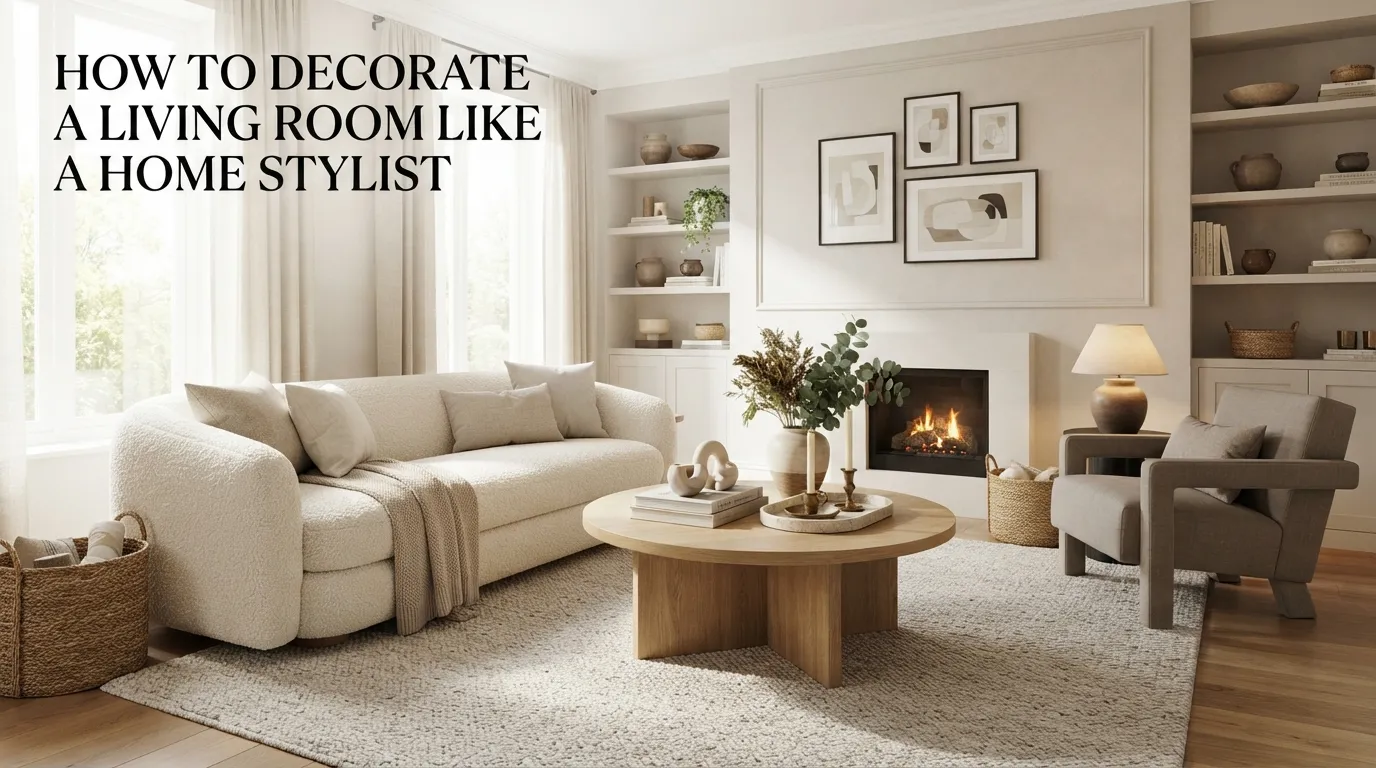
A beautifully decorated living room rarely comes together by accident. The rooms that feel polished, comfortable, and effortlessly put together usually have a few things in common: furniture is properly scaled, colors repeat naturally, lighting is layered, and decorative pieces have enough breathing room to be appreciated.
You don’t need a professional interior designer or a huge decorating budget to create that effect.
A home stylist’s approach is often less about buying more and more about making thoughtful decisions with what you already have. A sofa might look completely different after being repositioned. A coffee table can feel intentional when it’s styled in groups instead of covered with accessories. Even a simple neutral room can gain character through layered textures, artwork, greenery, and warm lighting.
One thing that works especially well is decorating in stages. Start with the room’s largest elements, establish the layout, then build the color palette and finally add smaller accessories. This prevents the common problem of buying individual pieces that look beautiful on their own but don’t work together.
For a comfortable American home, the living room also needs to function beyond photographs. It should have places for people to sit, surfaces that are easy to use, adequate lighting for evenings, and enough open space to move naturally through the room.
The ideas below show how to approach a living room the way a home stylist might: with intention, proportion, repetition, texture, and editing.
Whether you’re refreshing a family room, decorating an apartment, or starting with an almost-empty space, these techniques can help you create a room that looks finished while still feeling like home.
Table of Contents
1. Start With Layout
Create a functional furniture arrangement before adding decorative details.
2. Build a Color Palette
Choose a restrained group of colors that gives the room a cohesive appearance.
3. Balance Furniture Scale
Combine furniture proportions that suit the room and work comfortably together.
4. Layer Natural Textures
Use wood, linen, wool, woven materials, and ceramics to create visual warmth.
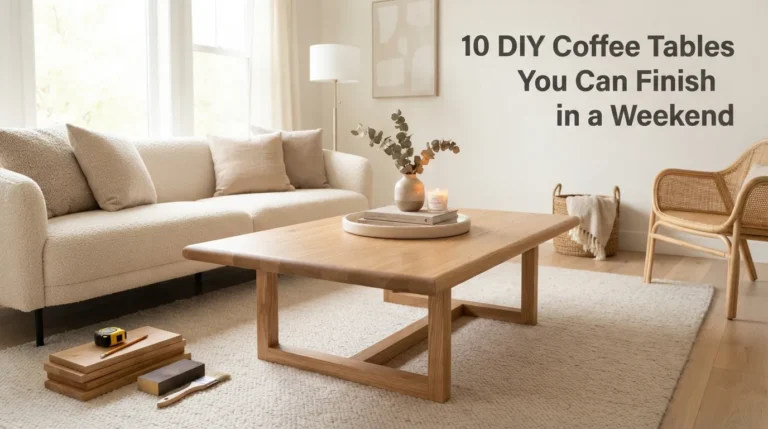
5. Style the Coffee Table
Create an attractive focal point without sacrificing everyday functionality.
6. Create Lighting Layers
Combine multiple light sources to make the room comfortable throughout the day.
7. Add Statement Artwork
Use appropriately scaled artwork to give the room personality and visual focus.
8. Arrange Decorative Groups
Group accessories thoughtfully instead of scattering objects across every surface.
9. Bring In Greenery
Use plants and organic shapes to add freshness and soften hard furniture lines.
10. Edit the Room
Remove unnecessary pieces so the final design feels intentional rather than crowded.
1. Start With Layout
Quick Benefits
- Improves everyday function
- Creates better conversation areas
- Makes the room easier to navigate
- Helps furniture feel proportional
- Gives decorating a clear foundation
Why It Works
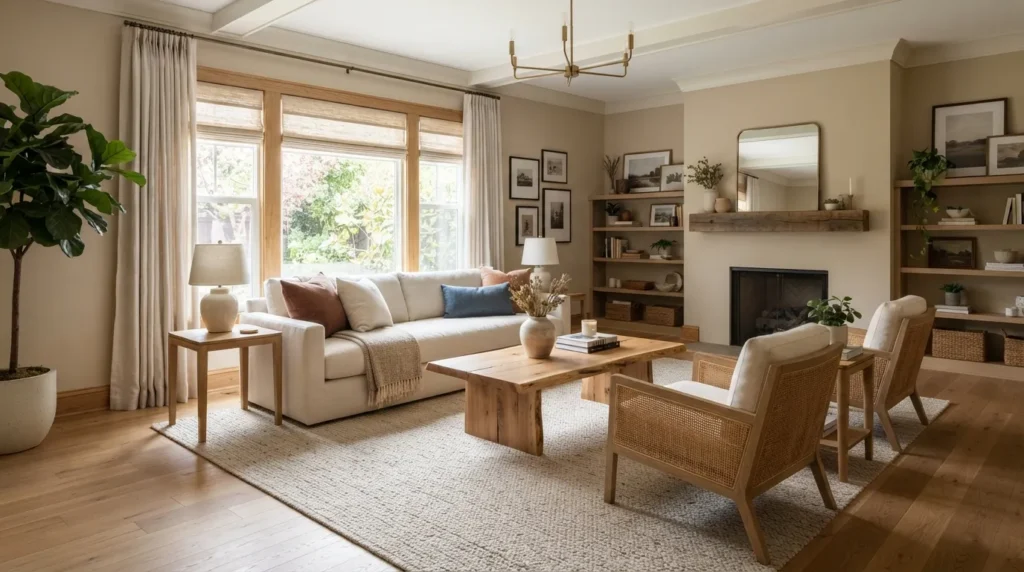
A home stylist typically considers the furniture arrangement before worrying about accessories.
That’s because even beautiful furniture can look awkward when it’s pushed against walls without a clear relationship to the rest of the room.
The living room should have an obvious purpose. If you regularly entertain, create a comfortable conversation area. If the room is primarily for television and family evenings, make sure seating has a practical relationship to the screen. If it’s also a reading space, leave room for a chair and appropriate lighting.
You don’t always need to place every piece against a wall.
Pulling a sofa slightly forward can create a more intimate seating arrangement while giving the room better visual depth.
How To Style It
Begin by measuring the room and your largest furniture pieces.
Use painter’s tape on the floor to test potential arrangements before moving heavy furniture.
Place the sofa first.
Then position chairs, accent tables, and the coffee table around the main seating area.
Create comfortable walking paths between furniture.
Avoid blocking doors, windows, heating vents, or important access points.
If the room is large, consider creating two smaller zones rather than leaving one oversized empty area.
A conversation area can sit near the center while a reading chair occupies an unused corner.
2. Build A Color Palette
Quick Benefits
- Creates visual cohesion
- Makes shopping easier
- Helps existing furniture work together
- Prevents random-looking decor
- Gives the room a polished appearance
Why It Works
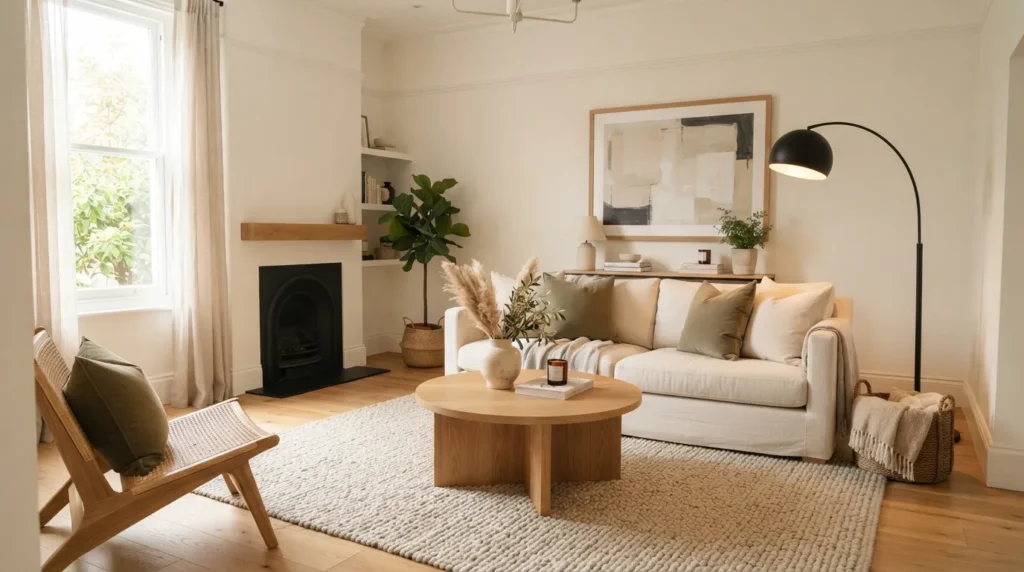
One of the easiest ways to make a living room look professionally styled is to repeat a small number of colors throughout the space.
That doesn’t mean everything needs to match.
Instead, choose a primary color, a supporting neutral, and one or two accent shades.
For example, a warm white sofa might work with beige walls, natural oak furniture, muted olive accents, and small touches of black.
The colors don’t need to appear in equal amounts.
A dominant neutral can cover most of the room while accent colors appear through pillows, artwork, rugs, books, or decorative objects.
How To Style It
Start with the item you’re keeping, such as a sofa, area rug, or favorite artwork.
Pull two or three colors from it.
Use the dominant shade for larger pieces.
Introduce the secondary color through textiles and medium-sized furniture.
Use the accent color sparingly.
Repeat important colors at least a few times around the room.
For example, if you introduce muted green in a pillow, repeat it subtly in artwork or greenery.
This creates connection without making the room feel overly coordinated.
3. Balance Furniture Scale
Quick Benefits
- Makes the room feel proportionate
- Prevents oversized furniture from dominating
- Creates visual balance
- Improves comfort
- Makes decorating easier
Why It Works
A common decorating mistake is choosing furniture based only on whether a piece looks attractive by itself.
Scale matters just as much.
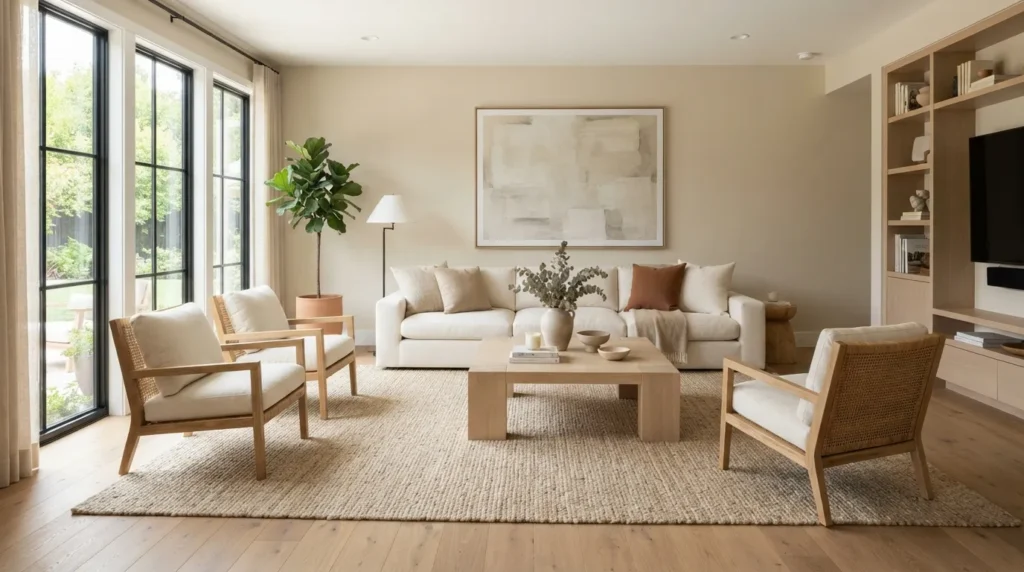
A very small coffee table can disappear in front of a large sectional. Tiny artwork may look lost above a substantial sofa. An oversized chair can make a narrow room difficult to navigate.
Home stylists pay attention to the relationship between pieces.
The furniture doesn’t need to be identical, but it should feel as though it belongs together.
Different shapes can actually make a room more interesting when their proportions are balanced.
How To Style It
Start with your largest piece, usually the sofa or sectional.
Choose a coffee table that is substantial enough to relate to it.
Pair large seating with appropriately sized artwork.
If your sofa is visually heavy, use a substantial rug to anchor the arrangement.
For smaller rooms, choose furniture with slimmer profiles and raised legs when practical.
For larger rooms, don’t be afraid to use bigger pieces.
The goal isn’t to make every object small.
It’s to make every piece appropriate to the space around it.
4. Layer Natural Textures
Quick Benefits
- Makes neutral rooms more interesting
- Adds warmth
- Creates visual depth
- Makes the room feel comfortable
- Supports a sophisticated look
Why It Works
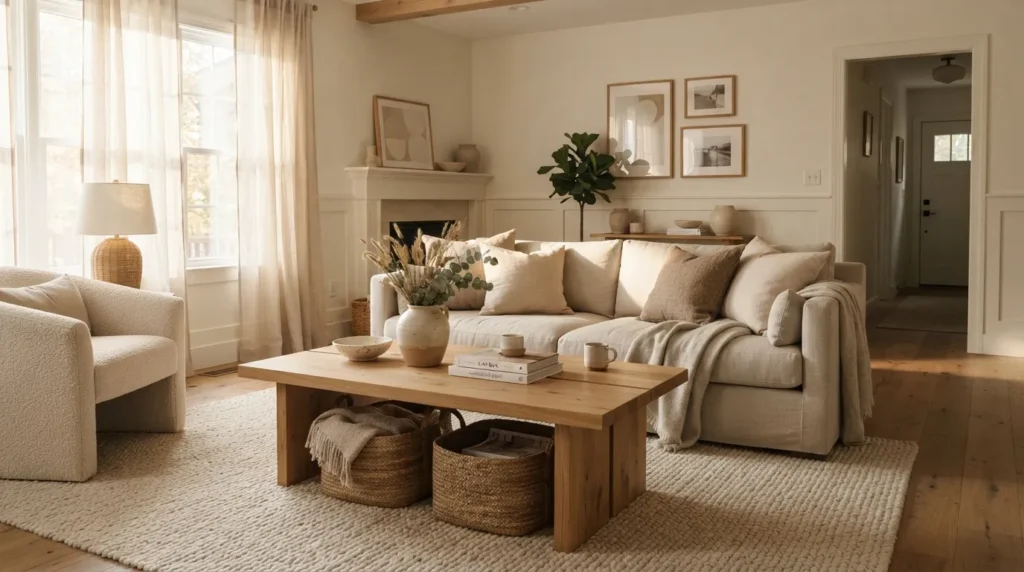
Texture is one of the stylist’s best tools, especially when working with neutral colors.
A room filled with beige can look flat if every surface has the same finish.
Introduce variation through linen, cotton, wool, wood, rattan, leather, ceramic, glass, and woven materials.
The contrast doesn’t have to be dramatic.
A linen pillow against a smooth sofa, a woven basket beside a wooden cabinet, or a wool-style rug beneath a leather chair creates subtle visual interest.
Texture also helps a room feel more lived in.
How To Style It
Begin with the largest textures.
An area rug can establish the foundation.
Add upholstered seating, woven baskets, linen curtains, and wooden furniture.
Use smaller textured elements through pillows and throws.
Mix smooth and rough surfaces.
For example, pair a smooth ceramic vase with a woven basket.
Keep the color palette controlled so the different textures don’t compete.
If your room already contains plenty of visual patterns, use quieter textures instead.
5. Style the Coffee Table
Quick Benefits
- Creates a visual focal point
- Makes the room feel finished
- Keeps everyday objects organized
- Adds personality
- Encourages intentional styling
Why It Works
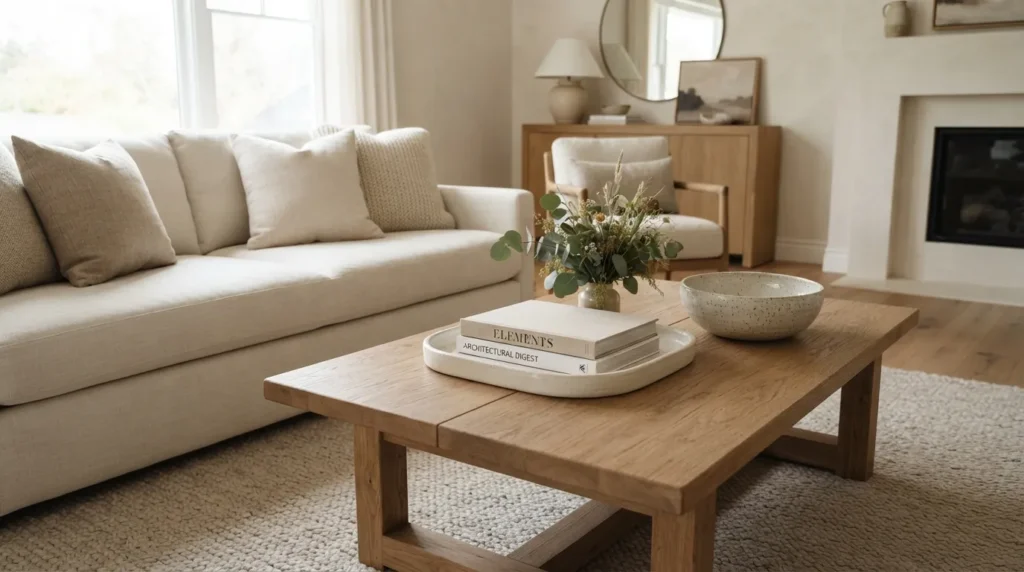
The coffee table sits in one of the most visible areas of a living room.
A completely empty table can look unfinished, while a table covered in objects can feel cluttered.
Stylists often create small groupings using objects with different heights, shapes, and textures.
A tray can provide a visual boundary for smaller pieces.
Books add height.
A ceramic bowl or vase introduces shape.
A small plant brings an organic element.
The important part is leaving enough empty space for everyday use.
How To Style It
Start with one larger anchor item, such as a tray or stack of books.
Add a smaller decorative object.
Introduce something organic, such as a small plant or branch arrangement.
Vary the heights rather than placing everything at the same level.
If the table is large, divide it into two or three visual zones.
If it’s small, keep the arrangement simple.
Remember that the coffee table still needs to hold drinks, remotes, and other everyday items.
Beautiful styling should remain functional.
6. Create Lighting Layers
Quick Benefits
- Makes evenings more inviting
- Adds depth to the room
- Improves functionality
- Highlights artwork and furniture
- Creates a more polished atmosphere
Why It Works
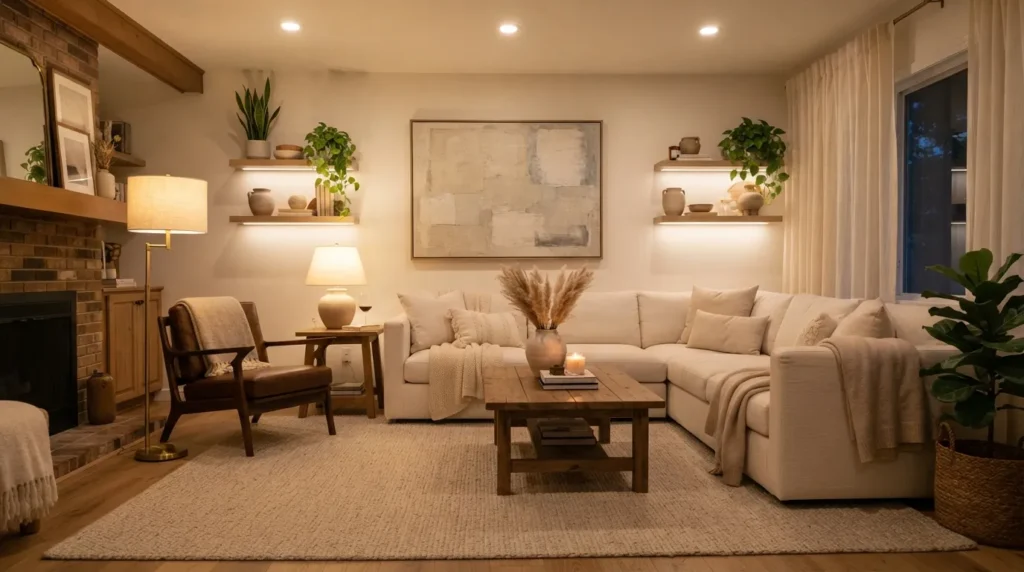
A single ceiling light rarely creates the most comfortable living room.
Different activities require different types of illumination.
A floor lamp can provide reading light.
A table lamp can illuminate a side table.
Wall lighting can add a decorative glow.
Accent lighting can highlight artwork or architectural features.
The combination creates depth because light isn’t coming from one location.
This becomes especially noticeable in the evening when natural daylight disappears.
How To Style It
Aim for several light sources distributed throughout the room.
Place a floor lamp beside a reading chair.
Add a table lamp to a console or side table.
Use overhead lighting when broader illumination is needed.
If you have artwork worth highlighting, consider appropriate picture or accent lighting.
Choose bulb temperatures that create the atmosphere you prefer, with warmer light often working particularly well for relaxed evening spaces.
Avoid making every lamp identical.
Coordinated doesn’t have to mean matching.
7. Add Statement Artwork
Quick Benefits
- Gives the room personality
- Creates a focal point
- Helps establish the color palette
- Fills large wall areas
- Makes the room feel finished
Why It Works
Artwork can communicate more about a room than a collection of small decorative objects.
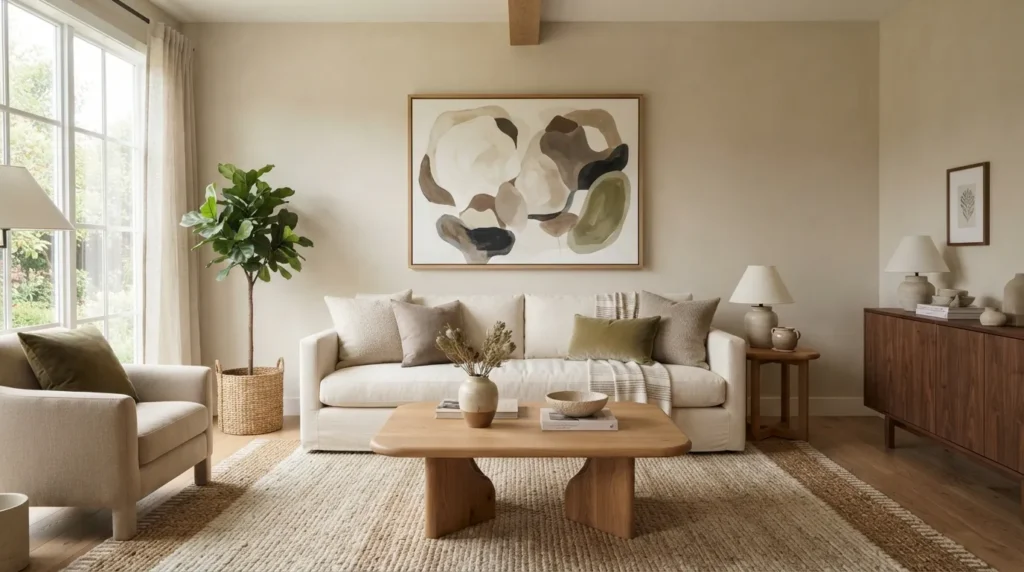
A large piece above the sofa can anchor the seating area.
A gallery wall can add personality to a hallway or adjacent wall.
A single abstract canvas can complement a minimalist interior.
The key is choosing artwork that relates to the room’s existing colors and proportions.
One mistake many homeowners make is hanging artwork that’s too small.
Large furniture usually requires artwork with enough visual weight to balance it.
How To Style It
Measure the wall before purchasing art.
Consider the width of the sofa or console below it.
Choose a piece that feels proportionate rather than simply selecting the smallest option that fits.
Repeat one or two colors from the artwork elsewhere in the room.
Natural wood frames can add warmth.
Black frames can provide crisp contrast.
For a gallery wall, maintain consistent spacing and use a common visual element to connect different pieces.
8. Arrange Decorative Groups
Quick Benefits
- Creates visual order
- Makes accessories feel intentional
- Prevents surfaces from looking random
- Adds personality
- Makes editing easier
Why It Works
Scattering individual objects across a room can make the space feel visually noisy.
Grouping similar pieces creates small areas of focus.
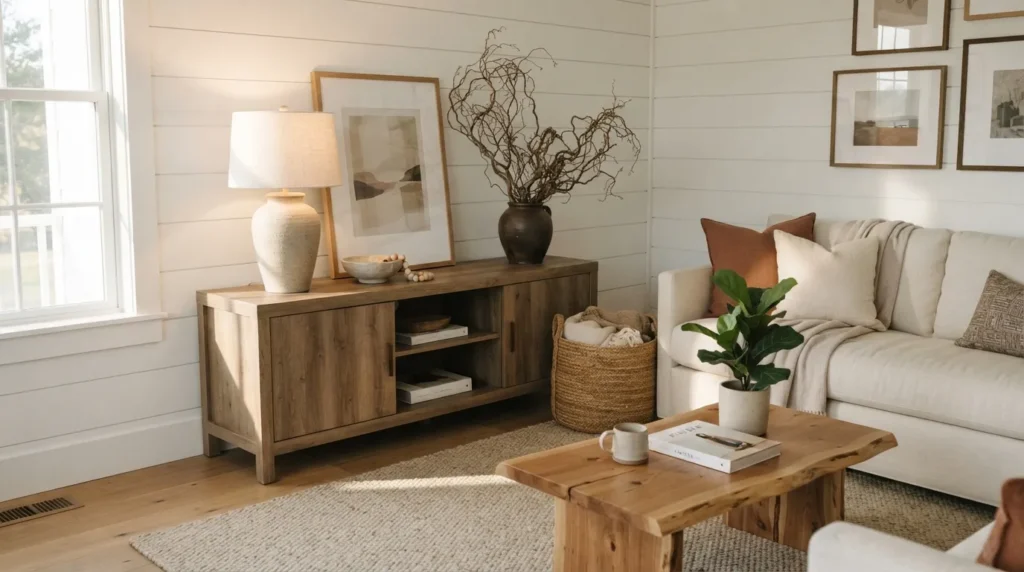
A console table might contain a lamp, framed artwork, and a ceramic bowl.
A bookshelf might combine books, baskets, plants, and a few meaningful objects.
The eye reads the group as one composition rather than dozens of unrelated items.
Stylists also use different heights to create rhythm.
A tall lamp beside a low bowl creates more visual interest than three objects of identical height.
How To Style It
Work in odd-numbered groupings when they look natural.
Combine different heights.
Mix materials such as wood, ceramic, glass, and woven elements.
Leave some empty space between groups.
Avoid placing small accessories on every available surface.
If a collection feels crowded, remove one piece and step back.
Sometimes the simplest arrangement looks the most sophisticated.
9. Bring In Greenery
Quick Benefits
- Adds organic color
- Softens furniture lines
- Creates freshness
- Introduces natural shapes
- Works with many decorating styles
Why It Works
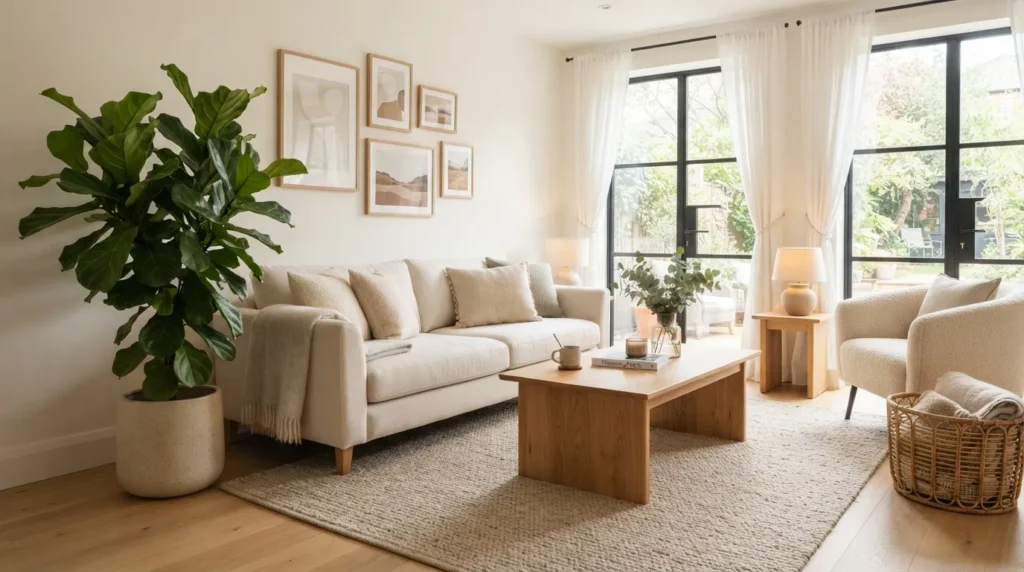
Plants can make a living room feel more alive without requiring a major decorating change.
Their irregular shapes contrast with the straight lines of sofas, tables, shelving, and cabinets.
Greenery also works across many styles.
A large leafy plant can complement a modern room, while a smaller potted plant can work beautifully in a farmhouse or traditional space.
The plant itself doesn’t need to become the focal point.
Sometimes its role is simply to soften an empty corner.
How To Style It
Choose plants based on the natural light available.
Use a larger plant to fill an unused corner.
Place smaller plants on shelves or consoles.
Select planters that coordinate with your existing materials.
Ceramic, terracotta, concrete-style, and woven planters can all work depending on the room.
If live plants aren’t practical, high-quality faux greenery can provide a similar visual effect.
Avoid adding plants simply because a corner feels empty.
Choose greenery that suits the room’s scale and maintenance needs.
10. Edit the Room
Quick Benefits
- Reduces visual clutter
- Highlights favorite pieces
- Makes cleaning easier
- Improves visual balance
- Creates a more sophisticated finish
Why It Works
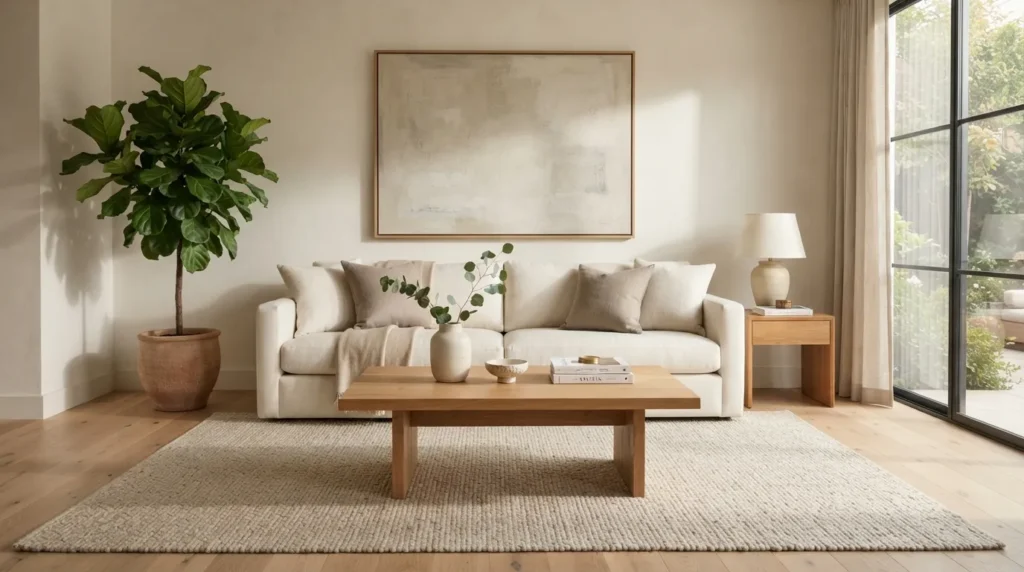
Styling isn’t only about adding things.
Editing is equally important.
A room can contain beautiful furniture and accessories but still feel unsettled if there are too many competing elements.
Home stylists often step back and evaluate the room as a whole.
Does one corner feel heavier than another?
Are there too many small accessories?
Is the color repeated enough?
Does the furniture have enough breathing room?
Editing allows the strongest elements to stand out.
How To Style It
Take photographs of your living room from several angles.
Photos can reveal clutter and proportion problems that aren’t obvious when you’re standing inside the space.
Remove a few decorative pieces and see how the room feels.
Clear unnecessary objects from tables and shelves.
Look for furniture that blocks movement or doesn’t serve a useful purpose.
Keep sentimental pieces that genuinely matter to you.
The goal isn’t to create an empty showroom.
It’s to create a room where every visible element feels intentional.
How Home Stylists Layer a Living Room
A polished room usually develops in stages rather than all at once.
Start With the Foundation
Begin with the walls, flooring, major furniture, and area rug.
These pieces establish the overall visual direction.
Add the Main Textiles
Introduce curtains, pillows, throws, and upholstery.
This is where the room starts to feel comfortable.
Introduce Wood and Natural Materials
Wood furniture, woven baskets, rattan, and ceramics add warmth and texture.
Add Artwork
Use artwork to reinforce the color palette and establish focal points.
Add Lighting
Layer floor lamps, table lamps, overhead fixtures, and appropriate accent lighting.
Finish With Accessories
Add books, bowls, vases, plants, and meaningful objects.
Edit
Remove anything that feels unnecessary.
This last step is often what separates a decorated room from a thoughtfully styled one.
How to Make a Living Room Look Expensive
You don’t necessarily need expensive furniture to create a polished appearance.
Focus on details that affect the overall impression.
Choose larger-scale artwork. Tiny pieces can make a large wall feel unfinished.
Use appropriately sized rugs. A rug that connects the seating arrangement can make furniture feel more intentional.
Repeat materials. If you have natural oak furniture, repeat the warmth with a frame, basket, or small decorative piece.
Use fewer accessories. A smaller number of well-chosen objects can look more sophisticated.
Hide visual clutter. Cords, remotes, paperwork, and miscellaneous items can quickly distract from an otherwise beautiful room.
Layer lighting. Multiple light sources create more depth than one bright ceiling fixture.
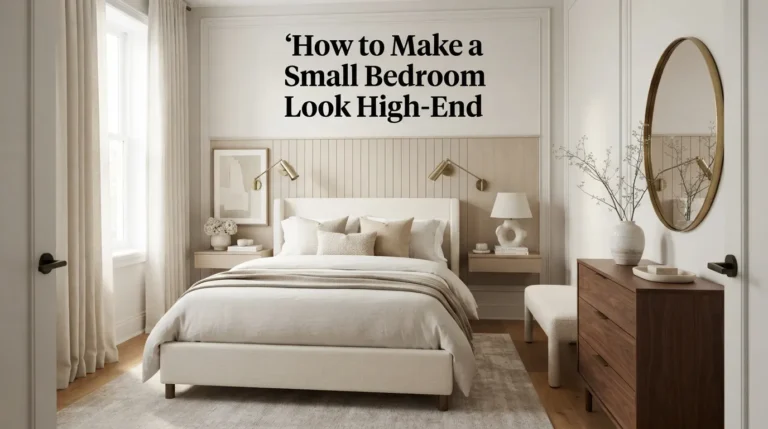
Keep textiles coordinated. Pillows and throws don’t need to match, but their colors and textures should relate.
How to Style a Small Living Room
Small living rooms require particularly careful editing.
Start with furniture that fits the room rather than trying to squeeze oversized pieces into limited space.
A sofa with a slimmer profile may provide more usable floor area.
Choose furniture with exposed legs when appropriate to create a lighter visual effect.
Use a properly scaled rug to connect the seating area.
Mirrors can reflect light and visually expand the room, especially when positioned thoughtfully.
Keep the coffee table proportionate.
Consider nesting tables if flexibility is important.
Use vertical storage for books and decor when floor space is limited.
Most importantly, preserve walking paths.
A small room can feel much more comfortable when movement is easy.
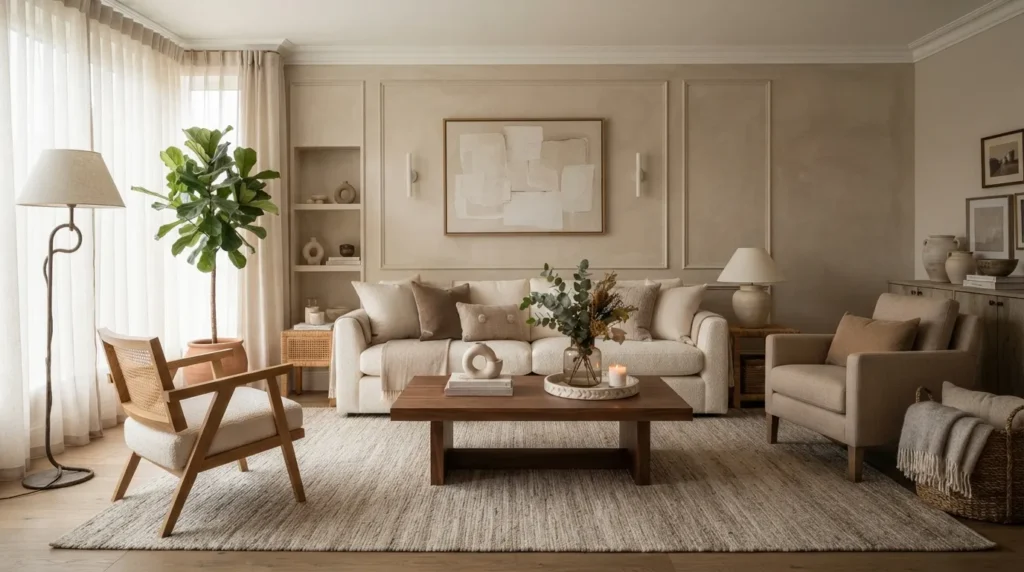
How to Style a Neutral Living Room
Neutral rooms benefit from variation rather than more color.
Combine several related shades such as cream, beige, taupe, warm gray, and natural brown.
Then introduce different textures.
A linen curtain can soften a window.
A wool-style rug adds warmth underfoot.
Wood furniture introduces organic variation.
Ceramic accessories add subtle contrast.
Greenery can provide a small amount of natural color.
If the room still feels flat, introduce one deeper accent such as charcoal, espresso brown, muted green, or black.
Use it in small repeated details rather than large blocks.
Common Living Room Styling Mistakes
Even a thoughtful decorating plan can be undermined by a few common issues.
Pushing Everything Against the Walls
This can create a large empty center while making the seating area feel disconnected.
Choosing a Rug That’s Too Small
A small rug can make substantial furniture appear disconnected.
Using Only One Light Source
The room may feel flat and overly bright in some areas while remaining dark in others.
Overmatching
Matching every pillow, frame, and accessory can make the room feel staged.
Too Many Small Accessories
Collections of tiny objects often create visual noise.
Ignoring Scale
Furniture and artwork need to relate to one another.
Decorating Without Editing
Adding more isn’t always the solution.
Sometimes removing one or two pieces creates a bigger improvement than buying something new.
Frequently Asked Questions
How do I make my living room look professionally styled?
Start with the layout, then establish a cohesive color palette and choose furniture that suits the room’s scale. Layer natural textures, add appropriately sized artwork, use multiple light sources, and finish with a small number of intentional accessories. The final editing step is important because removing unnecessary objects often makes the strongest pieces stand out.
What makes a living room look expensive?
Good proportions, appropriate lighting, quality-looking textiles, large-scale artwork, coordinated colors, and uncluttered surfaces can all contribute to a more polished appearance. You don’t need every item to be expensive. Consistency and thoughtful styling often have a greater visual impact than the price of individual accessories.
How many colors should a living room have?
There is no strict rule, but a restrained palette of a dominant color, one or two supporting neutrals, and a small accent color can create a cohesive appearance. Repeat important colors in different parts of the room so they feel connected rather than isolated.
Should a sofa be against the wall?
Not necessarily. In larger rooms, pulling a sofa away from the wall can create a more intimate seating arrangement and improve visual flow. In a small room, however, placing furniture closer to the wall may preserve valuable floor space. The best arrangement depends on the room’s dimensions, architecture, and circulation.
How do I style a coffee table without making it cluttered?
Start with one anchor such as a tray or stack of books. Add one or two smaller pieces with different heights and textures. Leave open tabletop space for everyday use. If the arrangement feels crowded, remove an item rather than adding another decorative piece.
How can I make a small living room feel bigger?
Use appropriately scaled furniture, preserve clear walking paths, choose a rug that connects the seating area, and avoid overcrowding surfaces. Light colors and reflective surfaces can help visually, while furniture with slimmer profiles may create more usable space.
How often should I change my living room decor?
There is no need to completely redecorate regularly. Small seasonal changes such as swapping pillows, throws, flowers, or artwork can refresh the room. A well-designed foundation can remain useful for years while smaller accessories evolve with your preferences.
Conclusion
Decorating a living room like a home stylist is less about following a perfect formula and more about learning to see the room as a whole.
Start with the layout.
Make sure furniture is comfortable, appropriately scaled, and easy to move around.
Then establish a color palette that connects the room without making everything match. Add texture through rugs, pillows, curtains, wood, ceramics, and woven materials. Layer lighting so the room works during both bright afternoons and relaxed evenings.
From there, bring in artwork, greenery, books, and personal objects.
The final step is the one that’s easiest to overlook: edit.
Step back and ask whether each piece contributes to the room. Remove anything that feels unnecessary, too small, too crowded, or disconnected from the overall palette.
A professionally styled living room doesn’t have to feel formal or untouchable. The best rooms still have comfortable seating, books on the table, blankets within reach, and objects that tell you something about the people who live there.
Start with one area rather than trying to transform everything at once. Rearrange the furniture, simplify one surface, improve the lighting, or add a piece of artwork you genuinely love.
Then build from there until the room feels balanced, comfortable, and distinctly yours.
Related Articles
- 10 Modern Living Room Ideas with Warm Neutral Colors
- How to Decorate a Small Living Room Without Remodeling
- 10 Cozy Living Room Ideas for Everyday Comfort
- 10 Living Room Wall Decor Ideas for a Stylish Home
- How to Arrange Living Room Furniture for Better Flow